European Space Agency Commemorates Half a Century of Innovation and Global Impact with Landmark Publication
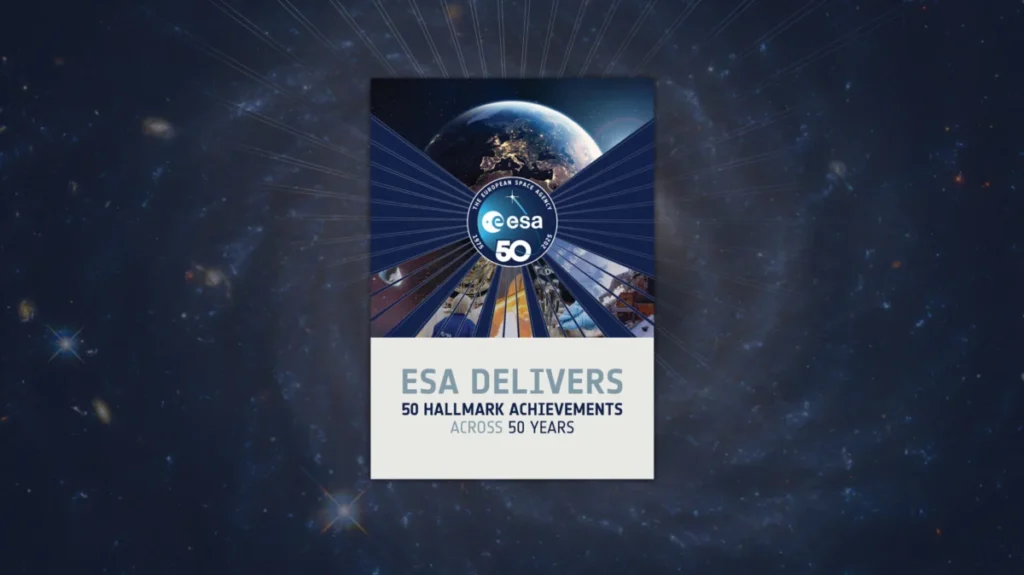
The European Space Agency (ESA) has unveiled a comprehensive retrospective, ESA Delivers: 50 Hallmark Achievements Across 50 Years, marking its first fifty years of groundbreaking contributions to space exploration, scientific advancement, and the fostering of Europe’s burgeoning space industry. This significant publication, now available for download, encapsulates a half-century of ambitious endeavors, from the historic landing on a comet to the implementation of the world’s most precise satellite navigation system, Galileo. The collection showcases ESA’s pivotal role in advancing human knowledge and technological capabilities beyond Earth’s atmosphere, demonstrating a consistent delivery of results that transcend the ambitions of any single nation.
The preface of ESA Delivers features an insightful introduction by ESA Director General Josef Aschbacher, who emphasizes the agency’s fundamental purpose: "Being an agency means taking action – that’s how the word is defined – to deliver results. And through its actions ESA delivers results that are too big and ambitious for any single nation." This statement underscores ESA’s collaborative model and its capacity to undertake projects of unprecedented scale and complexity, leveraging the collective strengths of its member states.
Kai-Uwe Schrogl, ESA’s coordinator for the 50th anniversary, elaborated on the genesis of the publication, stating, "The original idea for featuring 50 highlights from across the last half century came from our Director General. The challenge then became not what to put in, but what to leave out, because ESA has achieved such an enormously long list of remarkable milestones submitted by ESA’s Directorates following a call for contributions." This abundance of achievements speaks volumes about the agency’s sustained productivity and its expansive portfolio of successful missions and technological developments. Schrogl further described the selected achievements as not merely "top" but "hallmark" accomplishments, encompassing "technical miracles, historic firsts plus some moments of pure inspiration – intended to give a flavour of the broad range of ESA activities, contributing to elevate the future of Europe each and every day."
A Chronicle of European Space Excellence: Key Milestones
The publication meticulously details 50 pivotal moments that have shaped the trajectory of space exploration and European technological prowess. These achievements are strategically categorized according to ESA’s Strategy 2040, the agency’s forward-looking vision for the next 15 years. This organizational approach allows for an analysis of past successes as foundational elements for future ambitions, demonstrating a continuous thread of innovation and strategic planning.
Among the most significant achievements highlighted are:
- Comet Landing: The Rosetta mission’s Philae lander successfully touched down on comet 67P/Churyumov–Gerasimenko in 2014, a first in history, providing unprecedented data about cometary composition and the early solar system. This mission represented a monumental leap in our understanding of the universe’s origins.
- Galileo Satellite Navigation System: ESA has been instrumental in developing and deploying Galileo, Europe’s global navigation satellite system. Now fully operational, Galileo offers highly accurate positioning, navigation, and timing services, rivaling and in some aspects surpassing other global systems, with significant implications for transportation, emergency services, and precision agriculture.
- Contributions to the International Space Station (ISS): ESA has been a vital partner in the ISS program, contributing the Columbus laboratory module, a state-of-the-art research facility that has enabled countless scientific experiments in microgravity, advancing fields from medicine to materials science. ESA astronauts have also been integral to ISS operations, conducting vital spacewalks and research.
- Fostering Europe’s Space Industry: Beyond its own missions, ESA has played a crucial role in nurturing a vibrant and competitive European space sector. Through procurement policies, technology transfer initiatives, and support for small and medium-sized enterprises (SMEs), ESA has been a catalyst for economic growth and job creation across the continent.
Strategic Vision and Future Ambitions
Director General Aschbacher’s foresight extends to the practical implications of ESA’s absence. He prompts readers to envision a Europe devoid of its space agency, suggesting a future where the wider universe would remain "a much dimmer, less known, place," the continent might possess "few native astronauts or space scientists," and its critical services like "telecommunications, navigation and weather forecasting could well be dependent on foreign powers." This stark visualization underscores the strategic importance of ESA’s continued investment in space capabilities, not only for scientific discovery but also for European autonomy and security.
The grouping of achievements according to Strategy 2040 provides a clear framework for understanding ESA’s long-term objectives. These strategic goals likely encompass areas such as space science and exploration, Earth observation for climate monitoring and disaster management, space transportation and infrastructure, and the development of a robust and sustainable space economy. By framing its past achievements as baselines for future endeavors, ESA signals a commitment to continuous progress and adaptation in an ever-evolving global space landscape.

A Legacy of Collaboration and Impact
The publication of ESA Delivers serves as a testament to the power of international cooperation in achieving ambitious scientific and technological goals. ESA, founded in 1975, was born from a desire among European nations to pool resources and expertise, enabling them to compete on the global stage in space exploration. Its member states, currently 22, contribute financially and intellectually, fostering a shared sense of ownership and purpose.
The achievements detailed in the book span a wide array of disciplines:
- Astronomy and Astrophysics: Missions like the Hubble Space Telescope (in partnership with NASA) and ESA’s own XMM-Newton and Gaia have revolutionized our understanding of the cosmos, from distant galaxies to the precise mapping of stars within our own Milky Way. Gaia, launched in 2013, is creating the most precise 3D map of the Milky Way ever made, with over a billion stars cataloged.
- Earth Observation: ESA’s Earth Observation Programme, notably through the Sentinel satellites of the Copernicus program, provides critical data for monitoring climate change, managing natural resources, and responding to emergencies. Copernicus is the largest environmental monitoring program in the world, offering invaluable insights into our planet’s health.
- Human Spaceflight: Beyond the ISS, ESA has a rich history of human spaceflight, including the Ariane rocket program, which has reliably launched numerous European and international satellites into orbit, and the development of astronaut training programs.
- Robotic Exploration: Missions to planets, asteroids, and comets, such as Mars Express, Venus Express, and the BepiColombo mission to Mercury, have provided invaluable scientific data and pushed the boundaries of robotic exploration technology.
Supporting Data and Analysis
The cumulative impact of ESA’s endeavors can be quantified through various metrics. The agency’s annual budget, typically in the range of €6-7 billion, represents a significant investment in scientific research and technological development. The return on this investment is manifold, including the creation of high-tech jobs, the development of spin-off technologies that benefit everyday life, and the enhancement of European competitiveness in the global market. For instance, the satellite communications industry, significantly boosted by ESA’s efforts, is a multi-billion euro sector.
The Strategy 2040 itself outlines a vision for continued growth, aiming to enhance Europe’s strategic autonomy in space, strengthen its scientific leadership, and promote sustainable space activities. This strategy is likely to focus on areas such as lunar exploration, Mars sample return missions, advanced robotics, and the development of next-generation launch systems. The increasing privatization of the space sector also presents new opportunities for collaboration and innovation, with ESA playing a crucial role in setting standards and fostering a regulatory framework.
Official Responses and Future Outlook
The release of ESA Delivers has been met with widespread acclaim from the European scientific and political communities. The publication serves as a powerful tool for public outreach, inspiring future generations of scientists, engineers, and explorers. As Director General Aschbacher stated, the book is intended to "give a flavour of the broad range of ESA activities, contributing to elevate the future of Europe each and every day."
The 50 achievements highlighted are not merely historical footnotes but serve as springboards for future endeavors. The ongoing development of the European Space Economy, the pursuit of ambitious scientific missions, and the commitment to ensuring Europe’s independent access to space all depend on the foundational knowledge and technological capabilities built over the past five decades.
Download the Publication
The full PDF version of ESA Delivers: 50 Hallmark Achievements Across 50 Years is available for download at: https://esamultimedia.esa.int/docs/corporate/ESA_50_booklet.pdf. This comprehensive publication offers an in-depth look at the remarkable journey of the European Space Agency and its enduring impact on science, technology, and society. The agency’s continued commitment to innovation and exploration promises an exciting future, building upon this rich legacy of achievement.