The landscape of digital entertainment has long faced a significant barrier regarding physical accessibility, as standard gaming hardware is predominantly designed for users with full two-handed dexterity. For individuals with quadriplegia or severe motor impairments, the requirement for precise thumbstick manipulation and rapid button pressing often renders modern video games inaccessible. However, a new development from Caleb Kraft, the founder of The Controller Project and former editor at Make: magazine, is poised to disrupt this status quo. Kraft has unveiled a functional prototype of a sip-and-puff gaming controller that is both open-source and significantly more affordable than existing commercial alternatives, marking a potential turning point in the democratization of assistive technology.
The sip-and-puff interface is a well-established method of computer and machine control for individuals with limited mobility below the neck. By inhaling (sipping) or exhaling (puffing) into a tube, users can trigger specific commands. While this technology has existed for years, commercial units often command prices ranging from $500 to over $1,500, placing them out of reach for many who could benefit from them. Kraft’s latest iteration utilizes 3D-printable components and off-the-shelf electronics to bring the total build cost down to approximately $40, a reduction of over 90% compared to industry standards.
Technical Specifications and Design Philosophy
The core of Kraft’s sip-and-puff controller lies in its use of air pressure sensors paired with a microcontroller, such as an Arduino or a similar board. These sensors detect the subtle changes in air pressure within the tube and translate those fluctuations into digital or analog signals that a gaming console or PC can recognize as controller inputs.
The device is designed with high levels of configurability to accommodate the diverse needs of the disability community. Key features of the prototype include:
- Adjustable Sensitivity: Users can calibrate the amount of breath pressure required to trigger an action, ensuring that those with limited lung capacity can still operate the device effectively.
- Analog and Digital Modes: The controller can toggle between binary inputs (on/off) and analog inputs, where the intensity of the puff correlates to the degree of movement on an in-game joystick.
- Macro and Latch Functions: To simplify complex gameplay, the software allows for "latch" behaviors—where a single puff keeps a button "held down"—and macros, which enable multiple control inputs to be executed via a single breath command.
- Integrated Display: A small screen on the unit provides real-time feedback on input status and allows users to navigate settings menus without needing external software.
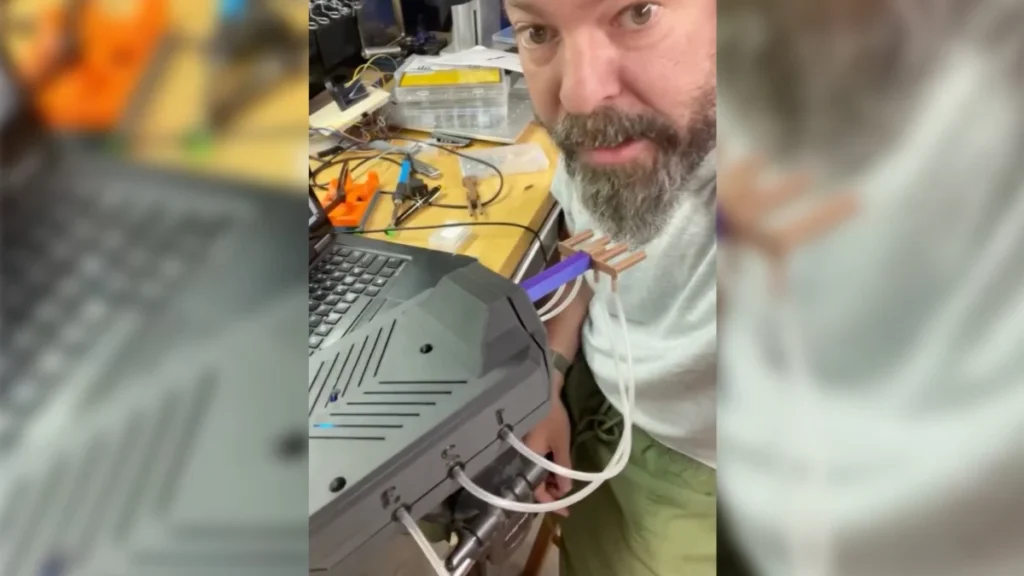
The physical construction involves a 3D-printed shell and a joystick mount. By mounting the sip-and-puff tubes directly onto a joystick, the player can use their mouth to physically move the stick for directional input while simultaneously using breath for button actions, effectively replicating the dual-input nature of a standard gamepad.
The Evolution of The Controller Project
The release of the sip-and-puff prototype is the latest milestone in a journey that began in 2012. Caleb Kraft founded The Controller Project with the mission of providing free or low-cost physical modifications for gamers with disabilities. For over a decade, the project has focused on 3D-printed extensions for Xbox and PlayStation controllers, such as snap-on levers that allow players to use their palms or elbows to press buttons that would otherwise require finger dexterity.
The project grew out of the "maker" movement, which emphasizes DIY ethics and open-source sharing. Kraft’s work has been supported by the maker community and organizations like Make: magazine. Dale Dougherty, the founder of Make:, has been a vocal supporter of Kraft’s endeavors, allowing him the flexibility to integrate his advocacy work with his professional responsibilities. This synergy between the hobbyist maker community and the needs of the disabled community has led to a repository of designs that anyone with a 3D printer can download and assemble.
Chronology of Accessibility in Gaming
To understand the impact of Kraft’s work, it is necessary to view it within the broader timeline of gaming accessibility:
- Early 2000s: Assistive gaming tech was largely niche, expensive, and custom-built by specialized medical engineering firms.
- 2012: The Controller Project is founded, focusing on mechanical mods for existing controllers.
- 2018: Microsoft releases the Xbox Adaptive Controller (XAC). This was a landmark moment, providing a hub that allowed users to plug in various external switches and joysticks. However, the cost of those external peripherals remained a barrier.
- 2023: Sony releases the Access Controller for PlayStation 5, further validating the need for first-party accessibility hardware.
- 2024: Kraft’s sip-and-puff prototype goes viral, demonstrating that the "last mile" of accessibility—specialized mouth-operated inputs—can be achieved through low-cost, open-source means.
While major corporations have made strides, their products often serve as a platform rather than a complete solution for the most severely impaired. Kraft’s $40 device fills a critical gap for users who require mouth-based controls but cannot afford the specialized peripherals required to plug into the Xbox or PlayStation hubs.

Economic and Social Implications
The financial burden of disability is a well-documented phenomenon. According to data from the CDC, approximately 1 in 4 adults in the United States lives with some form of disability. For many in this demographic, particularly those with spinal cord injuries or neuromuscular diseases, the cost of specialized equipment is compounded by medical expenses and potentially limited employment opportunities.
By providing an open-source bill of materials (BOM) and code, Kraft is effectively bypassing the traditional medical-device markup. The $40 price point is achieved by using mass-produced consumer electronics rather than proprietary medical hardware. This shift not only makes the technology more affordable but also more repairable. If a component breaks, the user or a local "maker" can replace it for a few dollars rather than sending the unit back to a specialized manufacturer for expensive repairs.
Furthermore, the social impact of gaming for individuals with limited mobility cannot be overstated. For many, video games provide a "level playing field" where physical limitations do not dictate success or social standing. Online gaming offers a vital avenue for social interaction, community building, and cognitive stimulation. By lowering the entry barrier to these digital spaces, Kraft’s project contributes directly to the mental well-being and social inclusion of people with disabilities.
Current Limitations and Future Development
Despite the enthusiastic response to the prototype, Kraft remains transparent about the device’s current limitations. In a statement regarding the project’s status, he categorized the controller as "usable but untested."
One primary concern is the durability of the pressure sensors when exposed to the moisture inherent in human breath. Over time, humidity can degrade electronic components, and Kraft is currently investigating methods to protect the sensors without sacrificing sensitivity. Additionally, the initial 3D-printed shell design presented challenges during the wiring and assembly process. Kraft has noted that future iterations will focus on improving the internal layout to make the device easier for hobbyists to build at home.
The use of a standard thumbstick for mouth movements is another area slated for testing. While functional, the ergonomics of using mouth muscles to move a stick designed for thumbs may lead to fatigue or precision issues. Kraft intends to collaborate with gamers with quadriplegia to gather empirical data and refine the ergonomics of the interface.
Broader Industry Reactions and the Path Forward
The viral success of the sip-and-puff controller has sparked a conversation within the tech industry regarding the role of open-source hardware in healthcare and accessibility. While large tech firms focus on "one-size-fits-most" solutions, the maker community is proving that "one-size-fits-one" customization is possible at a fraction of the cost.
Reactions from the community have been overwhelmingly positive, with many users expressing a desire to help test the device or contribute to its code. Kraft has encouraged interested parties to support the project through donations to The Controller Project or via his Patreon, which funds the research and development of these designs.
As the project moves into its next phase, the focus will be on rigorous field testing and the finalization of the assembly guides. The goal is to create a "gold standard" for DIY assistive controllers that can be replicated globally. By removing the profit motive from the production of essential assistive tools, The Controller Project is creating a blueprint for how technology can be used to foster a more inclusive society.
In the long term, the success of such projects may pressure commercial manufacturers to lower their prices or adopt more modular, open standards. Until then, the work of Caleb Kraft and the broader maker community remains a lifeline for gamers who have been left behind by the traditional hardware market. The sip-and-puff controller is more than just a piece of hardware; it is a testament to the idea that with a few sensors, a 3D printer, and a commitment to the common good, the barriers to the digital world can be dismantled.