The journey of a 3D printed part from its creation on a build platform to its final application is rarely a direct one. Additive manufacturing (AM), while revolutionizing product development and manufacturing, often yields components with inherent surface imperfections. These imperfections, such as visible layer lines, residual powder, support structure witness marks, and internal roughness, necessitate a critical postprocessing and surface finishing phase. This phase is not a one-size-fits-all solution; rather, it’s a nuanced selection of techniques tailored to the specific material, intricate geometry, required surface finish, and the ultimate end-use of the printed part. This comprehensive overview delves into the most prevalent postprocessing and surface finishing methods employed in the AM industry today, highlighting their applications, benefits, and the innovative advancements shaping this vital segment of additive manufacturing.
The imperative for meticulous postprocessing stems from the layer-by-layer nature of 3D printing. While this additive approach allows for unprecedented design freedom and complexity, it inherently leaves a topographical signature on the part’s surface. For many applications, particularly those in the medical, aerospace, and automotive sectors, these surface characteristics can compromise functionality, performance, and aesthetics. Achieving a smooth, defect-free surface is crucial for factors such as fluid dynamics in fuel nozzles, biocompatibility of medical implants, fatigue life of structural components, and the overall visual appeal of consumer products. The choice of postprocessing technique is therefore a strategic decision, balancing efficiency, cost, material compatibility, and the desired outcome.

Advanced Surface Finishing: Himed’s Hydroxyapatite Approach
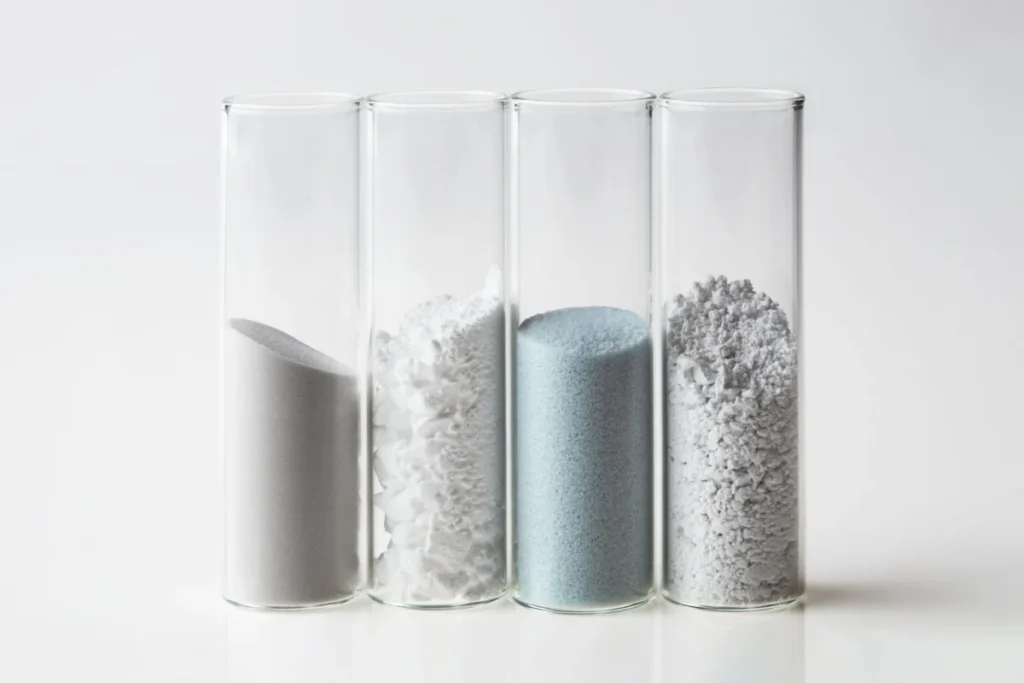
A notable advancement in surface finishing for AM parts comes from materials manufacturer Himed, which has developed a proprietary hydroxyapatite (HA) surface finishing process specifically for 3D printed medical implants. Hydroxyapatite, a calcium phosphate mineral, is widely recognized and utilized in the biomedical field for its biocompatibility and its ability to promote osseointegration—the direct bonding of bone to an implant surface. Traditionally, HA has been employed both as an abrasive agent for surface preparation and as a bioactive coating for medical implants. Himed’s innovation lies in leveraging HA’s abrasive properties within a postprocessing workflow to simultaneously address surface imperfections and potentially enhance the implant’s biological integration.
This HA-based surface finishing process targets common issues found in 3D printed metal implants, such as loosely adherent material beads and surface roughness that can arise from the printing process. By employing HA as an abrasive media, Himed’s method aims to remove these imperfections efficiently. The accompanying SEM (Scanning Electron Microscope) images provided by Himed clearly illustrate the transformative effect of their process. Prior to treatment, a 3D printed Ti64 lattice structure exhibits rough surfaces with discernible molten beads. Following the HA abrasive treatment, the SEM analysis reveals a significantly smoother surface topography, with the molten beads effectively removed, resulting in a uniform textured surface ready for further processing or implantation. This simultaneous approach—cleaning and preparing the surface while potentially imbuing it with osteoconductive properties—represents a significant step forward in the postprocessing of medical implants, potentially streamlining manufacturing workflows and improving patient outcomes.
The Spectrum of Surface Finishing Techniques
The AM industry currently employs a diverse array of postprocessing and surface finishing techniques, each with its unique strengths and limitations. The selection of the most appropriate method is contingent upon a complex interplay of factors, including the material being processed (e.g., metals, polymers, ceramics), the part’s geometric complexity (especially internal features), the required level of surface roughness (Ra value), and the stringent demands of the intended application.

1. Media Blasting (Bead, Sand, or Soda)
Media blasting stands as a foundational step in the postprocessing of many metal and polymer AM parts. This technique involves propelling a stream of abrasive media—such as glass beads, sand, or sodium bicarbonate—at the part’s surface under pressure. The primary functions of media blasting are to efficiently strip away loose powder residues that adhere to the part after printing, to knock down minor surface imperfections like small bumps or sharp edges, and to impart a consistent matte finish across the entire surface. Its appeal lies in its speed and cost-effectiveness, making it a common initial step for a wide range of AM components. Himed’s innovative use of hydroxyapatite as a blasting media exemplifies the evolution of this technique, offering a dual benefit for medical applications.
2. Abrasive Flow Machining (AFM)
Abrasive Flow Machining (AFM) is a precision finishing process well-suited for smoothing complex internal passages and intricate geometries. In AFM, a viscous, putty-like compound heavily laden with abrasive particles is forced to flow back and forth through the part’s internal channels under controlled pressure. This continuous, controlled flow of abrasive media gently abrades the internal surfaces, effectively removing burrs, smoothing layer lines, and improving surface finish without altering critical external dimensions. AFM is particularly favored for finishing components like fuel nozzles, manifolds, and hydraulic blocks, where achieving a high-quality internal surface finish is paramount for performance and efficiency.
3. Tumbling and Vibratory Finishing
Tumbling and vibratory finishing processes involve immersing parts in a rotating or vibrating barrel or bowl filled with abrasive media and a cleaning compound. Over extended periods—ranging from hours to days—the constant motion and friction between the parts and the media work to deburr, smooth, and polish the surfaces. These methods are highly effective for batch processing of small to medium-sized parts, efficiently breaking down sharp edges and radii. Mass Finishing Inc. (MFI) has introduced advanced solutions like their HZ-6 centrifugal barrel tumbler, which significantly accelerates the finishing process for additive components, offering high-polished surfaces in a compact footprint. Centrifugal barrel tumbling, operating on a principle akin to a Ferris wheel, employs a high rotational speed to generate greater force and achieve faster finishing times compared to traditional vibratory methods. This technique is especially beneficial for applications requiring a high degree of surface smoothness and edge radiusing.

4. Manual Grinding, Sanding, and Polishing
Despite the advent of automated solutions, manual grinding, sanding, and polishing remain indispensable in certain AM workflows. These labor-intensive processes are critical for addressing large structural components, fine-tuning prototypes, and meticulously removing support witness marks that automated methods might miss. In low-volume production environments, particularly for complex metal parts, manual finishing often represents a significant portion of the overall production cost due to the skilled labor and time required. However, for achieving precise tolerances and specific surface finishes on critical features, manual techniques continue to be the go-to solution.
5. Chemical and Electrochemical Polishing
Chemical and electrochemical polishing offer advanced solutions for achieving superior surface finishes, particularly on complex internal geometries. These processes involve immersing the part in a carefully formulated chemical solution that selectively dissolves microscopic peaks from the surface while leaving the valleys relatively untouched. This results in a dramatically smoothed surface. Electrochemical polishing, a variation of this technique, uses an electrolytic bath and an electrical current to achieve the same smoothing effect. These methods are highly advantageous for intricate lattice structures, conformal cooling channels found in injection molds, and medical implants where a smooth, biocompatible surface is essential. Holdson’s development of Electroform, an acid-free electrochemical polishing system, underscores the industry’s drive towards more sustainable and safer chemical finishing solutions, reducing reliance on hazardous chemicals while maintaining high-quality, repeatable finishes across various materials.
6. Laser Polishing
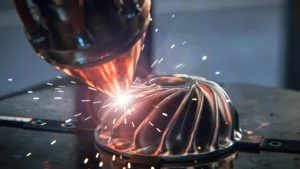
Laser polishing is an innovative, non-contact surface finishing technique that utilizes a precisely controlled laser beam. A defocused laser is directed at the part’s surface, causing a thin outer layer to remelt. Surface tension then acts upon this molten layer, pulling it smooth and effectively eliminating surface asperities and layer lines. The key advantages of laser polishing include the absence of consumables, eliminating the need for cleaning out abrasive media from internal features, and offering a high degree of control over the finishing process. This technique is particularly well-suited for small, high-value components, such as those used in the dental and aerospace industries, where intricate details and pristine surfaces are critical.

7. CNC Machining
While often considered a subtractive manufacturing process, CNC machining plays a vital role in the postprocessing of AM parts, particularly for achieving extremely tight tolerances and critical surface finishes. For applications requiring precise mating surfaces, bearing journals, sealing faces, and other features demanding high accuracy, CNC machining is often employed after the initial additive build. The rise of hybrid manufacturing machines, which integrate additive processes like Directed Energy Deposition (DED) or Laser Powder Bed Fusion (LPBF) with subtractive capabilities like milling in a single setup, is further blurring the lines between additive and subtractive manufacturing. Addman Advanced Manufacturing Solutions exemplifies this trend by combining its metal AM operations with in-house precision CNC machining services, offering a seamless workflow from part creation to final surface finishing for compact metal components.
8. Vapor Smoothing
Vapor smoothing is a highly effective technique for improving the surface finish of polymer-based 3D printed parts. In this process, cleaned parts are placed within an airtight vessel containing a specific solvent. The vessel is then heated to a controlled temperature, generating solvent vapor. This vapor permeates the part’s surface, softening and leveling the layer lines and surface imperfections, resulting in a significantly smoother and often glossy finish. Automated vapor smoothing systems are becoming increasingly popular for their efficiency and consistency, though the process can also be performed using sealed containers. This method is particularly beneficial for aesthetically critical parts or functional components where reduced friction or improved sealing is required.
9. Coatings and Plating
Coatings and plating represent the final frontier in surface finishing for AM parts, applied after mechanical preparation to enhance performance and appearance. Techniques such as anodizing, Physical Vapor Deposition (PVD), electroless nickel plating, and powder coating can be applied to a wide range of AM materials. These coatings serve multiple purposes: they can mask minor residual surface defects, provide enhanced wear and corrosion resistance, improve electrical conductivity, or impart a uniform and aesthetically pleasing cosmetic finish.

A significant innovation in this domain is the UV powder coating process developed collaboratively by Streamline 3D and Keyland Polymer. This process utilizes UV-curable powder coatings that melt and flow at lower temperatures (around 220°F), minimizing heat exposure to potentially sensitive AM substrates. Once applied and flowed, the coating is rapidly cured by UV light, offering a fast, efficient, and scalable method for achieving vibrant, consistent colors. This technology boasts a total process time of just 8 minutes, with a low scrap rate, making it highly attractive for mass production of colored AM parts.
The Broader Implications of Advanced Postprocessing
The continuous evolution of postprocessing and surface finishing techniques is not merely about aesthetics; it’s about unlocking the full potential of additive manufacturing. As AM technologies mature and find their way into more demanding applications, the requirements for surface quality become increasingly stringent. Innovations in areas like Himed’s HA blasting, Holdson’s acid-free electrochemical polishing, and Streamline 3D’s UV powder coating highlight a clear industry trend towards more efficient, sustainable, and specialized finishing solutions.
The integration of these advanced finishing methods directly impacts the economic viability and widespread adoption of AM. By reducing manual labor, improving throughput, and enhancing part performance, these techniques make AM a more competitive manufacturing option across diverse sectors. Furthermore, the development of hybrid manufacturing machines, combining additive and subtractive capabilities, signifies a paradigm shift towards optimized, end-to-end manufacturing workflows where postprocessing is an integral part of the design and build process, not an afterthought.

As the AM industry continues its rapid ascent, the sophistication and accessibility of postprocessing and surface finishing technologies will undoubtedly remain a critical determinant of its ultimate success, enabling the creation of parts that are not only complex in form but also superior in function and finish.