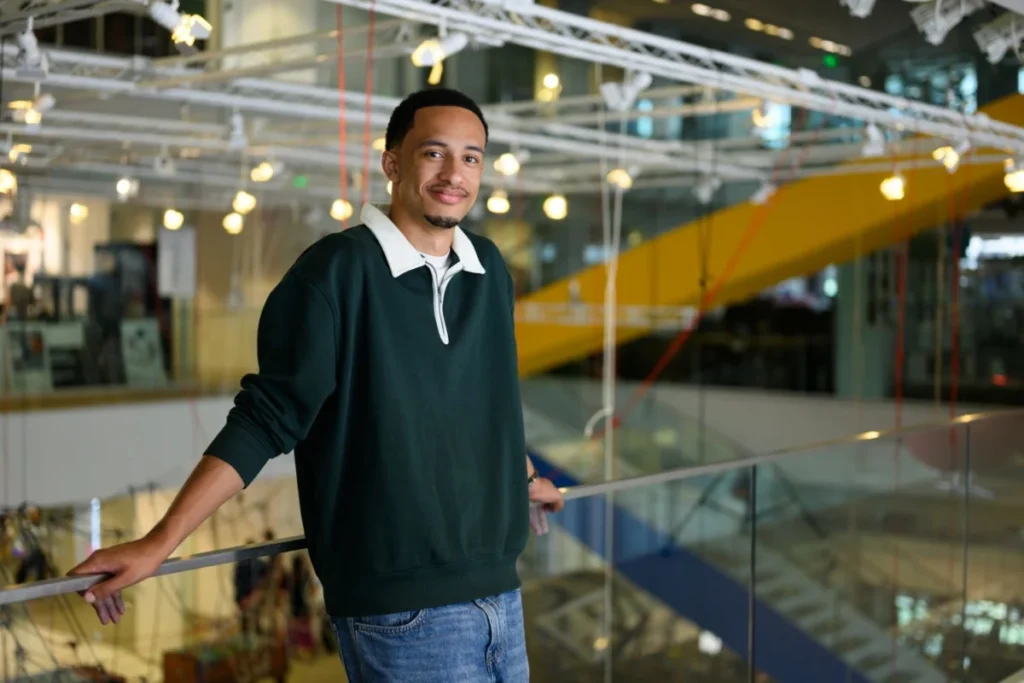
The Massachusetts Institute of Technology, a global beacon of scientific and technological advancement, is preparing to welcome its newest cohort of 1,100 first-year students this August. Amidst the traditional orientation programming designed to acclimate these bright minds to their new academic home, a groundbreaking initiative stands out: a meticulously designed trading-card game, "Campus Trade," conceived and executed by rising senior Kayode Dada. This project not only serves as an icebreaker but embodies MIT’s spirit of innovation and its growing emphasis on holistic student development, leveraging a passion often perceived as outside the conventional STEM purview to foster vital community bonds. Dada, a mechanical engineering major, demonstrates that ingenuity transcends disciplinary boundaries, affirming his belief that "a game can be made about anything," provided "it takes a lot of time and effort and thinking about it."
A Lifelong Passion for Play and Problem-Solving
Kayode Dada’s journey into game design began long before his matriculation at MIT. Growing up in Louisville, Kentucky, games were not merely a pastime but a foundational element of his childhood. Alongside his brother, he delved into countless hours of card games, board games, and video games. His vivid recollections paint a picture of a mind captivated by the mechanics and strategic depths of titles like "Dungeons and Dragons," "Catan," "Yu-Gi-Oh!," and "Risk." These early experiences weren’t just about entertainment; they subtly cultivated an analytical mindset, prompting him to ponder the underlying systems and decision-making processes embedded within each game. The communal aspect was equally significant, highlighted by a unique family ritual during the Covid-19 pandemic: "For weeks and weeks, every single night we’d play a full game of ‘Monopoly.’ It was crazy!" he recalls, underscoring the powerful role games played in connecting his family during an isolating period.
This nascent curiosity blossomed into active creation during his high school years. Dada’s initial foray into game design was remarkably hands-on, involving the construction of custom dice from arts and crafts materials, a testament to his inventive spirit. This initial spark ignited a prolific period where he estimates designing approximately 25 games. Nine of these concepts were fully realized, crafted into tangible forms, and gifted to friends, serving as unique, personalized birthday presents. This phase was crucial, transforming his abstract interest into practical experience, honing his understanding of player engagement, rule systems, and the iterative process inherent in creative design.
Charting an Unconventional Path to MIT
Dada’s deep engagement with board game design formed a significant part of his application to MIT, an institution renowned for its rigorous scientific and engineering programs. Initially, he harbored doubts about his prospects, fearing his "non-tech" portfolio might be misaligned with MIT’s perceived expectations. "I didn’t do any real tech stuff," he candidly admits, reflecting a common misconception among prospective students about what constitutes "MIT material." However, his perspective shifted dramatically after reading the MIT Admissions blogs. A particular post by a computer science major, who shared her experience of entering MIT without prior coding experience, resonated deeply with him.
This revelation provided Kayode with a crucial dose of encouragement and hope. It underscored MIT’s commitment to admitting well-rounded individuals with diverse passions and untapped potential, rather than solely those with pre-existing, highly technical credentials. "That gave me motivation and hope that I could apply with a bunch of cardboard games, and I got in," he states, a sentiment that speaks volumes about the institute’s evolving admissions philosophy. His experience served as a powerful affirmation that MIT students are not "super-duper geniuses in an unattainable sense," but rather "real" individuals whose unique strengths and interests contribute to the vibrant tapestry of the campus community. This emphasis on authenticity and potential over prescriptive skill sets is a cornerstone of MIT’s efforts to foster a diverse and inclusive learning environment.
Engaging the MIT Community: Beyond the Classroom
Upon his arrival at MIT, Dada quickly immersed himself in a multitude of extracurricular activities, demonstrating a commitment to community building that mirrored his passion for game design. Despite the demanding academic curriculum of a mechanical engineering major, he found time to contribute significantly to campus life. His roles include serving as an MIT Admissions blogger, an orientation captain, a leader in MIT Cru (a campus Christian group), a drummer in the MIT Live student music group, and a DJ on WMBR 88.1 FM, where his show, "Midwest Pizzeria," showcases a niche genre of Midwest emo math rock. This diverse portfolio highlights his ability to balance intense academic rigor with a rich and varied personal life, a characteristic often observed among successful MIT students.
His involvement as an MIT Admissions blogger and orientation captain are particularly salient, as they directly align with his desire to foster community and provide guidance to incoming students. Dada’s blog posts often delve into his personal experiences, offering candid insights into life at MIT. One post, detailing his experience as a Christian student on campus, garnered significant attention. "I got a lot of emails from either students interested in the club or parents and high school counselors saying, ‘Thank you for posting this – I had no idea,’" he recounts. This feedback underscores the profound impact of transparent student narratives in demystifying the MIT experience and broadening perceptions of the institution. He frequently encounters prospective students who doubt their qualifications, to whom he offers a consistent message of encouragement: "I tell them, ‘I think you should still apply… and regardless if you get into MIT or not, you’re going to do amazing things.’" This ethos of empowerment and belief in individual potential is a recurring theme in his contributions to the MIT community.
This summer marks Dada’s third involvement with MIT Orientation, an experience he describes as deeply rewarding. The opportunity to connect with new students, understand their interests, and guide them towards relevant campus resources is a source of immense satisfaction. "It’s a lot of fun to talk to students, hear what they are interested in, and then be like, ‘Oh, you should definitely go check out this thing. I’ll connect you to this person that you should talk to,’" he explains. In a delightful full-circle moment, some of the orientation leaders he now works alongside once read his blogs as prospective students, highlighting the enduring impact of his outreach efforts. These connections underscore the powerful, self-sustaining nature of community building at MIT, where current students actively contribute to the success and integration of future generations. He emphasizes that his closest friends at MIT are those who share his commitment to "helping out the people coming in… giving it back to MIT and contributing towards building up the next class."
Re-orienting Orientation: The Genesis of "Campus Trade"
The challenges of integrating a large, diverse cohort of students into a new, academically demanding environment like MIT are substantial. Orientation programs at institutions of this caliber often serve multiple crucial functions: logistical guidance, academic preparedness, and, critically, social integration. While traditional activities are important, fostering genuine connection and breaking down initial barriers among 1,100 individuals requires innovative approaches. This is where Dada’s unique blend of passion and practicality found its perfect application.
Last year, during a brainstorming session for MIT Orientation activities, the staff sought engaging ways to keep new students active and interacting between scheduled events. Dada seized this opportunity, proposing a trading-card game designed not only for entertainment but specifically as an ice-breaker. His initial creation, "Campus Trade," was a testament to his understanding of game mechanics and social dynamics. The game capitalized on the existing structure of orientation, where students are divided into 12 color-coded groups. Each incoming student received 12 trading cards corresponding to their assigned group’s color. The objective was straightforward yet compelling: by the end of the week, each student had to collect one card from every other group, resulting in a complete set of 12 different colors.
The first iteration of "Campus Trade" was an undeniable success in terms of engagement. "They got so invested immediately, and we couldn’t get them to stop playing and go back inside to the next meeting," Dada recounts, highlighting the immediate captivation the game inspired. This enthusiastic reception validated the core concept of using a game to foster interaction. However, Dada, ever the keen observer and critical designer, noticed an area for improvement. While students were actively trading cards, many interactions remained superficial. Players would often exchange cards quickly and move on, without engaging in meaningful conversation or forming deeper connections. This observation spurred his commitment to refining the game, transforming it from a simple trading exercise into a more potent tool for social integration.
From Concept to Connection: The Redesign and Collaboration
Driven by the desire to deepen social interaction, Dada embarked on a comprehensive redesign of "Campus Trade." This ambitious undertaking transitioned from a personal project into a structured research initiative through the Undergraduate Research Opportunities Program (UROP) at MIT. UROP is a hallmark of the MIT experience, enabling students to engage in cutting-edge research alongside faculty, often leading to significant contributions in their respective fields. Dada’s UROP project was supervised by Cassandra Lee, a research designer in the MIT Media Lab’s Center for Constructive Communication. Lee’s expertise in the nexus between games and social interaction proved invaluable, providing academic rigor and theoretical grounding to Dada’s practical design skills. The project was further supported by realtalk@MIT, a program that champions students who design and organize their own creative community infrastructure, perfectly aligning with Dada’s goals.
The redesign process was extensive, spanning months of dedicated effort during his junior year. It involved a systematic approach of prototyping, interviewing students who had played the previous version, rigorous testing of new mechanics, and iterative refinement. This meticulous process is characteristic of design thinking, where user feedback and empirical observation drive continuous improvement. The result is a significantly enhanced version of "Campus Trade" for the upcoming orientation.
The new cards are larger, reminiscent of tarot cards, designed to be more visually appealing and tactile. A key innovation is the artwork: one side of each card features original artwork by current MIT students, depicting a recognizable person, place, or object from campus life. This artistic element not only makes the cards more aesthetically pleasing but also embeds a sense of shared identity and belonging from the outset. Crucially, the reverse side of each card now features an icebreaker question. These questions are carefully crafted to encourage genuine conversation, prompting students to share personal anecdotes, preferences, or thoughts, thereby facilitating deeper connections beyond a mere transactional card exchange. Furthermore, the game’s mechanics have been refined to offer multiple pathways to victory, a deliberate design choice aimed at promoting collaboration and diverse strategies rather than purely competitive interaction. This multi-win condition approach fosters a more inclusive and cooperative environment, essential for a successful ice-breaker activity.
Cassandra Lee speaks highly of her collaboration with Dada: "Community development work really requires a student who understands and is willing to fight for the value of people, stories, and being in community. Consistently throughout this project, it was clear that Kayode is more than capable of balancing his own spirit with the grueling organizing work that makes a project like ‘Campus Trade’ possible." Lee’s assessment underscores Dada’s unique blend of empathy, vision, and practical execution – qualities vital for impactful community initiatives.
Broader Impact and Future Implications
The revamped "Campus Trade" game represents more than just an orientation activity; it is a tangible manifestation of MIT’s commitment to fostering a supportive and engaging environment for its students. Research consistently shows that strong social integration during the critical first few weeks of university life significantly impacts student retention, academic performance, and overall well-being. By intentionally designing an activity that encourages meaningful social interaction, MIT is proactively addressing potential challenges such as social isolation and the stress of adapting to a new environment. This innovative approach to orientation reflects a broader understanding within higher education that student success extends beyond academic metrics to encompass emotional and social health.
Kayode Dada’s project also highlights the growing recognition of game design as a legitimate and powerful tool for purposes far beyond mere entertainment. From educational games to simulations for training and, in this case, social engineering for community building, the principles of game design are increasingly being applied to solve complex problems. Dada’s ability to apply engineering principles – iteration, problem-solving, user-centered design – to a seemingly non-engineering field underscores the interdisciplinary nature of modern innovation. His journey from a childhood enthusiast to a creator of a large-scale, impactful social game at one of the world’s leading technical institutions serves as an inspiring example of how passion, when coupled with rigorous academic inquiry and practical application, can yield significant results.
Looking ahead, Dada is resolute in his ambition to pursue a career in game design after graduation. The experience of developing "Campus Trade" on a large scale has solidified his aspirations and provided him with invaluable real-world experience. "Before, I didn’t really believe I could do it," he admits, reflecting on the initial self-doubt that many aspiring creatives face. "But now that I have this project under my belt, some real experience working on a game on a large scale, I definitely have a lot of ideas." He envisions several potential paths: either applying for a position at a prominent game design company, perhaps a leader in the industry like Wizards of the Coast (known for "Magic: The Gathering" and "Dungeons & Dragons"), or venturing into entrepreneurship by starting his own company.
His story is a powerful testament to the value of embracing unconventional interests and leveraging personal passions in the pursuit of impact. Just as he took a chance applying to MIT with a portfolio of "cardboard games," his future in game design is poised to be an equally bold and rewarding endeavor. Kayode Dada’s "Campus Trade" game is more than an icebreaker; it is a symbol of how creativity, empathy, and strategic design can forge lasting connections, cultivate community, and redefine pathways to success in the most unexpected of places.






