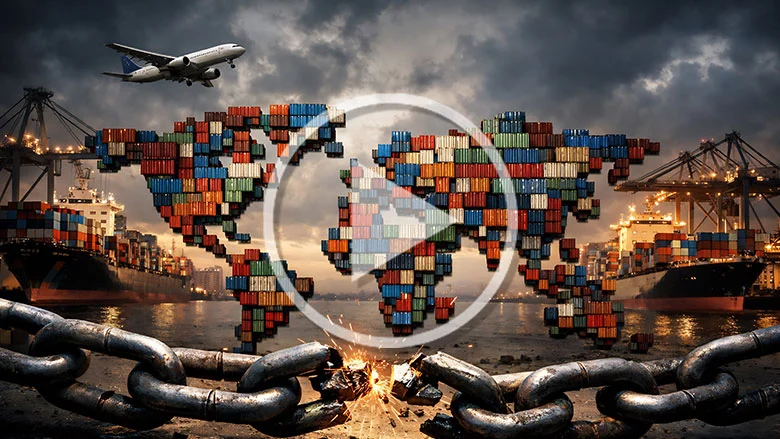
A fundamental re-evaluation is underway within global manufacturing, signaling a significant departure from the decades-long adherence to just-in-time (JIT) inventory management. Once hailed as the pinnacle of efficiency and cost reduction, the JIT model, which minimizes stockholding by ensuring components arrive precisely when needed for production, is increasingly being challenged by a volatile global landscape. Tariffs, geopolitical conflicts, pandemics, and natural disasters have exposed the inherent vulnerabilities of highly streamlined supply chains, prompting companies to invest in greater inventory and diversify their supplier networks.
Kyle Peacock, founder of Peacock Tariff Consulting, a firm specializing in navigating the complexities of international trade, observes this profound shift firsthand. "Just in time was such a phenomenon, and it made the most fiscal sense to a lot of businesses," Peacock states, reflecting on the historical dominance of the model. "Unfortunately, if you have a just-in-time supply chain, now you are putting you and your company at a significant risk." This sentiment echoes across boardrooms and factory floors globally, as manufacturers grapple with unprecedented levels of disruption. The era of lean operations, where every ounce of buffer was meticulously trimmed, is giving way to a more robust, albeit potentially more expensive, approach prioritizing resilience.
The Genesis and Zenith of Just-In-Time Manufacturing
The just-in-time philosophy originated in Japan, most notably with the Toyota Production System in the mid-20th century. Its core tenets revolved around producing only what is needed, when it is needed, and in the amount needed. This revolutionary approach sought to eliminate waste (muda), including overproduction, waiting, unnecessary transport, over-processing, excess inventory, unnecessary motion, and defects. By minimizing inventory, companies could drastically reduce warehousing costs, decrease capital tied up in stock, lower the risk of obsolescence, and enhance responsiveness to market changes.
Over the latter half of the 20th century and into the early 21st, JIT diffused globally, becoming a cornerstone of modern manufacturing across diverse sectors from automotive to electronics, aerospace, and consumer goods. Its widespread adoption was fueled by globalization, which facilitated access to cheaper labor and specialized components from around the world. Companies optimized their supply chains to be incredibly efficient, often relying on single-source suppliers in distant regions to achieve maximum cost savings. The benefits were undeniable, contributing significantly to corporate profitability and competitive advantage for decades.
A Cascade of Disruptions: The Unraveling of JIT’s Dominance
While the advantages of JIT were compelling, the system’s inherent fragility began to manifest with increasing frequency and severity in the 2010s and, most acutely, in the 2020s. The vulnerabilities of relying on a single, highly optimized supply line became starkly apparent when confronted with systemic shocks.
One of the earliest significant tremors came with the U.S.-China trade war, which escalated in 2018. The imposition of tariffs on a wide range of goods forced manufacturers to confront unexpected increases in input costs, making established sourcing strategies economically unviable overnight. Companies found themselves scrambling to identify alternative suppliers or absorb punitive duties, often with little buffer in their lean JIT inventories. The trade war highlighted how geopolitical decisions, previously considered peripheral, could directly impact operational viability.
The true stress test, however, arrived with the COVID-19 pandemic in early 2020. The global health crisis triggered an unprecedented cascade of disruptions: factory shutdowns, port closures, shipping container shortages, labor absenteeism, and dramatic shifts in consumer demand. A single factory closure in Wuhan or a port bottleneck in Los Angeles could ripple across continents, halting production lines thousands of miles away. Industries like automotive, which had perfected JIT to an art form, were hit particularly hard, leading to significant production cuts and vehicle shortages due to a lack of critical components like semiconductors. A 2021 report by Resilinc estimated that supply chain disruptions increased by 67% year-over-year in 2020, costing companies an average of $184 million annually in lost revenue.
Further compounding these challenges were ongoing geopolitical conflicts. The Russia-Ukraine war, which began in February 2022, severely disrupted global supplies of critical raw materials such as neon gas (essential for semiconductor manufacturing), palladium, and various agricultural products, sending shockwaves through energy and commodity markets. Similarly, recent attacks on shipping in the Red Sea have forced many maritime carriers to reroute vessels, adding weeks to transit times and significantly increasing shipping costs, impacting delivery schedules for everything from consumer goods to industrial components.
Beyond human-made crises, natural disasters have also played a critical role in exposing JIT’s weaknesses. Events like the 2011 Fukushima earthquake and tsunami in Japan, which crippled electronics and automotive supply chains, or the 2021 Texas winter storm, which disrupted petrochemical production, demonstrated how localized environmental events could have global ramifications for industries reliant on precise, uninterrupted flows of materials. These events underscored the reality that a highly efficient, single-point-of-failure system is inherently brittle in a world prone to unpredictable shocks.
The Strategic Pivot: Investing in Inventory and Diversification
In response to this prolonged period of volatility, manufacturers are making a conscious strategic pivot. Kyle Peacock notes that companies are now "putting money back into inventory and into supply chain" to build in alternatives and buffers. This represents a fundamental shift in capital allocation, moving away from viewing inventory solely as a cost center to recognizing it as an essential component of operational resilience.
This renewed focus on inventory isn’t about simply accumulating vast stockpiles; it’s a calculated decision to hold strategic reserves of critical components or finished goods to mitigate the impact of future disruptions. For instance, manufacturers might maintain a 30-day or 60-day supply of key inputs, a stark contrast to the mere days or even hours of inventory typical under strict JIT. This "just-in-case" mindset provides a crucial safety net, allowing production to continue even if a primary supply route is temporarily blocked or a key supplier faces an unexpected shutdown.
Beyond inventory, the other major pillar of this new strategy is supplier diversification. Companies are actively qualifying additional suppliers, often seeking out geographically diverse partners. This proactive approach aims to dismantle the single-source dependencies that proved so detrimental during recent crises. The goal is not just to have a backup, but to have multiple, fully vetted options ready to activate.
Microsourcing: A New Blueprint for Resilience

Peacock highlights a particularly innovative strategy gaining traction among final assembly manufacturers, which he terms "microsourcing." This goes beyond simply having a second backup supplier. Instead, manufacturers are establishing relationships with four or five distinct sources capable of producing the same component at approximately the same price point and quality standard.
The power of microsourcing lies in its inherent flexibility and redundancy. These multiple sources can be strategically distributed geographically across different continents or regions – for example, sourcing from Europe, Asia, South America, or North America. "You could source from Europe, or you could source from Asia, South America, and all with the flip of the switch," Peacock explains. This means that if a tariff is imposed on goods from one region, a political conflict destabilizes another, a natural disaster strikes a third, or a pandemic shuts down factories in a fourth, the manufacturer still has a fifth, pre-qualified option to turn to. "If there’s issues in four different regions, they still have that fifth region they can turn to and have the supply to them within a certain amount of time," Peacock emphasizes.
Implementing microsourcing is not a trivial undertaking. It demands significantly more upfront investment and preparation than merely identifying potential backup suppliers. Each of these four or five potential sources must undergo rigorous qualification processes. This includes ensuring they can meet the manufacturer’s precise technical specifications, production volumes, quality standards, and delivery timelines before any disruption occurs. This due diligence ensures that when a "switch needs to be flipped," the alternative supplier can seamlessly integrate into the production process without compromising product integrity or delaying schedules. The initial investment in supplier qualification, auditing, and relationship building is substantial, but it is increasingly viewed as a necessary cost of doing business in a volatile world.
The Economic and Operational Implications
This strategic pivot towards increased inventory and diversified sourcing carries significant economic and operational implications. While it enhances resilience, it also introduces new cost structures that challenge the lean paradigms of the past. Holding more inventory ties up capital, incurs warehousing costs, and increases the risk of obsolescence, particularly for rapidly evolving technologies. Building relationships with multiple suppliers also involves higher administrative overhead, more complex logistics management, and potentially less favorable pricing compared to the economies of scale often achieved with single-source, high-volume contracts.
However, these costs are increasingly being weighed against the far greater potential costs of disruption – lost sales, production halts, reputational damage, and even market share erosion. A 2022 survey by McKinsey & Company revealed that 70% of companies reported at least one major supply chain disruption in the previous year, with 20% experiencing multiple severe disruptions. The financial impact of these disruptions often dwarfs the costs associated with building resilience.
Therefore, the decision-making process for supply chain leaders is evolving. It’s no longer solely about minimizing cost and maximizing efficiency. Instead, it’s about optimizing a delicate balance between cost, efficiency, resilience, and flexibility. This often means accepting slightly higher operational costs to ensure continuity and mitigate catastrophic risks. Companies are developing more sophisticated risk assessment models, factoring in geopolitical stability, climate change impacts, and trade policy shifts alongside traditional metrics.
Broader Geopolitical and Industrial Shifts
The move away from hyper-globalized, single-point-of-failure supply chains is also contributing to broader geopolitical and industrial shifts. Concepts like "friendshoring" (sourcing from politically aligned countries) and "nearshoring" (sourcing from geographically closer countries) are gaining traction. Governments are actively encouraging domestic manufacturing and supply chain resilience through incentives and policies, recognizing the strategic importance of secure access to critical goods and technologies.
This trend could lead to a more regionalized global economy, where supply chains are shorter, more diversified within specific blocs, and less reliant on highly distant, potentially unstable regions. While this might lead to some loss of efficiency on a global scale, it could foster stronger regional economies, create jobs, and enhance national security.
Technology’s Role in the Evolving Supply Chain
Technological advancements are crucial enablers of this supply chain transformation. Advanced analytics, artificial intelligence (AI), and machine learning (ML) are being deployed to predict disruptions, optimize inventory levels, and identify alternative sourcing options more efficiently. Digital twins of supply chains allow companies to simulate various disruption scenarios and test mitigation strategies virtually. Blockchain technology offers enhanced transparency and traceability across complex supplier networks, improving accountability and risk management. Real-time tracking and Internet of Things (IoT) sensors provide unprecedented visibility into the movement of goods, allowing for quicker responses to delays or deviations.
These technologies help manage the increased complexity that comes with diversified sourcing and higher inventory levels, ensuring that the shift away from JIT doesn’t lead to unmanageable operational overhead.
The Competitive Edge: Proactive Adaptation
In this rapidly evolving landscape, proactivity is proving to be a defining characteristic of successful enterprises. As Kyle Peacock succinctly puts it, "Clients that are proactive are the ones that are winning." Companies that anticipated these shifts, began investing in inventory buffers, and started diversifying their supplier bases before major disruptions hit were better positioned to navigate the crises with minimal impact. They maintained production, fulfilled orders, and often gained market share from less prepared competitors.
This proactive stance requires visionary leadership, significant strategic investment, and a cultural shift within organizations. It means moving beyond a purely reactive crisis management approach to embedding resilience as a core strategic imperative. The focus is on building flexible, adaptable supply chains that can absorb shocks and recover quickly, rather than merely optimizing for the best-case scenario.
In conclusion, the era of unbridled just-in-time optimization is drawing to a close. A new paradigm, characterized by strategic inventory investment, robust supplier diversification, and innovative approaches like microsourcing, is emerging. Driven by a confluence of tariffs, pandemics, geopolitical conflicts, and natural disasters, manufacturers are fundamentally rethinking how they source, produce, and deliver goods. The goal is no longer just maximum efficiency, but maximum resilience – a critical adaptation for navigating the unpredictable complexities of the 21st-century global economy.