The pursuit of seemingly impossible goals has long been a cornerstone of watchmaking. From crafting ultra-thin movements to engineering intricate complications and achieving unprecedented power reserves, horological artisans continually push the boundaries of mechanical possibility. Beyond the mechanics, however, lies another realm of artistry: transforming timepieces into miniature works of decorative splendor. Among these artistic expressions, watches adorned with stone dials stand out as exceptionally rare and captivating. This enduring appeal, rooted in historical craftsmanship and the inherent beauty of natural materials, is experiencing a resurgence, highlighted by recent releases and the enduring allure of stones like pietersite.
The Ancient Art of Stone Dials in Watchmaking
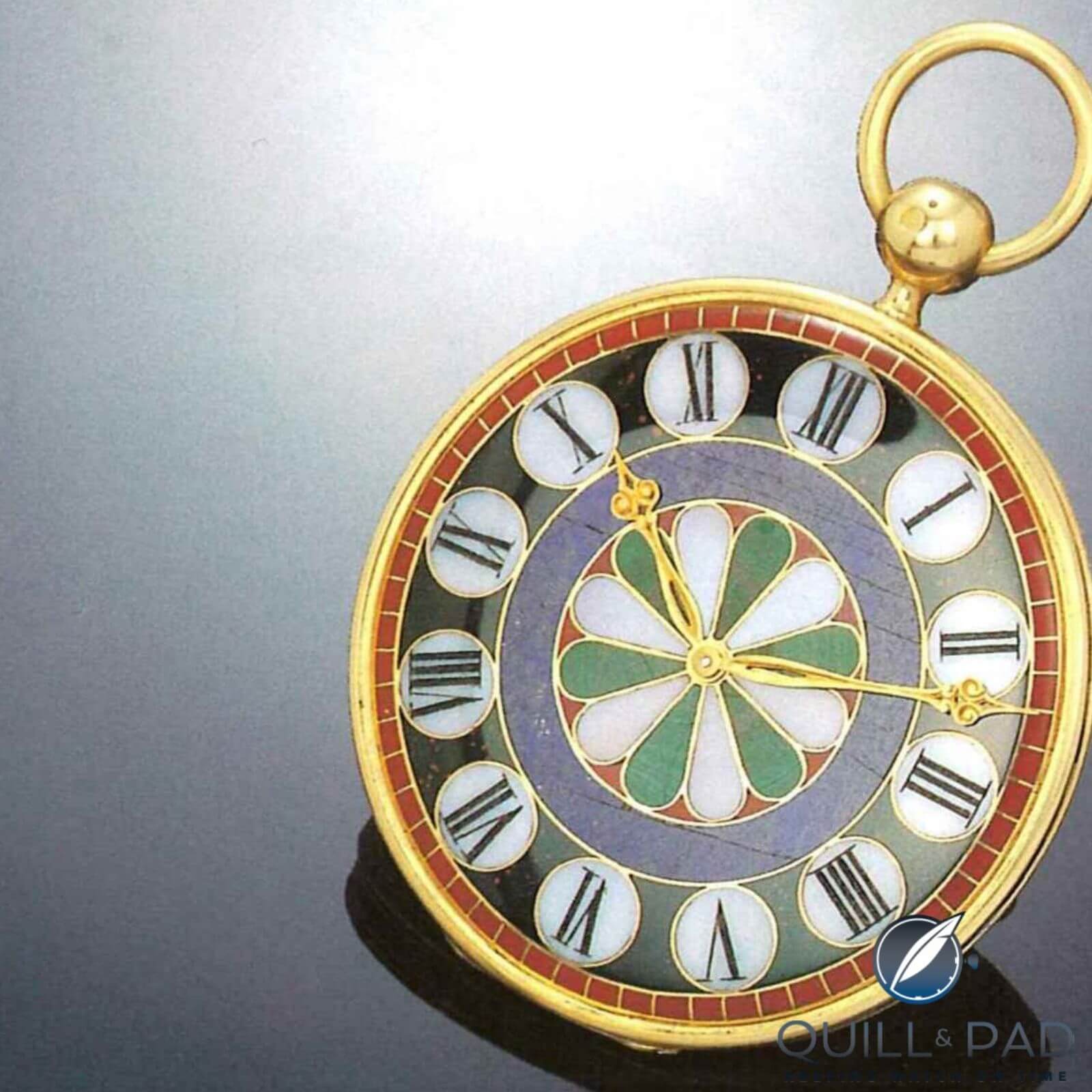
The technique of adorning timepieces with meticulously crafted stone dials traces its origins back to the Italian Renaissance. It was during this era that artisans developed the Florentine mosaic, a sophisticated method of reproducing detailed paintings using precisely cut and inlaid plates of various stones. This art form, known as pietra dura, eventually found its way into the world of watchmaking, likely in the 19th century. Historical records point to French firms like Breguet and Leroy, alongside other now-obscure names, as early pioneers in this domain. Later, in the late 19th and early 20th centuries, Vacheron & Constantin collaborated with Parisian jeweler Ferdinand Verger to produce pocket watches featuring exquisite pietra dura dials. The technique experienced a significant revival in 1966 when Piaget reinterpreted it in a more streamlined fashion, often utilizing a single thin slab of decorative stone, or occasionally two, for the dial’s central and peripheral sections.
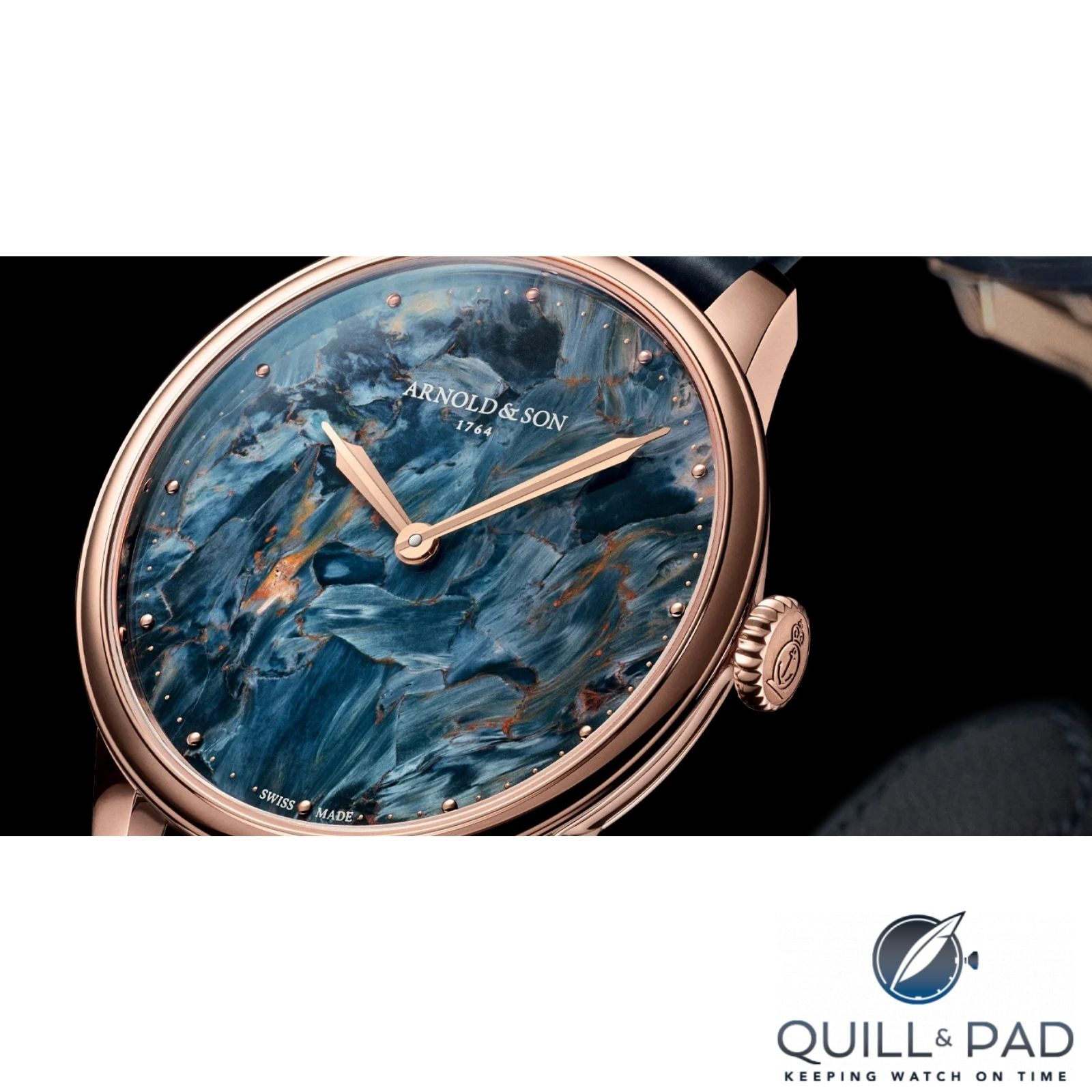
The appeal of these stone dials lies in their unique aesthetic. Unlike printed or enameled dials, each stone dial is inherently one-of-a-kind. The natural patterns, colors, and textures of the minerals imbue each watch with an inimitable character, making it a true work of art. This individuality, coupled with the technical mastery required to work with such delicate materials, has always positioned watches with stone dials as objects of desire and exclusivity.
The Golden Age of Stone Dials: The 1970s and 1980s
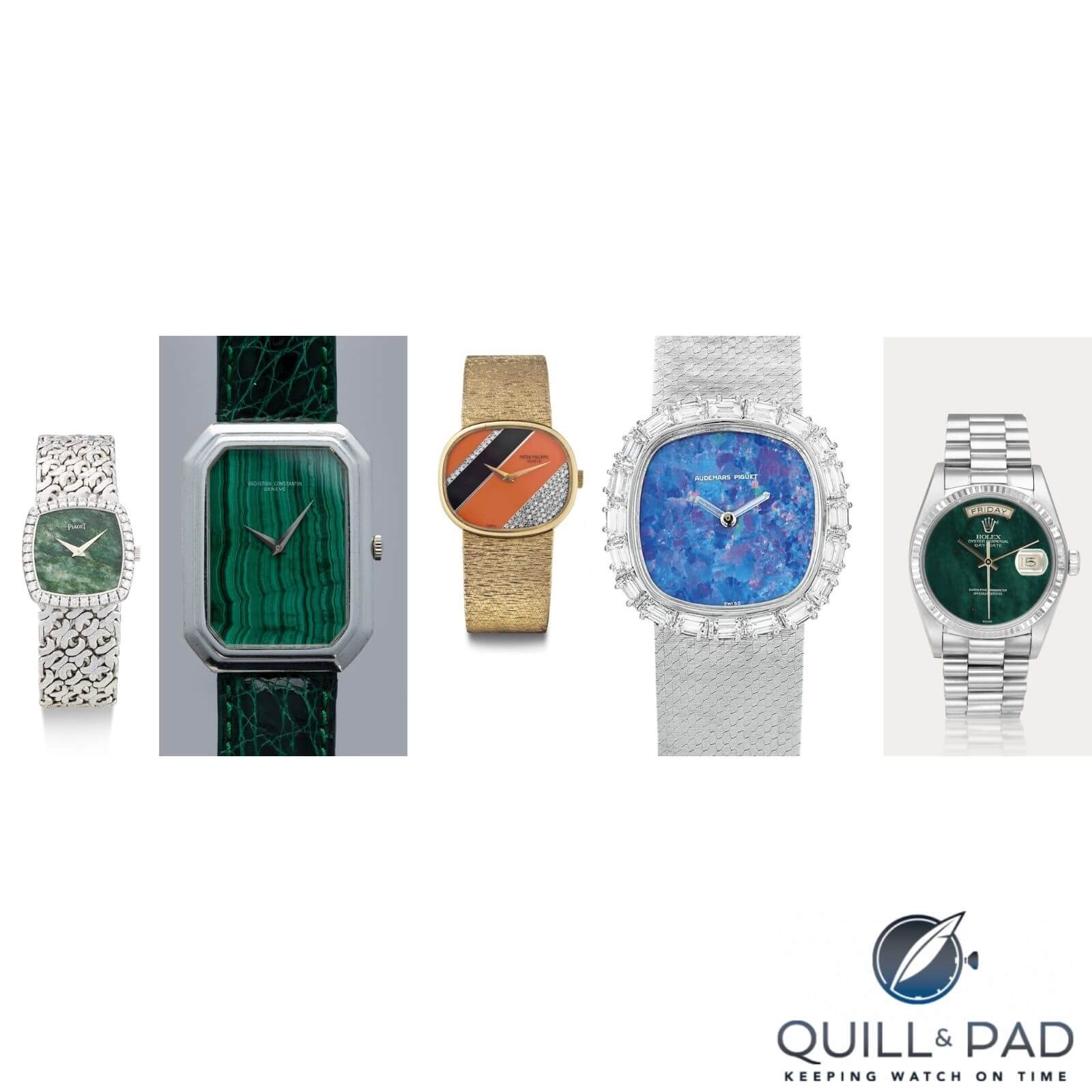
Wristwatches adorned with stone dials reached their zenith of popularity during the 1970s and 1980s. This period coincided with advancements in the production of thin movements, both mechanical and quartz, which allowed for the creation of slimmer, more elegant watch cases. These thinner profiles were ideal canvases for the decorative artistry of stone dials, particularly on gold dress watches. Watchmakers of the era frequently employed a variety of precious and semi-precious stones for these dials, including:
- Agate: Known for its banded patterns and diverse colorations.
- Jasper: Often displaying rich, earthy hues and intricate veining.
- Jadeite: Celebrated for its vibrant green tones and cultural significance.
- Lapis Lazuli: Characterized by its intense blue color, often flecked with pyrite.
- Malachite: Recognized for its striking concentric green bands.
- Onyx: A classic choice, typically black or deep brown, offering a stark contrast.
- Opal: Prized for its iridescent play-of-color.
- Tiger’s Eye: Famous for its chatoyant, golden-brown shimmering effect.
- Hawk’s Eye: Similar to tiger’s eye but with blue-gray hues.
- Turquoise: Valued for its distinctive sky-blue to greenish-blue color.
While not strictly minerals, materials such as aventurine (with its sparkling inclusions), coral, mother-of-pearl, and meteorite were also frequently incorporated into dial designs, adding further textural and visual diversity. Leading watch houses, including Rolex, Patek Philippe, Vacheron Constantin, Audemars Piguet, and Piaget – a notable innovator in the modern application of this technique – all actively produced timepieces featuring these unique dials.
The Technical Challenges and Rarity
The creation of a stone dial is fraught with technical challenges. Working with fragile, often imperfect natural materials demands exceptional skill and patience. The process begins with sourcing high-quality rough stones, which are then meticulously sawn, polished, and drilled to accommodate the watch’s hand pinions and any applied indices. The inherent brittleness of stone means that a high rate of breakage and defects is common during these stages. This difficulty significantly increases the production cost, not only for the dial itself but for the entire watch. Consequently, the production of hardstone dials has always been, and continues to be, highly limited. The fragility of the material also means that fewer examples survive the passage of time, further enhancing their rarity and value.
Pietersite: A Gemstone of Dramatic Beauty
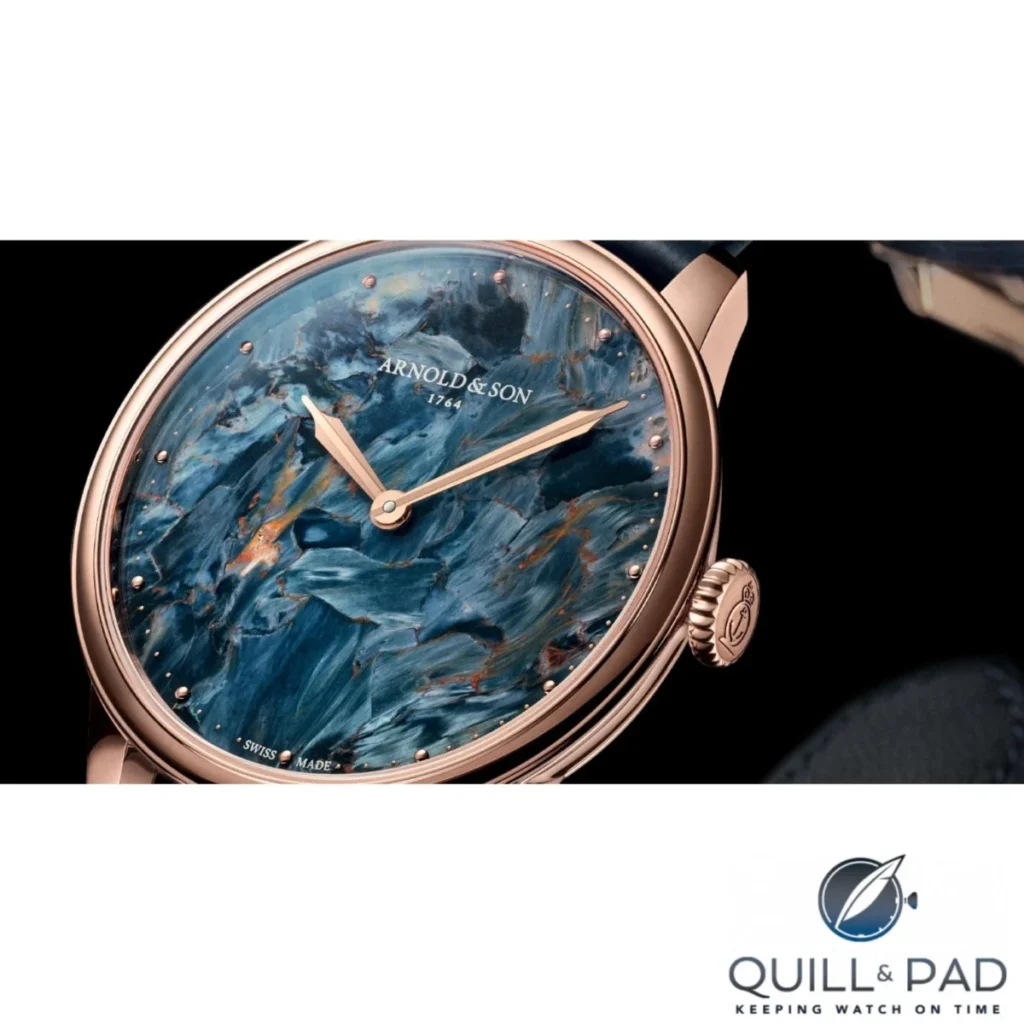
Among the pantheon of rare stone dials, pietersite stands out as exceptionally scarce and visually arresting. This unique type of chalcedony is characterized by its chaotic coloring and structure, featuring an unpredictable fibrous texture that seems to animate the polished stone as light and viewing angles shift. Often described as a dynamic blend of hawk’s eye and tiger’s eye, pietersite’s texture and predominant gray-blue hue evoke images of storm clouds or a turbulent sea, earning it the evocative moniker "Storm Stone."
The allure of pietersite dials lies in their mesmerizing shimmer, a kaleidoscope of hues ranging from light gray to deep, dark gray-blue and reddish-brown tones. The interplay of red, brown, gold, and silver-blue accents creates a sense of depth and movement that appears to live and shimmer beneath the polished surface of the translucent stone. This dynamic visual quality makes each pietersite dial a truly unique natural artwork.
A Timeline of Pietersite in Watchmaking
Pietersite’s journey into watchmaking is a relatively recent chapter. Discovered in Namibia in 1962 by mineral dealer Sidney Pieters, it was not until the 1970s that watches featuring dials made from this exotic mineral reportedly began to appear. Piaget is believed to be among the first, potentially with a reference like the Ref. 9791. The use of pietersite remained infrequent, with notable examples appearing on Audemars Piguet watches, including the Ref. 4647 in the late 1980s and the Royal Oak Ref. 14587 in 1994.
A new source of high-quality pietersite specimens suitable for watch dials emerged in the 2010s, leading to a resurgence of interest. Piaget marked this revival with a unique Black Tie Vintage watch featuring a pietersite dial for the Only Watch 2017 charity auction. Jaquet Droz preceded them by a year with the Grande Seconde Pietersite and later introduced tourbillon models adorned with two distinct types of pietersite: the Grande Seconde Tourbillon Blue Pietersite and the Grande Seconde Tourbillon Red Pietersite.
A New Wave of Pietersite Timepieces
The year 2025 witnessed a significant surge in the popularity of watches featuring pietersite dials, with several brands embracing this captivating mineral. Among the notable releases were:
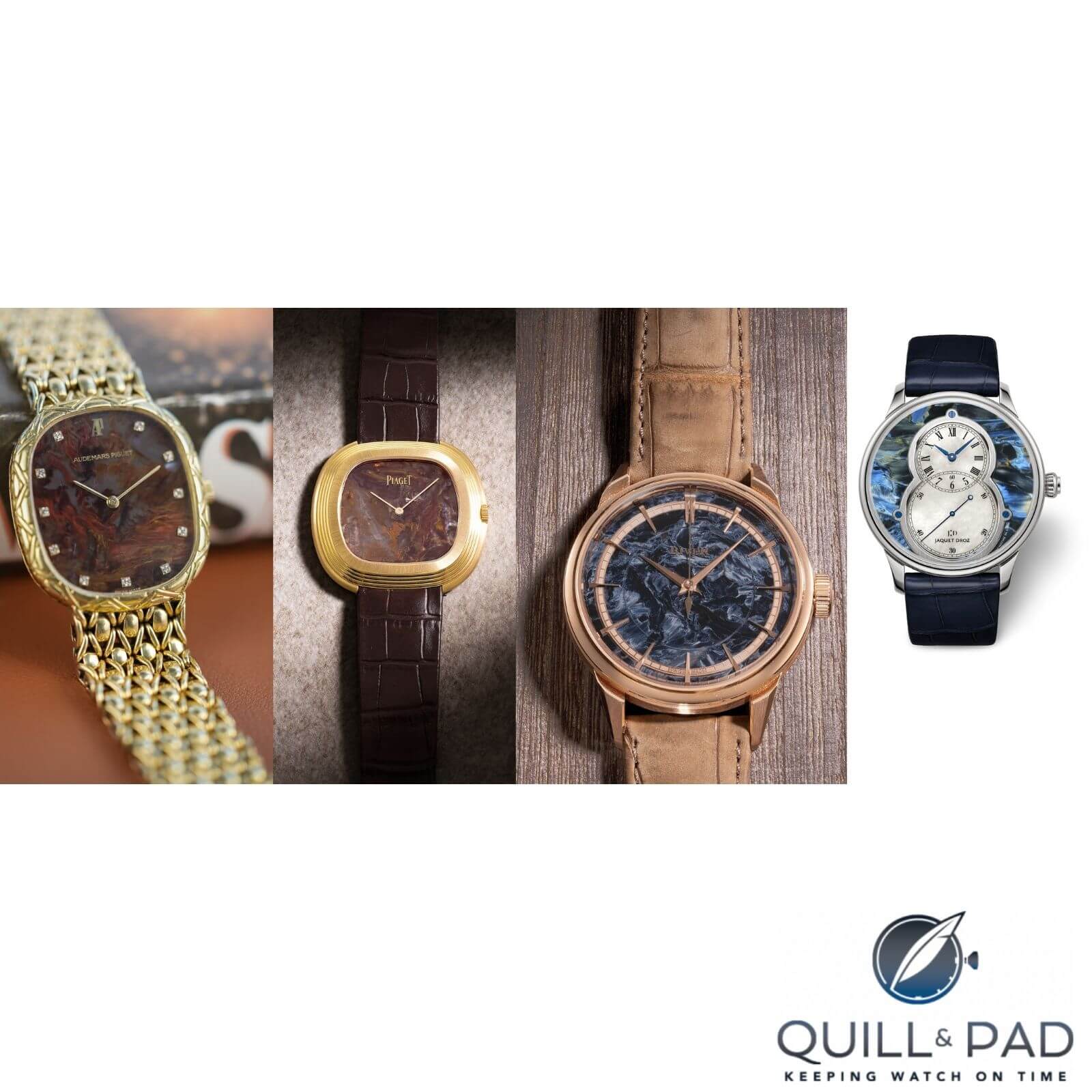
- Biver Automatique Atelier Series Pietersite: A testament to the brand’s commitment to unique materials.
- Baltic Prismic Stone Dial Pietersite: Combining the "eternal" allure of the stone with a retro-inspired "Prismic" dial design reminiscent of 1930s Patek Philippe Calatrava Ref. 96.
- Atelier Wen Millésime 2025 Perception: Showcasing the brand’s contemporary approach to haute horlogerie.
- Sartory-Billard SB04-E Pietersite Platinum: A luxurious interpretation featuring the distinctive stone.
Arnold & Son: A Modern Masterpiece with Pietersite
The narrative of pietersite in watchmaking took a remarkable turn at Watches and Wonders 2026 with the unveiling of two new HM Pietersite models by Arnold & Son. These timepieces, presented in stainless steel and red gold, underscored a growing demand for watches crafted with exotic stone dials. Initially announced with limited production runs of 18 steel and 8 gold pieces, the editions were subsequently increased to 28 steel and 18 gold examples, reflecting an underestimation of market interest. This situation suggests that watches with stone dials are far from mere PR stunts and can indeed drive significant sales.
The Arnold & Son HM Pietersite: Design and Craftsmanship
The Arnold & Son HM Pietersite exemplifies the modern dress watch, designed with a diameter of 39.5 mm, falling comfortably under the 40 mm threshold favored today. Its elegance is a product of its classic round shape, meticulous full polishing, and a remarkably slim profile, measuring a mere 7.82 mm in thickness. This aspect ratio, approaching 5:1, is exceptional for a contemporary mechanical watch, offering superior comfort and wearability. The brand’s expertise in achieving such slender proportions, particularly with stone dials which inherently add thickness, is noteworthy, especially considering their proficiency with thin tourbillons.
A key design element is the domed sapphire crystal. While flat crystals are more common in ultra-thin watches, the domed shape, enhanced by a dual-sided anti-reflective coating, creates an illusion of the crystal disappearing, allowing the pietersite dial to command full attention. The crystal’s curvature, combined with the stone’s natural dynamism, further amplifies the visual spectacle of the dial.
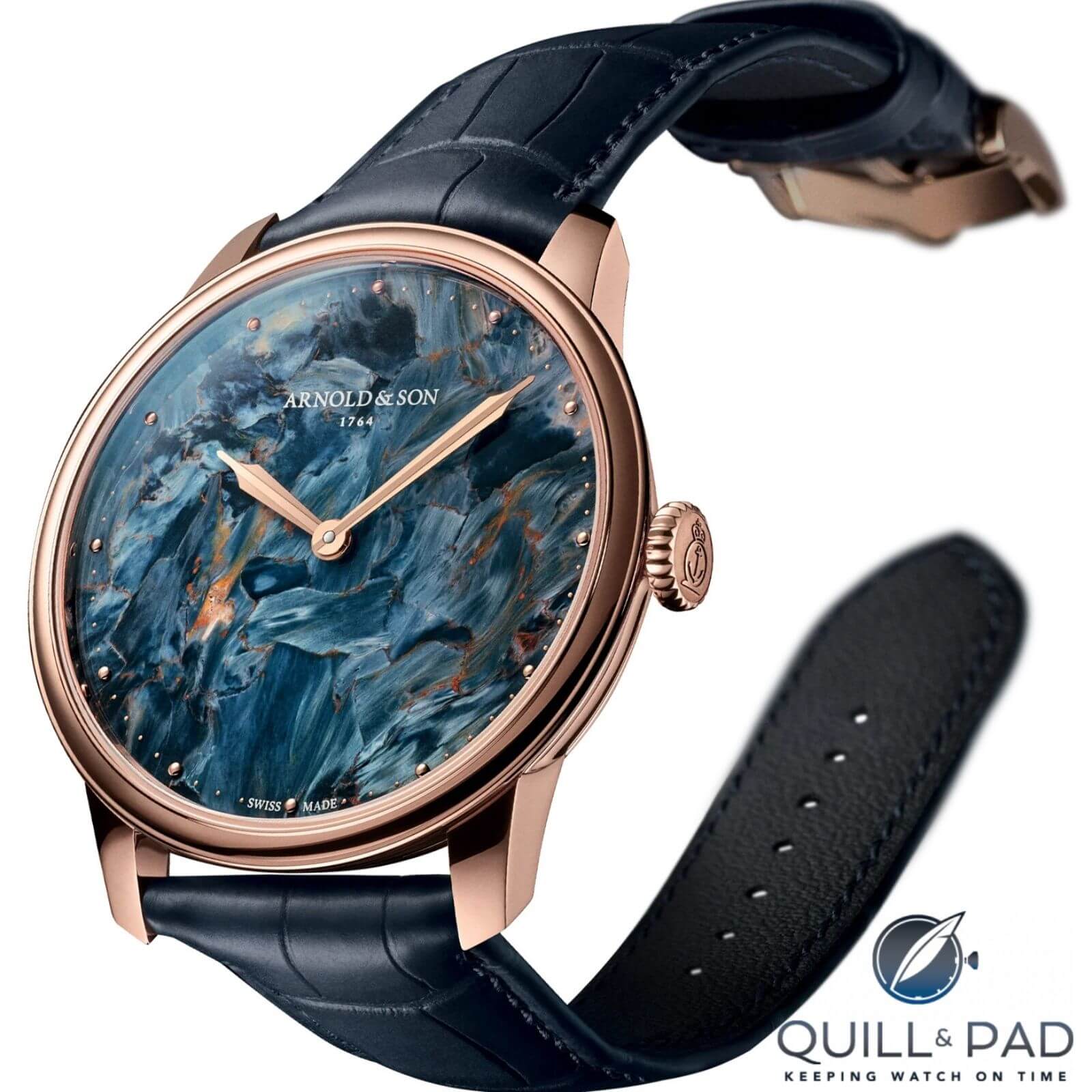
The pietersite itself, sourced from Namibia – the very location of its discovery – features swirling patterns formed by nature in a completely random manner. This inherent randomness ensures that no two dials are alike, offering owners a constantly engaging visual experience, akin to observing a natural phenomenon like fire, flowing water, or drifting clouds.
Minimalist Dial Design and Historical Echoes
To maximize the visual impact of the pietersite dial, Arnold & Son opted for a minimalist aesthetic. The dial is adorned with applied "pearl" indices – small, polished hemispherical metal elements. Larger pearls mark the hours, while smaller ones denote the minutes, a subtle nod to the styling of pocket watches from the early to mid-20th century. These indices serve as refined design accents, adding a touch of technical sophistication without overwhelming the stone’s natural beauty. They are finished to match the case material, a detail that speaks to the brand’s commitment to aesthetic harmony.
The Caliber A&S1001: A Symphony of Engineering and Artistry
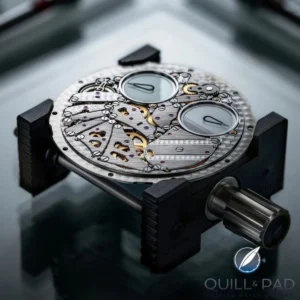
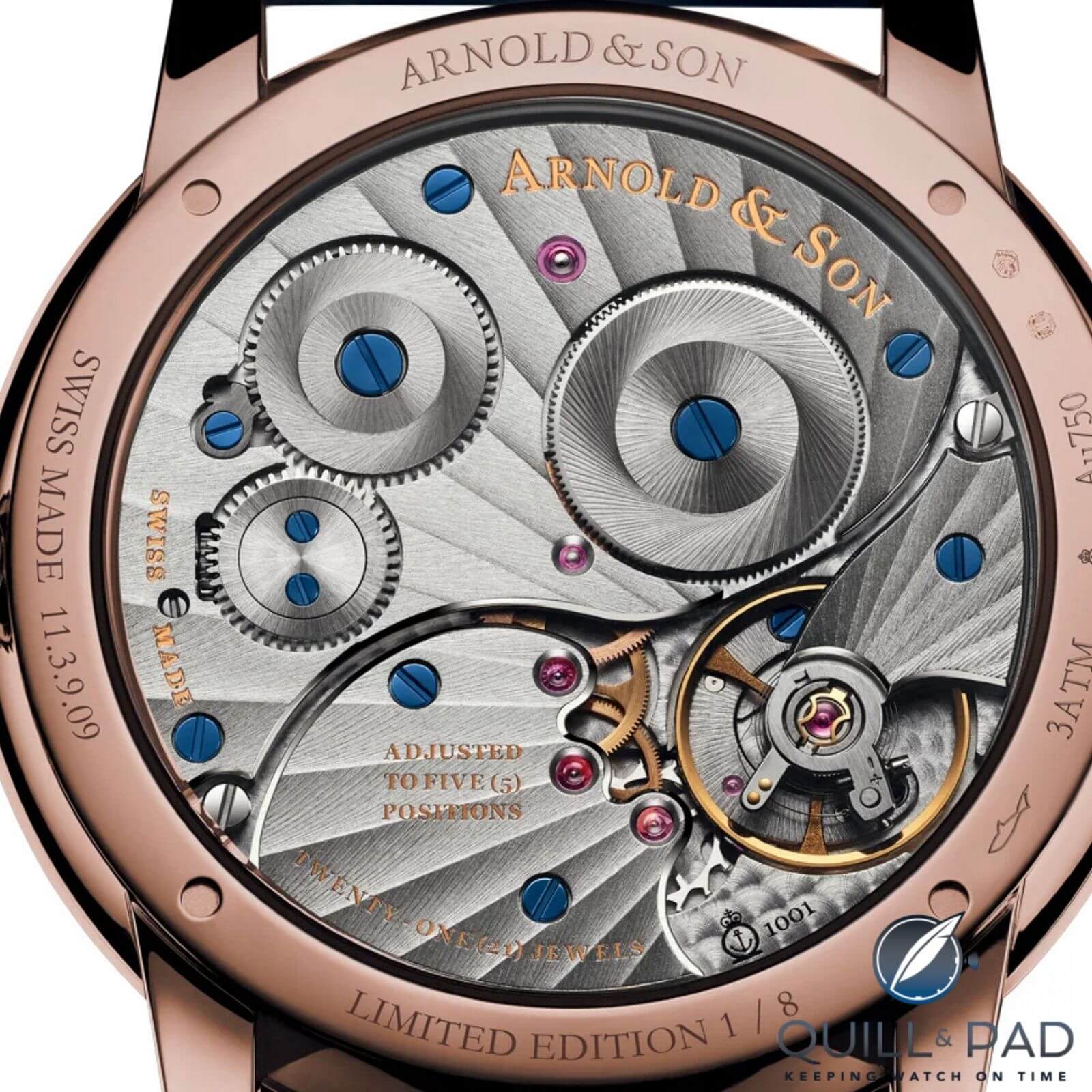
Unlike many vintage stone-dial timepieces, the Arnold & Son HM Pietersite offers a complete horological experience, revealing its mechanical heart through a sapphire caseback. The watch is powered by the exclusive Caliber A&S1001, an ultra-thin, hand-wound movement manufactured by Arnold & Son’s sister company, La Joux-Perret. Measuring a mere 2.7 mm thick, this movement boasts an impressive 90-hour power reserve, achieved through twin barrels – a rare feat for such a slender caliber.
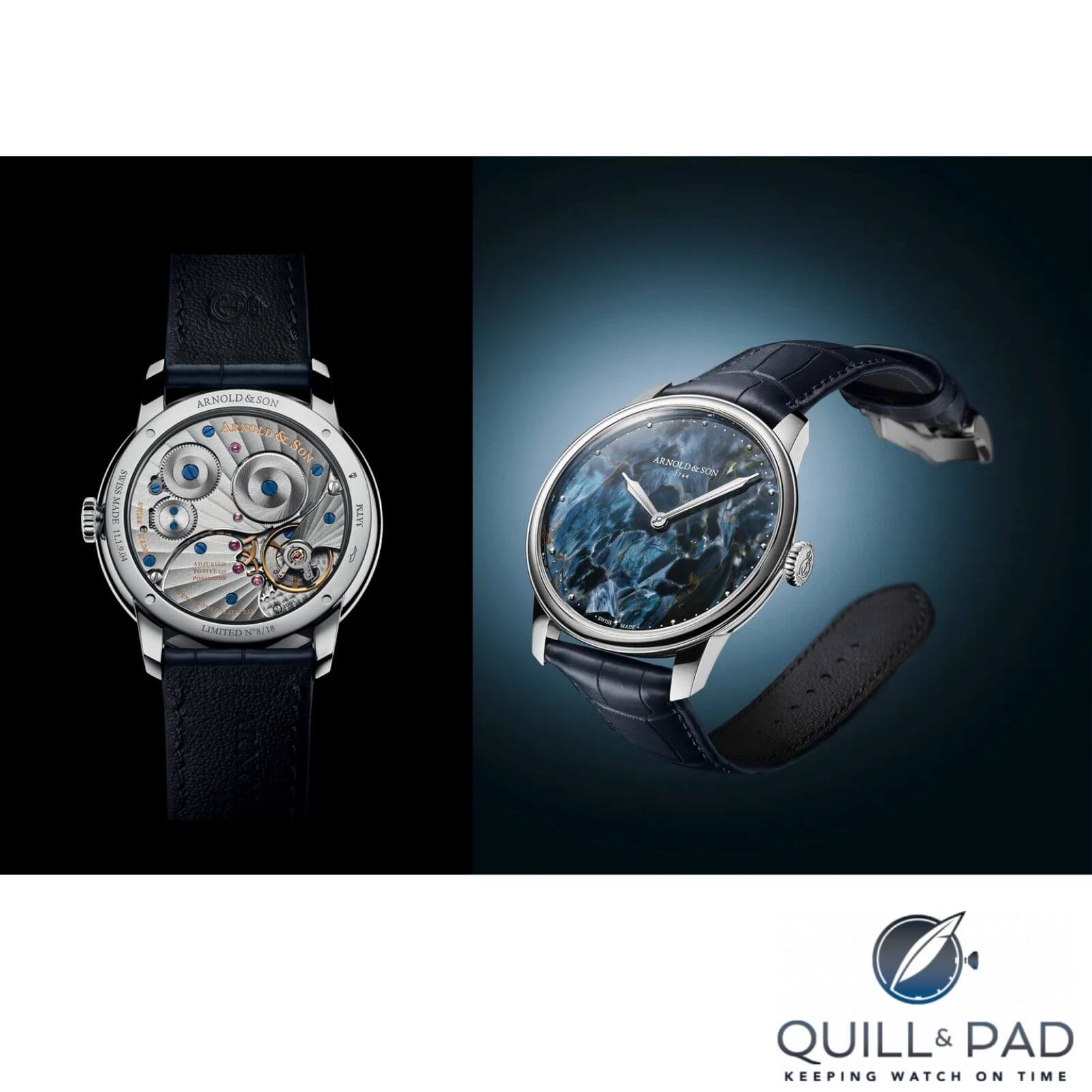
The movement’s substantial 30 mm diameter is a deliberate design choice. It accommodates the twin barrels and provides a commanding presence when viewed from the back. Arnold & Son and La Joux-Perret have masterfully utilized this geometry, crafting bridges with contours reminiscent of fine, slim pocket watch calibers from the early 20th century. The finishing is exquisite, featuring snail-brushed winding wheels, an abundance of blued screws, and gilded engravings. The mainplate is adorned with traditional perlage, while the bridges feature radial Côtes de Genève, radiating from the balance shaft. This blend of traditional finishing techniques and avant-garde design perfectly complements the modern dress watch aesthetic.
Quick Facts: Arnold & Son HM Pietersite
Models: HM Steel Pietersite, Ref. 1LCDS.Z02A.C1506S; HM Red Gold Pietersite, Ref. 1LCDR.Z01A.C1506A.
Maker: Arnold & Son.
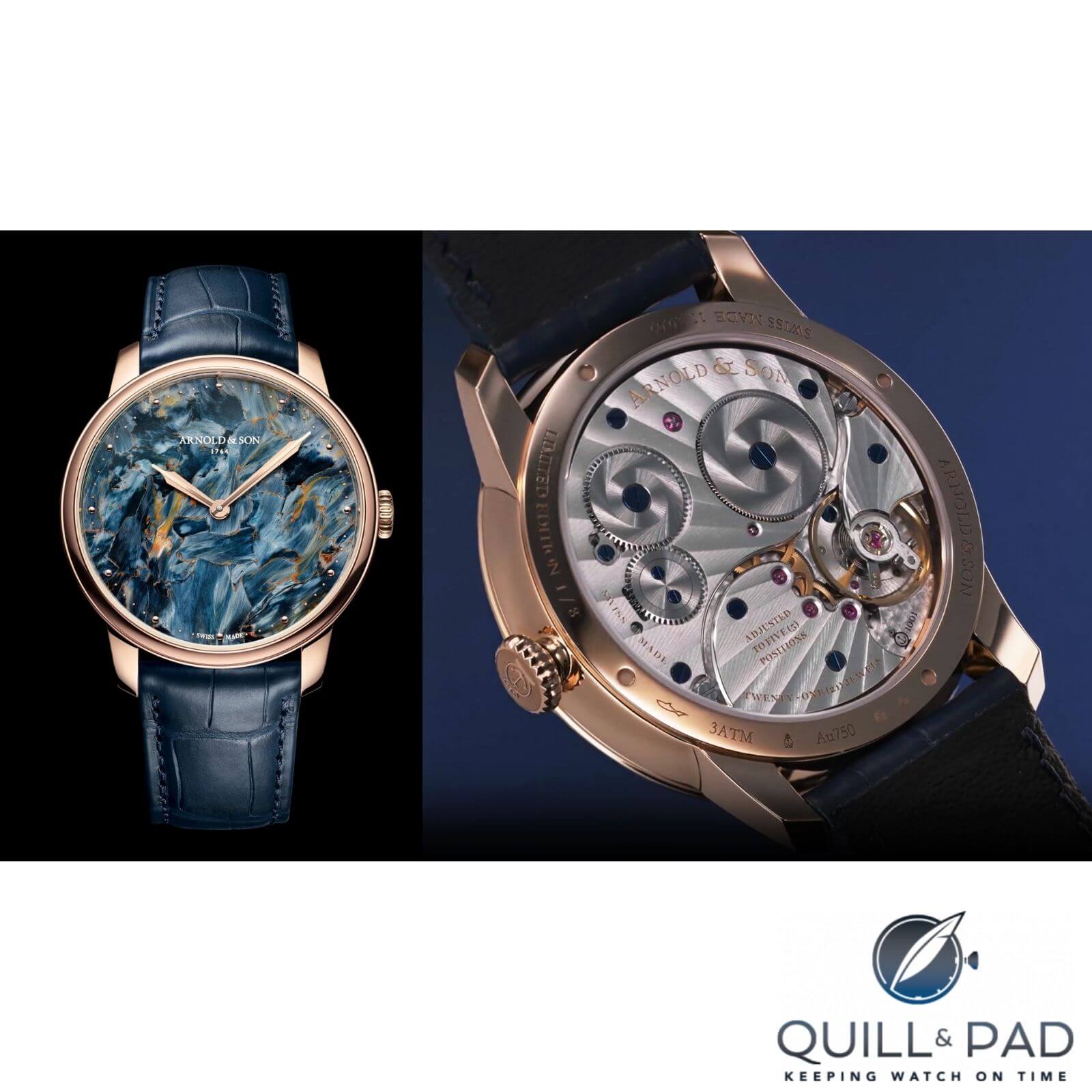
Edition: Limited to 28 pieces in stainless steel and 18 pieces in 18k red gold.
Case:
- Material: Polished stainless steel or 18k red gold.
- Crystal: Domed sapphire crystal with double-sided anti-reflective coating.
- Case back: Sapphire with anti-reflective coating.
- Crown: At 3 o’clock.
- Water resistance: 30 meters.
Case Dimensions:
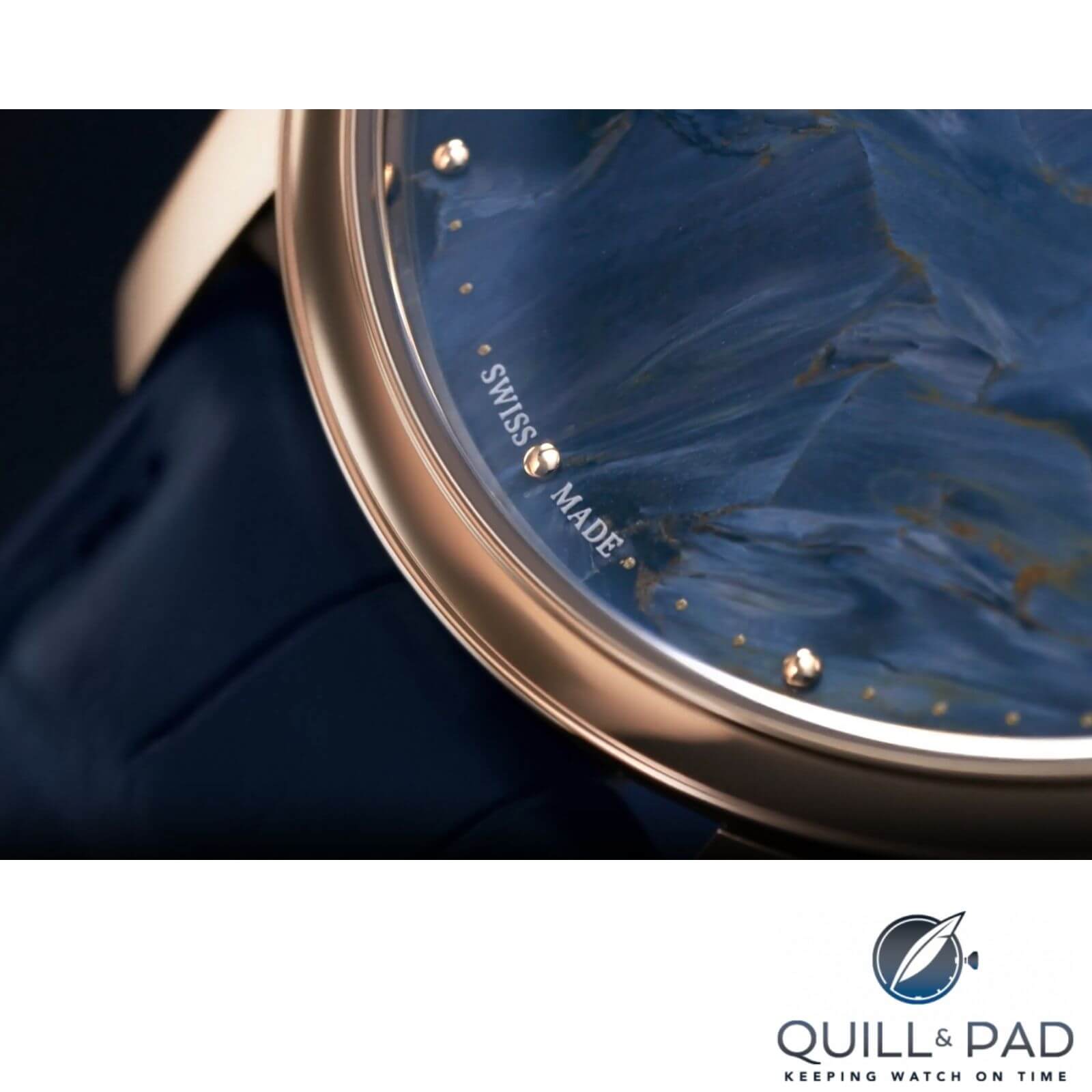
- Diameter: 39.5 mm.
- Thickness: 7.82 mm.
Dial:
- Material: Pietra dura dial crafted from Namibian pietersite.
- Indices: Semi-spherical applied indexes.
- Hands: Polished and brushed plume-style hour and minute hands.
Movement:
- Type: Manufacture hand-wound caliber A&S1001.
- Frequency: 3 Hz (21,600 vph).
- Power reserve: Approximately 90 hours.
- Jewels: 21.
- Diameter: 30 mm.
- Thickness: 2.70 mm.
Strap and Buckle:
- Strap: Dark blue alligator leather.
- Buckle: Pin buckle in stainless steel or 18k red gold, matching the case.
All images, unless otherwise noted, are courtesy of Arnold & Son.