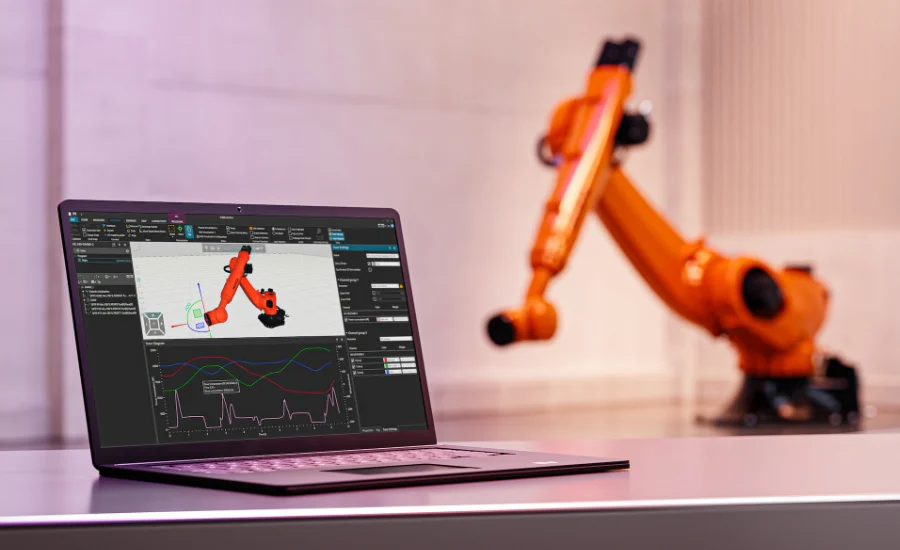
SHELBY TOWNSHIP, Mich. – KUKA Robotics has distinguished itself as the first robotics manufacturer to achieve Security Level 2 certification under the stringent IEC 62443-4-2 cybersecurity standard for its cutting-edge iiQKA.OS2 operating system and KR C5-2 robot controller platform. This significant milestone underscores KUKA’s commitment to embedding robust cybersecurity measures directly into its core automation technologies, addressing a rapidly escalating concern across the global manufacturing landscape.
The Imperative of Industrial Cybersecurity in a Connected World
The certification comes at a critical juncture for the manufacturing sector. As the vision of Industry 4.0 becomes a reality, robots, sensors, software, and other automation equipment are becoming increasingly interconnected, forming intricate networks within plant operations and extending into broader production ecosystems. While this connectivity unlocks unprecedented levels of efficiency, flexibility, and data-driven insights, it simultaneously expands the attack surface for malicious actors, creating new vulnerabilities that can jeopardize production, intellectual property, and even physical safety.
The IEC 62443 series of international cybersecurity standards for industrial automation and control systems (IACS) provides a comprehensive framework for securing these complex environments. Specifically, IEC 62443-4-2 establishes technical security requirements for components used within these systems, acting as a crucial guide for manufacturers designing secure hardware and software. Achieving Security Level 2 (SL2) signifies that a product is engineered to defend against intentional cybersecurity threats posed by attackers possessing limited resources and technical expertise. This foundational level of security is increasingly becoming a non-negotiable requirement for modern industrial deployments.
Understanding IEC 62443: A Pillar of Industrial Security
The IEC 62443 standard is not a single document but a collection of standards, technical reports, and specifications that address cybersecurity for operational technology (OT) systems. Developed through a collaborative effort involving the ISA99 committee (now ISA/IEC 62443) and the International Electrotechnical Commission (IEC), it provides a holistic approach to IACS security, covering everything from risk assessment and security program management to system design and component-level requirements.
The standard is structured into four main categories:
- General: Introduces concepts, models, and terminology.
- Policies and Procedures: Focuses on the security program requirements for asset owners.
- System: Defines security requirements at the system level for integrators and asset owners.
- Components: Specifies technical security requirements for individual products and components, such as controllers, software, and networking devices. This is where IEC 62443-4-2, relevant to KUKA’s achievement, falls.
Within the IEC 62443 framework, security levels (SL) are defined to categorize the strength of defenses required against different types of attackers:
- SL1 (Prevent Unintentional Misuse): Protection against casual or coincidental violations.
- SL2 (Prevent Intentional Misuse): Protection against intentional violation by attackers with limited resources and generic skills. This is the level KUKA has achieved.
- SL3 (Prevent Intentional Misuse with Sophistication): Protection against intentional violation by attackers with moderate resources and IACS-specific skills.
- SL4 (Prevent Intentional Misuse with Extensive Resources): Protection against intentional violation by attackers with extensive resources and advanced IACS-specific skills.
KUKA’s attainment of SL2 is a crucial step, establishing a robust baseline for its robotic platforms. It assures customers that these components incorporate fundamental security features designed to withstand common cyber threats, providing a significant layer of defense in complex industrial environments.
KUKA’s Certified Platforms: iiQKA.OS2 and KR C5-2
The certification applies to two pivotal KUKA offerings: the iiQKA.OS2 operating system and the KR C5-2 robot controller platform.
- iiQKA.OS2: This next-generation operating system represents KUKA’s vision for future robotics. Designed for intuitive use, enhanced connectivity, and openness, iiQKA.OS2 aims to simplify robot programming and integration while enabling seamless interaction within smart factory ecosystems. The integration of SL2 cybersecurity at its core means that the OS is architected from the ground up with security in mind, rather than as an afterthought. This includes secure boot processes, authenticated software updates, robust access control mechanisms, and data integrity checks that are essential for protecting critical automation logic.
- KR C5-2 Robot Controller Platform: As the brain of KUKA robots, the KR C5-2 controller manages all motion, safety, and communication functions. Its certified status ensures that the hardware and embedded software components are hardened against cyber threats. This platform is designed to provide reliable and secure operation, safeguarding the physical actions of the robot and protecting the sensitive data it processes. The KR C5-2’s architecture supports secure communication protocols and offers features that prevent unauthorized access or manipulation of robot programs and configurations.
Ed Volcic, regional technology officer for North America at KUKA Robotics Corp., emphasized the significance of this achievement, stating, “Cybersecurity has become a fundamental requirement for modern manufacturing. With Security Level 2 certification, we now provide customers with automation solutions that not only deliver productivity and performance but also help protect their operations against evolving cyber threats as well.” This statement highlights the dual benefits for manufacturers: maintaining operational excellence while simultaneously fortifying their defenses against a growing array of digital adversaries.

The Evolving Threat Landscape in Industrial Control Systems
The journey towards industrial cybersecurity has been marked by a series of wake-up calls. For decades, operational technology (OT) networks were largely "air-gapped," physically isolated from enterprise IT networks and the internet, providing a false sense of security. The rise of IT/OT convergence, driven by the demands of Industry 4.0 for real-time data and remote accessibility, shattered this illusion.
The infamous Stuxnet worm, discovered in 2010, was a watershed moment, demonstrating the potential for sophisticated cyberattacks to physically damage industrial infrastructure. Since then, the threat landscape has evolved dramatically, with cybercriminals and nation-state actors increasingly targeting OT environments.
- Ransomware: Attacks like WannaCry and NotPetya, while primarily targeting IT, quickly spread to OT networks, causing significant operational disruptions, as seen with companies like Maersk and Merck. The Colonial Pipeline attack in 2021, though targeting IT systems, led to a temporary shutdown of critical infrastructure, showcasing the cascading impact of cyber incidents.
- Supply Chain Attacks: Attackers increasingly compromise software vendors or service providers to gain access to their customers’ systems. The certification of components like KUKA’s helps mitigate risks originating from the supply chain.
- Intellectual Property Theft: Industrial espionage targeting manufacturing processes, designs, and proprietary algorithms remains a persistent threat, especially in high-tech sectors like automotive and aerospace.
- Sabotage and Disruption: Deliberate attacks aimed at disrupting production, causing equipment damage, or compromising safety systems are a constant concern for critical infrastructure and advanced manufacturing.
According to various industry reports, the number of cyberattacks targeting OT environments has been steadily increasing year-over-year. A 2023 report by IBM X-Force, for example, highlighted manufacturing as the most attacked industry for the third consecutive year. The average cost of a data breach in the industrial sector can run into millions of dollars, not including the intangible costs of reputational damage, regulatory fines, and loss of market share. This backdrop underscores why certifications like KUKA’s are not merely a competitive advantage but a fundamental necessity for resilient manufacturing.
Implications for Key Industries and the Broader Market
KUKA’s achievement holds significant implications for its customers and the broader industrial automation market, particularly in sectors that are heavily reliant on connected automation and face stringent cybersecurity requirements. These include:
- Automotive: With highly automated assembly lines, just-in-time logistics, and complex supply chains, the automotive industry is a prime target for cyberattacks. Protecting production robots from tampering or disruption is critical for maintaining output and ensuring vehicle quality and safety.
- Aerospace: This sector demands extremely high levels of precision, reliability, and security due to the critical nature of its products and the sensitive intellectual property involved in aircraft design and manufacturing.
- Electronics: Rapid production cycles, intricate processes, and fierce competition make the electronics industry vulnerable to disruptions and IP theft. Secure automation components help safeguard proprietary manufacturing techniques.
- General Manufacturing: Any manufacturer integrating advanced robotics into their operations will benefit from the enhanced security posture provided by certified platforms, reducing their overall cyber risk profile.
For KUKA customers, the certification translates into several tangible benefits:
- Enhanced Trust and Confidence: Knowing that their automation components meet an internationally recognized cybersecurity standard provides a significant level of assurance.
- Reduced Risk: The built-in security features help mitigate common cyber threats, reducing the likelihood of production downtime, data breaches, and operational disruptions.
- Compliance Support: As regulatory bodies globally introduce stricter cybersecurity mandates (e.g., NIS2 Directive in Europe, CISA guidelines in the U.S.), using certified components can help manufacturers demonstrate due diligence and achieve compliance.
- Future-Proofing Investments: Investing in secure automation solutions helps protect long-term operational viability and adaptability in an increasingly complex threat landscape.
This pioneering move by KUKA is also expected to set a new benchmark for the robotics industry. As the first to achieve this specific SL2 certification, KUKA gains a notable competitive advantage, likely prompting other manufacturers to accelerate their own cybersecurity development and certification efforts. This competitive pressure will ultimately elevate the overall security posture of industrial automation components across the market, benefiting all end-users.
A Chronology of Industrial Cybersecurity Milestones
The evolution of industrial cybersecurity has seen several pivotal moments, leading to the current emphasis on standards like IEC 62443:
- Pre-2000s: OT systems largely isolated, security focused on physical access.
- Early 2000s: Increasing connectivity with IT networks, leading to initial recognition of cyber risks in OT. Development of ISA99 committee (later ISA/IEC 62443) begins.
- 2007: Publication of the first parts of the ISA99/IEC 62443 standard.
- 2010: Discovery of Stuxnet, unequivocally demonstrating the real-world impact of sophisticated cyberattacks on industrial control systems. This event catalyzed global awareness and accelerated standard development.
- Mid-2010s: Increased focus on IT/OT convergence, leading to a broader understanding of the shared responsibilities and distinct challenges in securing both domains. Ransomware attacks begin to impact industrial operations.
- Late 2010s – Present: Escalation of ransomware, supply chain attacks, and nation-state sponsored threats targeting critical infrastructure and manufacturing. Continued refinement and adoption of IEC 62443 as the leading framework for IACS security.
- 2024: KUKA Robotics achieves IEC 62443-4-2 Security Level 2 certification, marking a significant milestone in embedding robust cybersecurity directly into robotic components.
This timeline illustrates a clear progression from nascent awareness to the current imperative of integrating cybersecurity by design. KUKA’s certification is a testament to this maturation, signifying a proactive stance against evolving threats.
Conclusion: Building a Resilient Industrial Future
KUKA Robotics’ achievement of IEC 62443-4-2 Security Level 2 certification for its iiQKA.OS2 operating system and KR C5-2 robot controller platform represents a significant leap forward in securing industrial automation. As the manufacturing sector continues its journey deeper into the interconnected realm of Industry 4.0, the foundational security offered by such certified components will be indispensable. This move not only fortifies KUKA’s offerings against prevalent cyber threats but also sets a crucial precedent for the entire robotics and industrial automation industry. By prioritizing security from the ground up, manufacturers can build more resilient, reliable, and trustworthy production systems, ultimately safeguarding operations, intellectual property, and the future of global manufacturing.