A groundbreaking study led by scientists at The University of Manchester’s National Graphene Institute and collaborators, including the National University of Singapore, has provided compelling evidence that electron-electron interactions are the primary drivers of superconductivity in magic-angle twisted bilayer graphene. The research team successfully demonstrated that by precisely weakening these fundamental interactions, superconductivity in the material could be completely switched off, offering a crucial insight into a phenomenon that has long puzzled physicists. This result, published in Physical Review X, represents a significant stride in narrowing down the possible explanations for unconventional superconductivity and could have profound implications for the quest to achieve superconductivity at higher temperatures.
The Enduring Mystery of Superconductivity
Superconductivity, the remarkable ability of certain materials to conduct electricity with absolutely no resistance and expel magnetic fields (the Meissner effect), has fascinated scientists since its discovery in 1911 by Heike Kamerlingh Onnes. For decades, the conventional understanding of superconductivity was encapsulated by the Bardeen-Cooper-Schrieffer (BCS) theory, proposed in 1957. BCS theory posits that electrons, under very cold conditions, form "Cooper pairs" mediated by vibrations in the material’s atomic lattice, known as phonons. These pairs can then move through the material without encountering resistance.
However, the discovery of high-temperature superconductors in the late 1980s, particularly cuprates, which exhibit superconductivity at temperatures significantly above those explained by BCS theory, revealed the existence of "unconventional" mechanisms. In these materials, phonons alone could not account for the observed critical temperatures, leading researchers to suspect that strong electron-electron interactions play a more dominant role in pairing the electrons. Understanding these unconventional mechanisms is seen as the holy grail for potentially achieving superconductivity at room temperature, which would revolutionize energy transmission, computing, medical imaging, and transportation.
The Rise of Magic-Angle Graphene
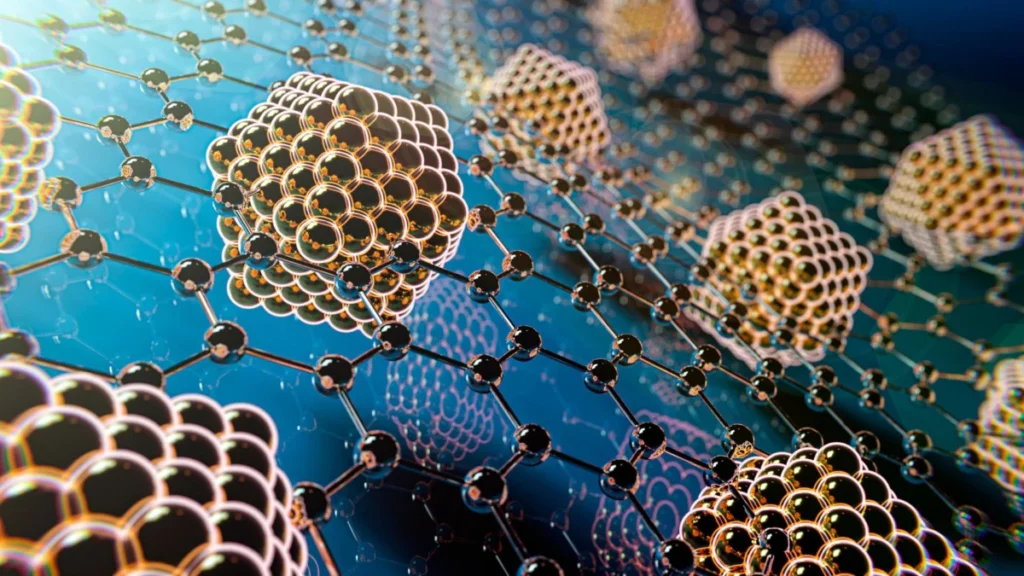
Graphene, a single atomic layer of carbon atoms arranged in a hexagonal lattice, was first isolated at The University of Manchester in 2004 by Professor Sir Andre Geim and Professor Sir Konstantin Novoselov, earning them the Nobel Prize in Physics in 2010. Known for its extraordinary strength, electrical conductivity, and unique electronic properties, graphene quickly became a cornerstone of materials science.
The plot thickened in 2018 when researchers at MIT discovered that stacking two layers of graphene and rotating one layer by a specific "magic angle" of approximately 1.1 degrees led to the emergence of exotic electronic states, including superconductivity and correlated insulating states. This system, dubbed "magic-angle twisted bilayer graphene" (MATBG), quickly became a new frontier in condensed matter physics. At this precise angle, the electronic bands of the graphene layers become remarkably flat, causing electrons to slow down significantly. This "flat band" physics enhances electron-electron interactions, making MATBG an ideal platform for studying strongly correlated electron phenomena, akin to the complex physics observed in high-temperature superconductors.
The initial observations sparked intense debate: was the superconductivity in MATBG conventional (phonon-mediated) or unconventional (electron-interaction-mediated)? While some theoretical models suggested a role for phonons, a growing body of evidence pointed towards electron-electron interactions, given the material’s strongly correlated nature. Resolving this debate was crucial for understanding the fundamental physics of MATBG and its potential relevance to other complex superconducting materials.
A Novel Device to Screen Electron Interactions
To definitively test the competing hypotheses, the Manchester and Singapore-based team developed a sophisticated new device that allowed for unprecedented control over electron interactions. Their innovative approach involved constructing a structure comprising two twisted graphene bilayers, meticulously separated by an incredibly small distance—less than a nanometre. Crucially, these two bilayers were designed to remain electronically separate, allowing one bilayer to function as a tunable "screening layer" for the other.
The principle behind this experimental setup leveraged the Coulomb interaction, the fundamental electrostatic force between charged particles like electrons. By increasing the carrier density (the number of charge carriers) in the neighbouring graphene bilayer, the researchers were able to progressively weaken, or "screen," the Coulomb interactions between electrons in the magic-angle graphene layer where superconductivity was being observed. This ingenious method allowed them to directly probe the impact of varying electron interaction strength on the material’s superconducting properties.
The precision of the device was paramount. The extremely minute separation between the two graphene systems, as short as 0.3 nanometres, was critical. This ultra-small distance enabled the screening effect to be far more pronounced and effective than in any previous experiments, providing a clear and unambiguous test of the role of electron interactions.
The Unambiguous Results: Superconductivity Suppressed
The results of the experiment were stark and unequivocal. As the researchers systematically increased the screening effect by enhancing carrier density in the adjacent bilayer, they observed a progressive weakening of superconductivity in the magic-angle graphene. Ultimately, when the electron interactions were sufficiently weakened, the superconductivity was completely suppressed. This direct correlation between weakened electron interactions and the disappearance of superconductivity provided robust experimental evidence supporting the hypothesis that these interactions are central to the phenomenon in MATBG.
Professor Alexey Berdyugin from the National University of Singapore, a corresponding author on the study, encapsulated the significance of the findings: "When we switched on the screening, we were surprised to find that superconductivity was completely suppressed. This provides clear experimental evidence that superconductivity in this system originates from strong electron-electron interactions."
The impact of screening was not limited to superconductivity alone. The team also observed a similar effect on another important electronic state present in magic-angle graphene: the correlated insulating state. This state, also believed to arise from strong electron correlations, disappeared under the same conditions that suppressed superconductivity. Furthermore, quantitative measurements revealed that the superconducting critical temperature – the maximum temperature at which the material exhibits superconductivity – could fall by more than an order of magnitude, underscoring the dramatic influence of electron interactions.
Ruling Out Conventional Mechanisms
The findings also played a crucial role in ruling out a simple conventional explanation for superconductivity in MATBG. If the superconductivity were primarily driven by phonons, as in BCS theory, weakening the Coulomb interactions between electrons would not be expected to have such a profound negative effect. In fact, under certain phonon-mediated scenarios, weakening electron-electron repulsion might even slightly strengthen phonon-mediated pairing. The experiment, however, produced the opposite result: screening electron interactions weakened and ultimately eliminated superconductivity, thereby providing strong support for an unconventional, electron-interaction-driven mechanism for electron pairing.
While the experiment does not identify one definitive pairing mechanism among the various theories involving collective electronic interactions, it significantly narrows the field of possibilities. It strongly points towards the necessity of robust electron-electron interactions for the formation of Cooper pairs in magic-angle graphene, guiding future theoretical and experimental investigations.
Broader Impact and Implications for High-Temperature Superconductivity
The implications of this research extend far beyond magic-angle graphene itself. The ability to precisely tune and study the role of electron interactions in a controllable platform like MATBG offers a powerful new tool for understanding other materials where strong electron interactions are believed to be critical, most notably the enigmatic high-temperature superconductors. Materials like cuprates, which superconduct at temperatures up to 138 Kelvin (well above liquid nitrogen boiling point), continue to defy a complete theoretical explanation. MATBG, with its tunable electron interactions and similar emergent phenomena, could serve as a valuable analogue system to unravel the complex physics underlying these high-Tc superconductors.
Professor Sir Andre Geim, a pioneer in graphene research, underscored the long-term vision: "Personally, I am interested only in high-temperature superconductivity – preferably at room temperature or above. This study was done at temperatures so low that even helium turns liquid. But unless we understand what makes superconductivity work, we are unlikely ever to reach room-temperature superconductivity, let alone make this remarkable phenomenon commercially useful. Our study takes only a tiny step – but still a step – in that direction, helping to nail down the mechanism of exotic superconductivity in graphene. Rome was not built in a day."
Indeed, current observations of superconductivity in magic-angle graphene occur at extremely low temperatures, typically a few Kelvin (just above absolute zero). While this is far from the dream of room-temperature superconductivity, each step in understanding the underlying mechanisms is crucial. By confirming the central role of electron interactions, this research provides a clearer roadmap for designing and synthesizing new materials that might leverage these interactions more effectively at higher temperatures.
The potential technological applications of room-temperature superconductivity are vast and transformative. Imagine electricity grids with zero energy loss, vastly more powerful and efficient supercomputers, magnetic levitation trains operating without friction, and ultra-sensitive medical imaging devices. While these remain aspirational goals, fundamental discoveries like this one in magic-angle graphene are essential pieces of the puzzle. They guide researchers toward developing theoretical models and experimental techniques that could eventually unlock the secrets to engineering materials with desired superconducting properties. The journey is long, but this latest discovery represents a significant waypoint on the path toward harnessing one of nature’s most extraordinary phenomena for the benefit of humankind.