The shape of the universe is not something we often think about. But a new study, published by a team of researchers, suggests it could be fundamentally asymmetric or lopsided, meaning not the same in every direction. This groundbreaking research, which scrutinizes one of the most significant disagreements in cosmological data—known as the cosmic dipole anomaly—poses a serious challenge to the most widely accepted description of the universe, the standard cosmological model, also known as the Lambda-CDM model.
The Unsettling Anomaly: Challenging Cosmic Uniformity
For decades, the bedrock of modern cosmology has been the assumption of a universe that is both isotropic (looks the same in all directions) and homogeneous (uniform when averaged on large scales). These principles are enshrined within the "standard cosmological model," or Lambda-CDM model, which elegantly describes the dynamics and structure of the entire cosmos from its earliest moments to the present day. However, a recent publication delves into the implications of the cosmic dipole anomaly, concluding that this particular discrepancy is not merely a minor inconsistency but a fundamental crack in the edifice of our current cosmological understanding. The study argues that the observed variations in the universe’s matter distribution do not align with the standard interpretation of the cosmic microwave background (CMB) dipole, suggesting an inherent asymmetry that cannot be easily reconciled with a perfectly uniform universe.
Foundations of the Cosmos: The Standard Model Under Scrutiny
The standard cosmological model, often referred to as Lambda-CDM (Lambda for dark energy and CDM for cold dark matter), is a remarkably successful framework. It posits that the universe is comprised of approximately 68% dark energy, 27% dark matter, and only about 5% ordinary matter. This model, built upon Albert Einstein’s theory of general relativity, fundamentally relies on the "FLRW description" (Friedmann–Lemaître–Robertson–Walker metric). This metric describes a universe that is spatially homogeneous and isotropic, meaning it appears the same from any point and in any direction when observed on sufficiently large scales (typically beyond 100 megaparsecs). This simplification vastly streamlines the complex equations of general relativity, making it possible to model the universe’s evolution, from the Big Bang to its current accelerating expansion.
The assumption of isotropy is particularly crucial. It implies that there is no preferred direction in the universe, and observers everywhere would perceive the same large-scale cosmic structure. This principle is not merely a convenience; it is deeply intertwined with the "cosmological principle," which states that the universe is homogeneous and isotropic on large scales. The apparent uniformity of the cosmic microwave background (CMB), the faint afterglow of the Big Bang, has historically provided the strongest observational evidence supporting this principle.
A Relic’s Tale: Unpacking the Cosmic Microwave Background (CMB)
To understand the cosmic dipole anomaly, one must first appreciate the significance of the cosmic microwave background (CMB). Discovered accidentally by Arno Penzias and Robert Wilson in 1964, the CMB is the oldest light in the universe, a faint echo of the Big Bang itself. This relic radiation, permeating all of space, represents the moment approximately 380,000 years after the Big Bang when the universe cooled sufficiently for protons and electrons to combine into neutral hydrogen atoms, making the universe transparent to light for the first time.
The CMB is remarkably uniform across the sky, varying by only about one part in a hundred thousand. This incredible uniformity was a monumental confirmation of the Big Bang theory and a powerful testament to the early universe’s smoothness. However, upon closer inspection, tiny temperature fluctuations (anisotropies) were detected, which are understood to be the seeds from which all structures in the universe – galaxies, clusters, and superclusters – eventually grew.
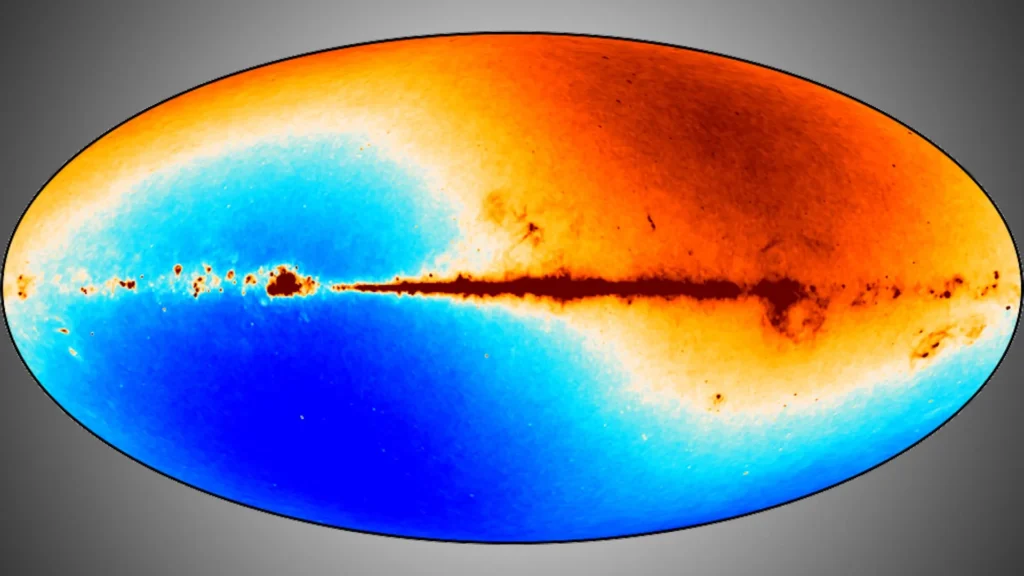
One of the most significant of these variations is the CMB dipole anisotropy. This is the largest temperature difference in the CMB, where one side of the sky appears slightly hotter and the opposite side slightly cooler, by approximately one part in a thousand (around 3.35 millikelvins). For decades, this CMB dipole has been almost universally interpreted as a Doppler shift caused by our local motion – specifically, the motion of our Solar System and the Milky Way galaxy relative to the CMB rest frame. As our galaxy moves through the cosmos, we are effectively "speeding into" the CMB on one side, making it appear blueshifted and hotter, and "receding from" it on the opposite side, making it appear redshifted and cooler. Under this interpretation, the CMB dipole is not an intrinsic property of the universe itself, but merely a local observational effect, and thus poses no challenge to the Lambda-CDM model’s assumption of an intrinsically isotropic universe.
The Ellis-Baldwin Test: A Critical Benchmark
The standard interpretation of the CMB dipole, however, rests on a crucial assumption: if our motion is indeed the sole cause of this anisotropy, then we should observe a corresponding dipole in the distribution of all other distant astronomical sources. This means that if we are moving towards a "hotter" region of the CMB, we should also observe a greater density of distant galaxies and quasars in that direction, and a lower density in the opposite, "cooler" direction.
This critical test was formally proposed in 1984 by cosmologists George Ellis and John Baldwin. Known as the Ellis-Baldwin test, it posits that the dipole anisotropy observed in the sky distribution of distant astronomical sources, such as radio galaxies and quasars, should be consistent with the CMB dipole if the FLRW assumption of a symmetrical universe is correct. The sources chosen for this test must be extremely distant to avoid contamination from local clustering effects, which could create a spurious "clustering dipole" unrelated to our bulk flow.
For many years, the necessary comprehensive and precise observational data catalogues of sufficiently distant sources were unavailable to perform the Ellis-Baldwin test with adequate statistical rigor. However, advances in astronomical surveys and detector technology have recently provided the wealth of data needed to execute this challenging experiment.
The Verdict: A Universe Failing Expectations
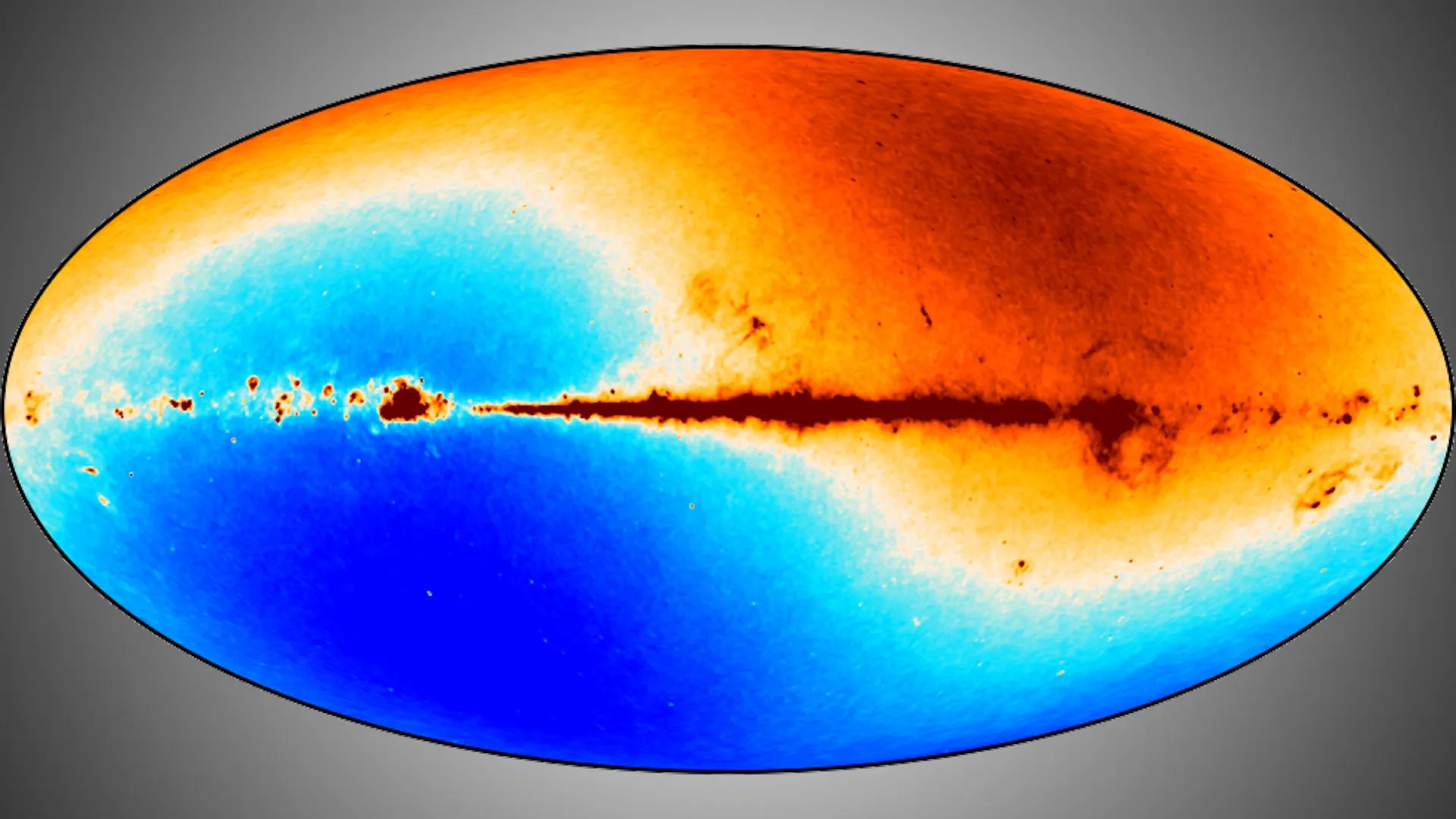
The results of the Ellis-Baldwin test, as detailed in the new paper, deliver a striking blow to the conventional understanding of cosmic isotropy. The universe, it appears, fails the Ellis-Baldwin test. The observed variation in the distribution of distant matter, contrary to expectations, does not match that predicted by the CMB dipole under the standard interpretation. In essence, the direction and magnitude of the dipole observed in the distribution of remote galaxies and quasars do not align with the direction and magnitude of the CMB dipole.
This discord is particularly alarming because it has been consistently observed across different types of astronomical data and using various observational techniques. For instance, the same anomalous result has been obtained with terrestrial radio telescopes observing at radio wavelengths and with satellites observing at mid-infrared wavelengths. The consistency across vastly different instruments and spectral bands—each with its own potential sources of error—lends significant credibility to the findings, making it difficult to dismiss as an instrumental artifact or a statistical fluke.
The cosmic dipole anomaly has thus established itself as a major, fundamental challenge to the standard cosmological model and, more profoundly, to the underlying FLRW description itself. If the universe is not isotropic on large scales, then the very mathematical framework used to describe its evolution must be re-evaluated.
Beyond the Dipole: Other Cosmic Tensions
The cosmic dipole anomaly is not an isolated problem; it joins a growing list of "tensions" or disagreements in cosmological data that pose challenges to the idea of a perfectly uniform universe. Perhaps the most widely debated of these is the "Hubble tension," named after Edwin Hubble, who in 1929 first established that the universe is expanding.
The Hubble tension emerged in the 2000s and has intensified with more recent, precise data from instruments like the Hubble Space Telescope and the Gaia satellite. It describes a significant discrepancy between measurements of the universe’s expansion rate (the Hubble constant) derived from its early days (e.g., from CMB observations) and those measured from the relatively nearby (more recent) universe using standard candles like Type Ia supernovae. Typically, early universe measurements predict a Hubble constant value around 67-68 km/s/Mpc, while late universe measurements yield values closer to 73-74 km/s/Mpc. This approximately 9% difference, far exceeding observational uncertainties, suggests that either there is unknown new physics at play, or our standard cosmological model is incomplete or incorrect.
While the Hubble tension has garnered considerably more attention within the astronomical community, the cosmic dipole anomaly, as highlighted by the new research, is arguably even more fundamental. The Hubble tension concerns the rate of expansion, whereas the cosmic dipole anomaly questions the very geometry and symmetry of the universe itself. If the universe is not isotropic, then the entire FLRW framework, and by extension, the Lambda-CDM model, would require a drastic overhaul.
Scientific Community’s Response and Broader Implications
The fact that the cosmic dipole anomaly has received less attention than the Hubble tension is noteworthy. The paper suggests this might be because there is "no easy way to patch up this problem." Resolving the Hubble tension might require tweaking parameters within the Lambda-CDM model or introducing minor extensions, such as new forms of dark energy or exotic particles. However, confronting the cosmic dipole anomaly demands a more radical rethinking. It implies abandoning not just the Lambda-CDM model but potentially the FLRW description itself, necessitating a return to fundamental principles to construct a new cosmological model from scratch.
This is a prospect that, while scientifically exhilarating, is also daunting. For decades, the FLRW metric has provided an incredibly successful and simplifying framework. To discard it would mean embracing a significantly more complex, anisotropic universe, which would dramatically complicate cosmological calculations and interpretations. Such a paradigm shift would have profound implications for fundamental physics, potentially requiring revisions to our understanding of gravity on cosmic scales or the very nature of space-time.
The scientific community, while traditionally cautious, is increasingly aware of these accumulating tensions. Leading cosmologists, even those not directly involved in this specific study, acknowledge the mounting evidence challenging the perfect uniformity of the cosmos. While initial reactions might involve seeking alternative explanations or systematic errors, the consistency of the Ellis-Baldwin test results across multiple datasets makes such dismissals increasingly difficult. The collective sentiment points towards a recognition that the standard model, while remarkably successful, may be reaching its limits in explaining all observed phenomena.
The Road Ahead: New Data and Revolutionary Insights
The future of cosmology promises an avalanche of new data that will be instrumental in either confirming or refuting these anomalies. Upcoming observatories and missions are poised to provide unprecedented precision and scope:
- Euclid: The European Space Agency’s Euclid mission, launched in 2023, is designed to map the large-scale structure of the universe, studying the distribution of galaxies and dark matter over a vast cosmic volume. Its data will be critical for scrutinizing homogeneity and isotropy with unparalleled detail.
- SPHEREx (Spectro-Photometer for the History of the Universe, Epoch of Reionization, and Ices Explorer): NASA’s SPHEREx mission, planned for launch in 2024, will conduct an all-sky survey in near-infrared light, creating a spectral map of the entire sky. This will provide an even more detailed census of galaxies and their distances, further enabling tests of cosmic isotropy.
- Vera C. Rubin Observatory (formerly LSST): Located in Chile, this ground-based observatory will conduct the Legacy Survey of Space and Time (LSST), observing billions of galaxies over a decade. Its deep and wide-field surveys will offer an immense dataset for studying large-scale structure and potential anisotropies.
- Square Kilometre Array (SKA): This international project, currently under construction in Australia and South Africa, will be the world’s largest radio telescope. It will be capable of mapping the universe in unprecedented detail, probing the distribution of neutral hydrogen out to vast distances, and providing another powerful avenue for testing the cosmic dipole anomaly.
Beyond new observations, the paper hints at the transformative potential of advanced computational techniques, particularly a subset of artificial intelligence (AI) known as machine learning. The sheer volume and complexity of the data expected from these new observatories will necessitate sophisticated analytical tools. Machine learning algorithms, with their ability to identify subtle patterns and correlations in vast datasets, could prove invaluable in sifting through cosmic noise to uncover definitive evidence of large-scale anisotropies or to help construct entirely new cosmological models that better fit the accumulating observational evidence.
The impact of such a paradigm shift would be truly enormous on fundamental physics and on our understanding of the universe. If the universe is indeed fundamentally lopsided, it would challenge the very notion of a "cosmic center" (even if not a spatial one) and necessitate a profound re-evaluation of the physical laws governing the cosmos on its grandest scales. This could lead to revolutionary insights into dark energy, dark matter, and perhaps even the early moments of the Big Bang itself, opening entirely new avenues for theoretical exploration and experimental verification. The journey to unravel the true shape of the universe has just become infinitely more intriguing.