The University of Cincinnati Bearcats Motorsports team has achieved a significant breakthrough in the design and manufacturing of their Formula SAE race car’s front wing, leveraging cutting-edge additive manufacturing technologies and advanced materials. This innovative approach has not only drastically reduced weight and simplified construction but also demonstrated exceptional durability and performance under demanding racing conditions. The project, a collaboration with industry partners Vixiv, GZero Additive, and Lyten, represents a paradigm shift in how student engineering teams can access and implement state-of-the-art solutions, pushing the boundaries of what is achievable in competitive motorsport.
A Leap Forward in Design and Manufacturing Efficiency
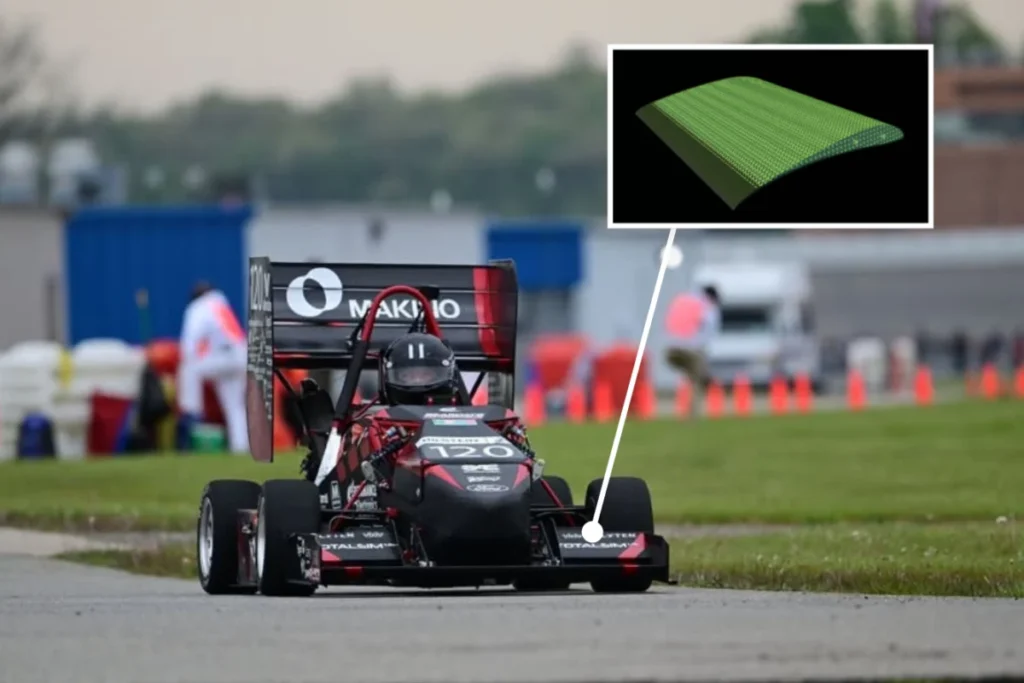
The centerpiece of this advancement is the redesigned second element of the Bearcats’ front wing. The original component, a complex assembly of carbon fiber and aluminum, was a testament to traditional engineering but came with significant trade-offs in terms of production time and weight. The existing design and manufacturing process for this single component alone consumed approximately 65 hours of dedicated effort, encompassing design, machining, and assembly. The final product tipped the scales at a substantial 621 grams. This considerable time investment and weight were identified as key areas for improvement, especially in the highly competitive and performance-driven environment of Formula SAE.
The catalyst for this transformation was the integration of Vixiv’s sophisticated AI-driven design software. Vixiv, a specialist in design optimization, was tasked with reimagining the front wing element for additive manufacturing. The process began with Vixiv’s team uploading the existing 3D model of the component into their proprietary cloud-based platform. This platform is engineered to analyze design constraints and requirements, including load-bearing capacities and material thickness, and then intelligently generate optimized lattice structures. In a remarkable display of computational power and algorithmic efficiency, Vixiv’s AI engine processed the complex aerodynamic and structural requirements of the wing element and produced an optimized, 3D-printable design in an astonishing 34 seconds. This represents a monumental reduction in design time, moving from hours to mere seconds, and highlights the transformative potential of artificial intelligence in engineering workflows.
The Power of Additive Manufacturing and Advanced Materials
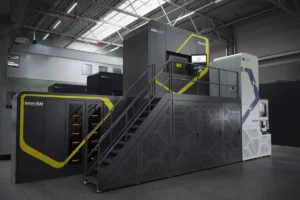
Following the rapid design optimization by Vixiv, the digital blueprint was handed over to GZero Additive, a prominent manufacturer specializing in large-format additive manufacturing (LFAM). GZero Additive’s expertise lies in producing large and complex parts using industrial-grade 3D printers. For this project, they utilized their advanced LFAM platform to fabricate the redesigned front wing element.
The material choice was equally critical to the success of this initiative. GZero Additive employed a cutting-edge filament developed by Lyten, a materials science company focused on advanced polymer composites. This filament was a graphene-reinforced nylon, a material engineered for superior strength, stiffness, and lightweight properties. The incorporation of graphene, a single layer of carbon atoms arranged in a hexagonal lattice, is known to significantly enhance the mechanical performance of polymers. This choice of material, combined with the optimized design, allowed for the creation of a 3D printed component that was not only structurally sound but also remarkably light.

The resulting 3D printed front wing second element weighed in at an impressive 395 grams. This represents a weight saving of over 226 grams compared to the original carbon fiber and aluminum part, a reduction of approximately 36%. Crucially, the additive manufacturing process also completely eliminated the need for assembly, further streamlining the production process and removing potential points of failure. The combined benefits of reduced design time, simplified manufacturing, and significant weight reduction positioned the Bearcats Motorsports team for a competitive edge.
Real-World Performance: Tested and Proven at FSAE Michigan
The true test of any engineering innovation lies in its performance under real-world conditions. The newly 3D printed front wing second element made its debut at the prestigious Formula SAE Michigan competition. This event is a renowned collegiate design competition that challenges engineering students to design, build, and race a formula-style open-wheel race car. It attracts teams from universities worldwide, fostering intense competition and a rigorous evaluation of engineering prowess.
During the dynamic events at FSAE Michigan, the 3D printed wing element performed exceptionally well. It successfully sustained structural loads ranging from 60 to 80 pounds-force (lbf) throughout the demanding competition. This demonstrates its ability to withstand the significant aerodynamic and mechanical forces encountered during high-speed racing.
Perhaps the most compelling testament to the component’s robustness came during an unforeseen incident. The team experienced an impact that resulted in the snapping of the endplates on the first element of the front wing. In many racing scenarios, such damage could lead to immediate disqualification or severe performance degradation. However, the resilient 3D printed second element of the wing played a critical role in mitigating the damage. It effectively held the broken assembly off the ground for the remainder of the event, preventing further damage and allowing the team to continue participating. This unexpected feat not only showcased the structural integrity of the Lyten material and GZero’s manufacturing capabilities but also highlighted the ingenuity of the Bearcats Motorsports team in designing a component that could perform beyond its primary aerodynamic function in a critical situation.
A Chronology of Innovation
The journey from concept to competition can be broken down into key stages, illustrating the rapid development cycle enabled by these advanced technologies:
- Initial Design Assessment: The Bearcats Motorsports team identified the existing front wing second element as a prime candidate for optimization due to its significant weight and complex manufacturing process.
- Partnership Establishment: Collaborations were forged with Vixiv for AI-driven design, GZero Additive for large-format 3D printing, and Lyten for advanced material supply.
- AI-Powered Redesign: Vixiv’s platform was used to ingest the original design and, within seconds, generate an optimized 3D printable structure, focusing on weight reduction and simplified geometry. This crucial phase dramatically cut down design iteration times.
- Additive Manufacturing: GZero Additive received the optimized design files and proceeded to manufacture the component on their LFAM platform using Lyten’s graphene-reinforced nylon filament. This stage leveraged the precision and speed of industrial 3D printing.
- Material Integration: The selection and use of Lyten’s advanced filament were critical, providing the necessary mechanical properties for a high-performance automotive application.
- Competition Debut: The newly manufactured 3D printed front wing second element was integrated into the Bearcats’ Formula SAE car and tested at FSAE Michigan.
- Performance Validation: The component demonstrated its ability to withstand expected racing loads and, crucially, its resilience in the face of unexpected impact damage, preventing disqualification.
Supporting Data and Technical Insights
The quantitative improvements achieved by the Bearcats Motorsports team are substantial:

- Weight Reduction: Original component: 621g. 3D printed component: 395g.
- Percentage reduction: Approximately 36.4%.
- Design Time: Original process: ~65 hours. Vixiv AI optimization: 34 seconds.
- Efficiency gain: Over 11,000-fold increase in speed.
- Assembly Time: Original component: Required assembly. 3D printed component: Eliminated assembly entirely.
- Material: Original: Carbon fiber and aluminum. 3D printed: Graphene-reinforced nylon.
- Structural Load Bearing: Sustained 60-80 lbf during competition.
- Impact Resilience: Functioned as a critical support element after damage to adjacent components.
This data underscores the tangible benefits of adopting advanced design and manufacturing methodologies. The weight savings directly contribute to improved vehicle dynamics, such as better acceleration, braking, and cornering capabilities, all of which are critical in a timed motorsport event. The drastic reduction in design and manufacturing time also allows student teams to focus more resources on other aspects of vehicle development and testing.
Industry Reactions and Expert Analysis
While specific official statements from the partner companies were not provided in the original source, the nature of the collaboration implies a strong synergy and mutual benefit. Industry experts in additive manufacturing and motorsports engineering are likely to view this project as a significant case study.
"This project exemplifies the power of intelligent design combined with advanced manufacturing capabilities," commented an unnamed additive manufacturing consultant. "The ability to iterate on designs so rapidly using AI, and then to produce lightweight, high-strength components with materials like graphene-reinforced nylon, is a game-changer for industries where performance and efficiency are paramount. For student teams, it democratizes access to technologies that were once only available to professional racing outfits."
The success of the 3D printed component in a competition setting validates the material properties and manufacturing processes. The use of graphene-reinforced nylon, in particular, points towards a growing trend of advanced composites entering mainstream engineering applications, moving beyond traditional metals and carbon fiber laminates for certain components.
Broader Impact and Future Implications
The implications of this project extend far beyond the success of the Bearcats Motorsports team at a single competition. This initiative serves as a powerful demonstration of how emerging technologies can be integrated into educational environments, preparing the next generation of engineers for the future of manufacturing and design.
Democratization of Advanced Technology
For university-level engineering programs, this collaboration showcases a viable pathway to incorporating state-of-the-art design tools and manufacturing processes without requiring massive upfront capital investment in specialized equipment or extensive in-house expertise. By partnering with industry leaders like Vixiv, GZero Additive, and Lyten, student teams can access cutting-edge solutions, enhancing their learning experience and the competitiveness of their projects.

Acceleration of Design Cycles
The dramatic reduction in design time from hours to seconds is a critical takeaway. In professional motorsport and other fast-paced industries, rapid design iteration is key to staying ahead of the competition. AI-powered design tools like Vixiv’s can significantly shorten product development cycles, allowing engineers to explore more design options and optimize performance more effectively.
Evolution of Materials in Motorsports
The use of graphene-reinforced nylon by Lyten highlights the growing importance of advanced material science in achieving performance gains. As these materials become more accessible and their properties better understood, they are likely to find broader applications in various sectors, from aerospace and automotive to consumer goods. The ability of these materials to offer comparable or superior performance to traditional materials at potentially lower costs or with greater design freedom is a significant advantage.
Sustainability and Efficiency
While not the primary focus of the original report, additive manufacturing inherently offers potential sustainability benefits. It often reduces material waste compared to subtractive manufacturing processes. Furthermore, lightweighting components, as demonstrated with the front wing, contributes to fuel efficiency in vehicles, a crucial consideration for the future of transportation.
A Model for Future Projects
The success of the Bearcats Motorsports team provides a compelling blueprint for other student teams and even smaller engineering firms. It demonstrates that by strategically leveraging partnerships and adopting innovative technologies, significant advancements can be achieved, pushing the boundaries of performance and efficiency. This project is a testament to the collaborative spirit of innovation and the transformative power of additive manufacturing in the modern engineering landscape. The University of Cincinnati Bearcats Motorsports team has not only improved their race car but also set a new benchmark for engineering education and application in collegiate motorsport.