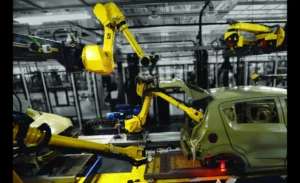
Jaguar Land Rover (JLR) has announced a significant workforce reduction, impacting approximately 4,000 employees, which represents roughly 12% of its 34,000-strong UK workforce. This substantial cut comes as the luxury automaker seeks to streamline its operations and bolster its financial standing amidst a challenging automotive landscape. Notably, the British government has indicated that no bailout package will be forthcoming for the company.
JLR’s Strategic Restructuring and Job Cuts
The decision to reduce its global workforce by around 4,000 roles over the next two years is a cornerstone of JLR’s broader transformation strategy. The company aims to achieve substantial cost savings, reportedly targeting 1.7 billion pounds, according to reports from The Guardian. The job cuts will primarily affect salaried and management staff, including those in marketing and research and development (R&D) departments. Crucially, hourly factory workers are said to be safe from these immediate reductions.
JLR intends to initiate the process through voluntary departures, a measure designed to mitigate the impact on its workforce and potentially foster a more cooperative transition. The union representing JLR employees has been actively engaged in discussions, advocating for retraining and redeployment opportunities for affected staff, aiming to secure alternative roles within the company or assist in their transition to new employment.
P.B. Balaji, the CEO of JLR, has framed these actions as a necessary "transformation" for the company’s future. He stated, "We will reduce our global workforce by around 4,000 roles over the next two years. We are committed to supporting everyone with care, fairness and respect." While the company emphasizes a supportive approach, the reality for 4,000 individuals is a search for new career paths.

Government’s Stance: No Bailout for JLR
Any hopes JLR may have harbored for a government bailout have been definitively dashed. Jonathan Reynolds, the UK’s Secretary of State for Business and Trade, has explicitly ruled out providing financial assistance to the company. Speaking to the BBC, Reynolds acknowledged the situation, stating, "If this is about making sure over time that the workforce is right to make the business as competitive as possible, that’s the conversation we need to have."
The Secretary of State is expected to convene meetings with representatives from JLR and the relevant unions to discuss strategies for mitigating the impact of these job losses and to explore ways to support the company’s long-term competitiveness. The government’s firm stance highlights a broader policy direction of encouraging market-driven solutions and fiscal responsibility among large corporations.
Context and Chronology of JLR’s Challenges
The recent announcement of job cuts does not occur in a vacuum but follows a series of significant challenges and strategic shifts for Jaguar Land Rover throughout 2026. The automotive industry, in general, has been navigating turbulent waters, marked by supply chain disruptions, the ongoing transition to electric vehicles (EVs), and evolving consumer demands.
Key events and developments in 2026 impacting JLR include:

- Discontinuation of the Land Rover Discovery Sport: This move signals a strategic re-evaluation of JLR’s model lineup, likely focusing resources on more profitable or future-oriented vehicles.
- Loss of North American CEO: The departure of a key executive from a crucial market indicates potential internal restructuring or strategic realignments within JLR’s leadership.
- Shift of Defender Production to the United States: Driven by escalating tariffs, JLR made the strategic decision to relocate Defender production to the U.S. This move aims to circumvent punitive import duties and potentially tap into the American market more effectively, though it also signifies a significant operational shift and potential impact on UK manufacturing.
- Stagnation in Jaguar’s Product Portfolio: The Jaguar brand, in particular, has faced criticism for a lack of new product introductions, leading to a perceived decline in market appeal and sales momentum.
The Road Ahead: Electrification and the Type 1 Sedan
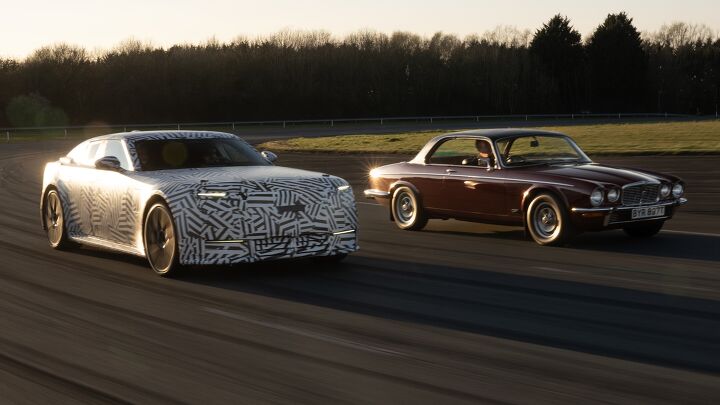
The future trajectory of JLR, especially the Jaguar brand, hinges on its forthcoming product launches. The company is pinning significant hopes on the unveiling of the Type 1 electric luxury sedan on October 6th in New York. This new model is expected to be a high-end offering, with an estimated price tag of around $130,000.
The Type 1 is envisioned as a technologically advanced vehicle, reportedly ditching traditional physical buttons and quilted leather in favor of innovative camera-based systems and an unconventional rear window design. This bold approach to interior design and technology underscores JLR’s ambition to position Jaguar as a leader in luxury electric mobility.
However, with Land Rover currently shouldering the bulk of JLR’s revenue and Jaguar facing a period of limited offerings until the Type 1’s introduction, the pressure to maintain profitability rests heavily on the success of Land Rover’s SUV lineup. The SUV segment remains a lucrative market, and JLR’s established reputation in this area provides a crucial revenue stream.
Analysis of Implications
The decision by JLR to cut jobs and the government’s refusal to offer a bailout carry significant implications for the company, its workforce, and the broader UK automotive sector.
- Financial Resilience and Competitiveness: The 1.7 billion-pound cost-saving target suggests JLR is undertaking a serious effort to improve its financial health. These cuts are likely intended to reduce operating expenses, increase efficiency, and free up capital for investment in future technologies, particularly electrification. The success of this transformation will be critical for JLR’s long-term competitiveness against a backdrop of rapid industry evolution.
- Impact on Workforce and Local Economies: The loss of 4,000 jobs will undoubtedly have a considerable impact on the affected individuals and their families. It also poses challenges for local economies in areas where JLR has significant manufacturing presence. The union’s focus on retraining and redeployment is crucial in mitigating the social and economic fallout.
- Government’s Fiscal Prudence: The government’s stance reflects a commitment to fiscal responsibility and a reluctance to engage in open-ended corporate bailouts. This approach signals a preference for market-based solutions and a focus on supporting businesses that demonstrate a clear path to sustainability and profitability.
- Strategic Pivot for Jaguar: The upcoming launch of the Type 1 electric sedan is a pivotal moment for the Jaguar brand. Its success or failure will heavily influence the future direction and viability of Jaguar as a distinct luxury marque within the JLR portfolio. The high price point and innovative design suggest a strategy of targeting a niche, high-net-worth customer base.
- Broader Automotive Industry Trends: JLR’s situation is symptomatic of broader challenges facing the global automotive industry. The transition to EVs, coupled with economic uncertainties and supply chain volatility, is forcing many established automakers to re-evaluate their strategies, product portfolios, and workforce. The industry is in a period of significant flux, demanding agility and bold decisions from all players.
In conclusion, Jaguar Land Rover’s decision to implement substantial job cuts, coupled with the UK government’s refusal to provide financial aid, marks a critical juncture for the luxury automaker. The company’s future success will depend on the effectiveness of its transformation strategy, the reception of its new electric models, and its ability to navigate the increasingly complex and competitive global automotive market. The coming months will be crucial in determining whether JLR can emerge from this period of restructuring as a leaner, more competitive, and sustainable entity.