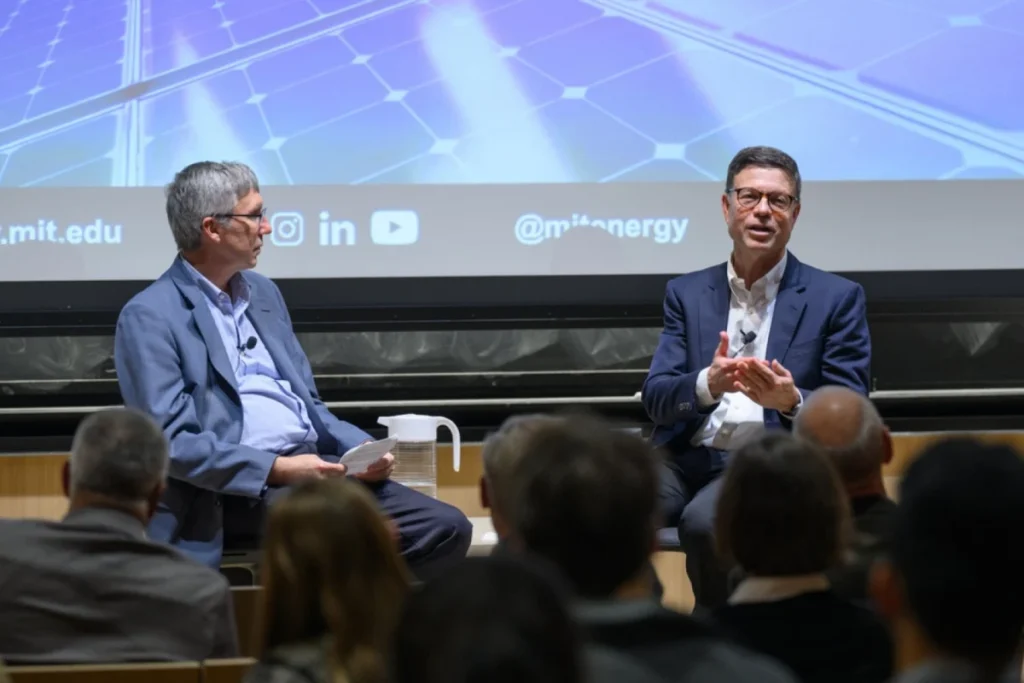
General Motors is at the vanguard of a transformative wave in battery technology, poised to revolutionize both personal mobility and the broader energy landscape. This pivotal role was underscored by Kurt Kelty, vice president of battery, propulsion, and sustainability at General Motors (GM), during his address at the prestigious MIT Energy Initiative (MITEI) Fall Colloquium. Kelty detailed GM’s strategic approach to accelerating the transition of cutting-edge battery innovations from laboratory concepts to widespread commercial application, thereby fueling a new era of American battery development. The colloquium, a key component of the MITEI Presents: Advancing the Energy Transition speaker series, provided a platform for Kelty to articulate GM’s vision and its concrete strategies for achieving these ambitious goals.
GM’s Three Pillars of Battery Development
At the core of Kelty’s team’s mission at GM are three fundamental objectives, each critical to unlocking the full potential of electric vehicles (EVs) and sustainable energy solutions.
Firstly, driving down costs remains paramount. Kelty articulated this challenge directly to the audience: "How do you drive down the cost? It’s the batteries. The batteries make up about 30 percent of the cost of the vehicle." This statistic highlights the significant financial barrier that battery expense presents to widespread EV adoption. By making EVs more affordable, GM aims to democratize access to cleaner transportation, accelerating the shift away from fossil fuel-dependent vehicles.
Secondly, enhancing battery performance is a continuous pursuit. This encompasses improvements in crucial metrics such as charging speed and energy density. Faster charging times address a key consumer concern, reducing range anxiety and making EV ownership more convenient and practical for daily use. Increased energy density translates to longer driving ranges on a single charge, further mitigating range concerns and expanding the appeal of EVs to a wider demographic.
Thirdly, localizing the supply chain is a strategic imperative for national security and economic resilience. Kelty emphasized this point, stating, "We’ve got to build up our resilience and our independence here in North America, so we’re not relying on materials coming from China." This focus on domestic sourcing and manufacturing not only reduces geopolitical risks but also promises to create high-skilled jobs and foster a robust domestic battery industry. The current global reliance on specific regions for critical battery materials has exposed vulnerabilities, making supply chain diversification a top priority for leading automotive manufacturers and governments alike.
Virtualization and AI: Accelerating R&D Cycles
To expedite progress in these critical areas, GM is making substantial investments in virtualization technologies. This strategic shift is dramatically reducing the time and resources required for research and development. Kelty explained that by leveraging artificial intelligence (AI) and advanced modeling techniques, his team can now conduct complex simulations and analyses that previously took months to complete, compressing these timelines to mere days.
"If you want to modify… the nickel content ever so slightly, we can very quickly model: ‘OK, how’s that going to affect the energy density? The safety? How’s that going to affect the charge capability?’" Kelty elaborated. This capability allows for rapid iteration and optimization at multiple levels, from the individual cell to the battery pack and ultimately the entire vehicle. This accelerated development cycle is crucial for staying ahead in the rapidly evolving battery technology landscape and bringing superior products to market faster. The ability to precisely predict the impact of material modifications on performance and safety before physical prototyping represents a significant leap forward in efficiency and innovation.
The Breakthrough: Lithium Manganese-Rich (LMR) Batteries
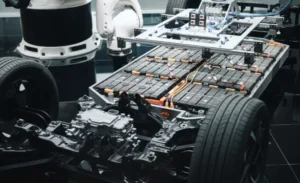
In pursuit of solutions that simultaneously address affordability, accessibility, and commercial viability, Kelty revealed a significant breakthrough: Lithium Manganese-Rich (LMR) batteries. Historically, the industry’s approach to cost reduction involved decreasing cobalt content and increasing nickel. While these high-nickel batteries have enabled impressive ranges, making them prevalent in many vehicles across the United States, LMR technology offers a more compelling proposition.
LMR batteries take this cost-optimization strategy a step further by reducing nickel content while significantly increasing the proportion of manganese. Manganese is a more abundant and less expensive element than nickel. This shift not only drives down the overall cost of battery production but, crucially, does so while maintaining a competitive driving range comparable to high-nickel chemistries.
This development positions LMR batteries as a strong contender against Lithium Iron Phosphate (LFP) batteries, which are widely adopted in China due to their low cost, extended cycle life, and high safety standards. Kelty described the LMR battery’s advantage as a dual benefit: "The cost is comparable to LFP with a range that is closer to high-nickel. That’s what’s really a breakthrough." This combination of affordability and performance addresses two of the most significant hurdles to widespread EV adoption, making them a truly game-changing innovation.
Overcoming Commercialization Hurdles
While the underlying chemistry of LMR batteries has been known for some time, widespread adoption has been hampered by significant commercialization challenges. "People knew about it, but they didn’t know how to commercialize it. They didn’t know how to make it work in an EV," Kelty explained. GM’s achievement lies in cracking this code, developing the manufacturing processes and integration strategies necessary to bring LMR batteries to market effectively. As a result, GM is set to be the first automaker to feature these advanced batteries in its EVs, with a planned rollout starting in 2028. This strategic move positions GM to capture a significant first-mover advantage in a rapidly growing market segment.
Beyond Mobility: Vehicle-to-Grid and Grid-Scale Storage
Kelty’s outlook extends beyond the immediate applications in electric vehicles, encompassing exciting future possibilities enabled by advanced battery technology. He expressed particular enthusiasm for the potential of vehicle-to-grid (V2G) technologies. V2G systems utilize bidirectional chargers, allowing EVs not only to draw power from the grid but also to feed stored energy back into it.
This capability transforms EVs into mobile energy assets. "Customers can charge their vehicles at night when the electricity prices are really low, and they can discharge it during the day when electricity rates are really high," Kelty illustrated. This dynamic energy management can lead to significant cost savings for consumers and contribute to grid stability by helping to balance supply and demand. During peak demand periods, EVs can discharge power, alleviating strain on the grid and potentially reducing the need for costly infrastructure upgrades or reliance on fossil fuel peaker plants.
Furthermore, GM is actively exploring ways to leverage its battery expertise in the realm of grid-scale energy storage. This expansion into stationary power solutions is driven by a burgeoning market, particularly fueled by the exponential growth of data centers. These facilities have immense and often fluctuating power demands, making robust and reliable energy storage solutions critical. By applying their battery knowledge to grid-scale applications, GM can contribute to a more stable and resilient energy infrastructure, supporting the increasing integration of renewable energy sources like solar and wind, which are inherently intermittent.
A Resurgent American Battery Industry
Looking ahead, Kelty conveyed a strong sense of optimism regarding the future of battery manufacturing and the EV sector in the United States. He believes the nation possesses the foundational elements for success: "We’ve got the technology here to make it happen. We’ve always had the innovation here. Now, we’re getting more and more of the manufacturing. We’re getting that all together."
This confluence of technological prowess, innovative spirit, and a growing manufacturing base creates a fertile ground for the development of a substantial domestic battery industry. Kelty concluded with a hopeful vision: "We’ve got just tremendous opportunity here that I’m hopeful we’re going to be able to take advantage of and really build a massive battery industry here." This sentiment reflects a broader national ambition to reclaim leadership in critical manufacturing sectors and secure a sustainable economic future.
The MITEI Presents: Advancing the Energy Transition speaker series plays a crucial role in fostering this dialogue, bringing together leading experts and innovators who are shaping the future of energy. These events highlight the scientific, technological, and policy solutions essential for navigating the complex transition to a cleaner and more sustainable energy system. For those interested in further engagement with these critical discussions, MITEI’s Events page provides comprehensive information on upcoming and past events.
The Broader Context of the Energy Transition
The insights shared by Kurt Kelty at the MITEI Fall Colloquium are part of a larger, global effort to decarbonize economies and combat climate change. The transition to electric vehicles is a cornerstone of this strategy, with governments and industries worldwide setting ambitious targets for EV adoption and the phase-out of internal combustion engine vehicles. Battery technology is the linchpin of this transition, and advancements in cost, performance, and sustainability are crucial for its success.
The emphasis on domestic supply chains by GM echoes similar initiatives in the United States and other major economies. Concerns about supply chain disruptions, geopolitical instability, and the environmental and social impacts of raw material extraction have spurred a concerted push for localized production of batteries and their components. This includes not only manufacturing but also the sourcing of critical minerals like lithium, cobalt, nickel, and manganese. Investments in battery recycling technologies are also gaining traction, aiming to create a circular economy for battery materials and reduce reliance on virgin resources.
The development of LMR batteries, as highlighted by Kelty, represents a significant step in making EVs more accessible to a broader segment of the population. Historically, the higher cost of batteries has been a major deterrent. By offering a chemistry that balances performance with affordability, GM is poised to accelerate EV adoption and contribute to a more equitable transition to sustainable transportation. The projected market entry in 2028 suggests a carefully considered development and validation process, ensuring that these new batteries meet rigorous safety and performance standards before widespread deployment.
Furthermore, the exploration of V2G technology and grid-scale storage underscores the evolving role of EVs in the energy ecosystem. Beyond simply being modes of transportation, these vehicles can become integral components of a smart grid, enhancing its reliability and efficiency. This integration is particularly important as grids increasingly incorporate renewable energy sources, which require sophisticated management to ensure a consistent power supply. The potential for EV owners to generate income by providing grid services could further incentivize EV adoption and accelerate the transition to a cleaner energy future.
The commitment of major automotive players like General Motors to innovation and sustainability is vital for driving progress in the energy transition. The collaboration between industry leaders, research institutions like MIT, and policymakers will be essential in overcoming the remaining challenges and realizing the full potential of battery technology for a cleaner, more prosperous, and more secure future. The ongoing dialogue and technological advancements discussed at events like the MITEI Fall Colloquium are critical for charting this path forward and ensuring that the benefits of this transformation are shared widely.