LEXINGTON, MA – After an exhaustive and unprecedented seven-year modification period, the Gulfstream IV (G-IV) aircraft, operated and maintained by MIT Lincoln Laboratory’s Tactical Defense Systems Group and Flight Test Facility (FTF), has successfully returned home from Canada. This monumental undertaking has transformed a standard business jet into a highly specialized airborne research platform, poised to support the U.S. Air Force’s critical Air Vehicle Survivability Evaluation (AVSE) program for decades to come. The project represents the largest and most complex airborne test bed modernization in the history of MIT Lincoln Laboratory, underscoring a profound commitment to national defense and technological innovation.
The extensive overhaul was coordinated by the Tactical Defense Systems Group, with crucial assistance from the FTF, in collaboration with the Toronto-based aerospace firm, Field Aviation. The return of the aircraft marks the culmination of years of dedicated effort, meticulous engineering, and resilient project management, overcoming significant global challenges, including the COVID-19 pandemic.
"Our team made hundreds of trips to Canada and dedicated countless weekends to keep the project moving along," stated David Culbertson, FTF manager, reflecting on the immense scale of the endeavor. "Seeing the aircraft finally return to the laboratory invoked a sense of pride and satisfaction that is truly immeasurable, knowing the critical role this platform will play in safeguarding our nation’s air and space assets."
A Legacy of Airborne Testing for National Security
For over four decades, the Tactical Defense Systems Group at MIT Lincoln Laboratory has been at the forefront of supporting the AVSE program. This vital initiative is dedicated to assessing the vulnerability of U.S. aircraft and space assets against a spectrum of current and emerging threats, ensuring their resilience in contested environments. The program leverages advanced airborne test beds to simulate real-world scenarios, gather crucial data, and inform the development of next-generation defensive systems.
Since the early 1990s, the group had relied on a modified Gulfstream II (G-II) for its airborne testing requirements. While the G-II served admirably for many years, by 2013, the specter of parts availability issues began to loom large, threatening the long-term operational viability of the platform. Recognizing the imperative to maintain continuous, cutting-edge testing capabilities, the laboratory initiated a series of comprehensive studies to identify a suitable replacement.
These studies meticulously evaluated various aircraft options, ultimately concluding that the Gulfstream IV was the optimal choice. The G-IV offered superior performance capabilities, including a higher service ceiling (up to 45,000 feet compared to the G-II’s approximate 43,000 feet) and a significantly longer range (over 4,000 nautical miles, a substantial improvement over the G-II’s roughly 2,600 nautical miles). These attributes promised extended mission durations and greater operational flexibility. Furthermore, the G-IV presented a more favorable long-term sustainability outlook and a competitive cost profile, making it a strategic investment for future research. The laboratory officially acquired the G-IV in 2015, setting the stage for its remarkable transformation.
Strategic Decisions and the Certification Challenge
A pivotal decision made early in the planning phase was to consolidate all anticipated modifications into a single, comprehensive overhaul rather than adopting a phased approach. This strategy, while demanding in its initial execution, was designed to circumvent the necessity of repeatedly re-entering the costly and arduous Federal Aviation Administration (FAA) certification process over the G-IV’s projected operational lifespan of 25 to 30 years. FAA certification is a rigorous, multi-stage process that involves extensive engineering analysis, detailed documentation, physical inspections, and flight testing to ensure an aircraft meets stringent safety and airworthiness standards. Each re-entry into this process would incur substantial financial and time costs, making the "all-at-once" approach a pragmatic, long-term cost-saving measure.
Following a competitive bidding process, Field Aviation was selected to perform the complex modifications. The Toronto-based company possessed a strong track record, having previously modified the G-II and other laboratory aircraft, demonstrating a proven expertise in specialized aerospace conversions. In December 2018, FTF pilots ferried the G-IV to Toronto, where it was initially expected to remain for approximately three to four years.
Navigating Unforeseen Challenges: The Pandemic’s Impact
The projected timeline, however, was significantly extended by unforeseen global events and project management shifts. The onset of the COVID-19 pandemic introduced unprecedented disruptions, including severe supply chain bottlenecks for specialized components, international travel restrictions that limited personnel movement, and labor challenges. These factors combined to create a complex operational environment, necessitating a more direct and hands-on approach from MIT Lincoln Laboratory.
To expedite the aircraft’s return and maintain project momentum, the laboratory took the extraordinary step of directly overseeing critical aspects of aircraft modifications, maintenance, and reassembly. This required an immense collaborative effort across various laboratory departments. Engineers, mechanics, pilots, program managers, and legal teams worked in concert to secure essential Canadian work permits and establish a continuous onsite presence in Toronto. This direct intervention was crucial in mitigating delays and ensuring the project progressed despite the formidable obstacles.
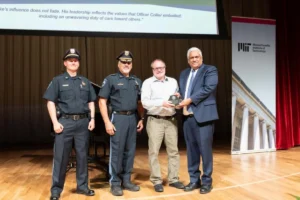
Craig Rowe, a senior aircraft mechanic, played a particularly instrumental role, serving as the lead crew chief. His dedication saw him traveling monthly to Canada with team members, demonstrating exceptional leadership and commitment. For his extraordinary efforts in steering the project through its most challenging phases, Rowe was deservedly recognized with a 2026 MIT Excellence Award for Outstanding Contributor, a testament to the individual sacrifices and collective resolve that underpinned this monumental project.
A Structural and Systemic Overhaul: Engineering the Future
The transformation of the G-IV involved a comprehensive structural and systemic overhaul, pushing the boundaries of aerospace modification. Mechanics meticulously removed, tracked, and ultimately reinstalled more than 2,000 individual components. The revamped G-IV now incorporates 12 major modifications, each requiring sweeping structural changes to the airframe.
One of the most significant modifications involved the wings, where mechanics installed four robust pylons designed to carry external sensor pods. These pods can weigh anywhere from 200 to over 1,000 pounds. To accommodate this added weight, stress, and the significant aerodynamic loads experienced during flight, the wings had to be substantially fortified. This involved internal structural reinforcement, careful material selection, and rigorous stress analysis to ensure the aircraft’s integrity and safety. In an additional modification, a fifth sensor pylon, capable of holding up to 2,000 pounds and accommodating systems nearly 19 feet long, was integrated into the forward lower fuselage.
The development of these pylons was a five-year endeavor, characterized by intensive reverse engineering. This process included the extraordinary step of purchasing and disassembling a wing from a scrapped G-IV aircraft to precisely measure internal structural components and understand load paths. The subsequent installation of these pylons alone took nearly two years, primarily due to the limited access to the inner wing structure, which could only be reached through small inspection panels. This highlights the intricate nature of integrating new, heavy components into an existing, complex airframe.
Further structural modifications included reshaping the roof and lower fuselage to create flat, standardized surfaces. This innovative design allows for the rapid mounting of external antennas and sensor systems without requiring repeated incursions into the aircraft’s pressurized fuselage, significantly enhancing operational flexibility and reducing turnaround times for different test configurations. The aircraft’s nose and tail sections were also extended and fitted with standardized sensor-mounting interfaces, enabling the rapid placement of sensors for both forward- and aft-facing test scenarios. The six-foot nose extension, in particular, necessitated completely gutting the cockpit to reinforce the internal structure adequately, ensuring it could bear the weight of the mounting interface and the varied test systems.
The interior of the G-IV was equally transformed into a state-of-the-art mobile laboratory. The team installed 14 equipment racks, providing ample space for specialized electronics and computing systems. Workstations for six onboard operators were integrated, allowing real-time data analysis and system control during missions. A comprehensive network of fiber-optic, Ethernet, and coaxial cables was laid, forming the backbone for high-speed data transfer. Advanced liquid- and air-cooling systems were implemented to manage the substantial heat generated by the sophisticated onboard electronics, ensuring optimal performance. Crucially, a dedicated power-distribution infrastructure, entirely separate from the baseline aircraft’s systems, was installed to ensure safety and prevent interference with critical flight operations.
Powering the Mission: A Revolution in Airborne Electrical Generation
Perhaps one of the most challenging aspects of the remodel was developing a means to generate sufficient electrical power to operate the extensive test systems in flight while simultaneously adhering to stringent FAA fire-containment standards. The aircraft’s original auxiliary power unit (APU), typically designed for ground operations and engine startup assistance, was woefully inadequate for the mission’s substantial electrical demands and lacked airborne operational capability.
To overcome this, Field Aviation engineers designed an entirely new, fireproof titanium enclosure to house a much larger, more powerful APU. This new unit is capable of producing nearly double the original electrical output, ensuring a robust power supply throughout the G-IV’s operational altitude ceiling of 45,000 feet. The Engineering Division at MIT Lincoln Laboratory played a critical role in validating this design, running extensive simulations to confirm that the APU inlet airflow would allow for maximum power output across the entire flight envelope, ensuring mission reliability and safety. This innovation represents a significant leap in airborne power generation for research platforms.
Strategic Implications and Future Outlook
The return of the modified Gulfstream IV to MIT Lincoln Laboratory marks a significant milestone not just for the institution, but for the broader U.S. national security apparatus. This state-of-the-art airborne test bed will dramatically enhance the capabilities of the Air Vehicle Survivability Evaluation program. By providing a stable, high-performance platform for testing new sensors, countermeasures, and defensive systems against an ever-evolving array of threats, the G-IV will play a critical role in maintaining the qualitative edge of U.S. air and space assets.
"This transformed G-IV is more than just an aircraft; it’s a testament to the ingenuity and perseverance of our engineering teams and a vital asset for our national defense," commented a representative from MIT Lincoln Laboratory leadership, speaking on the condition of anonymity due to the sensitive nature of the work. "It enables us to simulate highly complex threat environments and develop robust solutions, ultimately protecting our warfighters and critical infrastructure."
A U.S. Air Force official, also speaking anonymously, underscored the platform’s importance: "The AVSE program relies on cutting-edge platforms like this G-IV to provide unparalleled fidelity in threat assessment. This investment by MIT Lincoln Laboratory will directly translate into improved survivability for our next-generation aircraft and space systems, ensuring our forces are prepared for any challenge."
The strategic decision to complete all modifications upfront, while initially requiring a massive investment of time and resources, is projected to yield substantial long-term benefits. It will minimize future operational disruptions, avoid repeated costly certification processes, and ensure the platform remains at the forefront of research capabilities for decades. This forward-thinking approach exemplifies responsible stewardship of defense research funds and infrastructure.
The project also stands as a powerful example of collaborative engineering and resilient project management in the face of unprecedented global challenges. The dedication of the MIT Lincoln Laboratory teams, working hand-in-hand with industry partners like Field Aviation, showcases the profound impact of human ingenuity and unwavering commitment to mission success. The transformed Gulfstream IV is now poised to embark on its critical mission, contributing significantly to the security and technological superiority of the United States for a quarter-century and beyond.