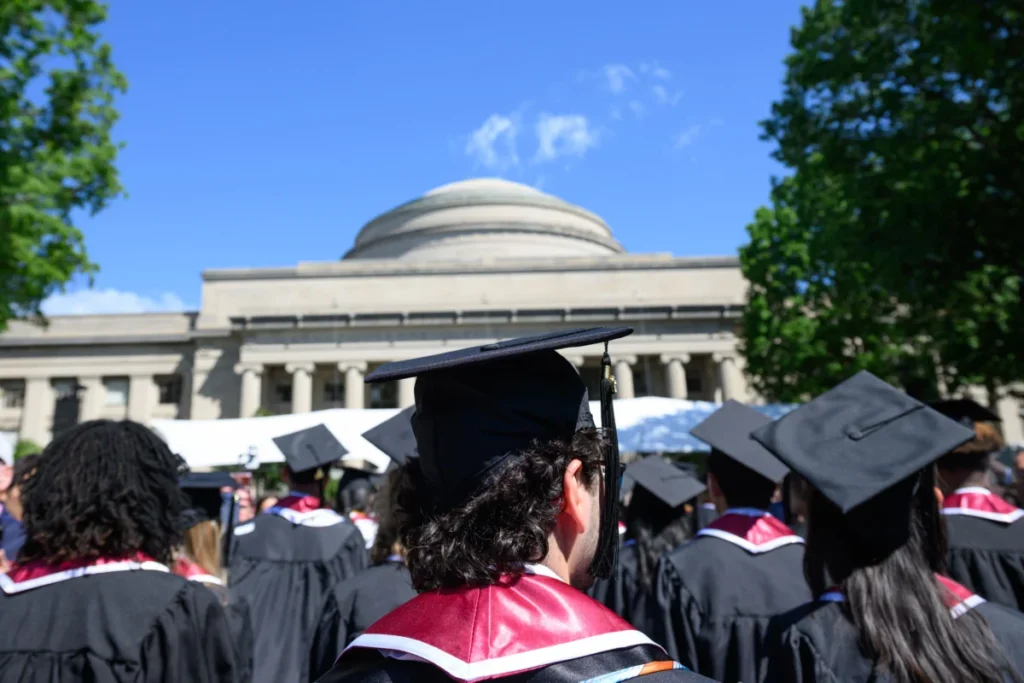
The Massachusetts Institute of Technology (MIT) has once again been distinguished as the premier institution of higher learning globally, according to the 2027 edition of the QS World University Rankings. Released today by Quacquarelli Symonds (QS), a leading global provider of services, analytics, and insight to the international higher education sector, the announcement marks a historic milestone for the Cambridge-based institute. This latest ranking confirms that MIT has held the number one position for 15 consecutive years, an unprecedented streak in the history of the global academic assessment.
The QS World University Rankings are widely regarded as one of the most influential and comprehensive evaluations of university performance worldwide. The 2027 results reflect an exhaustive analysis of thousands of institutions, utilizing a complex methodology designed to capture the multifaceted nature of academic excellence, research impact, and global engagement. For MIT, the consistent top-tier performance underscores its enduring commitment to innovation, interdisciplinary collaboration, and the practical application of knowledge—a philosophy encapsulated in its motto, "Mens et Manus" (Mind and Hand).
Methodology and Evaluation Criteria
The ascent to the top of the QS rankings is determined by a weighted average of several key performance indicators. Understanding these metrics provides insight into why MIT continues to dominate the global landscape. The 2027 rankings utilize the following criteria:
- Academic Reputation (30%): Based on the Academic Survey, which compiles the expert opinions of over 100,000 individuals in the higher education space regarding teaching and research quality.
- Employer Reputation (15%): Derived from surveys of employers who identify the institutions from which they source the most competent, innovative, and effective graduates.
- Citations per Faculty (20%): A measure of research impact, calculated by dividing the total number of citations received by university research papers over a five-year period by the number of faculty members.
- Faculty-to-Student Ratio (10%): An indicator of teaching quality and the level of personalized attention students can expect to receive.
- International Faculty Ratio (5%) and International Student Ratio (5%): Measures of a university’s ability to attract talent from across the globe, reflecting its international brand and diversity.
- Sustainability (5%): A newer metric assessing the social and environmental impact of universities as centers of education and research.
- Employment Outcomes (5%): Reflecting the ability of institutions to ensure a high level of employability for their graduates and nurture future leaders.
- International Research Network (5%): Evaluating the richness and diversity of a university’s international research partnerships.
MIT’s near-perfect scores in Academic Reputation and Employer Reputation have been pivotal to its success. Furthermore, its exceptionally high "Citations per Faculty" score highlights the institution’s role as a global powerhouse for scientific and technological breakthroughs.
Subject-Specific Dominance: A Broad Spectrum of Excellence
While the overall ranking captures the institution’s general standing, the QS World University Rankings by Subject, released earlier in March, offer a more granular look at MIT’s academic prowess. In the 2026-2027 cycle, MIT was ranked as the world’s top university in 12 distinct subject areas. This breadth of excellence demonstrates that MIT is not merely a technical school but a comprehensive research institution.
The subject areas where MIT achieved the No. 1 global ranking include:
- Chemical Engineering
- Civil and Structural Engineering
- Computer Science and Information Systems
- Data Science and Artificial Intelligence
- Electrical and Electronic Engineering
- Engineering and Technology
- Linguistics
- Materials Science
- Mechanical, Aeronautical, and Manufacturing Engineering
- Mathematics
- Physics and Astronomy
- Statistics and Operational Research
The top ranking in "Data Science and Artificial Intelligence" is particularly noteworthy, as it reflects MIT’s leadership in the current technological revolution. Through the Stephen A. Schwarzman College of Computing, the Institute has integrated AI and computing across all disciplines, ensuring that it remains at the forefront of the most transformative field of the 21st century.
In addition to its 12 first-place finishes, MIT secured the No. 2 position in seven other fields: Architecture and the Built Environment; History of Art; Biological Sciences; Economics and Econometrics; Marketing; Natural Sciences; and Statistics and Operational Research (noting overlap in complex multi-category assessments). These rankings highlight MIT’s significant contributions to the humanities, social sciences, and management, challenging the perception that its strengths are limited to the hard sciences.
A Fifteen-Year Chronology of Leadership
The journey to 15 years at the top began in 2012. Before that period, the top spot was frequently contested by institutions such as Harvard University, the University of Cambridge, and the University of Oxford. However, since the 2012/2013 ranking cycle, MIT has maintained a firm grip on the No. 1 position.
- 2012–2016: MIT solidified its lead by heavily investing in nanotechnology and biotechnology, alongside its traditional strengths in engineering.
- 2017–2021: The Institute expanded its global footprint through increased international collaborations and a focus on solving "Grand Challenges" such as climate change and global health.
- 2022–2027: The recent era has been defined by the rapid expansion of the Schwarzman College of Computing and a renewed emphasis on sustainability and ethical technology, allowing MIT to adapt to the evolving criteria of the QS methodology.
This 15-year streak is more than a statistical curiosity; it represents a generation of students and faculty who have operated within an environment of unparalleled excellence. It also coincides with a period of massive growth in the tech sector, where MIT alumni have played foundational roles in companies ranging from startups to the "Magnificent Seven" tech giants.
Global Competition and Context
While MIT holds the top spot, the 2027 rankings also highlight the shifting landscape of global education. The "Golden Triangle" of UK universities—Oxford, Cambridge, and Imperial College London—continue to perform strongly, often occupying the top five. In the United States, Harvard, Stanford, and Caltech remain MIT’s closest domestic competitors.
However, the 2027 data also suggests the rising influence of Asian universities. Institutions such as the National University of Singapore (NUS), Tsinghua University, and Peking University have seen steady climbs in the rankings over the last decade. These institutions are benefiting from massive state investment in research and development, particularly in STEM fields. Despite this surging competition, MIT’s ability to maintain its lead for a decade and a half is a testament to the robustness of its academic model and its ability to attract the world’s most cited researchers.
Institutional Philosophy and Impact
While MIT administration typically reacts to such rankings with modest acknowledgement, the implications for the Institute are profound. A top ranking serves as a powerful recruitment tool for both world-class faculty and the brightest students. It also influences the flow of research funding from both government agencies and private donors.
The Institute’s success is often attributed to its unique culture of "radical collaboration." Unlike many traditional universities where departments operate in silos, MIT encourages the crossing of disciplinary boundaries. A roboticist might work alongside a linguist to improve natural language processing, or a chemical engineer might collaborate with an economist to study the scalability of new battery technologies. This interdisciplinary approach is reflected in the high citation counts, as MIT research often addresses complex, real-world problems that require multifaceted solutions.
Furthermore, MIT’s impact on the regional and national economy cannot be overstated. The "MIT ecosystem"—comprising the university, its alumni, and the venture capital firms concentrated in Kendall Square—is a primary engine of innovation. Research indicates that the aggregate revenues of companies founded by MIT alumni would rank as the world’s tenth-largest economy.
Implications for the Future of Higher Education
The 2027 QS World University Rankings arrive at a time when the value of higher education is being scrutinized. Issues such as the rising cost of tuition, the integration of generative AI in the classroom, and the necessity of campus diversity are at the forefront of the national conversation. MIT’s continued dominance suggests that the market still highly values institutions that can demonstrate tangible research impact and strong employment outcomes.
For prospective students, the rankings provide a benchmark, but experts caution that the "best" university is often a matter of fit. However, for those seeking an environment that prioritizes rigorous quantitative analysis, cutting-edge laboratory work, and a peer group of high achievers, MIT remains the gold standard.
As the global academic community looks toward the 2030s, the challenge for MIT will be to maintain this momentum in an increasingly polarized and competitive world. With the 15th year of its reign secured, the Institute has set a bar for excellence that few institutions in history have ever reached. The full 2027 rankings are currently available on the QS website, providing a comprehensive look at the state of global higher education and the institutions shaping the future of human knowledge.