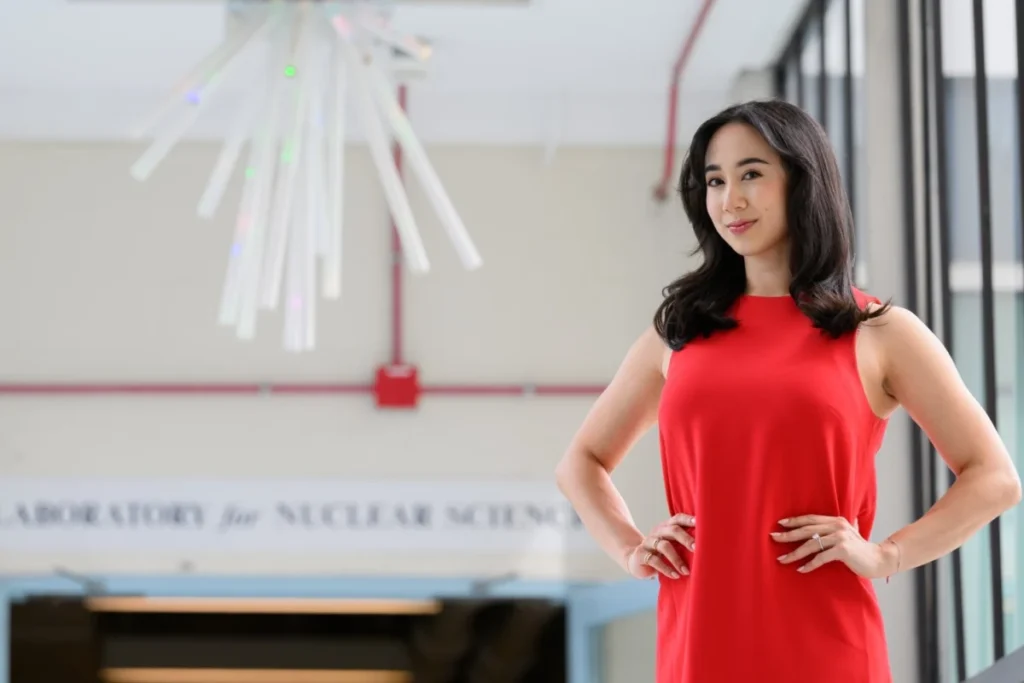
In the sterile, high-precision laboratories of the Massachusetts Institute of Technology (MIT), a fifth-year PhD candidate is hunting for a ghost. Jessica Fry, a researcher within the Laboratory for Nuclear Science (LNS), is part of an international cohort of physicists dedicated to identifying dark matter—the mysterious substance that constitutes approximately 85 percent of all matter in the known universe. Despite its overwhelming presence, dark matter has never been directly detected, remaining one of the most significant "missing links" in our understanding of the cosmos. Fry’s journey to the cutting edge of particle physics is as unconventional as the particles she seeks, bridging the gap between the disciplined artistry of professional dance and the rigorous analytical world of quantum research.
The Scientific Context: The Enigma of Dark Matter
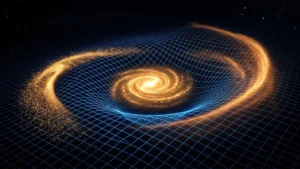
To understand the magnitude of Fry’s work, one must first grasp the "dark matter problem" that has confounded astrophysicists for nearly a century. In the 1930s, Swiss astronomer Fritz Zwicky observed that galaxies within clusters were moving far faster than the visible matter should allow. Decades later, Vera Rubin provided further evidence through galaxy rotation curves, showing that stars at the edges of galaxies moved just as quickly as those near the center.
The mathematical conclusion was inescapable: there is a vast amount of invisible mass providing the gravitational "glue" that prevents galaxies from flying apart. Modern calculations suggest that the universe’s energy density is composed of roughly 68% dark energy, 27% dark matter, and a mere 5% "normal" or baryonic matter—the atoms that make up stars, planets, and humans.
Fry’s research focuses on the axion, a theoretical elementary particle that is currently considered the leading candidate for dark matter. Unlike the more traditional "Weakly Interacting Massive Particles" (WIMPs), axions are hypothesized to be incredibly light—billions of times lighter than an electron. Because of their low mass, axions would behave less like individual billiard balls and more like a pervasive, coherent wave that flows through the galaxy.
A Chronology of Dual Passions: From SLAC to Broadway
Jessica Fry’s trajectory into the world of high-energy physics began in the San Francisco Bay Area, a region synonymous with scientific innovation. Growing up near the SLAC National Accelerator Laboratory, Fry was exposed to the culture of "Big Science" from a young age. However, her early life was equally defined by the performing arts. A competitive dancer from age three, Fry developed a reputation for an uncompromising work ethic—a trait she keeps a physical reminder of on her desk in the form of a childhood photo of her performing in a ham costume.
The synthesis of her interests became apparent in high school when a physics teacher provided her with two decommissioned detectors from SLAC. Rather than seeing them as relics, Fry treated them as a gateway. By researching 1960s-era experimental papers, she successfully replicated a particle detection experiment, an achievement that she describes as a turning point. The realization that physical instruments could be used to probe the fundamental nature of time and space "blew her mind," setting her on a path toward a double major in physics and theater at Stanford University.
The most dramatic chapter of Fry’s chronology occurred during her sophomore year at Stanford. While balancing the demands of a rigorous physics curriculum, she received an audition call for a Broadway revival of David Henry Hwang’s M. Butterfly. In a feat of logistical endurance, she flew to New York for the audition during midterms and returned immediately to sit for her exams.
Initially believing she had failed to secure the role, Fry accepted a prestigious summer research position at CERN (the European Organization for Nuclear Research) in Switzerland. It was while she was immersed in the scientific community at Geneva that the call came: she had been cast in the Broadway production. After completing her summer at CERN, Fry moved directly to New York, taking a two-year hiatus from her studies to perform professionally. During this time, she expanded her repertoire to include ballet, contemporary dance, and even Peking opera-style movement.
The Transition Back to the Laboratory
The transition from the stage back to the laboratory was born from a moment of profound self-reflection. While Fry thrived on the storytelling aspect of theater, the "occupational hazard" of the industry—the constant external judgment of auditions—began to erode her sense of self. She recognized that the career path of a professional performer was changing her into someone she didn’t want to be.
Choosing to prioritize her intellectual curiosity, Fry returned to Stanford to complete her degrees before applying to graduate programs. Her decision to join MIT’s Laboratory for Nuclear Science was driven by the facility’s sheer scale and the palpable "scientific energy" of the department. At MIT, Fry found a community that mirrored the intensity of the Broadway stage but directed that focus toward uncovering the secrets of the subatomic world.
Experimental Methodology: Hunting for the Axion Signal
Fry’s current work involves two major experimental efforts: ABRACADABRA and DMRadio. These experiments are designed to detect the subtle "fingerprint" of an axion as it interacts with the physical world.
ABRACADABRA (A Broadband/Resonant Approach to Cosmic Axion Detection with a Bayesian B-Ring Apparatus)
This experiment, based at MIT, utilizes a toroidal (donut-shaped) magnetic field. The theoretical premise is that if axions exist and pass through a strong magnetic field, they should produce a tiny, oscillating magnetic field of their own. This field would, in turn, induce a faint electric current in a superconducting pickup loop.
DMRadio (Dark Matter Radio)
In collaboration with her alma mater, Stanford, Fry is helping to build DMRadio. The principle is similar to tuning a car radio to a specific station. Since the mass (and thus the frequency) of the axion is unknown, the detector must be systematically "tuned" across a wide range of frequencies. The experiment uses high-precision circuit components and quantum amplifiers to boost the signal.
The primary challenge in these experiments is the signal-to-noise ratio. The expected signal from an axion is so weak that it is easily buried under thermal noise and environmental electromagnetic interference. Fry’s role involves sophisticated data analysis to distinguish the "rip current" of an axion signal from the background "noise" of the universe.
Institutional Support and Professional Recognition
The collaborative environment at MIT has been instrumental in Fry’s development. She works under the mentorship of Professor Lindley Winslow, the lead of the Neutrino and Dark Matter Group. Winslow, who also experienced a "turning point" between two passions in her own career, has noted that Fry’s background in theater contributes to her fearlessness in the lab and her drive for perfection.
The Neutrino and Dark Matter Group at MIT is unique for its integrated structure, consisting of four principal investigators. This setup allows graduate students like Fry to engage with diverse perspectives, pushing them beyond the narrow confines of their specific subfields. Fry’s contributions to the field have not gone unnoticed; she was recently named to the Forbes 30 Under 30 Science 2026 list, a testament to her standing as a rising leader in the physics community.
Broader Impact and Scientific Implications
The successful detection of the axion would do more than just solve the dark matter mystery. It would also address the "Strong CP Problem" in quantum chromodynamics (QCD). The Strong CP Problem refers to the puzzling observation that the strong nuclear force (which holds atomic nuclei together) does not seem to violate "charge-parity" symmetry, even though the Standard Model of physics suggests it should. The axion was originally proposed in 1977 by Roberto Peccei and Helen Quinn as a mathematical solution to this discrepancy.
If Fry and her colleagues are successful, the discovery would represent a paradigm shift in our understanding of the universe. It would validate the Peccei-Quinn theory and provide the first direct evidence of the "dark" sector of physics.
Analysis: The Intersection of Art and Science
Fry’s story highlights a growing trend in modern scientific research: the value of interdisciplinary backgrounds. The skills she honed on Broadway—discipline, the ability to take feedback, and the capacity to "perform" under high pressure—are directly applicable to the rigors of experimental physics. Furthermore, her focus on "storytelling" in dance translates to the way she approaches scientific communication and the conceptualization of complex data.
Outside the lab, Fry continues to dance at a studio near Harvard, viewing it as a necessary balance to her cognitive labor. "At the end of a long day of using my brain, I love just being in my body," she says. This holistic approach to her career suggests that the most profound scientific breakthroughs may come from those who can navigate both the physical and the theoretical with equal grace.
As Fry enters the final stretch of her PhD program, her focus remains on the data analysis for DMRadio. She approaches her future—whether it involves a postdoctoral fellowship or leading her own lab—with the clarity of someone who has already made the difficult choice between two worlds. For Fry, the discovery of dark matter is not a matter of "if," but "when." As she continues to tune the cosmic radio, the world of physics waits to hear what the universe has to say.