The intricate journey from a nascent idea scribbled on a napkin to a tangible, market-ready product is a path fraught with challenges, yet illuminated by innovation. At the heart of this transformative process lies prototyping, a methodology championed by professional product designer and BattleBots robot fighting champion, Bam Singhasaneh. Her compelling insights, shared last September at the prestigious Maker Faire Bay Area, transcended theoretical best practices, offering a vivid tapestry of real-life trials, tribulations, and triumphs gleaned from both the high-octane robot arena and the demanding world of toy design. Singhasaneh’s presentation underscored a profound paradigm shift: true innovation flourishes not in meticulous, pre-conceived designs, but in the dynamic, iterative cycle of rapid prototyping.
The Genesis of Innovation: Maker Faire Bay Area as a Catalyst
Maker Faire, often dubbed "the Greatest Show (and Tell) on Earth," serves as a global nexus for creativity, technology, and ingenuity. Originating in the San Francisco Bay Area in 2006, it has grown into an international phenomenon, providing a platform for inventors, crafters, engineers, artists, and scientists—collectively known as "makers"—to showcase their projects, share knowledge, and inspire future innovators. The Maker Faire Bay Area, in particular, is renowned for its scale and diverse exhibits, attracting tens of thousands of attendees eager to witness groundbreaking advancements and hands-on demonstrations.
It was against this backdrop of collaborative innovation that Bam Singhasaneh delivered her pivotal address. The event, held in September 2023, was an ideal venue for her message, resonating deeply with an audience inherently predisposed to experimentation and practical application. Maker Faire’s ethos—celebrating the spirit of making and learning through doing—perfectly complemented Singhasaneh’s core philosophy: that the most effective path to an optimal design begins not with exhaustive planning, but with immediate, tangible prototyping. Her talk was a highlight, bridging the often-disparate worlds of high-stakes competitive robotics and consumer product development, all under the umbrella of iterative design.
"Don’t Design, Prototype!": A Revolutionary Mantra
Singhasaneh’s presentation commenced with a deceptively simple yet profoundly impactful mantra: "Don’t Design, Prototype!" This statement challenges conventional wisdom that often prioritizes extensive upfront planning and detailed blueprinting. Instead, she advocates for an immediate, hands-on approach, emphasizing that the act of building and testing, even imperfectly, yields far greater insights than prolonged theoretical contemplation. This philosophy aligns closely with contemporary agile development methodologies and lean startup principles, which stress validated learning through rapid experimentation.
To illustrate this principle, Singhasaneh invoked the widely recognized "Marshmallow Challenge." In this exercise, groups are provided with a limited set of materials—typically 20 sticks of spaghetti, one yard of tape, one yard of string, and one marshmallow—with the singular objective of constructing the tallest freestanding structure capable of supporting the marshmallow atop. Fascinatingly, the teams that consistently achieve the greatest success are often composed of kindergartners. Singhasaneh explained that their advantage stems from their uninhibited approach: unlike adults who tend to spend considerable time planning, strategizing, and debating the ‘perfect’ design, young children instinctively begin building, testing, and failing almost immediately. They don’t fear collapse; they simply rebuild, iterating rapidly until a stable structure emerges. This contrasts sharply with adults who, after meticulous planning, often find their carefully constructed edifice unable to bear the marshmallow’s weight, forcing a complete restart.
The Marshmallow Challenge serves as a powerful metaphor for product development:

- Prototype Quickly: The kindergartners’ immediate action bypasses analysis paralysis.
- Iterate Quickly: Each failure provides instant feedback, leading to rapid adjustments.
- Learn Quickly: The direct experience of what works and what doesn’t accelerates the understanding of structural integrity, material properties, and balance.
This iterative feedback loop—Prototype Quickly = Iterate Quickly = Learn Quickly—is the cornerstone of Singhasaneh’s methodology. It minimizes wasted effort on flawed concepts and accelerates the discovery of viable solutions, proving that embracing early, frequent failures is not a setback, but a critical driver of success. In an industry where time-to-market and cost efficiency are paramount, this approach offers tangible benefits by reducing the risk of investing heavily in an unvalidated design.
Toy Design Secrets: From Sketch to Play with CrunchLabs
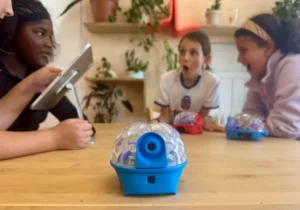
Singhasaneh further elucidated her prototyping philosophy through practical examples drawn from her work with CrunchLabs, a popular subscription toy series co-founded by YouTube science educator Mark Rober. CrunchLabs specializes in delivering engaging, hands-on STEM experiences to children, often integrating physical mechanisms with electronic components. Designing physical toys, especially those with intricate electronic elements, presents a unique set of challenges. The goal is not merely functionality, but also durability, safety, ease of assembly for young users, and, critically, an engaging play experience.
The initial hurdle for Singhasaneh and her team at CrunchLabs was designing something that, by definition, hadn’t yet been designed. How do you test the viability of a concept when its form and function are still nebulous? Their solution was to embrace the "ugly prototype." They created rudimentary, often clunky electronic prototypes that bore little resemblance to the polished final products seen today. These early iterations were not about aesthetics or material finish; they were purely functional testbeds.
For instance, if a toy concept involved a motion sensor, the team would hastily assemble a basic circuit board with a sensor and a simple indicator, perhaps an LED or a buzzer, encased in a rough, hand-cut housing. The objective was to answer fundamental questions: Did the motion sensor reliably detect movement within the desired range? Was the button’s reaction time sufficiently responsive for a child’s interaction? Did the electronic components withstand repeated use? These "ugly" prototypes, while lacking visual appeal, were invaluable. They allowed the team to quickly validate core technological assumptions, identify potential glitches, and gauge user interaction without committing significant resources to sophisticated tooling or complex manufacturing processes.
This stage of prototyping is crucial for several reasons:
- Risk Mitigation: Early functional testing identifies critical flaws before they become expensive to fix. A motion sensor that fails intermittently in an early prototype can be redesigned with minimal cost; the same issue discovered in a mass-produced item could lead to costly recalls.
- User Experience Validation: Observing how target users (children, in this case) interact with these basic prototypes provides invaluable feedback on intuitiveness, engagement, and potential frustrations.
- Iterative Refinement: Each prototype iteration builds upon the lessons learned from the previous one, gradually refining the functionality, form, and overall user experience. This systematic approach ensures that the final product is robust, enjoyable, and meets its intended educational or entertainment goals.
The success of CrunchLabs toys, known for their innovative blend of engineering and fun, stands as a testament to the efficacy of this prototype-driven development cycle. It demonstrates that focusing on core functionality and user interaction in the early stages, even with crude models, is paramount to creating beloved and successful products.
The Crucible of BattleBots: "Fail Faster" in Action
Perhaps the most dramatic and visceral illustration of Singhasaneh’s "fail faster" philosophy comes from her experience competing in BattleBots. This televised combat robotics competition pits custom-built, heavily armored robots against each other in a destructive arena. The stakes are high, and failure is often spectacular, unequivocal, and immediate. As Singhasaneh starkly put it, "In BattleBots, when your bot fails, it fails hard. You don’t get graceful failure; it explodes or gets thrown across the arena. But that’s the best way to learn."

In conventional product design, a "graceful failure" might manifest as a minor bug in software, a slightly uncomfortable ergonomic grip, or a component that wears out prematurely but doesn’t catastrophically destroy the product. While these provide feedback, they often mask deeper systemic issues. In BattleBots, however, failure is often total. A robot’s weapon might seize, its drive system could be annihilated, or its entire chassis might be ripped apart. This level of immediate, undeniable destruction provides an unfiltered, brutal education.
Each explosion, each thrown component, each defeat offers a wealth of data:
- Structural Weaknesses: Which points of the robot were most vulnerable? Where did the armor fail?
- Systemic Flaws: Did a particular motor overheat? Did the battery connection loosen under impact?
- Design Inadequacies: Was the weapon arm too fragile? Was the center of gravity poorly optimized?
The intense pressure and rapid turnaround required between BattleBots seasons or even between fights within a tournament force teams like Singhasaneh’s to adopt an extreme form of iterative design. They must analyze catastrophic failures, diagnose root causes, and implement robust solutions—often under tight deadlines. This real-world pressure cooker environment instills an unparalleled discipline in problem-solving and rapid prototyping. It teaches designers to identify critical points of failure, engineer for maximum resilience, and embrace a mindset where every destructive setback is merely a data point for the next, stronger iteration.
The competitive nature of BattleBots elevates the concept of prototyping from a mere development step to a fundamental survival strategy. The ability to quickly diagnose, redesign, and rebuild after a devastating loss is what separates champions from contenders. This intense learning environment, where "failure is not an option" paradoxically means "failure is the best teacher," profoundly shapes Singhasaneh’s approach to all forms of design, instilling a resilience and data-driven pragmatism that few conventional design environments can replicate.
Broader Implications: The Iterative Mindset in the Modern Age
The principles espoused by Bam Singhasaneh extend far beyond the specific domains of toy design and combat robotics. Her emphasis on rapid prototyping, iterative refinement, and learning from failure holds significant implications for various industries and the broader landscape of innovation.
Economic Efficiencies: In today’s fast-paced market, time-to-market is a crucial competitive advantage. By embracing quick prototyping, companies can significantly reduce development cycles. Early validation through prototypes minimizes the risk of costly rework or product recalls, leading to substantial savings in both time and financial resources. It shifts the investment from late-stage correction to early-stage learning, optimizing the entire product lifecycle. This approach is a cornerstone of efficient resource allocation, particularly relevant for startups and established enterprises seeking to maintain agility.
Fostering Innovation and Creativity: A culture that encourages prototyping and embraces failure inherently fosters a more innovative environment. When designers and engineers are not paralyzed by the fear of imperfection, they are more likely to experiment with unconventional ideas. Prototyping allows for the rapid exploration of multiple solutions, promoting divergent thinking and ultimately leading to more creative and groundbreaking products. It democratizes the design process, allowing more team members to contribute tangibly to problem-solving.
Educational Paradigms: Singhasaneh’s insights offer valuable lessons for educational institutions, particularly in STEM fields. Integrating hands-on, iterative project-based learning, much like the Marshmallow Challenge, can teach students critical thinking, problem-solving, and resilience more effectively than purely theoretical instruction. Encouraging students to "build to learn" rather than just "learn to build" prepares them for the realities of modern engineering and design challenges. This approach cultivates a growth mindset, where mistakes are seen as opportunities for profound learning, not indicators of inadequacy.

Industry Trends: The acceleration of rapid prototyping technologies, such as 3D printing, CNC machining, and advanced simulation software, further underscores the relevance of Singhasaneh’s philosophy. These tools allow for the creation of increasingly sophisticated prototypes at unprecedented speeds and costs, making iterative design more accessible than ever. Industries ranging from aerospace and automotive to medical devices and consumer electronics are leveraging these advancements to compress development timelines and enhance product quality through continuous feedback loops.
Psychological Impact: Beyond the technical aspects, the iterative mindset promotes a healthy psychological approach to problem-solving. It builds resilience, teaches humility in the face of challenges, and cultivates a pragmatic perspective on progress. The understanding that perfection is an asymptote, not a starting point, empowers individuals and teams to make continuous improvements, celebrating small victories and learning from every setback.
Conclusion: The Enduring Power of Prototyping
Bam Singhasaneh’s unique trajectory—from a professional product designer crafting engaging experiences for CrunchLabs to a BattleBots champion navigating the destructive ballet of robotic combat—provides an unparalleled perspective on the power of prototyping. Her presentation at Maker Faire Bay Area was not merely an exposition of technical methods but a testament to a philosophy that transcends specific disciplines. It is a philosophy rooted in humility, humor, and an unwavering commitment to learning from every interaction, every test, and every spectacular failure.
The journey of any amazing product, from the initial spark of an idea to its eventual presence on a shelf, is rarely linear. It is a winding path paved with sketches, crazy concepts, and, most importantly, a relentless willingness to build, test, and refine. Singhasaneh’s stories vividly illustrate that prototyping is not merely a phase in the product development lifecycle; it is a continuous, dynamic mindset that fosters innovation, builds robust products, and ultimately transforms abstract ideas into remarkable realities. Her message serves as a powerful reminder that true mastery in design, whether for a child’s toy or a combat robot, stems from the courage to begin, the discipline to iterate, and the wisdom to learn from what goes wrong.
For those eager to delve deeper into these transformative insights, witness the prototypes firsthand, hear the exhilarating BattleBots narratives, and draw inspiration for their own creative endeavors, the full video of Bam Singhasaneh’s compelling talk is available. It offers a comprehensive look at how a commitment to rapid, iterative prototyping can turn any concept into something truly extraordinary.