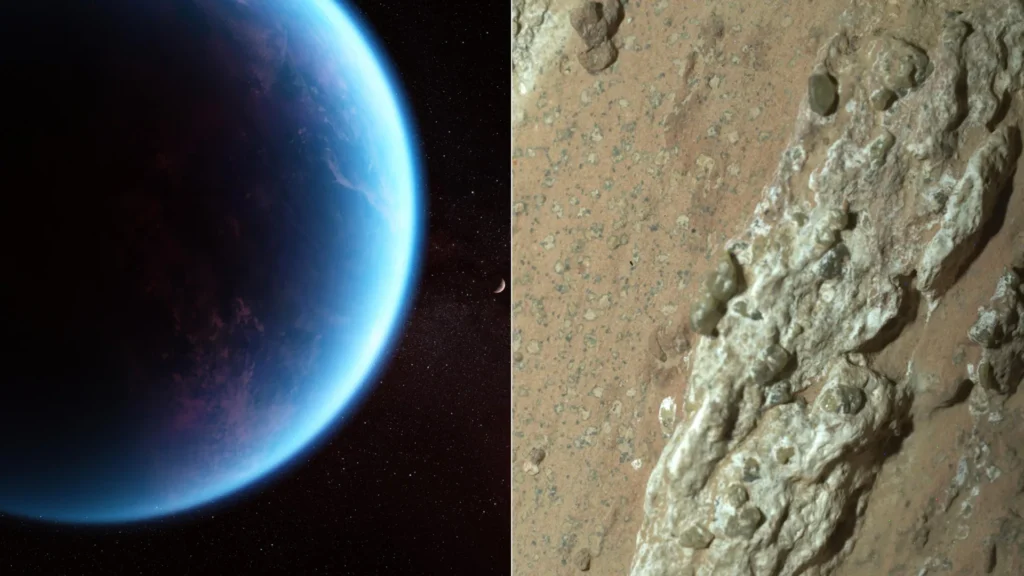
The quest to answer humanity’s most profound question – are we alone in the universe? – has recently seen tantalizing developments that have captured global attention. In 2025, the scientific community buzzed with announcements that hinted at the potential discovery of extraterrestrial life. One such announcement, emanating from Cambridge University, proclaimed the "strongest hints yet" of biological activity on the exoplanet K2-18b. Simultaneously, NASA Administrator Sean Duffy described a collected sample from a Martian rock, dubbed "Cheyava Falls," as the "closest we have ever come" to discovering life on the Red Planet. These statements, amplified by widespread media coverage, have ignited public imagination and fueled a fervent discussion about the possibility of alien life.
However, beneath the headline-grabbing pronouncements lies a more complex reality: the nuanced distribution of scientific opinion. While these breakthroughs may appear definitive to the public, the true consensus, or lack thereof, within the broader scientific community is often opaque. This article delves into the findings of a recent survey of astrobiologists, conducted in the wake of these significant announcements, to explore what experts actually think about these potential discoveries and to examine the broader implications for how scientific consensus is understood and communicated.
The Dual Pillars of Potential Discovery: K2-18b and Mars
The year 2025 marked a significant period for astrobiology, with two prominent announcements that promised to reshape our understanding of life beyond Earth.
K2-18b: An Exoplanet’s Atmospheric Enigma
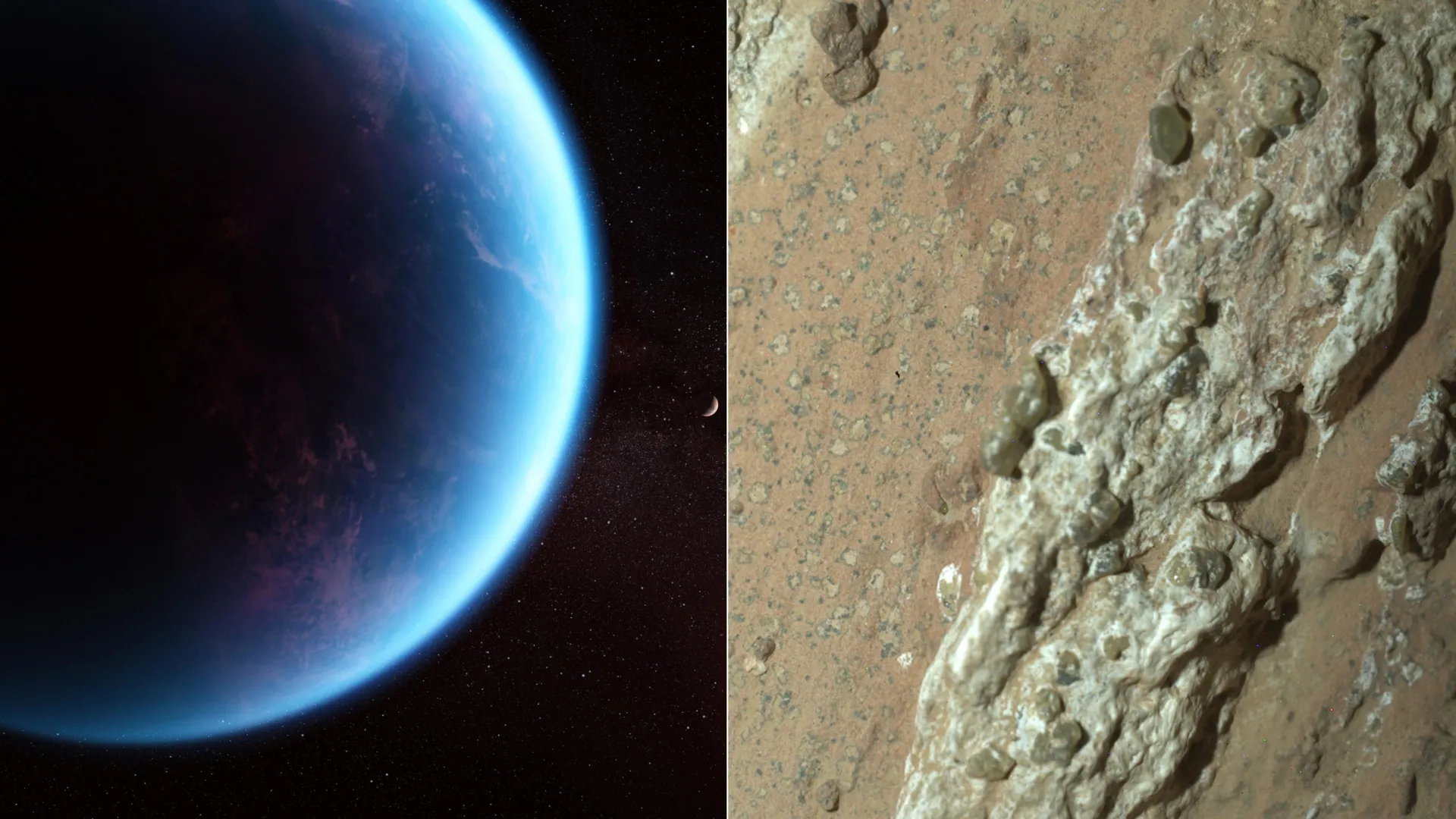
The first major development involved K2-18b, an exoplanet orbiting a red dwarf star approximately 120 light-years away in the constellation Leo. In April 2025, researchers published findings detailing the detection of possible traces of dimethyl sulfide (DMS) and/or dimethyl disulfide (DMDS) in the planet’s atmosphere. On Earth, these sulfur-containing organic molecules are predominantly produced by biological processes, particularly marine phytoplankton. The detection was made using advanced spectroscopic analysis from telescopes like the James Webb Space Telescope, which can analyze the chemical composition of exoplanet atmospheres by observing how starlight filters through them.
The implications of this finding were profound. If confirmed, the presence of DMS or DMDS on K2-18b would represent one of the most compelling potential biosignatures detected on an exoplanet to date. The media response was swift and enthusiastic, with many outlets framing the discovery as a monumental leap forward in the search for extraterrestrial life. The Cambridge University press release, highlighting the "strongest hints yet," underscored the significance attributed to these molecular detections.
Mars: A Terrestrial Clue in "Cheyava Falls"
The second pivotal announcement came in September 2025, from NASA’s Perseverance rover mission on Mars. Scientists revealed that a rock sample from a geological formation known as "Cheyava Falls" exhibited characteristics interpreted as a potential biosignature. Specifically, the rock displayed what are colloquially termed "leopard spots" – circular mineral formations that, on Earth, are frequently indicative of past microbial activity. These "leopard spots" are often formed by the interaction of microbes with minerals in their environment, creating distinctive layered or pitted structures.
NASA Administrator Sean Duffy’s statement, emphasizing that this was the "closest we have ever come" to discovering life on Mars, further amplified the excitement. The Perseverance rover, equipped with sophisticated instruments for geological and chemical analysis, had been meticulously exploring the Jezero Crater, a region believed to have once harbored a lake and river delta, making it a prime candidate for ancient Martian life. The ability to analyze Martian rocks directly, in situ, offered a different pathway to potential discovery compared to the remote sensing of exoplanet atmospheres.
The Survey: Gauging the Expert Pulse
The extraordinary nature of these announcements prompted a critical question: what did the experts in the field, the astrobiologists themselves, truly believe? Recognizing the tendency for public discourse to rely on a select few voices or to generalize scientific opinion, a team of researchers, including the author of the original study, embarked on a systematic endeavor to quantify expert judgment.
Shortly after both major announcements, a comprehensive survey was distributed to hundreds of astrobiologists across the globe. The objective was to move beyond anecdotal evidence and to gain a quantitative understanding of how the expert community was responding to these potentially groundbreaking findings. The survey posed a direct question: did surveyed astrobiologists believe that extraterrestrial life had probably been found?
The Measured Response: A Spectrum of Belief
The results of the survey painted a picture far more nuanced than the triumphant headlines might suggest, revealing a community characterized by caution and a detailed consideration of the evidence.
K2-18b: A Glimmer of Possibility, Not Definitive Proof
Regarding the exoplanet K2-18b, the survey revealed a notably reserved sentiment. Only a small fraction of the surveyed astrobiologists, precisely 6.6%, agreed that extraterrestrial life had likely been discovered. A significant majority, nearing two-thirds (approximately 65.4%), disagreed with this assertion. The remaining 28.0% of respondents remained neutral, indicating a state of uncertainty or an unwillingness to commit to a definitive conclusion based on the available data.
Mars: Higher Confidence, Yet Still Measured
The findings for the Martian rock, "Cheyava Falls," indicated a slightly higher level of confidence within the astrobiology community, but still underscored a pervasive sense of caution. In this case, 15.1% of astrobiologists agreed that extraterrestrial life had probably been found. While this represents an increase in agreement compared to the K2-18b case, a substantial portion, 44.6%, still disagreed. The percentage of neutral respondents also saw an increase, reaching 40.3%, suggesting that the direct analysis of Martian samples, while intriguing, did not elicit widespread conviction of a definitive discovery.
Beyond Agreement and Disagreement: The Importance of Nuance
A critical insight from the survey lies in examining the full spectrum of responses, not just simple agreement or disagreement. The proportion of astrobiologists who strongly disagreed with the claim of discovery diminished significantly between the K2-18b and Mars cases. For K2-18b, 35.1% strongly disagreed. This figure dropped to 11.1% for the Martian discovery. This shift indicates that while outright endorsement remained low, there was a movement away from absolute rejection towards more tentative stances.
This pattern suggests that the scientific community’s response was not a simple binary switch from "no" to "yes." Instead, the evidence presented, while not conclusive, appeared to foster a greater openness to the possibility of life, without leading to outright acceptance. The transition from K2-18b to Mars represented a subtle but important evolution in expert opinion, moving towards a more open-minded contemplation of the evidence.
Factors Influencing Expert Judgment
Several factors likely contributed to this nuanced distribution of opinion. The distinct nature of the evidence presented in each case played a crucial role:
- Evidence Modality: The K2-18b claim relied on atmospheric signatures detected from vast interstellar distances. This type of remote sensing, while powerful, inherently involves greater uncertainties and potential for alternative explanations. In contrast, the Martian discovery involved direct analysis of a physical sample, allowing for more detailed examination and a greater capacity to rule out certain abiotic processes.
- The Challenge of False Biosignatures: Astrobiologists are acutely aware of the phenomenon of false biosignatures – geological or chemical features that can mimic signs of life but are in fact produced by non-biological processes. The history of planetary science is replete with examples where seemingly biological indicators were later explained through abiotic means. The challenge, as many experts note, is not just to imagine how life could produce a signal, but to exhaustively understand all the ways that natural, non-biological processes could create similar phenomena. This inherent skepticism is a cornerstone of rigorous scientific inquiry.
The Broader Implication: Rethinking Scientific Consensus
The survey’s findings carry significant implications that extend far beyond the specific domain of astrobiology. The way scientific opinion is communicated to the public often oversimplifies complex realities. Phrases like "the science says" or "scientists believe" can create an illusion of monolithic agreement where none truly exists.
The Spectrum of Scientific Opinion:
Scientific opinion is rarely a simple "for" or "against." The distribution of responses—ranging from strong agreement to strong disagreement, with varying degrees of neutrality—provides a richer and more accurate depiction of a scientific community’s engagement with new evidence.
- Neutrality as an Indicator: A high proportion of neutral responses can signal several important dynamics. It might mean that the evidence is genuinely inconclusive, with valid arguments on multiple sides. It could reflect an intermediate level of confidence among experts, where the data is suggestive but not yet compelling. Alternatively, it might indicate that a claim is perceived as too speculative to be definitively endorsed or rejected at that stage.
- Shifting Attitudes: A decrease in strong disagreement, even if overall disagreement remains high, can signify a softening of attitudes. It suggests that while definitive proof is lacking, the evidence has prompted a re-evaluation of initial skepticism and a greater willingness to entertain the possibility.
Failing to acknowledge these nuances risks misrepresenting the state of scientific understanding and can lead to public confusion and distrust.
Towards More Systematic Measurement of Expert Opinion
The need for more systematic methods to gauge scientific opinion is becoming increasingly evident across various fields. In areas such as climate science, public health during pandemics, the rapid advancement of artificial intelligence, and breakthroughs in medical research, public discourse frequently hinges on notions of scientific consensus.
While genuine, strong scientific consensus does exist in some areas, it is often absent in others, particularly when evidence is still emerging or substantial uncertainties persist. In such situations, discussions often rely on selective quotation of prominent figures, the amplification of vocal individuals, or assumptions about what the majority of scientists think.
Emerging Initiatives:
Recognizing this gap, efforts are underway to develop more robust methodologies for assessing expert opinion. At Durham University, the C-Scope (the Centre for Scientific Community Opinion Polling and Evaluation) research group is dedicated to studying the distribution and evolution of expert opinion over time. Their aim is not to substitute scientific evidence with polling data, nor to equate majority opinion with absolute truth. Instead, the objective is to foster a deeper understanding of how scientific communities grapple with uncertainty and respond to new information.
The Path Forward:
Scientific knowledge is not a static body of facts but a dynamic process of exploration, characterized by uncertainty, disagreement, and gradual revision. As public discourse and, consequently, political decision-making increasingly rely on claims about scientific understanding, there is a compelling imperative to invest in more systematic and transparent methods for understanding what scientists actually think. This will not only lead to more informed public discussions but also to more effective policy development and a more accurate public perception of the scientific enterprise. The quest for extraterrestrial life, while perhaps the most captivating example, serves as a potent reminder that understanding the nuances of scientific opinion is crucial for navigating the frontiers of human knowledge.