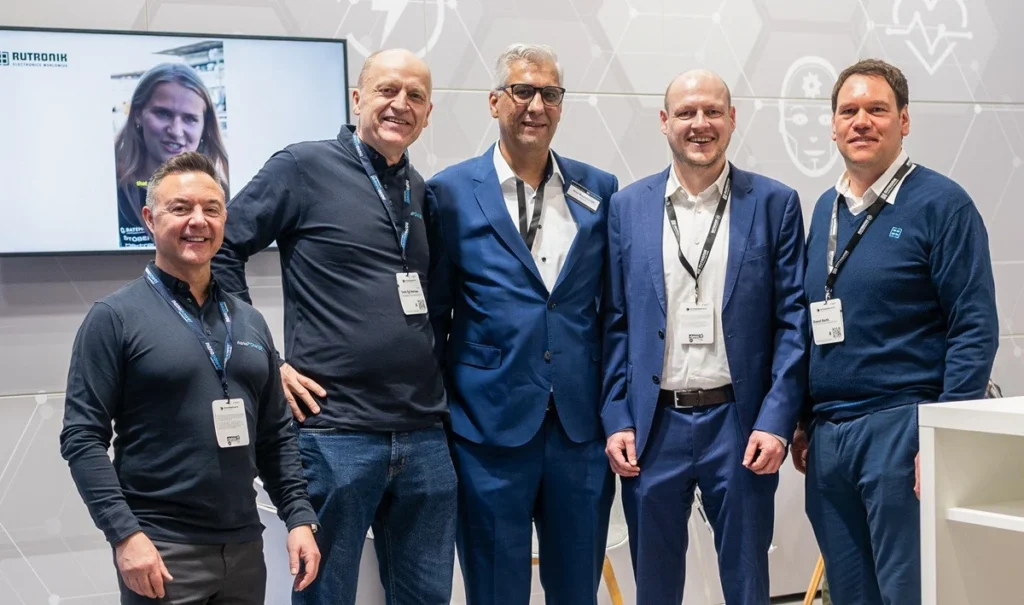
Rutronik Elektronische Bauelemente GmbH, a leading broadline distributor of electronic components, has significantly bolstered its semiconductor portfolio through a new worldwide franchise agreement with Nanopower Semiconductor, a Norwegian innovator specializing in ultra-low-power technology. This strategic partnership integrates Nanopower Semiconductor’s groundbreaking Power Saving ICs (PSICs) into Rutronik’s extensive offering, marking a pivotal step towards a future dominated by energy-autonomous and truly battery-free Internet of Things (IoT) applications. The agreement encompasses Nanopower Semiconductor’s complete standard product portfolio and sees Rutronik providing not only distribution but also critical design-in and comprehensive technical support to customers globally. This collaboration is set to empower developers across various industries to create a new generation of IoT, sensing, and energy-autonomous systems characterized by unprecedented longevity and reduced maintenance requirements.
The Growing Imperative for Ultra-Low Power in the IoT Landscape
The global Internet of Things market is experiencing exponential growth, with projections indicating billions of connected devices by the end of the decade. This proliferation spans diverse sectors, including industrial automation, smart cities, healthcare, and intelligent buildings, each demanding increasingly sophisticated and power-efficient solutions. A persistent challenge in this landscape has been the power consumption of edge devices, particularly those operating on batteries. The need for frequent battery replacement or recharging not only introduces significant operational costs and logistical complexities but also poses environmental concerns due to battery waste. Furthermore, many IoT deployments, such as sensors embedded in inaccessible infrastructure or remote environmental monitoring stations, make battery maintenance impractical or prohibitively expensive. This critical need has spurred intense research and development into ultra-low-power components and energy harvesting technologies.
Against this backdrop, Nanopower Semiconductor emerges as a key innovator. Founded with a vision to revolutionize power management for connected devices, the company has developed patented nPZero subthreshold technology, which forms the core of its Power Saving ICs (PSICs). Unlike conventional power management integrated circuits or microcontrollers, Nanopower’s PSICs are specifically engineered to enable autonomous sensor operation while consuming current in the incredibly low nanoampere range. This drastic reduction in energy consumption is not merely an incremental improvement; it represents a paradigm shift. By minimizing the power draw of connected systems, these devices can extend battery operating life by orders of magnitude, effectively eliminating the need for battery replacements for decades in some applications, or, more significantly, enable designs that completely forgo batteries in favor of energy harvesting solutions.
Nanopower’s nPZero Technology: A Deep Dive into Nanoampere Operation
At the heart of Nanopower Semiconductor’s innovation is its proprietary nPZero subthreshold technology. Traditional semiconductor devices operate above their threshold voltage, where current flow is relatively strong. Subthreshold operation, conversely, involves operating transistors at voltages below this threshold, where current leakage is typically minimized. While this approach offers significant power savings, it traditionally comes with challenges related to signal integrity, noise immunity, and speed. Nanopower’s patented technology, however, has successfully engineered integrated circuits that leverage these subthreshold characteristics to achieve ultra-low power consumption while maintaining robust functionality crucial for sensor applications.
The company’s Power Saving ICs (PSICs) are not designed to replace the primary microcontroller or transceiver in an IoT device. Instead, they act as intelligent companions, managing the power state of the system and performing critical low-power tasks. For instance, a PSIC might continuously monitor a sensor at nanoampere levels, waking up the main microcontroller only when a significant event occurs or data needs to be transmitted. This "always-on, always-listening" capability, without the commensurate high power draw, is transformative. By offloading these constant monitoring tasks from the main processing unit, the overall energy budget of the device is dramatically reduced. This specialized functionality directly addresses the inefficiency inherent in many battery-powered systems, where a significant portion of energy is expended during standby or idle modes.
The implications of nanoampere operation are profound. For battery-powered devices, it translates into significantly longer operational lifespans, reducing the total cost of ownership and the logistical burden of maintenance. For energy-autonomous systems, it lowers the minimum power requirement, making energy harvesting a viable power source for a much wider array of applications. A small solar cell, a miniature thermoelectric generator, or even ambient radio frequency energy can become sufficient to power devices that would otherwise require substantial batteries. This technological advancement is particularly critical for applications where replacing batteries is difficult, expensive, or entirely impractical, such as remote agricultural sensors, smart infrastructure monitors, or embedded medical devices. Furthermore, the reduced power footprint often correlates with smaller physical device sizes, enabling more compact and discreet designs, which is a key requirement in many modern IoT deployments.
Strategic Alignment: Rutronik’s Global Reach Meets Nanopower’s Innovation

The worldwide franchise agreement is a strategic win for both Rutronik and Nanopower Semiconductor. For Rutronik, a company with a strong global presence and a comprehensive portfolio spanning semiconductors, passive components, electromechanical components, and display solutions, the addition of Nanopower’s PSICs significantly enhances its offering in the rapidly expanding ultra-low-power and energy-autonomous IoT segments. Rutronik’s commitment goes beyond mere distribution; its extensive network of technical experts and application engineers will provide crucial design-in support, guiding customers through the integration of Nanopower’s advanced technology into their new product developments. This hands-on support is invaluable for cutting-edge technologies that require nuanced understanding and application expertise. Rutronik’s Vice President of Semiconductor Product Marketing, Reza Armin Maghdounieh, underscored this point, stating that Nanopower’s nPZero technology enables IoT devices to operate in the nanoampere range while maintaining functionality, opening up potential across industrial IoT, healthcare, and smart buildings.
For Nanopower Semiconductor, partnering with a distributor of Rutronik’s caliber provides unparalleled access to global markets and a vast customer base. As an innovator, Nanopower’s primary focus is on developing groundbreaking technology. Rutronik’s established sales channels, logistical infrastructure, and reputation as a trusted partner to thousands of design engineers worldwide will accelerate the adoption of Nanopower’s PSICs. Anthony Carter, Global Sales Director at Nanopower Semiconductor, highlighted this synergy, noting that Rutronik’s international reach and technical support would be instrumental in bringing the company’s technology into a wider range of design projects. This partnership is a testament to the market’s growing recognition of the critical role ultra-low-power solutions will play in the next wave of IoT innovation. The agreement, effective immediately and applicable worldwide, signals a robust commitment from both parties to drive technological advancement in energy-efficient electronics.
Target Applications: Revolutionizing Industrial, Healthcare, and Smart Infrastructure
Nanopower Semiconductor’s technology is poised to make a significant impact across a multitude of battery-powered and energy-autonomous IoT applications. The target sectors represent some of the most dynamic and critical areas of modern technological development:
- Industrial IoT (IIoT): In industrial settings, sensors are deployed to monitor everything from machinery health and environmental conditions to asset tracking and predictive maintenance. These often operate in harsh or remote environments where wired power is unavailable and battery replacement is hazardous or expensive. PSICs can enable sensors to run for years without maintenance, providing continuous data streams essential for operational efficiency and safety. Consider vibration sensors on remote pipelines or temperature monitors in inaccessible factory corners – the ability to operate for decades on a tiny energy harvest source changes the economic model entirely.
- Smart Buildings: Modern buildings increasingly rely on a dense network of sensors for occupancy detection, climate control, lighting automation, and security. Ultra-low power consumption allows for battery-free sensors that can be easily installed and forgotten, reducing installation costs and eliminating the ongoing burden of battery management. This not only makes smart building solutions more sustainable but also more scalable and cost-effective.
- Healthcare: The healthcare sector is witnessing a surge in wearables, remote patient monitoring devices, and smart medical equipment. For these applications, prolonged battery life is crucial for patient comfort and data reliability. PSICs can significantly extend the operational life of such devices, minimizing the need for recharging or replacement, thereby improving patient compliance and the continuity of care. Imagine a continuous glucose monitor or a vital signs patch that operates for months or even years without user intervention.
- Smart City Infrastructure: Urban environments benefit from sensors that monitor air quality, traffic flow, structural integrity of bridges, and waste management systems. These sensors are often distributed across wide areas and exposed to varying environmental conditions. The ability to power these devices through small, localized energy harvesting units, supported by nanoampere power consumption, allows for flexible and sustainable urban sensing networks that contribute to improved quality of life and resource management.
- Logistics and Asset Tracking: Devices used for tracking goods in transit or monitoring inventory in warehouses can benefit immensely from extended battery life. Eliminating battery replacement costs for thousands of tracking tags can lead to substantial operational savings and enhanced supply chain visibility.
These applications increasingly demand sensors and connected devices capable of operating for extended periods with little or no maintenance. Lowering standby and active operating power allows for the use of smaller, less expensive batteries, or extends the period between replacements to decades, or crucially, enables devices to operate entirely using harvested energy. This shift is not just about convenience; it’s about enabling entirely new categories of applications that were previously unfeasible due to power constraints.
Broader Impact and Future Implications
The partnership between Rutronik and Nanopower Semiconductor carries significant implications for the broader electronics industry and the future trajectory of IoT development. Firstly, it democratizes access to cutting-edge ultra-low-power technology. By integrating Nanopower’s PSICs into Rutronik’s global distribution network, more design engineers and product developers will have the opportunity to experiment with and deploy these transformative components. This wider accessibility will likely accelerate innovation across various sectors, leading to a new generation of highly efficient and sustainable IoT devices.
Secondly, the emphasis on battery-free and extremely long-life applications aligns perfectly with global sustainability goals. Reducing reliance on disposable batteries lessens environmental impact by minimizing hazardous waste. Furthermore, the ability to power devices through renewable energy harvesting sources, facilitated by ultra-low power consumption, contributes to a greener, more energy-independent technological ecosystem. This moves the industry closer to a circular economy model where devices are designed for longevity and minimal resource consumption.
Thirdly, this agreement highlights a growing trend in the semiconductor market towards specialized, highly optimized solutions for specific challenges. While general-purpose microcontrollers and power management ICs will always have their place, the complexity and diverse requirements of IoT are driving demand for components like Nanopower’s PSICs that excel in niche, yet critical, functions. Distributors like Rutronik play a crucial role in bringing these specialized innovations to a broader market, bridging the gap between cutting-edge research and practical application.
Looking ahead, the collaboration between Rutronik and Nanopower Semiconductor is poised to unlock unprecedented design possibilities. Device manufacturers will be empowered to create products that are more robust, require less maintenance, and offer a lower total cost of ownership for end-users. This will not only drive the next wave of IoT adoption but also foster greater innovation in areas like edge AI, predictive analytics, and truly autonomous systems. The ability for devices to "live" in their environment for years without human intervention, continuously collecting and processing data at minimal power, represents a fundamental shift in how we conceive and deploy connected technologies. The worldwide agreement is effective immediately, setting the stage for these transformative changes to unfold across the global technology landscape.