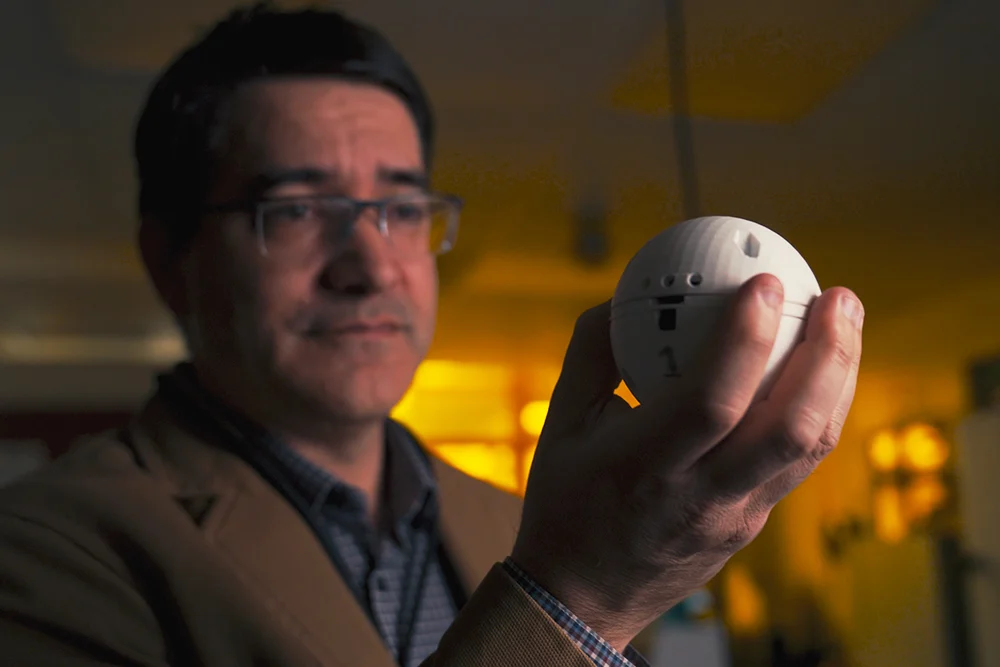
Researchers at MIT Lincoln Laboratory have unveiled a groundbreaking throwable sensor, dubbed TOSSIT, designed to provide an immediate and accessible warning system for military personnel, first responders, and law enforcement facing chemical threats. This innovative device, roughly the size of a baseball, is capable of remotely detecting hazardous vapors and aerosols, a critical capability for personnel operating in potentially compromised environments. The development addresses a significant gap in current detection technologies, offering a low-cost and deployable solution for identifying a range of chemical hazards.
The TOSSIT Sensor: A New Frontier in Chemical Detection
The Tactical Optical Spherical Sensor for Interrogating Threats, or TOSSIT, is engineered for rapid deployment and intuitive operation. Its primary function is to sample the air in an area of concern and analyze it for the presence of specific chemical agents. The sensor utilizes a removable dye card, which undergoes a visible color change when exposed to certain chemicals. An internal camera then captures this color alteration, processing the information to determine if a threat is present. This visual detection method is complemented by an integrated alerting system, which can notify users through a dedicated mobile application or directly via alarms built into the sensor itself.
This technology is poised to revolutionize how chemical threats are identified and managed in high-stakes scenarios. Unlike more complex and expensive laboratory-based detection systems, TOSSIT offers a distributed and immediate sensing capability. Its small size and ease of deployment—whether by tossing, drone-dropping, or launching—allow for swift reconnaissance of areas that may be too dangerous for personnel to enter directly. The types of threats TOSSIT is designed to detect include chemical warfare agents such as nerve and blister agents, as well as hazards arising from industrial chemical accidents and the presence of dangerous airborne particles like fentanyl dust.
Addressing an Unmet Need in Threat Detection
The development of TOSSIT stems from a recognized need for more accessible and cost-effective chemical detection tools. Traditional methods often involve bulky equipment, time-consuming sample collection and analysis, or require personnel to be in close proximity to potential hazards. TOSSIT aims to overcome these limitations by providing a proactive and remote sensing solution.
"TOSSIT fills an unmet need, providing a low-cost sensing option for vapors and solid aerosol threats — think toxic dust particles — that would otherwise not be detectable by small deployed sensor systems," stated Richard Kingsborough, the principal investigator for the project at MIT Lincoln Laboratory. This statement highlights the unique contribution of TOSSIT, particularly its ability to detect particulate threats that can be insidious and difficult to identify with existing portable sensors.
The implications of this development are far-reaching. For military service members, TOSSIT can provide early warning in combat zones or during hazardous material operations, potentially saving lives and preventing widespread contamination. First responders, such as firefighters and hazardous materials teams, can use the sensor to assess the safety of a scene before entering, enabling them to make more informed decisions about protective equipment and response strategies. Law enforcement agencies could also benefit from its ability to detect dangerous substances like fentanyl dust, a growing concern in the opioid crisis.
A Timeline of Innovation and Development
The journey of TOSSIT from concept to fielded technology involves a rigorous process of research, development, and testing. While specific dates for the initial conceptualization and early development phases are not detailed in the provided information, the publication date of July 9, 2026, suggests that the technology has undergone significant maturation and is now entering or has recently entered a phase of broader application.
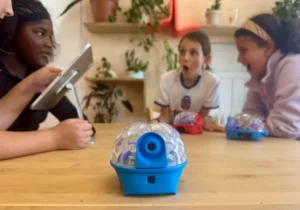
The image accompanying the announcement, featuring researcher Jude Kelley holding the TOSSIT sensor, showcases a "baseball-sized spherical sensor" with a visible dye card. This visual representation underscores the device’s compact and user-friendly design. The caption further clarifies that the dye card is removable and changes color in response to airborne chemicals, a key mechanism of TOSSIT’s operation.
Following extensive field testing, the technology is now in the process of being transferred to the U.S. military. This transition indicates a successful validation of TOSSIT’s performance and reliability in real-world conditions. The transfer process typically involves further refinement, manufacturing scale-up, and integration into existing military systems and protocols. The timeline for this transfer and subsequent deployment will be crucial in assessing the immediate impact of TOSSIT on operational safety and effectiveness.
Supporting Data and Technical Specifications
While detailed technical specifications are not extensively elaborated upon in the initial announcement, key features of TOSSIT can be inferred:
- Size and Form Factor: Baseball-sized and spherical, designed for easy handling and deployment.
- Detection Mechanism: Utilizes a removable dye card that changes color upon exposure to specific chemical agents.
- Analysis: An internal camera captures color changes on the dye card for interpretation.
- Alerting System: Provides notifications via a mobile application or integrated alarms.
- Targeted Threats: Vapors and aerosols, including chemical warfare agents (nerve, blister), industrial chemicals, and toxic dusts (e.g., fentanyl).
- Deployment Methods: Tossing, drone-dropping, or launching.
- Cost-Effectiveness: Described as a "low-cost sensing option."
The "low-cost" aspect is particularly significant. In military and first responder contexts, the ability to deploy numerous sensors without incurring prohibitive expense can drastically enhance situational awareness. If TOSSIT can be produced at scale for a reasonable price point, it could become a standard piece of equipment for many units and agencies.
Official Responses and Future Implications
The transfer of TOSSIT technology to the U.S. military signifies a strong endorsement from defense and security agencies. While direct quotes from military officials are not included, the action itself suggests confidence in the device’s capabilities and its potential to enhance operational security. The development at MIT Lincoln Laboratory, a research and development arm of the U.S. Department of Defense, further reinforces its strategic importance.
The broader implications of TOSSIT extend beyond immediate threat detection. The technology could pave the way for a new generation of distributed sensor networks capable of providing real-time, comprehensive environmental monitoring. Such networks could be invaluable in a variety of applications, including:
- Disaster Response: Monitoring air quality in areas affected by natural disasters, such as chemical spills or fires releasing toxic fumes.
- Public Health: Detecting airborne pathogens or environmental toxins in urban settings.
- Border Security: Identifying illicit substances or hazardous materials being transported across borders.
- Industrial Safety: Monitoring chemical plants and other industrial facilities for leaks or accidental releases.
The ability to gather data from numerous TOSSIT units simultaneously could provide a detailed, dynamic map of chemical hazards, allowing for more targeted and effective interventions. This data could also be used for long-term trend analysis and risk assessment.
Analysis of Impact and Broader Context
The introduction of TOSSIT represents a significant leap forward in tactical chemical sensing. Historically, the detection of chemical agents has been a complex and often reactive process. The development of portable, easy-to-deploy sensors like TOSSIT shifts the paradigm towards proactive threat identification.
The focus on both vapors and aerosols is particularly noteworthy. Aerosolized particles, such as toxic dusts, can remain suspended in the air for extended periods and pose a significant inhalation hazard. Detecting these particles effectively is crucial for protecting personnel and the public. The inclusion of fentanyl dust as a specific example highlights the device’s relevance to contemporary public safety challenges.
The "removable dye card" mechanism, while seemingly simple, is an elegant solution that leverages established chemical indicator principles. The innovation lies in its integration into a compact, self-contained, and digitally connected device. This integration allows for rapid analysis and communication, which are critical in time-sensitive situations.
The potential for TOSSIT to be deployed via drones opens up further possibilities for remote sensing in highly dangerous or inaccessible environments. Drones equipped with TOSSIT units could survey areas before human entry, or continuously monitor a perimeter for chemical incursions, providing an unprecedented level of real-time intelligence.
As TOSSIT moves from the laboratory to the field, ongoing research and development will likely focus on expanding its detection capabilities to a wider range of chemical agents, improving its accuracy and sensitivity, and enhancing its communication range and data processing capabilities. The long-term success of TOSSIT will depend on its ability to integrate seamlessly into existing operational frameworks and its continued affordability and reliability in diverse environmental conditions. The development of such technologies underscores the ongoing commitment to leveraging advanced scientific and engineering solutions to enhance national security and public safety.