The world of haute horlogerie is often characterized by established legacies, recognizable design cues, and carefully cultivated brand narratives. Yet, within this landscape of tradition and prestige, a distinct philosophy has emerged, championed by H. Moser & Cie. This Swiss watchmaker has strategically cultivated an identity that deliberately eschews conventional branding, positioning itself as an "unbrand" – a maverick in an industry where brand recognition is paramount. This approach, while seemingly counterintuitive, has allowed Moser to carve out a unique and influential niche, characterized by innovation, audacious creativity, and a deep respect for horological mastery.
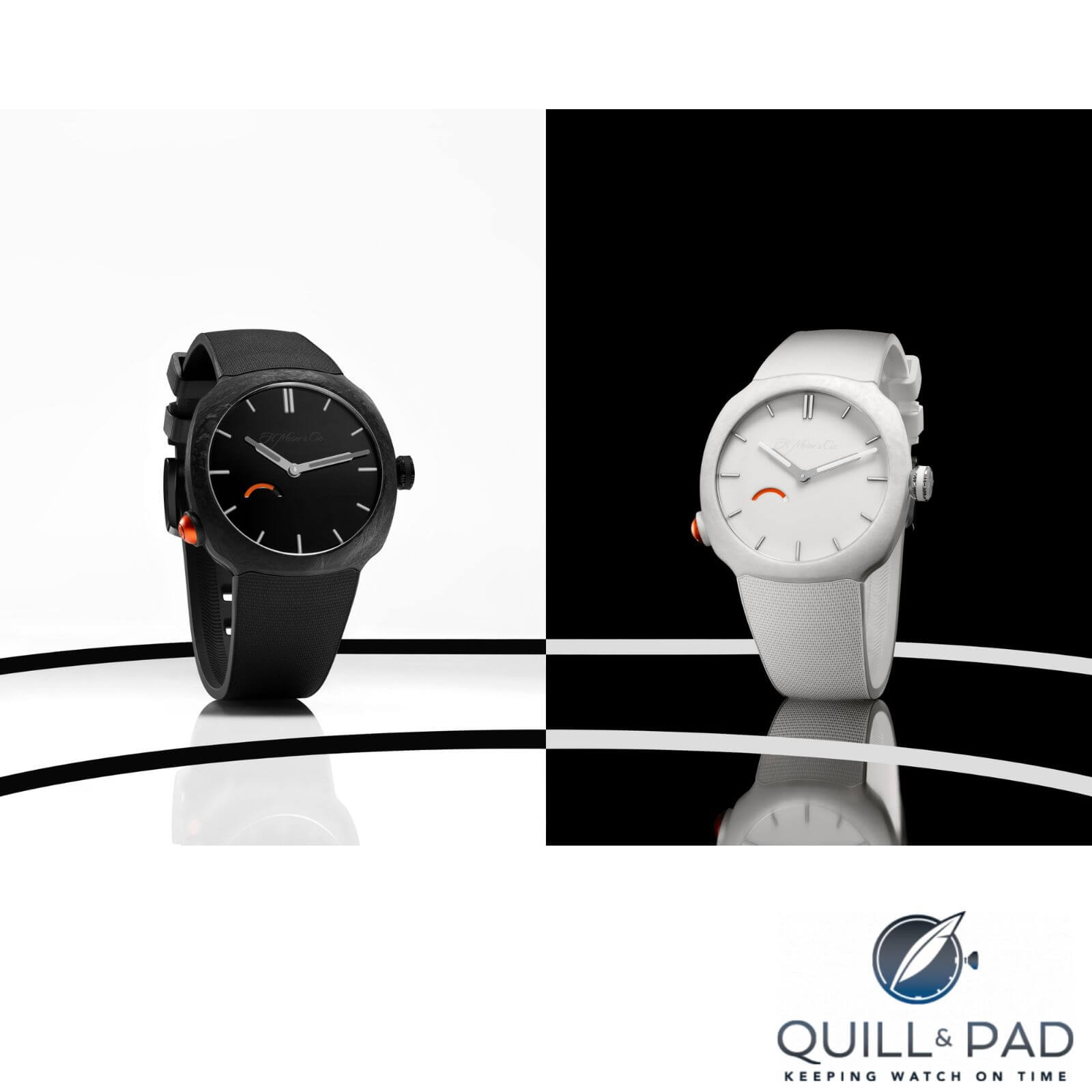
At Watches & Wonders 2026, a significant shift was palpable. H. Moser & Cie, a brand long associated with the independent spirit of the Carré des Horlogers, debuted with a prominent presence among the industry’s titans at the Palexpo in Geneva. Their booth, designed with an airy, art gallery-like aesthetic, immediately drew attention. The centerpiece of their display featured two striking new releases from their Streamliner family: the Pump, presented in both black and white variations. These watches, distinguished by a unique, almost playful orange protrusion at the 8 o’clock position, served as a powerful magnet for attendees, embodying Moser’s ethos of surprising the horological community.
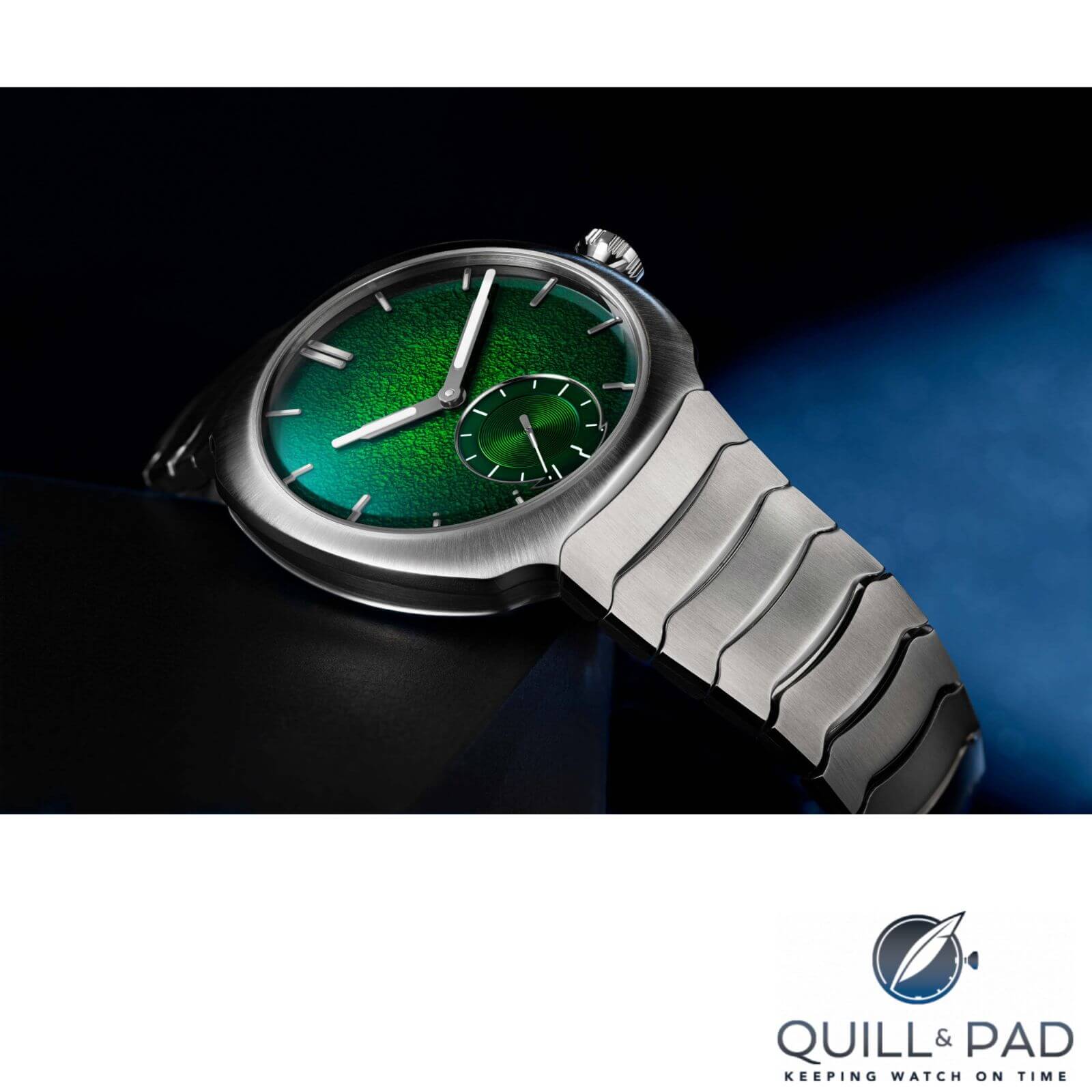
The Pump’s design, with its cushion-shaped case and flowing, lug-less silhouette, clearly places it within the celebrated Streamliner collection. This collection has become a canvas for Moser’s most distinctive and avant-garde creations. The brand’s approach to blending tradition and innovation is not a marketing slogan but a lived reality. Alongside its sister brand, Hautlence, Moser, based in Neuhausen am Rheinfall near Schaffhausen, consistently produces timepieces that are both visually arresting and built upon a foundation of robust watchmaking expertise.
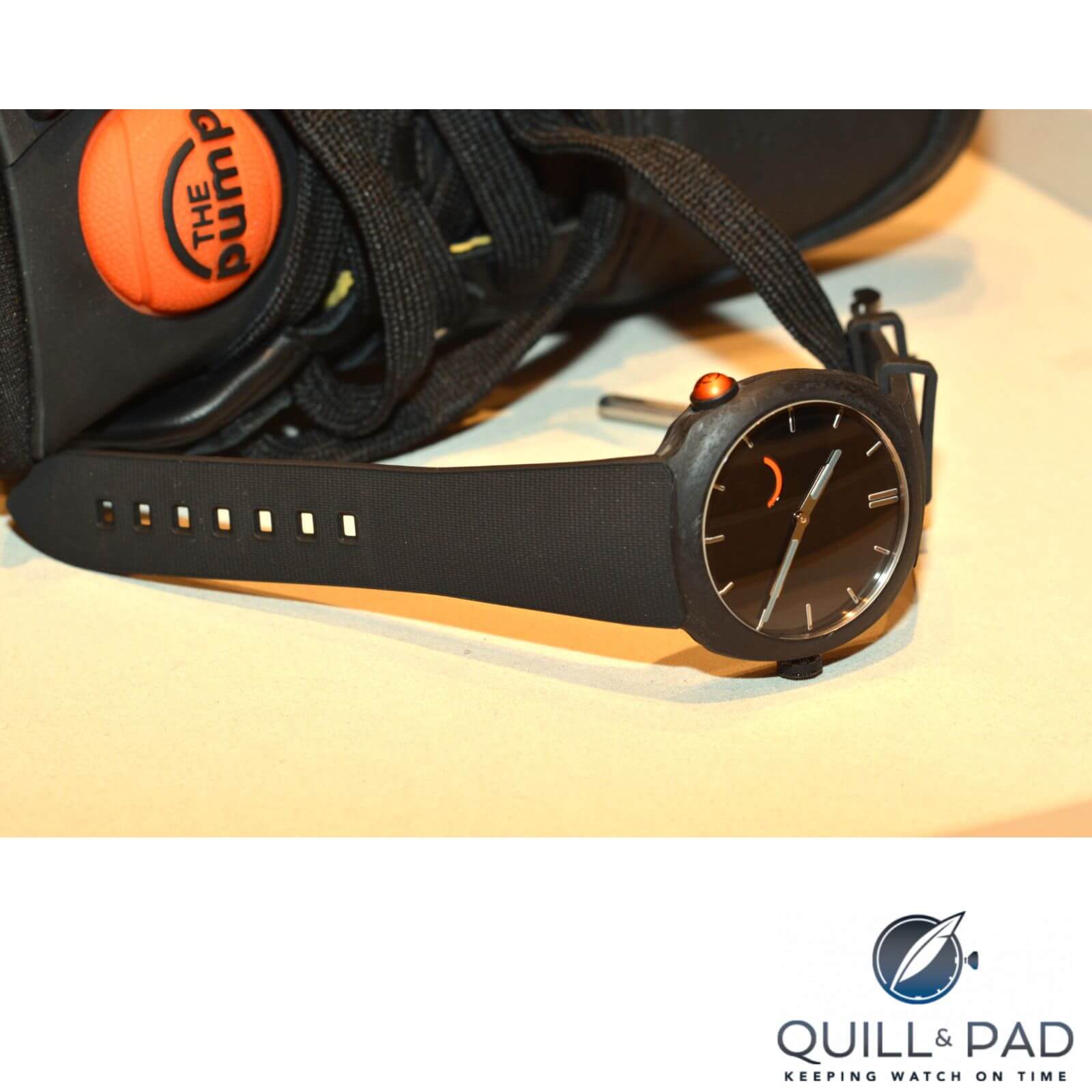
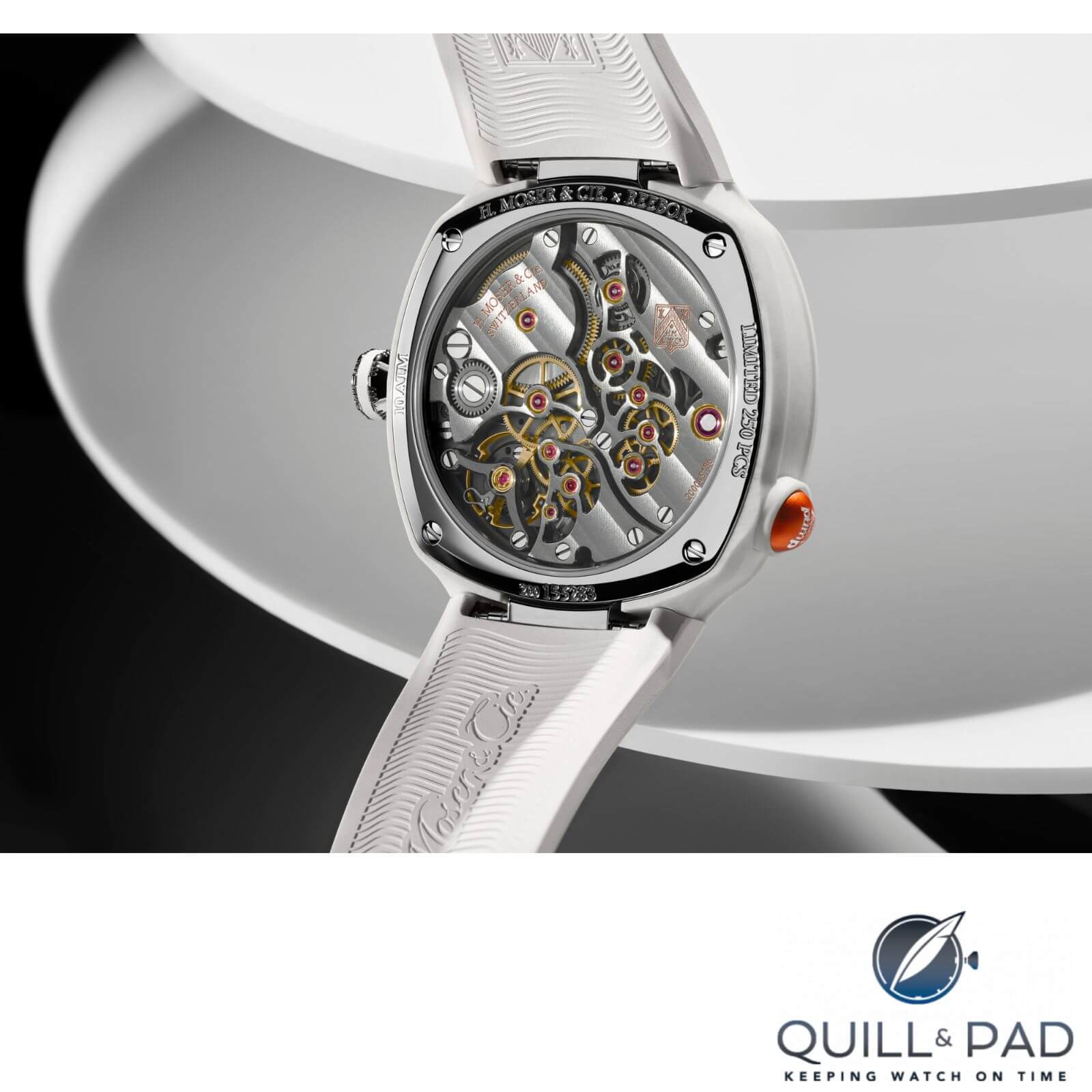
Moser’s strategy to gain recognition and captivate audiences has frequently involved bold collaborations and unexpected inspirations. From partnerships with streetwear-influenced Studio UnderdOg to the avant-garde designs with MB&F, the brand has consistently pushed boundaries. For the Pump, Moser drew inspiration from an icon of athletic footwear: the Reebok Pump sneaker. Released in 1989, the Reebok Pump featured a revolutionary internal air chamber, inflated by a distinctive orange button on the tongue, to provide a personalized, snug fit. Moser masterfully translated this concept into a watch. The Pump features an anodized aluminum orange pusher, mirroring the sneaker’s design, which allows for a full wind-up of the hand-wound HMC 103 manufacture calibre. Alternatively, users can opt for the traditional crown at 3 o’clock. A subtle slit on the dial serves as a power reserve indicator, a nod to the functional elements often found in sports-inspired designs.
The Pump, while sleek, is not without its technical complexities. The integration of the unique winding pusher into the meticulously crafted HMC 103 calibre presented a significant engineering challenge. The case itself is constructed from forged carbon fiber, a material known for its lightness and exceptional resistance, yet rarely seen in watchmaking. Currently available in limited editions of 250 pieces each in white and black, the potential for future color variations, given the versatility of the case material, remains an intriguing prospect.
The Genesis of an Unconventional Brand Identity
The transformation of H. Moser & Cie. into the "unbrand" it is today began in earnest following its acquisition by MELB Holding in 2012. This investment vehicle, steered by brothers Edouard and Bertrand Meylan, with the seasoned guidance of their father, Georges-Henri Meylan – a luminary in the watch industry and former CEO of Audemars Piguet – embarked on a mission to redefine the brand’s trajectory.
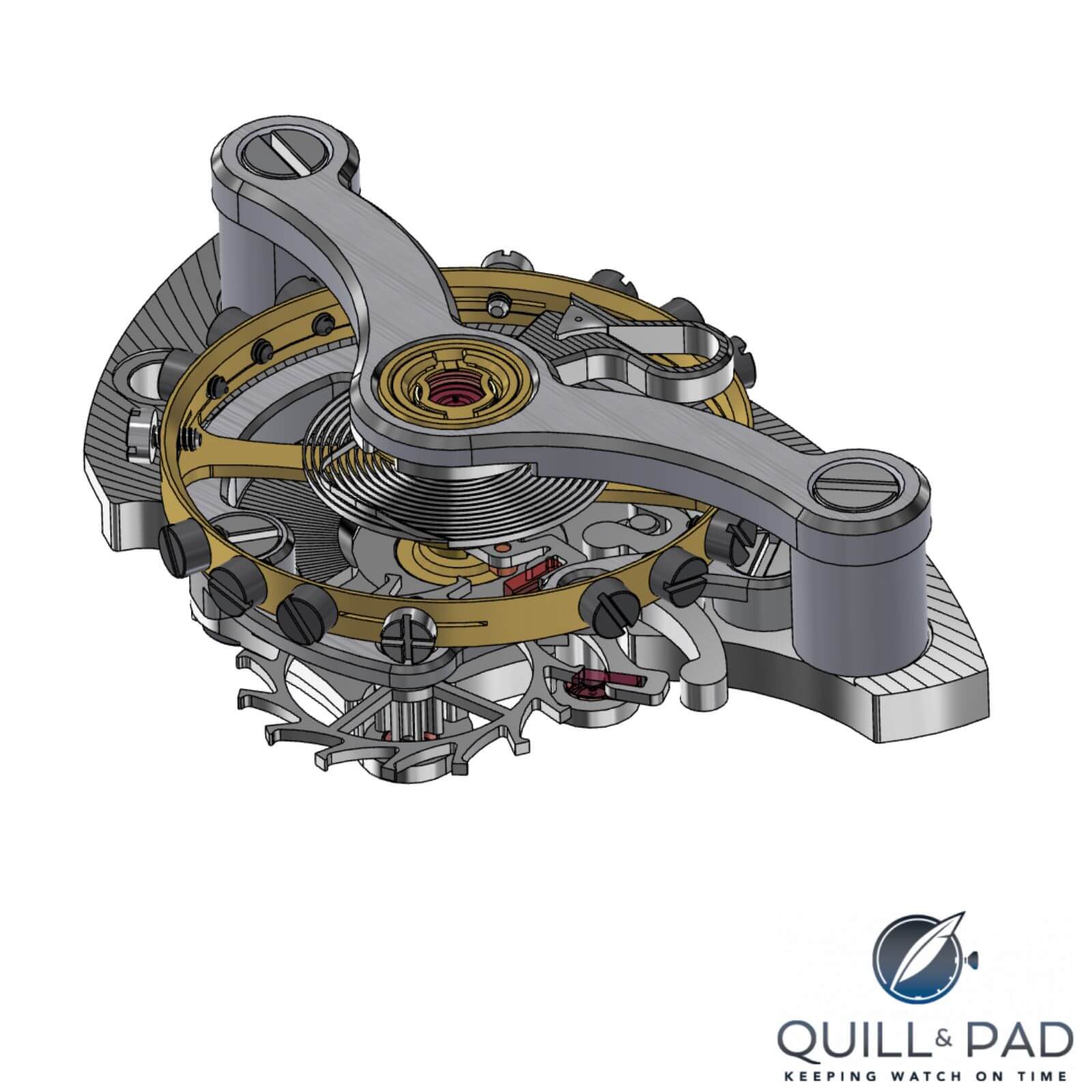
Prior to the Meylan family’s involvement, H. Moser & Cie. was renowned for its exquisitely crafted, classical timepieces, characterized by their signature fumé dials in a palette of muted browns, greens, blues, and grays. The horological underpinnings were undeniably strong. The brand had a historical legacy of technical innovation, notably featuring a unique balance assembly designed by Andreas Strehler. This system employed two hairsprings oscillating in opposite directions, a design that significantly enhanced chronometric accuracy. The hairsprings themselves were manufactured by Precision Engineering, a company that later became part of Moser. Furthermore, the balance wheel, pallet lever, and escape wheel were integrated into a removable module, a design that greatly simplified servicing and replacement without requiring a complete disassembly of the movement.
However, the new ownership recognized the need to evolve beyond its traditional image to thrive in the contemporary watch market. "We needed to discontinue some things and examine what could be improved," stated Nicholas Hofmann, H. Moser & Cie. International Sales Director, in an interview. "I think that was one of the biggest successes: not following in the footsteps of an existing brand, but truly carving out our own territory, our own segment in the market." This strategic pivot involved calculated risks and substantial investments, aiming to cultivate a distinct identity that resonated with a new generation of collectors.
Provocation and Precision: The Moser Playbook
Moser’s audacious strategy to gain attention and foster recognition has been a cornerstone of its post-2012 evolution. This has manifested in a series of provocative releases that, while sometimes polarizing, invariably spark conversation and highlight the brand’s technical prowess. The brand’s willingness to engage in what could be termed "serious fun" has been key to its success.
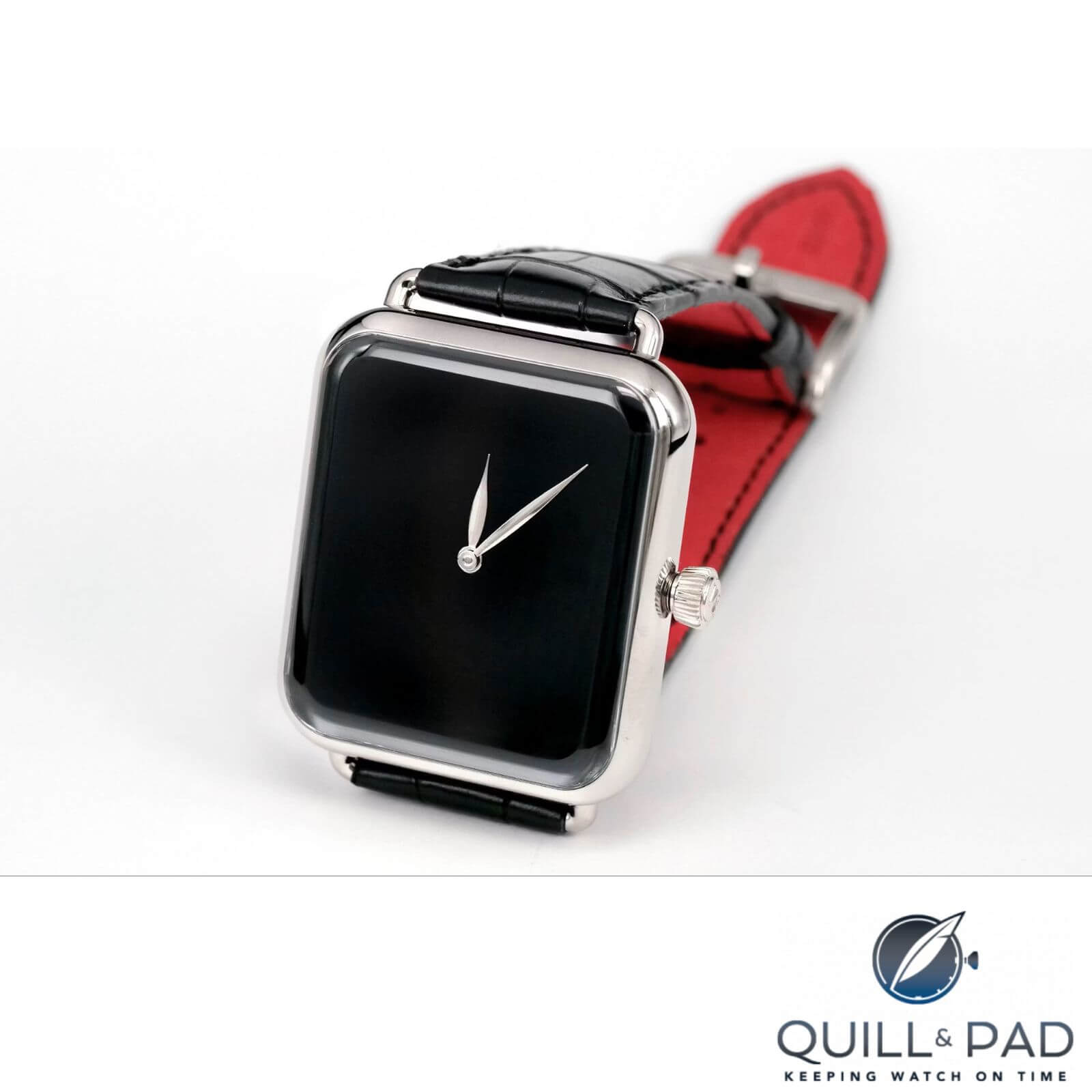
In 2015, as the broader watch industry grappled with the advent of smartwatches, exemplified by Apple’s entry into the market, H. Moser & Cie. responded with the Swiss Alp Watch. This rectangular timepiece, measuring 38.2mm x 44.0mm, was a clever and witty riposte, positioned somewhere between a running joke and a profound horological statement. It demonstrated that even in the face of digital disruption, traditional watchmaking could offer unique value and artistic expression. The community began to take notice, a critical step in establishing Moser’s presence.
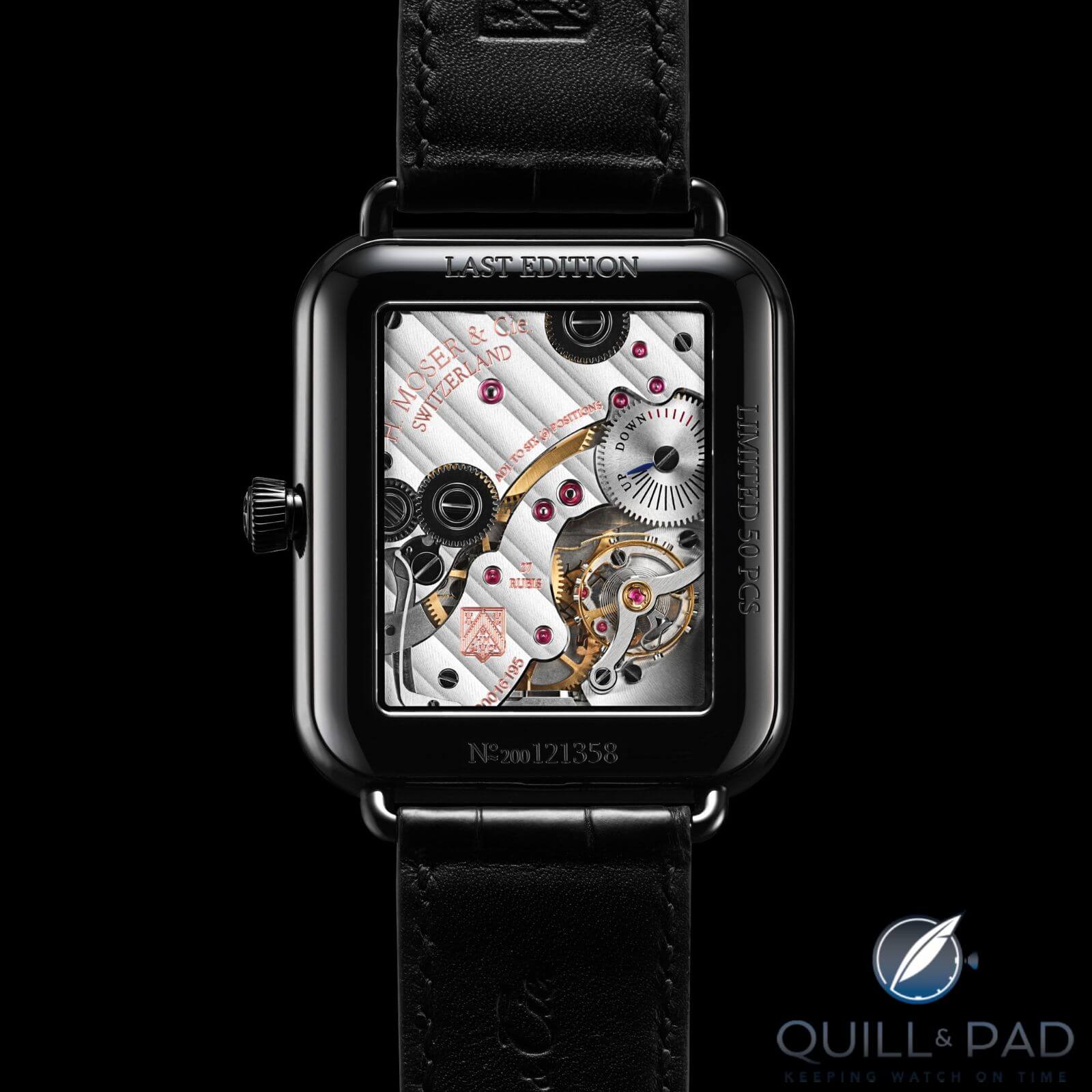
Beneath the playful exterior of the Swiss Alp Watch and subsequent conceptual pieces lay exceptional craftsmanship. The internal movements, such as the HMC 324, were testament to Moser’s vertically integrated manufacturing capabilities. This calibre, beating at 18,000 vibrations per hour, offered an impressive 100-hour power reserve. Its mainplate and bridges were adorned with the signature double "Moser stripes," a hallmark of high-end finishing. This commitment to technical excellence and meticulous finishing provided the credibility necessary for Moser’s more unconventional designs to be taken seriously by discerning collectors. As Hofmann aptly explained, "People took us seriously with the Swiss Alp Watch, with and the ‘cheese watch’, because behind it all we had a genuine, vertically integrated manufacture. We had the expertise, we’re specialists in balance springs and balance wheels, so we had a certain credibility. If we’d just been assemblers of off-the-shelf movements and, on top of that, played up this slightly fun, disruptive side, I think it wouldn’t have gone down so well with collectors."
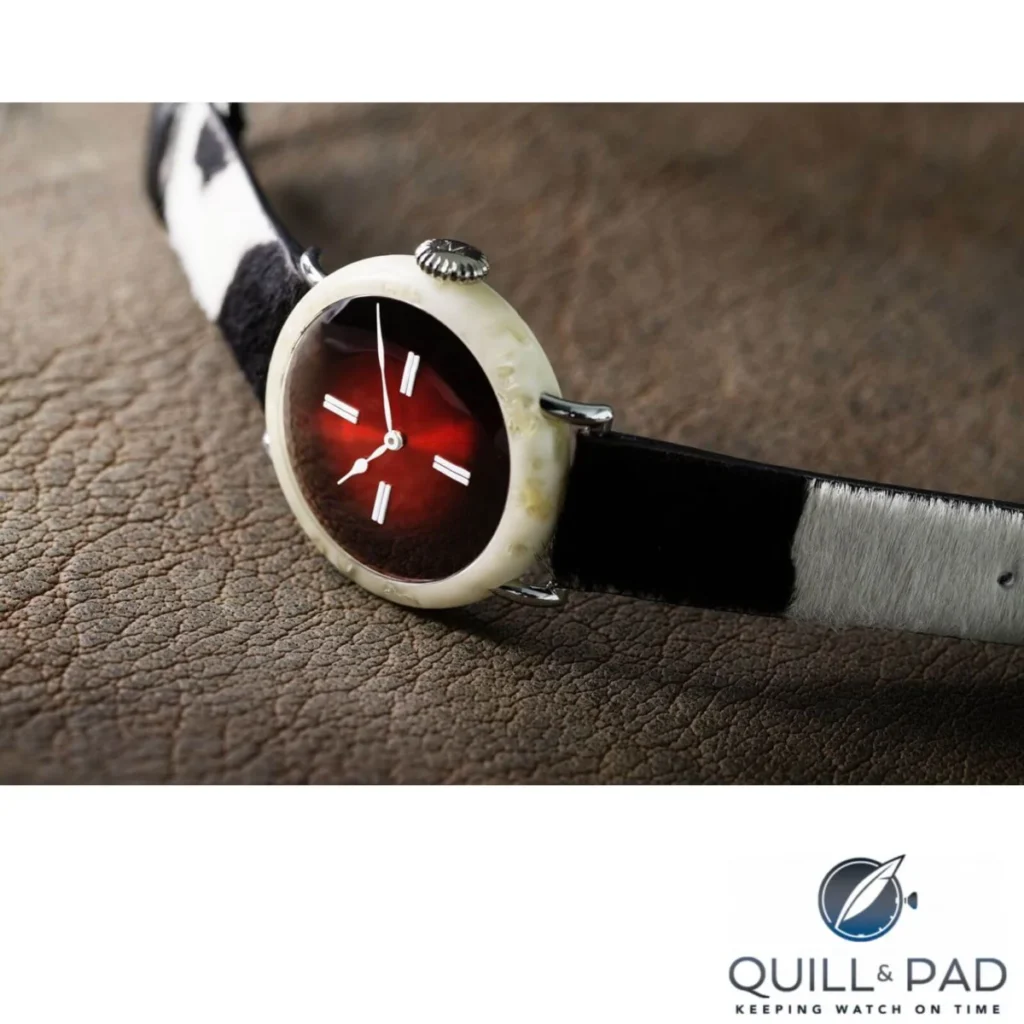
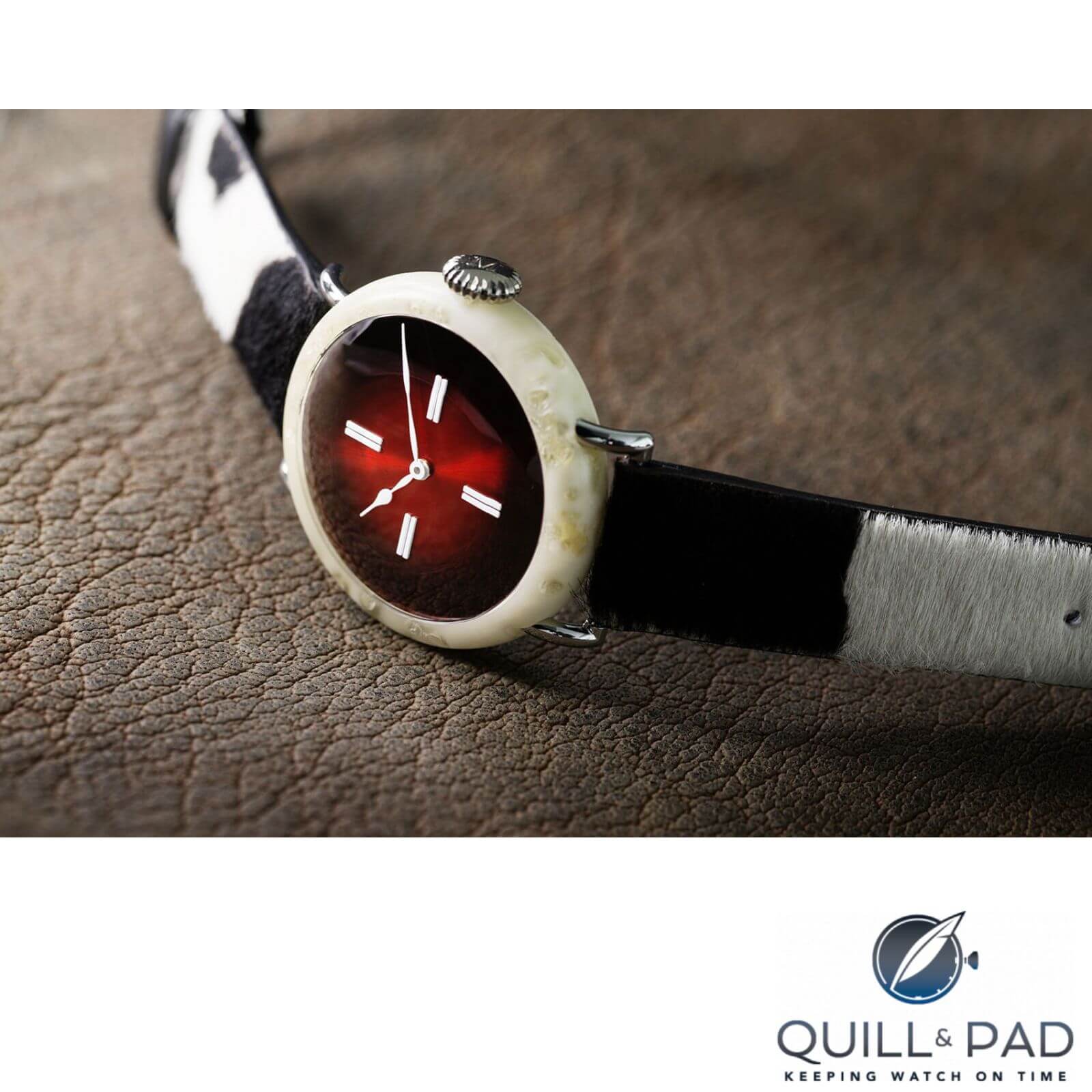
The brand’s creative process continued to push boundaries. The Swiss Mad Watch, released in 2017, was a bold protest against the perceived dilution of the "Swiss Made" label, featuring a case crafted from cheese. Later, the Frankenstein Watch, a deliberately assembled timepiece incorporating iconic elements from rival brands – such as a Rolex Pepsi bezel, a Patek Nautilus dial, and a Girard-Perregaux bridge – drew a stern, albeit perhaps grudging, acknowledgment from the industry. These actions, while provocative, were rooted in a desire to stimulate dialogue and highlight the unique position Moser occupied.
The brand’s willingness to experiment extends to its dial colors and materials. Moser has become known for its daring use of vibrant and striking hues, a choice that requires considerable confidence given the potential for colors to date quickly. The Pioneer Center Seconds Sun Berry, for instance, showcased a dazzling combination of yellow and pink. The Endeavour Pop Collection, introduced in 2025, featured dials incorporating turquoise, coral, lapis lazuli, and Burmese jade, demonstrating a playful yet sophisticated approach to color. For those with more understated preferences, the Endeavour Perpetual Calendar Concept Tantalum offers a minimalist dial, underscoring the brand’s versatility.
A Timeline of Audacious Innovation
Moser’s journey from a classical watchmaker to a celebrated "unbrand" can be traced through a series of significant milestones:
- 2012: MELB Holding, led by the Meylan family, acquires H. Moser & Cie., initiating a strategic repositioning.
- 2015: The brand releases the Swiss Alp Watch, a direct and witty response to the rise of smartwatches, showcasing its commitment to mechanical watchmaking’s enduring appeal.
- 2016: The Swiss Alp Watch Zzzz debuts, encouraging wearers to "slow down time" with its minimalist design. Later iterations explored Vantablack dials and minute repeaters, reinforcing the brand’s technical capabilities alongside its conceptual designs.
- 2017: The Swiss Mad Watch is launched, a statement against the "Swiss Made" label, highlighting Moser’s willingness to engage in industry commentary.
- 2018: The Frankenstein Watch is introduced, a daring assembly of iconic components from other luxury watch brands, eliciting industry reactions and cementing Moser’s reputation for boldness.
- 2020: The Streamliner collection is unveiled, initially met with mixed reactions but quickly establishing itself as a cornerstone of Moser’s modern identity, with diverse iterations featuring innovative dials and complications.
- 2021: The final version of the Swiss Alp Watch is released, featuring a "loading" sub-seconds display, a playful nod to smartwatch animations.
- 2023: H. Moser & Cie. invests in Agenhor, a renowned movement and module specialist, further enhancing its in-house capabilities and collaborative potential.
- 2026: At Watches & Wonders, the brand presents the latest additions to the Streamliner family, including the innovative "Pump" model, showcasing its continued commitment to surprising and delighting the watch community.
The Agenhor Partnership: Elevating Horological Excellence
A significant development in H. Moser & Cie.’s strategic expansion occurred in 2023 with its investment in Agenhor. This move was more than a simple acquisition; it represented a synergy of design philosophy and technical mastery. Agenhor, under the direction of Jean-Marc Wiederrecht, has been instrumental in creating some of the most celebrated and complex timepieces from brands such as Hermès, Fabergé, Singer, and Van Cleef & Arpels.

The integration of Agenhor’s expertise into Moser’s operations is particularly evident in models like the Endeavour Flyback Chronograph Dual Time. This timepiece, powered by the HMC 730 calibre developed with Agenhor’s input, features a flyback chronograph, a second time zone, and a central date display. This collaboration underscores Moser’s commitment to developing sophisticated complications that are not merely functional but also elegantly integrated into their designs. The partnership signifies Moser’s dedication to pushing the boundaries of mechanical watchmaking while maintaining its signature blend of innovation and aesthetic appeal.
The "Unbrand" Paradox: Identity Through Non-Conformity
The paradox at the heart of H. Moser & Cie.’s strategy is undeniable. It is a brand that consistently refuses to conform to traditional branding norms, yet in doing so, it has forged one of the most recognizable and respected identities within independent watchmaking. This deliberate departure from convention has granted Moser the freedom to experiment, to provoke, and to surprise.
Nicholas Hofmann articulates this philosophy clearly: "We’re always on the lookout for ideas, asking ourselves: what can we bring to the table? We’re here to provoke. We need to surprise people – and yes, if we do, we might lose a certain segment of the customer base who simply won’t relate. But we might also win others over. We have the luxury of being part of a family that owns the brand, and that lets us take risks that a CEO answerable to shareholders on a quarterly basis simply couldn’t." This familial ownership structure provides a crucial buffer, allowing for long-term vision and creative freedom, unhindered by the short-term pressures often faced by publicly traded companies.
As H. Moser & Cie. prepares to commemorate the company’s founding by Heinrich Moser in Saint Petersburg in 1828, anticipation is high for what the future holds. Hofmann hints that "big things await." However, predicting Moser’s next move is, by design, an exercise in futility. This inherent unpredictability, this constant drive to innovate and surprise, has arguably become the brand’s most enduring and defining characteristic. It is a testament to the power of embracing the unconventional, proving that in the world of luxury watches, sometimes the most effective way to be seen is to refuse to be easily categorized.