BOSTON — Silicone has become an indispensable material across a vast array of industries, from the intricate components of medical devices to the robust seals in automotive manufacturing, the protective casings in electronics, and the functional elements in consumer products. Its unparalleled combination of flexibility, impressive temperature resistance, and remarkable chemical stability makes it the material of choice for demanding applications where other polymers simply fall short. However, these very properties, which define its utility, have historically rendered it one of the most challenging materials to bond effectively and durably, posing a persistent hurdle for manufacturers worldwide.
The inherent paradox of silicone’s strength lies in its chemical makeup. Bonaventure Mutuku, a leading expert from Boston Industrial Solutions, highlights that silicone’s unique chemistry necessitates an entirely different approach to bonding compared to conventional engineering materials. Unlike many plastics, metals, or composites that readily form strong adhesive bonds with various substrates, silicone’s molecular structure presents a formidable barrier. Its backbone of silicon-oxygen (Si-O) bonds, coupled with organic side groups, contributes to its inertness and, crucially, its exceptionally low surface energy. This low surface energy means that silicone naturally repels most adhesives, making it difficult for them to "wet" the surface and establish the intimate contact required for strong adhesion.
“Silicone is very good in terms of application across many industries,” Mutuku explains, detailing the material’s widespread adoption. “It’s nonreactive to many things, it’s safe, it’s very flexible, and it can withstand a wide range of temperatures without changing its form. That’s what makes it very good. But those same properties make it very challenging to bond.” This statement encapsulates the core dilemma: the very attributes that make silicone a superior material also contribute to its adhesive recalcitrance. Manufacturers grappling with silicone integration have long sought reliable, scalable, and cost-effective methods to ensure permanent, high-performance bonds.
The Ubiquitous Material: Silicone’s Indispensable Role
To fully appreciate the significance of advancements in silicone bonding, it’s essential to understand the material’s pervasive influence. Silicone elastomers, resins, and fluids are critical in countless applications where performance and reliability are paramount. In the medical field, biocompatible silicones are used for everything from catheters and implants to drug delivery systems and surgical tools, demanding sterile, durable, and non-reactive bonds. The automotive sector relies on silicone for gaskets, seals, hoses, and sensor encapsulation due to its ability to withstand extreme temperatures, oils, and vibrations under the hood. Electronics benefit from silicone’s electrical insulation properties, thermal conductivity, and moisture resistance for potting compounds, encapsulants, and flexible circuits, ensuring device longevity and performance. Even in consumer goods and food processing, silicone’s non-toxic, heat-resistant, and flexible nature makes it ideal for bakeware, kitchen utensils, baby products, and food-grade seals, where product safety and durability are non-negotiable. The global silicone market, estimated to be worth tens of billions of dollars, continues to expand, driven by innovation and the increasing demand for high-performance materials. This expansion underscores the urgent need for robust bonding solutions to unlock silicone’s full potential in next-generation products.
The Paradox of Pliability: Why Silicone Resists Bonding
The scientific explanation behind silicone’s bonding difficulties lies primarily in its unique molecular architecture. Unlike polymers with highly reactive surface groups or high surface energy, silicone’s methyl groups create a hydrophobic and non-polar surface. This results in a typical surface energy of around 20-24 mN/m, significantly lower than many engineering plastics (e.g., polycarbonates at 30-40 mN/m, or metals at hundreds of mN/m). Adhesion, at its most fundamental level, requires an adhesive to wet the substrate surface thoroughly, allowing for intermolecular forces to develop. With silicone’s low surface energy, many conventional adhesives simply bead up, failing to spread and establish sufficient contact. Furthermore, the inherent chemical inertness of the siloxane backbone means there are few "active sites" for chemical bonds to form with standard adhesives, making mechanical interlocking or weak van der Waals forces the primary, often insufficient, modes of adhesion. This challenge is compounded by silicone’s flexibility, which can lead to bond line stress and delamination if the adhesive joint isn’t designed to accommodate movement.
Historical Approaches and Their Limitations
For decades, manufacturers seeking to bond silicone have largely relied on mechanical surface treatments to temporarily alter its surface energy. These methods aim to introduce polar groups onto the silicone surface, making it more receptive to adhesives. Among the most common techniques are:
- Plasma Treatment: This involves exposing the silicone surface to a low-pressure plasma discharge (e.g., oxygen or argon plasma). The energetic ions and radicals in the plasma bombard the surface, breaking Si-CH3 bonds and forming Si-OH (silanol) groups and other oxygen-containing species. This increases surface energy and creates active sites for bonding.
- Flame Treatment: Similar in principle, flame treatment uses a controlled flame to briefly oxidize the silicone surface, creating polar groups. It’s often used for larger, less intricate parts.
- Corona Discharge Treatment: This method uses high-voltage electrical discharge to ionize the air around the silicone surface, producing reactive species that modify the surface chemistry.
While these historical approaches have proven effective in some applications, they come with significant limitations. One of the primary drawbacks is the creation of narrow processing windows. The modified surface of the silicone is often unstable and begins to revert to its original, low-energy state over time, a phenomenon known as "hydrophobic recovery." This means that bonding must occur shortly after surface preparation, typically within minutes or hours.
“The limitation is the duration, the time in which you need to work with that material,” Mutuku observes. “When that window passes, then you have to go back and redo it.” This requirement for immediate bonding can disrupt manufacturing workflows, limit batch processing, and increase scrap rates, particularly in high-volume production environments. Furthermore, the equipment for plasma or corona treatment can represent a substantial capital investment, and achieving consistent treatment across complex geometries can be challenging. These factors highlighted the need for more robust, less time-sensitive bonding solutions.
A New Era of Adhesion: Chemical Bonding Innovations
Recognizing these inherent limitations, the industry has increasingly turned its attention to chemical bonding technologies. These advanced solutions aim to create more durable, permanent adhesion without relying solely on temporary surface activation. The principle often involves the use of specialized primers or adhesive systems that are chemically engineered to react with the silicone surface, creating strong covalent or robust intermolecular bonds. These primers essentially act as molecular bridges, preparing the silicone surface for subsequent adhesion with a wide range of materials or other silicone components.
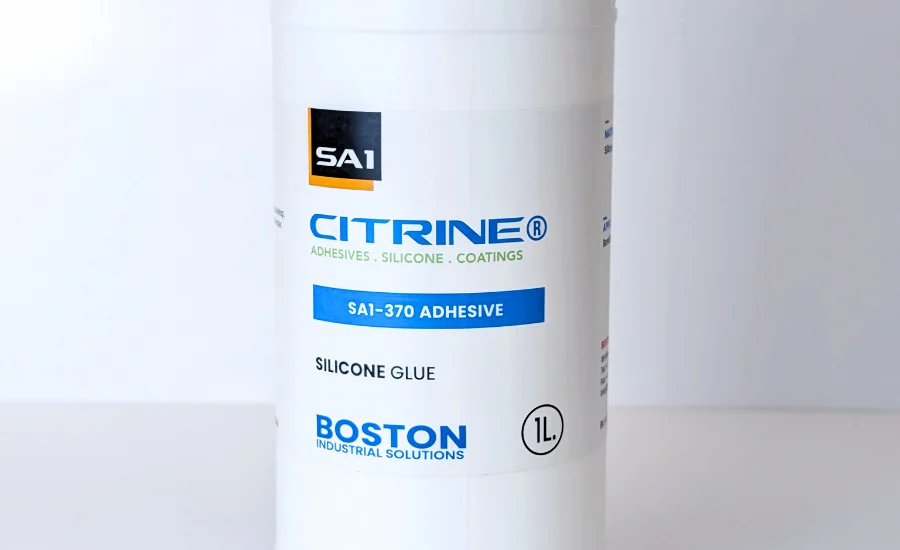
Boston Industrial Solutions stands at the forefront of this innovation. Mutuku reveals that the development of their cutting-edge chemical bonding solutions was the culmination of extensive research and development, building upon the company’s prior expertise in formulating advanced silicone inks and industrial primers. “It took us about two years to be able to get to where we are,” he recounts, emphasizing the rigorous process. “We finally developed something that we thought was very good, and we’ve benchmarked it against some of the best companies in the world.” This dedication to R&D has yielded products that promise to revolutionize silicone assembly, offering manufacturers greater flexibility, reliability, and efficiency. These chemical primers and adhesives are designed to offer a more stable surface modification, often allowing for a longer open time between preparation and bonding, thus easing production constraints and reducing the risk of bond failure due to time-sensitive processing windows. The shift towards chemical bonding represents a significant leap from purely physical surface modifications, paving the way for truly integrated silicone components.
The Crucial Role of Process Control: Beyond the Adhesive
Even with the advent of improved adhesive technologies, successful silicone bonding remains heavily dependent on meticulous process control. The most advanced primer or adhesive cannot compensate for inadequate surface preparation or improper application. Bonaventure Mutuku emphasizes that overlooking fundamental steps is one of the most common and costly mistakes manufacturers make.
“The biggest one that we see out in the industry is people don’t clean the surface,” he states unequivocally. “If the surface is not clean, then bonding becomes an issue because now you have a new layer that was not supposed to be there.” This "new layer" could be anything from dust, oils, greases, mold release agents, or even fingerprints, all of which act as weak boundaries, preventing the adhesive from making direct contact with the silicone substrate. A properly cleaned surface ensures maximum contact area and allows the chemical bonding mechanisms to function as intended.
Beyond simple cleanliness, Mutuku also cautions manufacturers about the critical importance of using compatible cleaning chemicals and ensuring complete solvent evaporation. Using aggressive or incompatible cleaning agents can damage the silicone surface, while residual solvents can interfere with the curing process of the adhesive, leading to weak or delaminated bonds. “You want to make sure that it’s fully degassed before you move on to the next step of bonding,” Mutuku advises. “Otherwise, you’re not going to achieve a good bond.” The economic implications of inadequate process control are substantial, ranging from increased material waste and production delays to costly product recalls and damage to brand reputation. Investing in robust cleaning protocols, proper drying, and quality control checks at each stage of the bonding process is as vital as selecting the right adhesive.
Driving Demand: Industries Reliant on Robust Silicone Bonds
The continuous growth in demand for reliable silicone bonding solutions reflects the material’s expanding utility across critical industries. Manufacturers are pushing the boundaries of silicone applications, requiring stronger, more durable, and more consistent bonds to meet stringent performance requirements. Mutuku specifically highlights several key sectors where permanent silicone bonding is not just beneficial, but transformative:
- Medical Devices: The integrity of bonds in medical implants, tubing, and diagnostic equipment is paramount for patient safety and device functionality. Improved bonding simplifies complex assemblies, reduces the risk of contamination, and enhances the longevity of life-critical devices.
- Automotive Components: As vehicles become more complex and electric, the need for robust seals, sensors, and structural components that can withstand harsh environments, extreme temperatures, and vibrations increases. Reliable silicone bonds contribute to vehicle safety, performance, and extended operational life.
- Electronics: From miniature wearable devices to large industrial controls, silicone is used for encapsulation, thermal management, and environmental protection. Permanent bonds are essential for protecting sensitive circuitry from moisture, dust, and shock, ensuring the reliability of electronic systems.
- Food-Processing Equipment: In applications requiring hygiene, non-toxicity, and resistance to cleaning agents and temperature fluctuations, silicone seals and components are invaluable. Enhanced bonding simplifies the design of sanitary equipment and improves durability, reducing maintenance and ensuring food safety standards.
The ability to consistently create strong, long-lasting bonds with silicone opens up new design possibilities, reduces assembly complexity, and ultimately improves the durability and performance of a vast array of end products. This allows engineers to fully leverage silicone’s superior properties without being constrained by previous bonding limitations.
The Future of Silicone Assembly: Automation and Sustainability
Looking ahead, the evolution of silicone bonding is intrinsically linked to broader trends in manufacturing, particularly automation and sustainability. Mutuku anticipates continued advances in robotic dispensing and curing technologies that will further improve manufacturing efficiency and consistency. The integration of robotics into the adhesive application process offers numerous advantages: unparalleled precision, reduced human error, increased throughput, and the ability to handle complex geometries with ease. Automated systems can ensure consistent bead size, placement, and curing conditions, leading to more reliable and repeatable bond quality.
“We do see robotics applying these adhesives,” Mutuku confirms, painting a picture of future manufacturing floors. This shift towards automated application aligns perfectly with the industry’s drive for higher efficiency, lower labor costs, and enhanced quality control. Furthermore, the development of sustainable products and processes is a core objective for Boston Industrial Solutions and the broader manufacturing sector. This includes formulating adhesives with reduced volatile organic compounds (VOCs), optimizing curing processes to minimize energy consumption, and developing bonding solutions that enable easier recycling or repair of composite products. “We want to develop sustainable products and sustainable processes, and we think that’s where the market is going,” Mutuku concludes.
The journey from struggling with silicone’s inertness to developing advanced chemical bonding solutions and integrating automated application represents a significant triumph in material science and manufacturing engineering. As industries continue to innovate and demand more from their materials, the ability to reliably bond silicone will remain a cornerstone of progress, enabling the creation of safer, more durable, and more efficient products for a rapidly evolving global market.