After a thorough closet cleanout, the options for responsibly recycling old threads are remarkably few. Beyond depositing used garments at a donation center, a comprehensive, scalable process for textile recycling, akin to the established systems for bottles and cans, remains largely elusive. This stark reality contributes to an alarming statistic: the average American discards approximately 81 pounds of clothing annually, collectively amounting to more than 11 million tons of textiles that ultimately clog landfills or fuel incinerators. However, a groundbreaking innovation from Massachusetts Institute of Technology (MIT) engineers offers a beacon of hope, aiming to significantly reduce this burgeoning mountain of textile waste with the development of a novel, fully recyclable yarn.
The Looming Crisis of Textile Waste
The fashion industry, particularly the rise of "fast fashion," has dramatically exacerbated the global textile waste problem. Driven by rapid production cycles, low prices, and fleeting trends, consumers are encouraged to purchase more and discard faster. This linear model of consumption—take, make, dispose—is unsustainable. According to the Environmental Protection Agency (EPA), textile waste has more than doubled over the last two decades, with a staggering 85% of all textiles ending up in landfills or incinerators. Landfilled textiles decompose slowly, releasing methane, a potent greenhouse gas, and leach toxic chemicals and dyes into the soil and groundwater. Incineration, while reducing volume, contributes to air pollution through the release of particulate matter and greenhouse gases.
Beyond the sheer volume, the complexity of modern textiles presents a formidable recycling challenge. Many garments are composed of blended fibers—a mix of natural materials like cotton and synthetic ones such as polyester, nylon, and crucially, spandex. While these blends offer desirable properties like stretch, durability, and comfort, they are notoriously difficult to separate and recycle economically. The intricate chemical and physical bonds between different fiber types render most conventional recycling methods ineffective, pushing these composite materials towards incineration or landfill, even if individual components might theoretically be recyclable.
MIT’s Pioneering Solution: A Polyethylene-Based Yarn
The MIT team, led by research scientist Svetlana Boriskina from the Department of Mechanical Engineering, has engineered a yarn crafted from a form of plastic widely utilized in everyday items like milk bottles and grocery bags: polyethylene. This innovative yarn possesses a tactile quality remarkably similar to traditional sewing thread and can be seamlessly woven into flexible, lightweight apparel. The true game-changer lies in its lifecycle: researchers envision that a garment fashioned from this polyethylene-spun yarn could, at the end of its utility, be melted down and redrawn into fresh yarn. This newly formed yarn could then be re-woven into new clothing or even molded into other plastic products such as buttons, belt buckles, or various accessories, thus closing the loop on textile consumption.
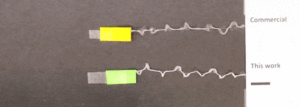
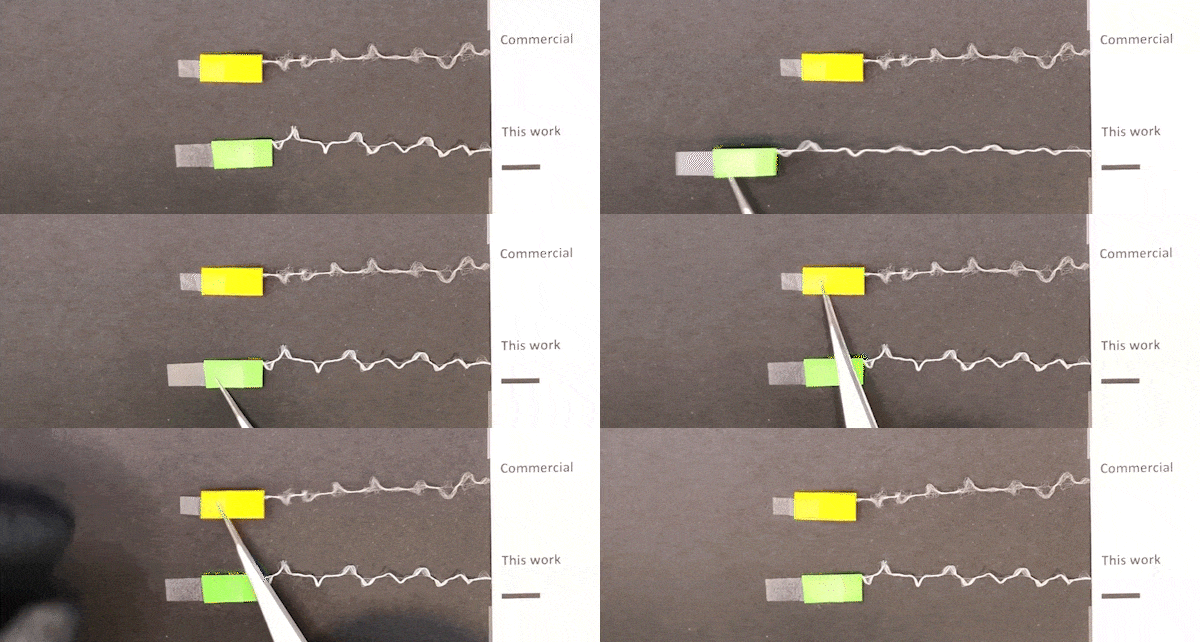
To rigorously validate the yarn’s recyclability, the MIT researchers conducted a series of demanding experiments. They repeatedly spun a spool of the innovative yarn, melted it down, and then re-spun it into new yarn, meticulously documenting the process over multiple cycles. Their findings were highly encouraging: even after ten cycles of melting and re-spinning, the regenerated yarn maintained its original strength and flexibility, performing comparably to conventional thread. This robust performance suggests a durable, truly circular pathway for textile materials.
Addressing the Spandex Dilemma
A significant driver for this research was the widespread integration of spandex in contemporary clothing. Boriskina highlights a critical issue: "Eighty percent of textiles on the U.S. market currently contain some amount of spandex, which makes them nonrecyclable." This pervasive presence of spandex is a major roadblock to textile circularity. Spandex, a polyurethane-based synthetic fiber, is celebrated for its elasticity but lacks inherent strength. To create durable, stretchy fabrics, it is typically combined with stronger fibers like polyester or nylon, forming a core-sheath structure where a spandex core is enveloped by a more robust material.
This composite structure, while delivering desired garment properties, creates an insurmountable hurdle for conventional recycling. Recycling such blended yarns typically necessitates arduous and often environmentally harmful chemical treatments to separate the polyester or nylon sheath from the spandex core. While the separated polyester might then be melted and reused, the spandex component often has no viable recycling pathway without these complex chemical processes. As Boriskina explains, "Even though chemical separation technologies exist, they add extra cost and complexity, and usually require toxic chemicals that are harmful to the environment. That’s why most stretchy garments go to the dump."
In stark contrast, the MIT team’s new yarn circumvents this problem entirely. It is designed from a specific combination of polyethylene materials that effectively mimics the tough and stretchy characteristics of spandex-based yarns, yet critically, is composed of materials from the same chemical family. This chemical homogeneity is key to its easy recyclability, eliminating the need for complex and costly separation processes.
A Foundation in Previous Research and Innovative Material Science
The development of this advanced recyclable yarn builds upon the Boriskina group’s prior work. In 2021, the team successfully developed a new type of yarn derived solely from polyethylene. At that time, polyethylene, despite being the world’s most common plastic (found in everything from grocery bags and water bottles to industrial pipes), had not been widely considered a textile material. Their earlier research demonstrated that polyethylene yarn possessed desirable moisture-wicking, stain-resisting, and cooling properties, opening up new possibilities for its use in apparel. This foundational work laid the groundwork for the current breakthrough.
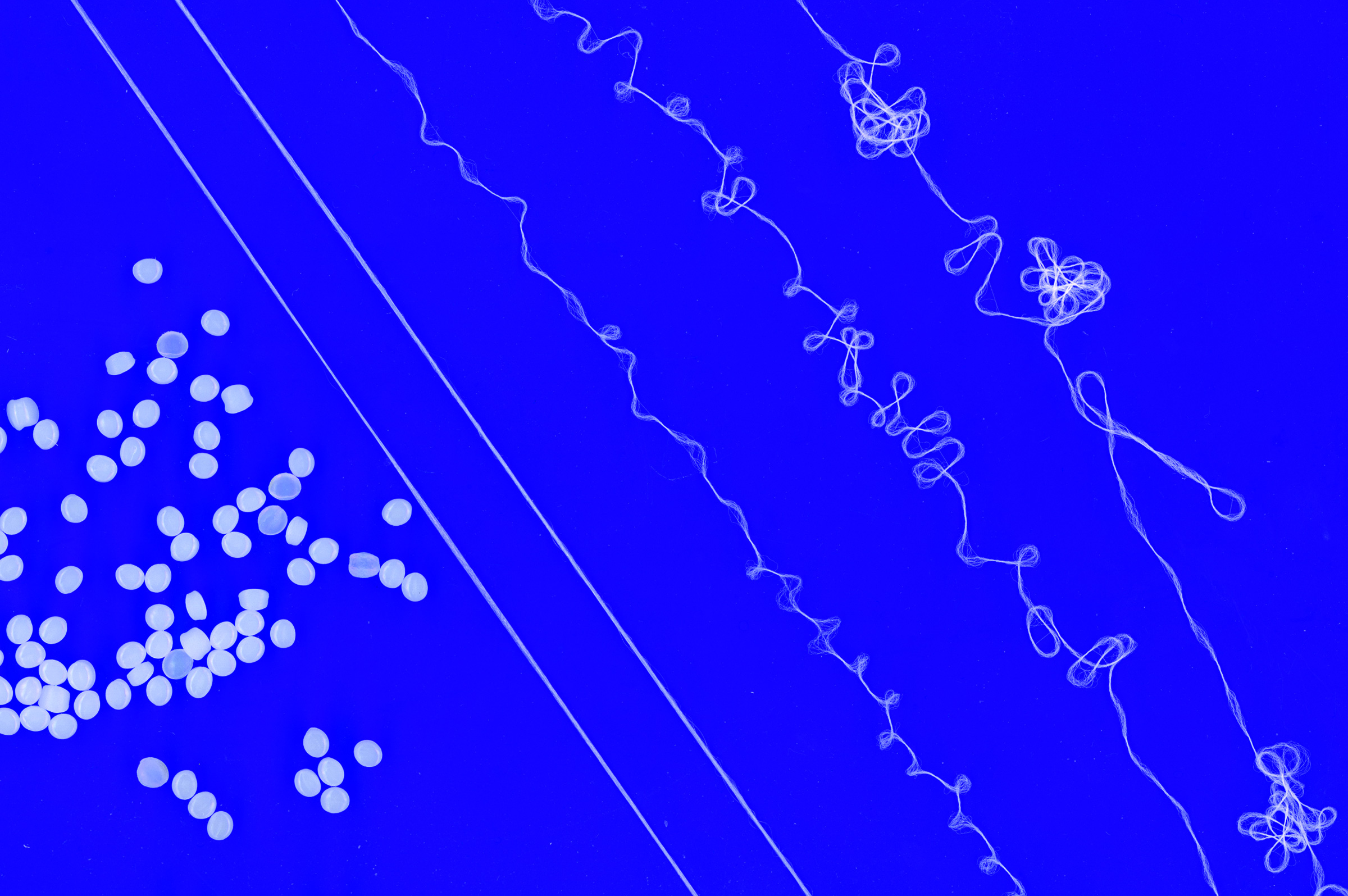
For this latest study, published in the esteemed journal ACS Materials Letters, the group explicitly aimed to tailor polyethylene yarn to emulate the unique combination of strength and flexibility found in spandex, while simultaneously proving its recyclability. The research involved a meticulous selection of polyethylene-based copolymers. They sought one formulation that could serve as the stretchy "elastic core" and another, stiffer polyethylene variant to function as the sturdy "sheath." This involved extensive review of scientific literature and industrial reports to evaluate numerous chemical variations of polyethylene.
"The chemical structure of polyethylene is like Christmas garland — a backbone of carbon, carbon, carbon, and also these dangling ‘decorations’ of hydrogen atoms or short branches with the same structure as a backbone," Boriskina illustrates. "How these chains are arranged can change the properties of the whole structure." First author SeongHyeon Kim adds, "Polyethylene can give us a wide range of properties, depending on how you make it."
The fabrication process itself is reminiscent of common industrial practices. Researchers obtained pellets of the chosen polyethylene-based resins from a chemical manufacturer. These pellets were then heated to approximately 350 degrees Fahrenheit, exceeding their melting point. The molten polyethylene was subsequently extruded through fine dies to create hair-thin fibers. Kim likens the process to "a spaghetti machine," emphasizing its relative simplicity and scalability. An industrial yarn spinner then wound the sheath fibers around the core fiber, culminating in the creation of the final, elastic, and fully recyclable yarn.
Broader Implications and a Vision for a Circular Economy
The implications of MIT’s polyethylene-based yarn extend far beyond the laboratory, promising to catalyze a paradigm shift across several sectors.
Environmental Impact: The most immediate and profound impact will be on environmental sustainability. By providing a truly recyclable alternative to prevalent non-recyclable textile blends, the new yarn could dramatically reduce the millions of tons of textile waste currently destined for landfills and incinerators. A closed-loop system for polyethylene textiles would lessen the demand for virgin plastic production, conserve natural resources (water, energy), and mitigate the environmental burden associated with textile manufacturing and disposal. This aligns perfectly with global efforts to transition towards a circular economy, where resources are kept in use for as long as possible.
Economic Opportunities: The development of this yarn opens up new economic avenues. There will be a need for infrastructure to collect, sort, melt, and re-spin polyethylene textiles, potentially creating new jobs and industries in waste management and material reprocessing. For textile manufacturers, the ability to source recycled materials could offer long-term cost savings and reduce reliance on volatile raw material markets. Brands investing in this technology could also gain a significant competitive advantage in a market increasingly prioritizing sustainability.
Fashion Industry Transformation: The fashion industry is under immense pressure to reduce its environmental footprint. This innovation offers a tangible pathway for brands to design and produce garments that are inherently sustainable from conception to end-of-life. It could spur a shift towards "design for circularity," where product longevity and recyclability are core considerations. Fast fashion brands, in particular, could leverage such materials to improve their environmental credentials, though the ultimate goal would be to slow down consumption cycles rather than merely making disposable items recyclable. The widespread adoption of this yarn could also lead to new standards and certifications for textile recyclability.
Consumer Behavior and Policy: For consumers, the ability to easily recycle clothing could simplify sustainable choices. Imagine a future where textile recycling bins are as common and effective as those for plastic bottles. This ease of disposal could encourage greater participation in recycling programs. From a policy perspective, governments and regulatory bodies could implement incentives for manufacturers to use recyclable materials and establish robust collection and reprocessing systems, further accelerating the transition to a circular textile economy.
Scaling Up and Future Development:
The MIT team is optimistic about the future of their polyethylene yarn. They confirm that their "recipe" for this innovative material is scalable, meaning it can be adapted for industrial-sized spools. Just like conventional spandex fibers, kilometers of this new yarn would be required to weave a single garment. The immediate next steps involve extensive trials in knitting and weaving to demonstrate its performance in actual textile production.
Boriskina and her colleagues envision a future where a polyethylene garment, once worn out, could be effortlessly deposited into a dedicated recycling bin. From there, it would be transported to a specialized facility, melted down, and re-spun into new yarn, ready to embark on another life cycle. "Hopefully it will prevent the need for making more and more textile materials, because you can keep recycling a large portion of it," Boriskina concludes, encapsulating the profound potential of this innovation.
This research, supported in part by the DEVCOM Soldier Center through the U.S. Army Research Office, the Office of Naval Research Global via Tecnologico de Monterrey, and the MIT Portugal Program, represents a critical step forward in addressing one of the most persistent and challenging environmental issues of our time. By offering a practical, scalable, and environmentally sound alternative to non-recyclable textiles, MIT’s recyclable yarn holds the promise of weaving a more sustainable future for fashion and beyond.