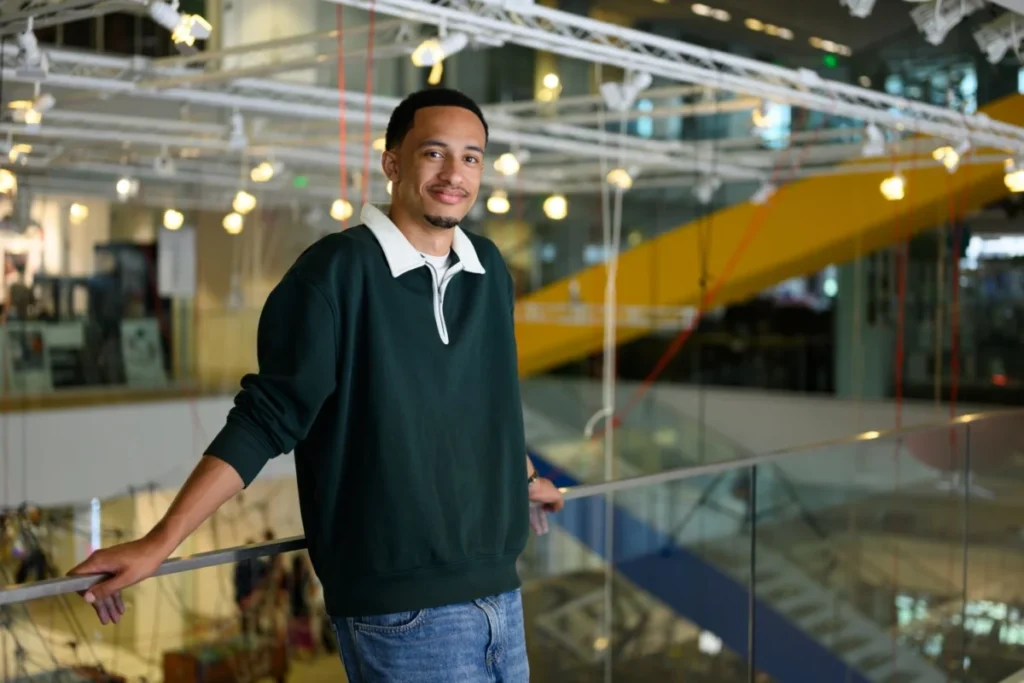
A foundational belief that "a game can be made about anything," coupled with an understanding that a "good game" requires "a lot of time and effort and thinking," has propelled Kayode Dada, a rising senior in mechanical engineering at the Massachusetts Institute of Technology, into the spotlight of campus innovation. Dada has leveraged his lifelong passion for game design to create a groundbreaking trading card game for the upcoming MIT Orientation, designed to connect 1,100 incoming first-year students and redefine their initial campus experience. This initiative not only showcases Dada’s ingenuity but also highlights MIT’s commitment to fostering a vibrant, interconnected community from the very first moments of a student’s journey.
A Lifelong Affinity for Play: From Louisville to MIT
Kayode Dada’s journey into the intricate world of game design began far before his MIT matriculation, rooted in the competitive and creative play of his childhood in Louisville, Kentucky. His face lights up as he recounts countless hours spent with his brother, immersed in a diverse array of card, board, and video games. Classics like "Dungeons and Dragons," "Catan," "Yu-Gi-Oh!," and "Risk" were not merely pastimes but early classrooms where Dada began to instinctively dissect game mechanics and strategic decision-making. The COVID-19 pandemic further solidified this familial bond through play, culminating in a memorable nightly ritual: "For weeks and weeks, every single night we’d play a full game of ‘Monopoly.’ It was crazy!" he recalls, underscoring the profound social and engaging power of games.
Even as a young boy, Dada possessed an innate curiosity about the underlying structures and choices inherent in the games he enjoyed. This theoretical interest blossomed into practical application during high school when he embarked on his first foray into actual game creation. Using simple arts and crafts materials, he constructed unique dice with custom sides, a tangible first step into design. This initial success ignited a prolific period of creativity, during which he conceptualized approximately 25 distinct games. Of these, he brought nine to fruition, gifting them to friends and family, an early testament to his dedication and skill.
Dada’s deep engagement with board game design formed a significant portion of his application to MIT, a choice he initially doubted would be successful. He candidly admits, "I didn’t do any real tech stuff," fearing his unconventional portfolio might not align with MIT’s traditionally STEM-focused image. However, a crucial turning point came through the MIT Admissions blogs, particularly a post by a computer science major who shared her lack of prior coding experience before arriving at the Institute. This revelation provided Dada with the crucial motivation and hope he needed. "That gave me motivation and hope that I could apply with a bunch of cardboard games, and I got in," he states, emphasizing the profound impact of peer narratives in demystifying the admissions process. He adds, "It was really cool to see, through the eyes of current students, that they are not all super-duper geniuses in an unattainable sense. They’re real." This experience not only validated his path but also instilled in him a desire to pay it forward, shaping his future involvement in community-building initiatives at MIT.
Beyond the Classroom: Dada’s Multifaceted Contributions to MIT Life
Upon arriving at MIT, Dada quickly immersed himself in the vibrant tapestry of extracurricular life, embracing diverse roles that, while demanding, offered new avenues for community engagement and personal growth. Despite having less dedicated time for game design, his impact on campus has been substantial. He now serves as an MIT Admissions blogger himself, sharing his unique perspective and demystifying the MIT experience for prospective students. He is an orientation captain, a leader in MIT Cru (a campus Christian group), a drummer in the MIT Live student music group, and a DJ on WMBR 88.1 FM, where his show, "Midwest Pizzeria," spotlights the niche genre of Midwest emo math rock. Each of these roles, seemingly disparate, underscores Dada’s commitment to enriching the student experience and fostering connections.
His work as an MIT Admissions blogger and orientation captain is particularly meaningful, allowing him to directly address common anxieties and misconceptions about the institution. He recalls a post about being a Christian at MIT that resonated deeply, eliciting numerous emails from interested students, parents, and high school counselors who expressed gratitude for the insight into a lesser-known aspect of campus life. He also frequently engages with students who doubt their qualifications for MIT, offering a message of encouragement: "I tell them, ‘I think you should still apply… and regardless if you get into MIT or not, you’re going to do amazing things.’" This empathetic approach reflects his own journey and a desire to broaden the perception of who belongs at MIT.
The upcoming summer marks Dada’s third MIT Orientation, an event he thoroughly enjoys. "It’s a lot of fun to talk to students, hear what they are interested in, and then be like, ‘Oh, you should definitely go check out this thing. I’ll connect you to this person that you should talk to,’" he explains. This proactive mentorship is a hallmark of his approach to community building. In a delightful twist, some of the orientation leaders he now collaborates with were once prospective students who read his blogs, illustrating the cyclical nature of mentorship and the enduring impact of his contributions. He also highlights the profound friendships forged through orientation, emphasizing a shared commitment to "helping out the people coming in… giving it back to MIT and contributing towards building up the next class." This sentiment is central to the ethos of MIT’s orientation program, which aims to cultivate a supportive and collaborative environment from day one.
Re-orienting Orientation: The Genesis and Evolution of "Campus Trade"
The intersection of Dada’s passion for game design and his role in MIT Orientation occurred last year, addressing a critical need identified by the orientation staff: creative ways to keep new students engaged between scheduled events and facilitate genuine ice-breaking. Dada seized the opportunity, proposing a trading-card game that would not only entertain but also serve as a structured mechanism for social interaction. This initiative was born from the understanding that while traditional icebreakers can be effective, a well-designed game offers a more organic and sustained platform for connection, particularly for a large and diverse cohort of 1,100 students.
The inaugural version of his game, "Campus Trade," capitalized on the existing structure of MIT Orientation, where students are divided into 12 distinct groups, each designated by a specific color. The premise was simple yet effective: each student began with 12 trading cards corresponding to their group’s color. The objective was to collect one card from every other group by the end of the week, resulting in a collection of 12 cards, each of a different color. This straightforward goal provided a clear incentive for students to interact, approach strangers, and initiate trades.
The game proved to be an immediate success. "They got so invested immediately, and we couldn’t get them to stop playing and go back inside to the next meeting," Dada recounts, highlighting the unforeseen depth of engagement. This initial triumph, however, also offered valuable insights for refinement. Dada keenly observed that while students were actively trading cards, many interactions were transactional and brief. The desired deeper conversations and connections were not always naturally emerging from the mechanics of the first iteration. This observation sparked a critical phase of redesign, moving beyond mere engagement to foster more meaningful social interaction.
Redesigning for Deeper Connection: A Research-Driven Approach
Determined to enhance the social impact of "Campus Trade," Dada embarked on an ambitious redesign project. He sought expert guidance and connected with Cassandra Lee, a research designer at the MIT Media Lab’s Center for Constructive Communication. Lee’s research interests, particularly the intricate relationship between games and social interaction, made her an ideal mentor. This collaboration evolved into an Undergraduate Research Opportunities Program (UROP) project, a hallmark of the MIT educational experience that allows students to engage in cutting-edge research alongside faculty. Dada’s UROP was supported through the realtalk@MIT program, an initiative dedicated to empowering students to design and organize their own creative community infrastructure, perfectly aligning with his vision for "Campus Trade."
The Center for Constructive Communication, where Lee operates, focuses on developing technologies and systems that improve human communication and foster healthier social environments. This philosophical alignment was crucial, providing a robust framework for Dada’s redesign efforts. The realtalk@MIT program further supported this by recognizing the value of student-led initiatives in shaping campus culture.
The redesign process was rigorous and iterative, spanning months of prototyping, extensive interviews with students to gather feedback on their social experiences and preferences, meticulous testing of new mechanics, and continuous iteration based on observations. This systematic, research-driven approach transformed "Campus Trade" from a successful icebreaker into a sophisticated tool for community building.
The enhancements for this year’s "Campus Trade" are significant and thoughtfully integrated. The cards themselves are larger, now tarot-sized, making them more visually striking and easier to handle in a social setting. One side of each card features original artwork by current MIT students, depicting a person, place, or iconic thing from campus. This artistic element serves multiple purposes: it celebrates MIT’s creative talent, offers conversation starters rooted in shared campus experiences, and provides a tangible connection to the Institute’s unique identity. The reverse side of each card features an icebreaker question, directly addressing Dada’s previous observation about limited conversation. These questions are designed to prompt more personal and engaging dialogue, moving beyond simple transactional trades to facilitate genuine get-to-know-you moments.
Crucially, the redesigned game incorporates multiple pathways to "win," strategically encouraging collaboration over pure competition. This fundamental shift in game theory promotes a cooperative spirit, where students are incentivized to help each other achieve their goals, further cementing social bonds. For example, winning might involve collecting a full set of different colored cards and having meaningful conversations associated with each trade, or even working together to complete a collective goal as a group.
Cassandra Lee praised Dada’s dedication and vision, describing their collaboration as "sincerely rewarding." She noted, "Community development work really requires a student who understands and is willing to fight for the value of people, stories, and being in community. Consistently throughout this project, it was clear that Kayode is more than capable of balancing his own spirit with the grueling organizing work that makes a project like ‘Campus Trade’ possible." Lee’s statement underscores the blend of empathy, strategic thinking, and meticulous execution required to bring such a large-scale, socially impactful project to fruition.
Broader Implications: Fostering Community and Redefining Success at MIT
The "Campus Trade" project holds significant implications for MIT’s orientation strategy and, more broadly, for how institutions can foster a sense of belonging among large student populations. In an era where digital communication often supplants in-person interaction, and where mental health and feelings of isolation are pressing concerns on college campuses, initiatives like Dada’s are vital. By intentionally designing for social interaction, MIT is not just welcoming students; it is actively building a framework for connection.
The success of a student-led initiative of this magnitude also reflects MIT’s unique culture of empowering its students. The Undergraduate Research Opportunities Program (UROP) is a testament to this, providing invaluable resources and mentorship that allow students to pursue their passions, even those outside traditional academic silos. Dada’s journey, from an applicant who doubted his "tech" credentials to a leading innovator in campus community building, sends a powerful message: MIT values diverse talents, unconventional paths, and the ability to apply creative thinking to complex social challenges. It reinforces the idea that "super-duper geniuses" come in many forms, and that real-world impact often stems from interdisciplinary approaches and genuine human connection.
Furthermore, the integration of art (student artwork on cards) and social science (icebreaker questions, collaborative mechanics) into a mechanical engineering student’s project highlights the interdisciplinary nature of modern problem-solving. It demonstrates that innovation at MIT is not confined to laboratories or specific departments but thrives at the intersections of various fields, driven by passionate individuals.
A Future Forged in Play: Dada’s Aspirations in Game Design
With "Campus Trade" poised for its large-scale rollout, Kayode Dada’s aspirations for a career in game design have solidified. The project has provided him with invaluable "real experience working on a game on a large scale," equipping him with a robust portfolio and a wealth of new ideas. He often finds himself contemplating game mechanics and design possibilities, whether lying awake at night or even during church services, a testament to the depth of his engagement with the field.
"Before, I didn’t really believe I could do it," he admits, reflecting on his earlier self-doubt. Now, however, "I definitely have a lot of ideas." Dada envisions two potential paths post-graduation: either applying for a position at a prominent game design company, perhaps a titan like Wizards of the Coast, known for its iconic trading card games like Magic: The Gathering, or taking the entrepreneurial leap to start his own company. "Just see how it goes," he says with a blend of confidence and adventurous spirit.
His journey to this point — taking a chance on an MIT application despite perceived unconventional qualifications, immersing himself in diverse campus activities, and ultimately designing a large-scale game that blends engineering principles with social psychology — underscores a fundamental truth: innovation often springs from courage, curiosity, and the willingness to forge one’s own path. Kayode Dada’s "Campus Trade" is more than just a game; it is a vibrant testament to the power of play in building community and a compelling narrative of how passion, perseverance, and institutional support can transform an individual’s vision into a tangible force for positive change.