Black holes are frequently characterized in popular culture as silent, dark voids—mysterious, bottomless pits akin to the surreal rabbit hole of Lewis Carroll’s imagination. However, modern astrophysics presents a far more complex and violent reality. Far from being "nothing," a black hole is an extraordinary concentration of "something": it is the densest object in the known universe, possessing a gravitational pull so immense that it warps the very fabric of space and time. This gravity creates a celestial stage where matter is accelerated to near-light speeds, forming glowing disks of gas and dust that swirl toward an invisible center before crossing the event horizon, the definitive point of no return.
In the last decade, our understanding of these cosmic engines has undergone a paradigm shift. As astronomers have deployed a more sophisticated array of space-based and ground-based telescopes, they have moved beyond static images to observe the dynamic, often erratic behavior of these giants. At the center of this research is Erin Kara, an associate professor of physics at the Massachusetts Institute of Technology (MIT) and a member of the Kavli Institute for Astrophysics and Space Research. Kara’s work focuses on the "engines" of galaxy formation—supermassive black holes—and her recent elevation to tenure at MIT marks a milestone in a career dedicated to connecting extreme physics with the origins of our own Milky Way.
The New Era of Black Hole Observation
For decades, black holes were studied primarily as theoretical constructs or distant, unchanging objects. "It used to be that we didn’t have eyes on systems all the time," Kara explains. The shift toward "time-domain" astronomy—monitoring the sky for changes over days, hours, or even seconds—has revealed a much more active universe. Kara notes that black holes can "turn on and off" at rates far exceeding previous scientific predictions. Observations now show matter being consumed at accelerated speeds, often triggered by stars that wander too close, becoming trapped in the black hole’s accretion disk and shredded by tidal forces.
Supermassive black holes, which reside at the centers of almost all large galaxies, can have masses ranging from millions to billions of times that of our sun. Despite their distance—often billions of light-years away—these objects exert a profound influence on their surroundings. They regulate star formation by heating gas and blowing it out of the galaxy, essentially acting as the thermostats of the universe. Kara’s research aims to bridge the gap between the physics of the event horizon and the macro-scale evolution of galaxies.
A Chronology of Discovery: From Bethlehem to Barnard
The path to the forefront of astrophysics was not a linear one for Kara. Raised in Bethlehem, Pennsylvania, she was the youngest of four in a family dedicated to medicine. Her mother served as a nurse and her father as a doctor, leading Kara to initially enroll as a pre-medical student at Barnard College of Columbia University. However, an introductory physics course during her freshman year redirected her trajectory. Drawn to the subject’s ability to provide fundamental descriptions of the universe, from the subatomic to the cosmic, Kara realized that physics offered a "ground level" explanation for reality that medicine did not.
A pivotal moment occurred in June 2008, when NASA launched the Fermi Gamma-Ray Space Telescope. Under the mentorship of astronomer Reshmi Mukherjee, Kara, then a summer intern, was tasked with analyzing unidentified gamma-ray signals detected by the new satellite. Gamma rays represent the highest-energy form of light, typically produced by the universe’s most extreme environments. Kara’s analysis confirmed that two of these bright signals were quasars—extremely luminous active galactic nuclei powered by supermassive black holes. This early success solidified her commitment to the field.
Kara’s undergraduate years also provided a lesson in the sociology of science. While Barnard’s all-women environment fostered confidence, her upper-level courses at the co-educational Columbia campus initially felt intimidating. "I went to Columbia and all of a sudden felt like I couldn’t do this," Kara recalls. "All these guys were much more confident and outwardly understanding of the material." Overcoming this "confidence gap" became a formative experience, teaching her that academic performance and external bravado are often unrelated—a realization that has informed her role as an educator and mentor at MIT.
The Science of X-Ray Reverberation Mapping
After graduating with a degree in physics and a minor in art history, Kara moved to the University of Cambridge on a scholarship. There, working with PhD advisor Andy Fabian, she entered the burgeoning field of X-ray reverberation. In 2009, Fabian’s team had identified curious time delays in X-ray signals coming from the vicinity of a black hole. They hypothesized that these were "echoes" of light.
To understand this, one must visualize the environment surrounding a black hole. It consists of the accretion disk—the flat, rotating disk of matter—and the corona, a region of high-energy electrons located just above the black hole. When the corona emits X-rays, some of that light travels directly to our telescopes, while some hits the accretion disk first and "bounces" off it before reaching us. The slight delay between the direct light and the reflected light allows scientists to map the geometry of the space around the black hole, much like how sonar maps the ocean floor.
Kara’s PhD work involved mining vast archives of satellite data to find these reverberation signals. Her research proved that these echoes were not anomalies but common features that could be used to measure the mass and spin of black holes with unprecedented precision.
Navigating Scientific Setbacks: The Hitomi and NICER Missions
Following her time at Cambridge, Kara returned to the United States for postdoctoral research at the University of Maryland and NASA’s Goddard Space Flight Center. Her work was initially centered on the Hitomi satellite, a joint Japanese-U.S. mission launched in 2016. Hitomi carried a revolutionary instrument: a microcalorimeter capable of measuring the energy of individual X-ray photons with extreme accuracy.
However, just 40 days into the mission, a software error caused the satellite to spin out of control and disintegrate. It was a devastating loss for the international community, but a single "clean" observation sent back before the failure proved the technology worked. This data set provided a new look at the Perseus cluster of galaxies, showing that the gas between galaxies was much calmer than expected. This success paved the way for the X-ray Imaging and Spectroscopy Mission (XRISM), which launched successfully in 2023 and currently features Kara as a leader in its science group.
In the wake of Hitomi’s failure, Kara pivoted to the Neutron Star Interior Composition Explorer (NICER), a telescope installed on the International Space Station in 2017. NICER’s ability to time X-ray arrivals to within 100 nanoseconds allowed Kara to study "tidal disruption events" (TDEs)—the rare moments when a black hole destroys a star. These events provide a "snapshot" of a black hole’s growth, revealing how they consume massive amounts of matter in a very short period.
The MIT Hub and the Future of Black Hole Physics
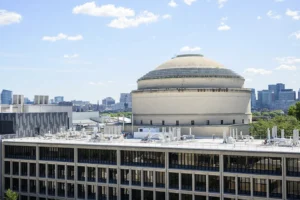
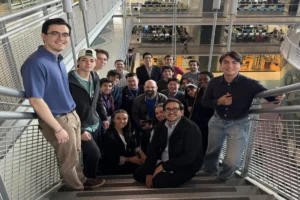
In 2019, Kara joined the faculty at MIT, a move she describes as a "no-brainer" due to the institution’s storied history in X-ray astronomy. MIT was the home of pioneers like Bruno Rossi and Hale Bradt, who helped launch the field in the 1960s. Today, Kara leads a research group that continues this legacy, utilizing data from NICER, XRISM, and the upcoming Ultraviolet Transient Astronomy Satellite (ULTRASAT).
One of Kara’s more innovative projects involves the "sonification" of black hole data. In 2022, she collaborated with music anthropologists to convert X-ray echoes into audible sound waves. As a violinist and singer, Kara sought to make the abstract data of the cosmos accessible to the human senses. The resulting audio—a haunting, shifting drone—captures the immense energy of a black hole’s environment, turning light years of distance into seconds of sound.
Looking forward, Kara is preparing for the Laser Interferometer Space Antenna (LISA) mission, which will detect gravitational waves—ripples in spacetime—from the collisions of supermassive black holes. This will allow scientists to "hear" the universe in a way that light-based telescopes cannot, providing a completely different perspective on how black holes grow and merge over billions of years.
Broader Implications: Why Black Holes Matter
The study of black holes is often viewed as purely theoretical, yet it has profound implications for our understanding of the universe’s structure. "For reasons we don’t fully understand, the distribution of stars and gas and dust in a galaxy is dictated in part by the supermassive black hole at its center," Kara says. This includes our own sun and the solar system.
By untangling the physics of the event horizon, Kara and her colleagues are answering fundamental questions about why galaxies look the way they do and how the universe evolved from a hot, dense soup of particles into the structured cosmos we see today. As black holes "turn on" and consume matter, they release energy that can stop the birth of new stars or trigger the formation of others. In this sense, the "dark voids" are actually the primary architects of the visible universe.
As Kara continues her work at MIT, her research serves as a reminder that the most extreme objects in the universe are not just distant curiosities; they are foundational to the existence of galaxies, stars, and ultimately, life itself. The puzzles of supermassive black holes remain among the most challenging in physics, but through the "reverberations" of X-ray light, the shadows are finally beginning to yield their secrets.