The emergence of exotic states of matter has long been a focal point of condensed matter physics, promising to revolutionize the way we understand electronic transport and quantum information. A landmark study published in the journal Nature Communications has unveiled a previously undocumented form of quantum oscillation in a three-dimensional topological insulator, zirconium pentatelluride (ZrTe5). This discovery, led by an international coalition of researchers from the University of São Paulo (USP) in Brazil, Los Alamos National Laboratory, and the University of Washington, challenges traditional models of electron behavior. By subjecting the material to temperatures approaching absolute zero and magnetic fields of immense intensity, the team observed electrons behaving as relativistic quasiparticles that defy standard periodic patterns, a finding that could have profound implications for the development of future spintronic and quantum computing technologies.
The Dual Nature of Topological Insulators
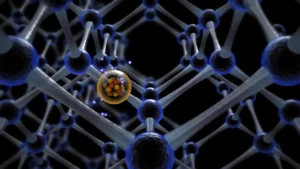
To understand the significance of the recent findings, it is necessary to examine the unique properties of topological insulators. These materials are characterized by a paradoxical electronic structure: while their interior (the "bulk") acts as an electrical insulator, their surfaces or edges are highly conductive. This conductivity is not a result of chemical doping but is "topologically protected," meaning it is guaranteed by the fundamental symmetries of the crystal lattice and cannot be easily disrupted by impurities or structural defects.
Zirconium pentatelluride (ZrTe5) occupies a unique niche within this class of materials. It is often described as sitting on the "knife’s edge" of topological phases. Because its electronic bands are so closely aligned, even minor external stimuli—such as a shift in temperature, the application of mechanical strain, or a change in magnetic field strength—can trigger a phase transition. This sensitivity makes ZrTe5 a premier laboratory for studying Dirac fermions, which are quasiparticles that behave as if they have no mass and move at relativistic speeds within the solid.
Experimental Framework and Extreme Conditions
The research was spearheaded by Professor Julio Larrea Jiménez, director of the Laboratory for Quantum Matter under Extreme Conditions (LQMEC) at the University of São Paulo’s Physics Institute. The experimental heavy lifting was conducted largely by Cauê Kaufmann Ribeiro, the study’s first author, during a research internship at the National High Magnetic Field Laboratory (NHMFL) in Los Alamos, New Mexico.
The experimental setup required conditions that few facilities on Earth can provide. To observe the subtle quantum effects within ZrTe5, the team utilized pulsed magnetic fields reaching up to 60 tesla. For context, this is roughly 1.2 million times stronger than the Earth’s magnetic field. These intense fields were paired with cryogenic cooling systems that brought the samples down to 0.7 kelvin (-272.45 °C), a temperature where thermal fluctuations are sufficiently suppressed to allow quantum mechanical signatures to emerge clearly.
The primary goal was to measure the material’s magnetoresistance—the change in electrical resistance as a function of the magnetic field. Under these extreme conditions, the researchers observed a phenomenon that contradicted decades of established theory regarding quantum oscillations.
The Mechanics of Quantum Oscillations and the Landau Level
In a typical metal, electrons moving through a magnetic field are forced into quantized orbital paths. According to the principles established by the Soviet physicist Lev Landau in 1930, these electrons can only occupy specific, discrete energy levels known as Landau levels. As the strength of the magnetic field increases, these levels shift. When a Landau level crosses the Fermi level—the highest occupied energy state at absolute zero—a sudden change in the material’s electrical properties occurs, resulting in a periodic oscillation known as the Shubnikov-de Haas (SdH) effect.
In standard materials, these oscillations follow a predictable, periodic pattern relative to the inverse of the magnetic field (1/B). Furthermore, once the magnetic field becomes strong enough to push all electrons into the lowest possible Landau level—a state known as the "quantum limit"—the oscillations are expected to cease entirely. However, the team’s observations of ZrTe5 told a different story.
The oscillations in ZrTe5 did not follow the 1/B periodicity. More strikingly, they persisted well beyond the theoretical quantum limit. This persistence suggested that the Landau levels were not simply moving away from the Fermi level as the field increased, but were instead "bending back" and re-entering the relevant energy range.
Reentrant Landau Levels and the Role of Spin
The researchers have termed this phenomenon "reentrant Landau levels." The mechanism behind this behavior lies in the complex interplay between the orbital motion of the electrons and their intrinsic spin. In ZrTe5, the spin-orbit coupling is exceptionally strong, meaning the electron’s spin and its orbital path are inextricably linked.
As the magnetic field intensifies, two primary effects compete: the cyclotron energy (related to the orbital motion) and the Zeeman effect (the interaction between the magnetic field and the electron’s spin). In most materials, the cyclotron energy dominates. In ZrTe5, however, the Zeeman effect is powerful enough to significantly alter the energy landscape.
"In our work, we show that the spin of these quasiparticles plays a central role," explained Cauê Kaufmann. "When we apply strong magnetic fields, the interaction between spin and the magnetic field profoundly alters the energy levels of the electrons. As a result, Landau levels that would normally move away from the system’s relevant energy can ‘return’ and cross it again."
This "back-bending" of the energy levels creates a second window for oscillations to occur, effectively reviving quantum effects that should have been extinguished by the high magnetic field.
Reconciling Scientific Discrepancies
One of the most significant contributions of this study is its ability to resolve a long-standing debate in the condensed matter physics community. For years, different research groups studying ZrTe5 reported conflicting results. Some observed standard 1/B oscillations, while others reported non-periodic or even logarithmic signals.
The USP-led team demonstrated that these variations are likely not the result of different physical processes, but rather variations in the carrier density of the specific samples used. By applying a single-particle model based on a three-dimensional Dirac Hamiltonian, the researchers showed that the material’s behavior is highly sensitive to the size of its Fermi surface.
In samples with high carrier density, the conventional orbital effects dominate, leading to standard periodic oscillations. However, in the high-purity, low-carrier-density samples used in this study (approximately 10^16 carriers per cubic centimeter), the Zeeman effect becomes comparable to the cyclotron energy. This allows the anomalous, reentrant behavior to become visible. This finding provides a unified framework that accounts for the diverse observations recorded in previous literature.
Implications for Spintronics and Quantum Technology
The discovery that ZrTe5 supports the transport of electron spin in such a robust and controllable manner opens new doors for the field of spintronics. Unlike traditional electronics, which rely on the flow of electric charge, spintronics utilizes the spin of electrons to process and store information. Because spin states can be manipulated more rapidly and with less energy dissipation than charge states, they are considered a cornerstone of next-generation computing.
Professor Julio Larrea Jiménez noted that the study expands the understanding of topological insulators as platforms for transporting degrees of freedom beyond mere charge. "This work suggests that topological insulators support the transport of not only electric charge, but also another fundamental degree of freedom: electron spin," he stated.
Furthermore, the confirmation of ZrTe5 as a material sitting near a topological phase transition suggests it could be used to host even more exotic quasiparticles, such as Weyl fermions. These particles, which have been theorized but are difficult to observe, could lead to "dissipationless" electronics, where electricity flows without generating heat, vastly increasing the efficiency of global power grids and electronic devices.
A Global Collaborative Effort
The success of this research highlights the importance of international cooperation in high-stakes physics. The project involved a synthesis of advanced material synthesis, high-field experimental physics, and complex theoretical modeling.
The funding for the project reflected this international nature, with support coming from the São Paulo Research Foundation (FAPESP) through a Young Investigator Grant and a Research Internship Abroad scholarship. On the American side, the research was supported by the National Science Foundation (NSF) and the U.S. Department of Energy (DOE).
The National High Magnetic Field Laboratory in Los Alamos provided the critical infrastructure. As one of the few places on Earth capable of generating 60-tesla pulses, the facility is a hub for "extreme conditions" research. "Access to those facilities is highly competitive," Larrea noted, emphasizing that the results obtained justify the intense resources required for such experiments.
Conclusion and Future Directions
The study of zirconium pentatelluride marks a significant step forward in the quest to map the landscape of quantum matter. By identifying the reentrant nature of Landau levels, the researchers have not only solved a localized mystery in material science but have also provided a new tool for probing the relativistic nature of electrons in solids.
Moving forward, the team plans to explore how mechanical stress and chemical substitution might further tune the electronic properties of ZrTe5. By "squeezing" the crystal lattice or swapping out atoms, they hope to drive the material into even more exotic topological phases, potentially uncovering new states of matter that exist only under the most extreme conditions. As the boundaries of quantum physics continue to expand, materials like ZrTe5 remain at the forefront of the transition from theoretical curiosity to technological reality.