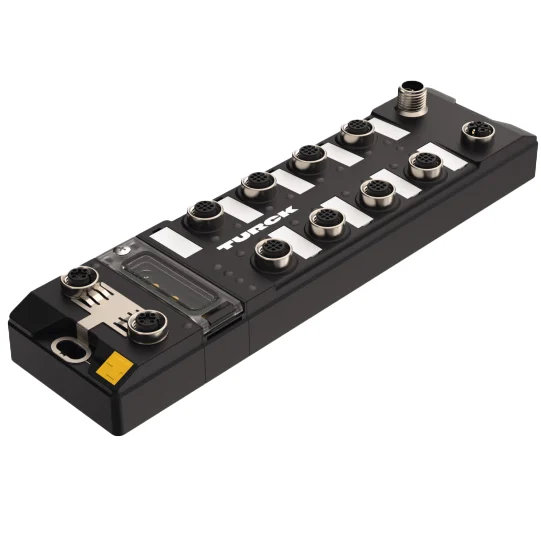
TURCK, a global leader in industrial automation, has offered a preview of its groundbreaking TBEN-LLH-4RMC, a compact multiprotocol Ethernet I/O module specifically engineered for the precise control and seamless integration of conveyor roller motors. This innovative solution targets critical applications within material handling and intralogistics, promising to redefine efficiency and flexibility in automated systems. The module is slated for its official launch in the U.S. market during the second quarter of 2026, marking a significant step forward in decentralized automation.
The TBEN-LLH-4RMC is meticulously designed to meet the rigorous demands of modern conveyor systems prevalent across intralogistics, packaging, and diverse manufacturing environments. In these sectors, the imperative for robust motor control, system adaptability, and unwavering durability is paramount. The module’s introduction comes at a time when industries are increasingly seeking smarter, more resilient automation solutions to cope with escalating operational complexities and the relentless drive for higher throughput.
The Paradigm Shift in Industrial Automation: From Centralized to Decentralized Control
For decades, industrial automation relied heavily on centralized Programmable Logic Controllers (PLCs) to manage vast networks of sensors and actuators. While effective, this architecture often necessitated extensive wiring, complex panel builds, and presented challenges in terms of scalability and maintenance, particularly in sprawling facilities with numerous conveyor lines. The advent of industrial Ethernet protocols — such as PROFINET, EtherNet/IP, and Modbus TCP — initiated a transformative shift, enabling faster data exchange, greater network capacity, and improved diagnostics. However, the physical connection of field devices still often required significant infrastructure.
The TBEN-LLH-4RMC represents the next evolutionary leap in this journey towards truly decentralized automation. By integrating onboard logic directly at the field level, alongside comprehensive I/O functions and a robust housing, the module empowers localized control. This strategic decentralization significantly diminishes the reliance on traditional, monolithic PLCs for every control function, thereby streamlining system architectures. For manufacturers and system integrators, this translates directly into a substantial reduction in both installation time and material costs associated with complex wiring, alongside simplified long-term maintenance requirements.
Addressing the Core Challenges of Modern Intralogistics

The material handling and intralogistics market is experiencing unprecedented growth, fueled by the explosive expansion of e-commerce, the increasing demand for automation to offset labor shortages, and the global push for optimized supply chains. According to recent industry reports, the global material handling equipment market is projected to reach over $200 billion by 2027, with intralogistics automation being a primary growth driver. Conveyor systems form the backbone of these operations, moving billions of items daily in warehouses, distribution centers, and production facilities worldwide.
Despite their critical role, traditional conveyor systems often grapple with several challenges:
- Installation Complexity: Extensive cable runs, large control cabinets, and intricate commissioning processes lead to prolonged installation times and higher labor costs.
- Limited Flexibility: Reconfiguring or expanding conveyor lines can be a costly and time-consuming endeavor, hindering agility in dynamic operational environments.
- Maintenance Headaches: Centralized systems can make fault diagnosis difficult, leading to longer downtimes when issues arise across vast networks of motors and sensors.
- Scalability Concerns: Adding new sections or increasing motor density often requires significant re-engineering of the control infrastructure.
The TBEN-LLH-4RMC directly confronts these challenges. Its compact footprint allows for mounting directly on the conveyor frame, eliminating the need for bulky control cabinets in many instances. The multiprotocol capability ensures seamless integration into diverse existing network infrastructures, whether a facility primarily uses PROFINET for its Siemens PLCs, EtherNet/IP for Rockwell systems, or Modbus TCP for other controllers. This inherent flexibility removes barriers to adoption and simplifies the integration process for system integrators working with varied client specifications.
Key Technical Features and Their Operational Impact
While a comprehensive list of features awaits the official launch, TURCK’s description implies several critical capabilities:
- Multiprotocol Ethernet Support: The module’s ability to communicate via common industrial Ethernet protocols (e.g., PROFINET, EtherNet/IP, Modbus TCP) is a cornerstone of its versatility. This allows it to seamlessly integrate into virtually any existing or new industrial network without requiring specialized gateways or complex protocol conversions, reducing engineering effort and potential points of failure.
- Onboard Logic (Decentralized Intelligence): This feature is a game-changer. Instead of relying solely on a central PLC for every decision, the TBEN-LLH-4RMC can execute local control algorithms. This means faster reaction times for individual conveyor segments, reduced network traffic (as not every minor event needs to be reported to the central controller), and the potential for implementing edge computing functionalities, such as basic motor diagnostics or localized error handling, directly at the point of control.
- Integrated I/O Functions: Beyond motor control, the module likely includes a range of digital inputs and outputs to connect proximity sensors, photoelectric sensors, emergency stops, and other common field devices found on conveyor lines. This integration simplifies wiring further by consolidating multiple device connections into a single, compact module.
- Rugged Industrial Housing: Designed for demanding environments, the module’s robust construction ensures reliable operation. Typically, such industrial-grade modules feature high ingress protection ratings (e.g., IP65/IP67) to withstand dust, water jets, and even temporary submersion. They are also built to resist vibration, shock, and extreme temperatures common in manufacturing and logistics facilities, ensuring longevity and reducing replacement costs.
- Compact Design: The small form factor is crucial for mounting in confined spaces often found along conveyor belts. This minimizes obstruction, simplifies installation, and maintains the overall aesthetic and functional integrity of the system.
- Dedicated Roller Motor Control: The module is specifically optimized for controlling conveyor roller motors, which are often 24V DC motor-driven rollers (MDRs). This specialization allows for efficient power management, precise speed control, and advanced diagnostic capabilities tailored to the specific needs of these motors, enhancing both performance and lifespan.
Strategic Implications for Industry Stakeholders
The introduction of the TBEN-LLH-4RMC carries significant strategic implications for various stakeholders within the industrial automation ecosystem:

- For System Integrators: This module promises to dramatically simplify project execution. Reduced wiring complexity means faster installation times, lower labor costs, and fewer opportunities for wiring errors. The multiprotocol capability allows integrators to offer a consistent solution across different client PLC platforms, increasing efficiency and reducing inventory of specialized components. The decentralized nature also simplifies troubleshooting, as issues can often be isolated to specific modules or segments rather than requiring extensive tracing through a centralized system.
- For Manufacturers and Logistics Operators (End-Users): The direct benefits include reduced capital expenditure on installation, lower operational costs due to streamlined maintenance, and enhanced system flexibility. The ability to quickly reconfigure conveyor layouts to adapt to changing product lines or order profiles provides a competitive edge in rapidly evolving markets. Improved diagnostic capabilities translate into predictive maintenance opportunities, minimizing unplanned downtime and maximizing throughput. The robust design ensures a longer operational life cycle, offering a superior return on investment.
- For the Broader Automation Industry: This product reinforces the trend towards intelligent, distributed control systems that are foundational to Industry 4.0 and the Industrial Internet of Things (IIoT). By pushing intelligence closer to the edge, such modules facilitate real-time data collection, enable more granular control, and lay the groundwork for advanced analytics and machine learning applications that can further optimize material flow and overall plant efficiency.
TURCK’s Legacy and Future Vision
TURCK has a long-standing reputation for innovation in industrial automation, particularly in the fields of sensors, fieldbus technology, connectivity solutions, and I/O systems. With a global presence and a comprehensive portfolio, the company has consistently delivered robust and reliable products designed to thrive in harsh industrial environments. The TBEN-LLH-4RMC aligns perfectly with TURCK’s strategic vision of providing intelligent, modular, and easy-to-integrate solutions that empower decentralized automation and facilitate the transition to smarter factories and logistics hubs. This module builds upon their existing expertise in fieldbus I/O and reinforces their commitment to developing cutting-edge technology that addresses real-world industrial challenges.
Anticipated Market Reception and Timeline
Industry experts and system integrators are expected to welcome the TBEN-LLH-4RMC with significant interest. The challenges it addresses are pervasive across the material handling sector, and a compact, multiprotocol, decentralized solution with integrated logic fills a critical gap. The preview at trade shows, as suggested by the original article, would generate considerable buzz, allowing TURCK to gather early feedback and fine-tune its market strategy.
The scheduled U.S. launch in Q2 2026 suggests a deliberate and thorough development and testing phase, ensuring the module meets the highest standards of reliability and performance upon release. Following a successful U.S. launch, it is highly probable that TURCK will pursue a phased global rollout, making this advanced solution available to its international customer base, further solidifying its position as a key enabler of advanced industrial automation worldwide.
In conclusion, the TBEN-LLH-4RMC is poised to become a pivotal component in the ongoing evolution of material handling and intralogistics. By offering a powerful combination of decentralized intelligence, multiprotocol flexibility, and rugged design, TURCK is providing a solution that not only simplifies the deployment and maintenance of conveyor systems but also significantly enhances their operational efficiency, adaptability, and readiness for the future demands of Industry 4.0. This module represents a clear commitment from TURCK to drive innovation that delivers tangible benefits across the industrial landscape.
For more information and future updates on the TBEN-LLH-4RMC and TURCK’s complete range of industrial automation solutions, interested parties are encouraged to visit turck.us.