NASA is on the cusp of concluding a comprehensive test campaign simulating catastrophic explosions of rockets fueled by liquid methane, a propellant rapidly becoming the cornerstone of next-generation launch vehicles. Scheduled to wrap up mid-September, these rigorous experiments are designed to provide critical data for updating launch safety protocols and meticulously defining the crucial keep-out zones surrounding launch pads. The agency’s commitment to understanding the volatile behavior of this increasingly popular propellant is paramount as the space industry embarks on an era of super heavy-lift rockets.
Groundbreaking Explosions Inform Future Spaceflight Safety
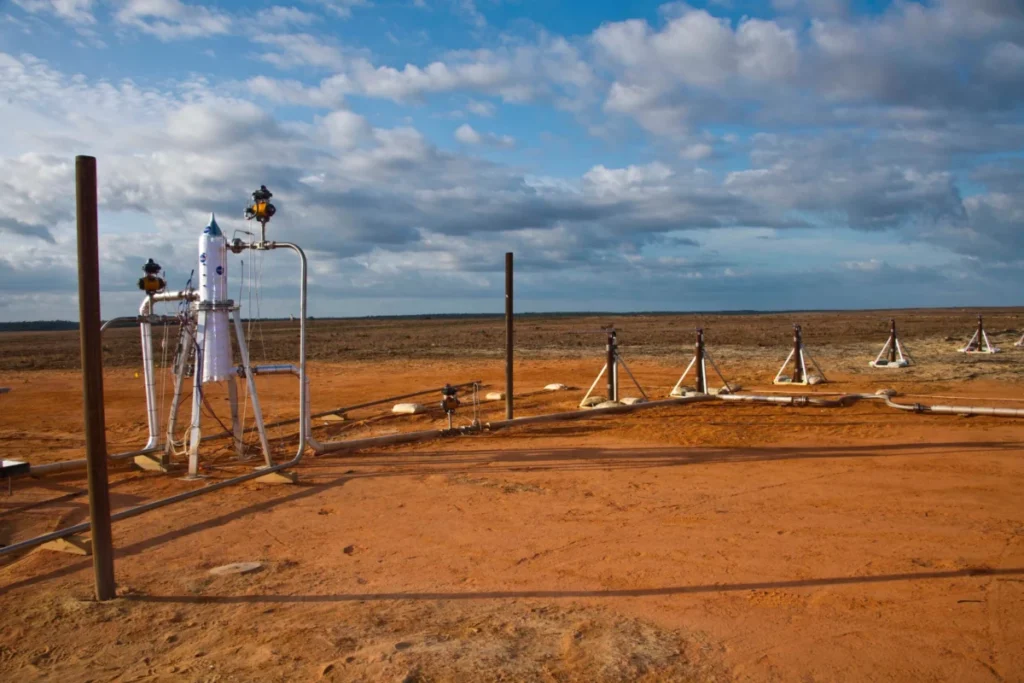
The intensive testing initiative, which commenced in January at the sprawling Eglin Air Force Base in Florida, has been meticulously documenting the destructive power of liquid oxygen and liquid methane detonations. According to Jason Hopper, deputy project manager of the Liquid Oxygen Methane Assessment, as of August 26th, engineers had successfully conducted 16 controlled explosions. These tests utilized simulated rocket components filled with pressurized liquid natural gas, predominantly methane, mixed with liquid oxygen. The scale of these detonations has been significant, with the largest employing a staggering 9,000 kilograms of propellant. Plans were in place for three additional explosions of this magnitude before the campaign’s scheduled conclusion on September 16th.
This extensive data collection effort is not merely an academic exercise. In a March article detailing the program, NASA highlighted its inherent responsibility to thoroughly understand the "safety profile" of liquid oxygen and methane-propelled rockets and spacecraft. This imperative stems directly from the surging popularity of this propellant combination, particularly for the design of massive launch systems. Companies like SpaceX, with its ambitious Starship program, and Blue Origin, developing the New Glenn rocket, are heavily reliant on methane. Published rocket specifications indicate that these behemoths will each require hundreds of thousands of kilograms of methane per launch, underscoring the critical need for accurate safety assessments.
A New Era of Propellants Requires Evolved Safety Models
The current safety frameworks and protocols employed by NASA for ground-based rocket explosions were primarily developed for propellants like liquid hydrogen and liquid oxygen, utilized in systems such as the Space Launch System (SLS), or liquid oxygen and kerosene, as seen in SpaceX’s Falcon rockets. However, the unique chemical and physical properties of liquid methane necessitate the creation of entirely new analytical models. "For liquid methane designs, new models are needed," Hopper emphasized, highlighting the inadequacy of existing protocols for this new generation of propellants.
The remote detonation tests at Eglin are a collaborative endeavor, conducted in close cooperation with the Federal Aviation Administration (FAA) and the U.S. Space Force. This multi-agency involvement ensures that the data gathered will inform a wide range of regulatory and operational considerations essential for safe space launch operations.
Simulating Catastrophic Failure Scenarios
NASA’s testing methodology is designed to replicate critical failure scenarios that could lead to catastrophic explosions. Hopper outlined two primary configurations under investigation:
- Bulkhead Failure: This scenario simulates a breach or breakdown in the structural integrity of the barrier separating the liquid oxygen and liquid natural gas tanks within the test article. Such a failure could lead to an uncontrolled mixing of these highly reactive propellants.
- Transfer Tube Failure: This configuration focuses on the failure of the transfer tube responsible for feeding one of the propellants through the tank containing the other. This could result in an unintended reaction or ignition within the fuel lines or tank structure.
By deliberately inducing and studying these failure modes, engineers can gain invaluable insights into the dynamics of such explosions, the resulting blast effects, and the potential for collateral damage.
Quantifying the Explosive Power: Instrumentation and Analysis
To accurately measure the devastating consequences of these simulated explosions, NASA employed a sophisticated array of instrumentation. Sensors were strategically placed both on the test articles themselves and extending outwards to a radius of approximately 240 meters. This included:
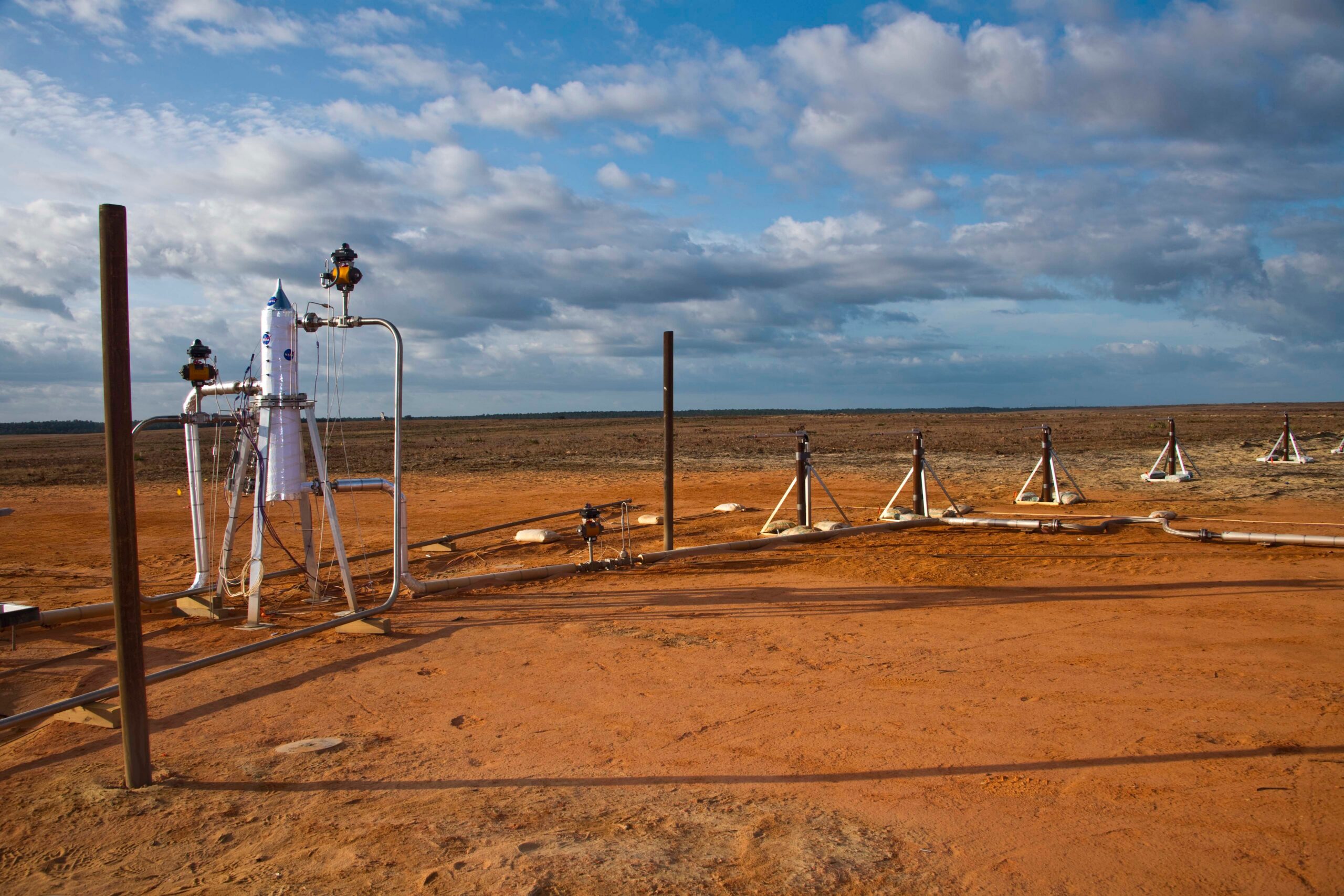
- High-Speed Optical Cameras: Designed to capture the rapid movement of debris ejected during the explosions, providing crucial data on fragmentation patterns and velocities.
- Acoustic Microphones and Sensors: Deployed to measure the intense sound waves generated by the blasts, as well as the heat and pressure signatures of the explosions.
This comprehensive data collection allows for a detailed analysis of the physical forces at play.
Key Safety Concerns: Blast Overpressure and Fragmentation
Hopper identified blast overpressure, commonly referred to as a blast wave, and fragmentation as the two paramount safety concerns arising from methane-oxygen explosions. These issues have far-reaching implications across four critical domains:
- Ground Siting: This refers to the development of hazard areas designed to protect personnel and vital infrastructure during ground operations, such as the intricate and potentially hazardous process of fueling a rocket on a launch pad. Understanding the extent of blast overpressure is crucial for determining safe distances from launch pads.
- Range Safety: This encompasses the establishment and maintenance of keep-out zones for people, vehicles, vessels, and aircraft during the critical moments of a launch. Accurate predictions of an explosion’s reach are essential for ensuring public safety and preventing accidental interference.
- Crew Safety: NASA must rigorously assess how a methane explosion might impact the safety of a rocket capsule, particularly in the context of an abort scenario. This analysis directly informs the development of critical abort rules, such as the precise timing for crew capsule separation from a failing launch vehicle.
- Nuclear Payload Safety: For missions carrying nuclear materials, a paramount concern is predicting and safeguarding against the potential dispersion of radioactive material in the event of an explosion. This requires an in-depth understanding of the explosion’s energy release and fragmentation patterns.
Industry Collaboration and Data Validation
The valuable experimental data generated by these tests is being utilized by Amentum, a key contractor in the program. Amentum, in collaboration with NASA, will work to "validate and refine analytical models and predictive methods." This process is expected to significantly enhance the industry’s collective understanding of the fundamental causes and mechanisms behind such explosions. By combining empirical data with theoretical modeling, the space sector can move towards more robust and reliable safety protocols.
Real-World Incidents Underscore the Need for Testing
The urgency of NASA’s testing program is underscored by recent real-world incidents involving liquid methane-fueled rockets. In June 2025, a Starship upper stage experienced an explosion during a static fire test at SpaceX’s Starbase facility in Texas. More recently, in May, a New Glenn rocket suffered an explosion during a hot-fire test on its Florida launch pad, resulting in damage to nearby structures and a dramatic mushroom cloud. These incidents, while distinct in their specific circumstances, highlight the inherent risks associated with the propellants and the critical need for thorough understanding and mitigation strategies.
Extending the Reach of Acoustic Measurement
Beyond the immediate blast and fragmentation analysis, NASA’s testing initiative has also incorporated cutting-edge acoustic research. Professor Kent Gee, a physics professor at Brigham Young University in Utah, has been leading a team of students in placing microphones at distances of up to 30 kilometers from the test articles. Their objective is to meticulously measure how the acoustic sound waves generated by the explosions propagate over vast distances.
Gee, working as a subcontractor for Amentum, stated that preliminary findings indicate that environmental factors play a significant role in the intensity and reach of these pressure waves. Direction of wind, ambient temperature and humidity, and even the presence of topographical features like hills can all influence how far and how strongly the sound waves travel.
"We know weather affects sound, but when it comes to measuring the impact weather has on a blast like this, we need the data from multiple tests to build a model that we can use to gauge even larger explosions," Gee explained in an early August interview. His team’s research is crucial for developing predictive models that account for real-world atmospheric conditions, allowing for more accurate safety zone calculations.
Furthermore, Gee highlighted the surprising impact of the surrounding natural environment. "Foliage is actually scattering the sound, and that sound absorption through the trees and ground cover is actually turning out to be more than I would have expected," he observed. This insight into the acoustic dampening effects of vegetation adds another layer of complexity to modeling blast wave propagation and will inform the development of more nuanced safety assessments, particularly for launch sites located in vegetated areas.
A Foundation for Safer Space Exploration
As NASA nears the completion of this vital test campaign, the data generated promises to be a cornerstone for the future of spaceflight safety. By meticulously simulating and analyzing the catastrophic potential of liquid methane-oxygen explosions, the agency and its partners are not only fulfilling a critical regulatory responsibility but also actively contributing to the broader goal of enabling more ambitious and safer space exploration for generations to come. The insights gleaned from these controlled detonations will directly translate into enhanced launch pad designs, refined operational procedures, and ultimately, a more secure environment for both ground personnel and future astronauts venturing beyond Earth’s atmosphere. The mid-September conclusion marks not an end, but a significant milestone in the ongoing evolution of space launch safety.