In a groundbreaking development that bridges the chasm between persistent waste and critical food security, researchers have unveiled a pioneering system capable of transforming plastic waste and agricultural byproducts into essential food ingredients. This innovative approach, born from a confluence of environmental concern and the demands of extraterrestrial exploration, holds the potential to revolutionize how we address both waste management and food scarcity on a global scale, from the most remote disaster zones on Earth to the nascent outposts of human civilization in deep space.
The scientific revelation was presented at the prestigious fall meeting of the American Chemical Society (ACS), specifically during the "Undergraduate and Graduate Research in Biochemistry and Chemical Biology" symposium held at McCormick Place. This gathering, a nexus for cutting-edge chemical and biochemical research, provided a platform for Associate Professor Lahiru Jayakody and his team from Southern Illinois University (SIU) Carbondale to showcase their remarkable findings.
From Pollution to Protein: The Genesis of a Bold Idea
The research initiative stems from a critical need identified by NASA: the development of self-sustaining food production systems for long-duration space missions. Astronauts on extended voyages, such as potential missions to Mars or prolonged stays on the Moon, cannot rely on frequent resupply missions from Earth. This logistical challenge necessitates the creation of closed-loop systems where resources are maximized and waste is minimized, ideally transformed into something valuable.
"We were trying to develop technologies for plastic upcycling to make more valuable products," explained Associate Professor Lahiru Jayakody. "We thought, why not focus on making food? Because plastic is carbon and food is carbon." This fundamental insight, recognizing the shared atomic building blocks of both waste and sustenance, laid the groundwork for their ambitious project.
Two of the most pressing global challenges facing humanity are the escalating crisis of plastic pollution and the persistent threat of food insecurity. SIU Carbondale’s research endeavors to tackle these intertwined issues by leveraging the remarkable capabilities of microorganisms. The ultimate goal is to engineer a biological process that can convert materials previously deemed recalcitrant waste into safe and nutritious food components.
The Microbial Maestros: Engineering Yeast as Miniature Food Factories
At the heart of this innovation lies the strategic engineering of yeast, a single-celled fungus renowned for its metabolic versatility and its established role in food production, most notably in baking and brewing. For decades, scientists have harnessed yeast’s genetic malleability to produce vital pharmaceuticals like insulin. Jayakody and his graduate student, Sandhya Jayasekara, have applied a similar principle to the realm of waste valorization.
Their team has successfully programmed various strains of yeast, including common baker’s yeast, to metabolize compounds derived from plastic waste and agricultural leftovers. These engineered microbes then act as microscopic bioreactors, converting these raw materials into essential food components such as proteins, vitamins, and flavorings.
However, before these microbial artisans can perform their magic, the waste materials must first be broken down into a form that the yeast can readily consume. The researchers employ a proprietary method known as oxidative hydrothermal dissolution, developed by SIU Carbondale Geology Professor Ken Anderson. This robust process subjects materials like polyethylene terephthalate (PET) – the ubiquitous plastic found in soda and water bottles – and agricultural biomass, such as discarded corn stalks and leaves, to high temperatures and pressures in the presence of water and oxygen.
"Microbes are very clever," Jayakody stated, emphasizing the elegance of their biological approach. "So, we are using their traits to solve the problems we created." This quote encapsulates the team’s philosophy: harnessing nature’s ingenuity to rectify human-made environmental burdens.
Oxidative hydrothermal dissolution effectively breaks down the complex, resistant molecular structures of PET into smaller, more manageable carbon-rich molecules. These molecules, which contain the fundamental building blocks for proteins and other vital nutrients, are then introduced to the engineered yeast. The yeast, fueled by these compounds, initiate a cascade of biochemical reactions, ultimately synthesizing new food components.
From Waste Streams to Edible Innovations: The µBites Revolution
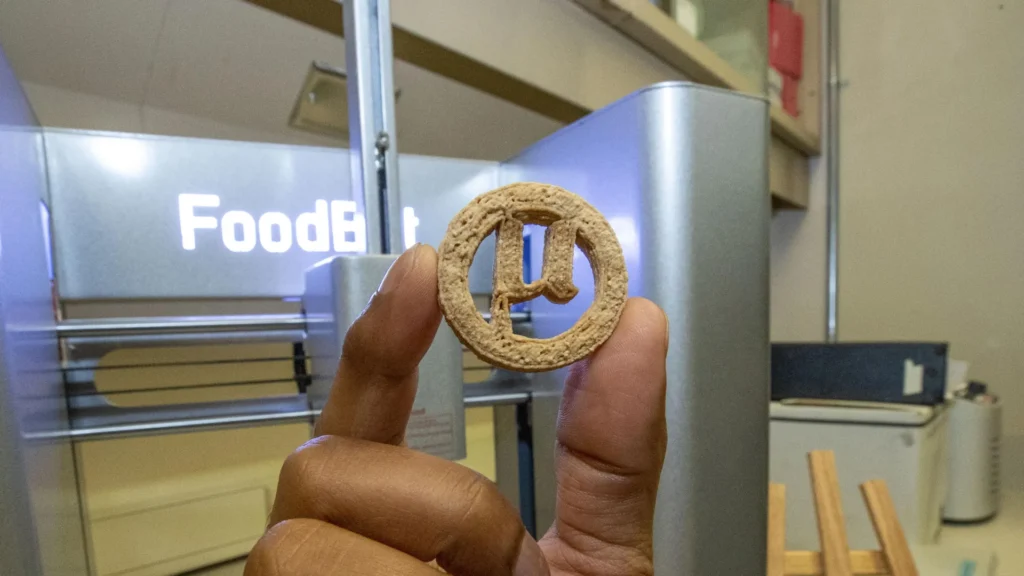
The culmination of this intricate process is the creation of a novel food product tentatively named µBites (pronounced "microbites"). Once the yeast has produced its array of proteins, fats, and acids, these ingredients are blended with common food staples like fiber, starch, and sweeteners. This composite mixture is then precisely extruded through a 3D printer, allowing for the creation of protein-rich cookies.
While the safety of µBites for human consumption has been preliminarily established through available data, the researchers are awaiting formal institutional approval before commencing comprehensive taste tests. However, initial evaluations based on aroma have yielded promising results. Participants in early assessments have indicated a willingness to consume µBites in situations where conventional food resources are scarce, underscoring the potential of this technology in emergency relief scenarios.
The research team is actively working to enhance the palatability and appeal of µBites, aiming to make them a desirable option even when alternative food choices are available. Sandhya Jayasekara, a key graduate student on the project, has engineered specific yeast strains capable of producing additional, more sophisticated food ingredients. For instance, one strain can now generate vanilla flavoring from plant biomass, a common and popular flavor profile. Another strain has been programmed to utilize ethylene glycol, a component derived from PET plastic, to produce beta-carotene. This vital carotenoid is then converted by the human body into vitamin A, an essential nutrient.
"We’re using microbes to develop the cookie into a more attractive, consumer-friendly product," Jayasekara remarked, highlighting the dual focus on nutritional value and sensory appeal.
Expanding the Microbial Menu: Towards Complete Self-Sufficiency
The long-term vision for the SIU Carbondale team extends beyond producing just a few key ingredients. Their ultimate objective is to engineer microbes that can generate the majority, if not all, of the components required for µBites, including the starch, fiber, and sweeteners that currently need to be added separately. Achieving this level of microbial synthesis would represent a significant leap towards truly closed-loop food production systems.
Professor Jayakody expressed optimism about the timeline for public consumption of these innovative cookies, suggesting that they could be available within the next few years. The implications of this technology are far-reaching, extending beyond terrestrial applications.
Broader Implications: Addressing Global Food Security and Future Frontiers
The potential applications for this waste-to-food technology are vast and varied. In disaster-stricken regions, where supply chains are often disrupted and food is scarce, µBites could offer a crucial lifeline. Similarly, in remote or resource-limited environments on Earth, such as submarines or isolated communities, this system could provide a sustainable and localized food source.
The technology’s relevance to space exploration, its initial impetus, remains paramount. As humanity sets its sights on establishing permanent settlements on the Moon and Mars, the ability to produce food from in-situ resources, including potential waste streams generated by future inhabitants, will be indispensable. This research offers a tangible pathway to achieving that goal, reducing the reliance on costly and complex resupply missions from Earth.
Furthermore, the SIU Carbondale team’s work offers a proactive response to the escalating global food demand. Projections indicate a significant rise in global food needs by the year 2050, with estimates suggesting a 35-56% increase. Concurrently, approximately 30% of the world’s population is at risk of hunger.
"Global food demand is expected to rise 35-56% by the year 2050, and about 30% of the world population will be at risk of hunger in the future," Jayakody stated, underscoring the urgency of developing novel food production strategies. "The way to address that, I believe, is by using microbes." This perspective positions microbial biotechnology not merely as a scientific curiosity but as a critical tool for ensuring future global food security.
The research has been supported by significant funding, including the NASA Deep Space Food Challenge, which incentivizes the development of innovative food production technologies for space exploration, and a National Science Foundation Faculty Early Career Development Program (CAREER) grant, recognizing and supporting promising early-career faculty. This dual support highlights the recognized importance and potential impact of this interdisciplinary research.
The journey from discarded plastic bottles and agricultural waste to nutrient-rich cookies represents a paradigm shift in how we perceive and utilize resources. By harnessing the power of engineered microorganisms, scientists are not only finding novel ways to mitigate environmental pollution but are also paving the way for a more resilient and sustainable food future for all, both on our home planet and beyond. The successful integration of this technology could herald a new era of resourcefulness, where waste is no longer a problem but a valuable feedstock for survival and progress.