The European Space Agency (ESA) in partnership with the Raspberry Pi Foundation has officially declared the commencement of the 2026/27 European Astro Pi Challenge, marking a significant milestone in international STEM education. As of 14 September 2026, students and young enthusiasts across ESA Member States, Associate Members, and Canada are invited to submit their coding projects for the unique opportunity to have their software executed on the International Space Station (ISS). This annual competition, which has grown into one of the world’s most prestigious youth space-coding initiatives, seeks to bridge the gap between classroom computer science and real-world orbital research.
The Astro Pi Challenge is designed to inspire the next generation of scientists, engineers, and coders by providing them with access to two specially augmented Raspberry Pi computers—named Ed and Izzy—located 400 kilometers above the Earth’s surface. These units are equipped with a variety of sensors and cameras, allowing participants to conduct experiments that range from creative digital art to complex environmental analysis. By integrating high-level technology with accessible educational pathways, the project continues to be a cornerstone of the ESA Education program, implemented locally by European Space Education Resource Offices (ESEROs) to ensure maximum reach and impact across diverse linguistic and cultural backgrounds.
The Dual-Mission Structure: Catering to All Skill Levels
The 2026/27 challenge is structured into two distinct tracks, Mission Zero and Mission Space Lab, ensuring that the program is inclusive of beginners while remaining challenging for advanced students. This tiered approach allows the program to function as a comprehensive educational pipeline, guiding students from their first lines of code to the execution of sophisticated scientific protocols.
Mission Zero: Art in Orbit
Mission Zero is designed as an entry-level activity for young people aged 9 to 16. It focuses on the creative application of Python programming, requiring no prior coding experience. In this mission, participants are tasked with creating a piece of digital "pixel art" that will be displayed on the Astro Pi’s 8×8 LED matrix for the astronauts on board the ISS to see.
A key feature of the 2026/27 Mission Zero is the integration of live light readings. Students use a web-based code editor to write programs that detect the ambient light levels inside the ISS; their code then adapts the colors of their artwork based on these readings. This introduces young learners to the concept of "input-output" logic in a tangible, high-stakes environment. For the current season, Mission Control has enhanced the project guides to include examples of two-frame animations, allowing teams to move beyond static images. Every participant who follows the program requirements is guaranteed to have their code run in space, receiving a certificate that includes the exact time and location of the ISS when their program was active.
Mission Space Lab: Real Orbital Science
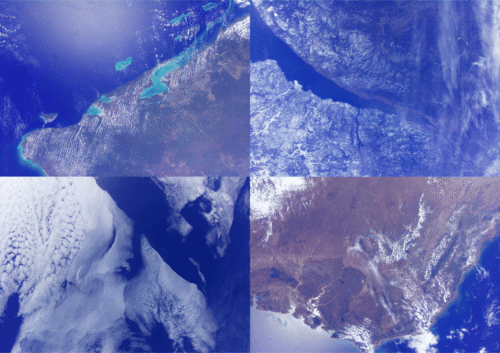
For older students aged 12 to 19, Mission Space Lab offers a more rigorous scientific experience. This track requires teams of two to six people to design and program a scientific experiment that utilizes the Astro Pi’s full suite of sensors, including the High Quality Camera, the Infrared Camera, and the Integrated Measurement Unit (IMU).
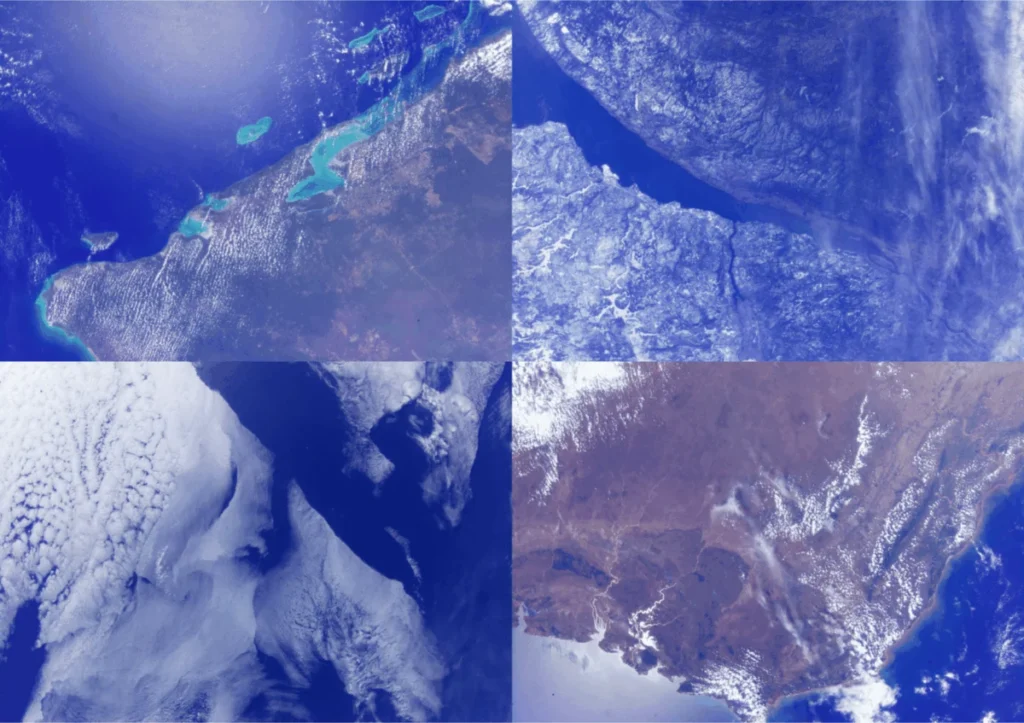
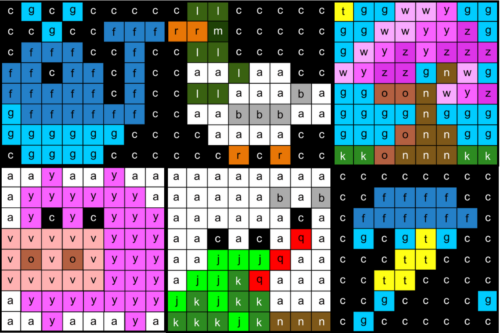
Teams participating in Mission Space Lab are encouraged to explore one of two themes: Life on Earth or Life in Space. Using the Astro Pi’s sensors, teams can track the ISS’s orientation, calculate its orbital velocity, or use Near-Infrared (NIR) imaging to monitor the health of vegetation on the Earth’s surface through Normalized Difference Vegetation Index (NDVI) analysis. This year’s Mission Space Lab includes a new "Creator Guide" featuring basic data capture templates. These templates serve as a scaffolding tool, helping students predict data outputs and refine their logic before the final submission. Like Mission Zero, every eligible Mission Space Lab program is guaranteed a ten-minute flight slot on the ISS, providing teams with a unique dataset captured in microgravity.
Technological Infrastructure: The Astro Pi Hardware
The success of the challenge rests on the specialized hardware developed by the Raspberry Pi Foundation in collaboration with ESA. The current units on the ISS are based on the Raspberry Pi 4 Model B, significantly upgraded from the original units launched in 2015. These "Mark II" Astro Pis are housed in space-hardened aluminum flight cases designed to meet the rigorous safety and thermal requirements of the ISS.
The hardware includes a Sense HAT (Hardware Attached on Top) which features a variety of sensors:
- Gyroscope, Accelerometer, and Magnetometer: Used for measuring movement and orientation.
- Temperature, Pressure, and Humidity Sensors: Allowing for the monitoring of the internal ISS environment.
- 8×8 RGB LED Matrix: Used for displaying messages and art in Mission Zero.
- Five-button Joystick: Providing a manual interface for astronauts if needed.
Furthermore, the units are equipped with the Raspberry Pi High Quality Camera. One unit features a standard sensor for visible light photography, while the other is equipped with an infrared-sensitive sensor. This allows students to conduct Earth observation experiments that distinguish between healthy and stressed vegetation, a technique used by professional climate scientists and agricultural researchers.
Chronology and Evolution of the Astro Pi Program
The Astro Pi Challenge has a storied history that reflects the rapid advancement of both consumer technology and educational outreach. The program was first conceived in 2014 as part of British ESA astronaut Tim Peake’s "Principia" mission. Two original Astro Pi units were launched to the ISS in December 2015, and the first student codes were run in early 2016.
Since that inaugural season, the program has expanded from a UK-centric initiative to a pan-European and Canadian phenomenon. Over the last decade, tens of thousands of students have participated, contributing to a massive repository of orbital data. In 2021, the hardware underwent a major refresh with the deployment of the Mark II units, which offered faster processing speeds and higher-resolution imaging capabilities. The 2026/27 season marks the second decade of the program, highlighting its sustainability and its status as a permanent fixture of the ISS’s educational payload.
Official Representation: Thomas Pesquet as Ambassador
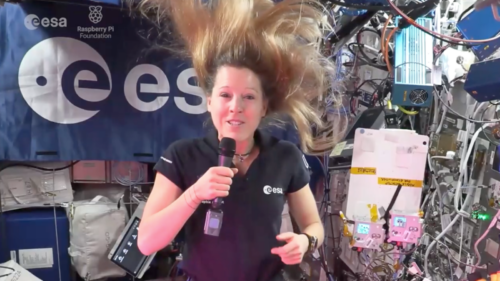
ESA astronaut Thomas Pesquet has been named the official ambassador for the 2026/27 European Astro Pi Challenge. This marks Pesquet’s third time in the role, having previously served as the face of the competition during the 2016/17 and 2020/21 seasons. Pesquet, a veteran of two long-duration missions to the ISS (Proxima and Alpha), is widely recognized for his commitment to scientific communication and his ability to engage young audiences.
Pesquet’s involvement is particularly poignant this year as he prepares for his next major assignment. Having been selected to command a private astronaut mission scheduled for 2027, his endorsement of the Astro Pi Challenge reinforces the connection between educational coding and the future of commercial and institutional spaceflight. "Space is the ultimate laboratory," Pesquet remarked in a statement regarding the launch. "Programs like Astro Pi give young people the tools to participate in that laboratory, teaching them that their ideas and their code can truly reach the stars."
Strategic Importance and Educational Impact
The Astro Pi Challenge is more than a coding competition; it is a strategic tool for developing the "Space 4.0" workforce. By engaging students in Python—one of the most widely used programming languages in the aerospace and data science industries—ESA and the Raspberry Pi Foundation are equipping the youth with highly transferable skills.
Data Literacy and Scientific Method
Through Mission Space Lab, students are required to move through the entire scientific method: hypothesis, experimental design, coding, data collection, and analysis. The requirement to predict outputs and handle "noisy" real-world data from space sensors teaches a level of data literacy that is difficult to replicate in a standard classroom setting.
Addressing the Digital Skills Gap
Europe faces a significant shortage of software engineers and data analysts. The Astro Pi Challenge addresses this by lowering the barrier to entry. Mission Zero, in particular, targets students who might not otherwise consider themselves "tech-savvy," using the allure of space to spark an initial interest in computer science.
International Collaboration
By allowing teams from different countries to participate, the challenge mirrors the international cooperation that defines the ISS itself. The program fosters a sense of global citizenship, as students from Lisbon to Ottawa work on the same platform to solve problems related to Earth’s climate and orbital mechanics.
Support Systems and Future Outlook
To ensure the success of the 2026/27 season, the Astro Pi Mission Control team has established a comprehensive support network. This includes interactive livestreams, support calls for teachers, and detailed technical documentation available in multiple languages. The ESERO network plays a vital role here, providing localized pedagogical support to educators who may be teaching coding for the first time.
As the ISS approaches the final years of its planned operation, the Astro Pi program represents a vital legacy of the station’s educational mission. The data collected by students in this cycle will contribute to a long-term record of Earth observation, providing insights into environmental changes as seen from 400km above.
The 2026/27 European Astro Pi Challenge is now open for registrations. Educators and youth leaders are encouraged to visit the official Astro Pi website to access the web-based editors and project guides. With the support of ESA, the Raspberry Pi Foundation, and ambassadors like Thomas Pesquet, the program continues to prove that the sky is no longer the limit for the next generation of European and Canadian innovators.