The Raspberry Pi Computing Education Research Centre, a joint initiative between the University of Cambridge and the Raspberry Pi Foundation, has officially announced the launch of a pioneering research study designed to transform how artificial intelligence (AI) is taught in secondary schools across England, Scotland, and Wales. This initiative specifically targets computing teachers working with students aged 11 to 14—a critical developmental period known as lower secondary or Key Stage 3—to explore the intersection of AI ethics, societal impact, and environmental sustainability. By shifting the focus from mere technical proficiency to critical ethical reasoning, the study aims to equip the next generation with the tools necessary to navigate an increasingly automated world.
The research comes at a time when AI integration into daily life is accelerating at an unprecedented rate. While much of the global conversation has centered on the capabilities of generative AI tools like ChatGPT and Midjourney, the Raspberry Pi Computing Education Research Centre argues that the educational framework must expand to include the "hidden" costs of these technologies. This includes not only the potential for algorithmic bias and privacy violations but also the massive energy consumption and carbon footprint associated with training and maintaining large-scale language models.
The Growing Necessity for AI Literacy in UK Classrooms
The impetus for this study is grounded in recent data highlighting the rapid adoption of AI among young people. According to a 2024 report by Ofcom, the UK’s communications regulator, more than half of children aged 8 to 17 have interacted with AI tools. Among the 11-to-14 age bracket, this usage is often driven by academic curiosity, creative experimentation, and social media integration. However, while young people are proficient "users" of AI, research suggests they often lack the "critical literacy" required to understand the systemic implications of the technology.
The Raspberry Pi Computing Education Research Centre recently conducted an extensive scoping literature review to assess the current state of AI ethics education for lower secondary students. This review, which has been accepted for publication at the prestigious Frontiers in Education conference scheduled for October 2024, revealed a significant imbalance in what is currently being taught. While concepts such as fairness, algorithmic bias, and data privacy are frequently addressed in modern computing curricula, other vital areas are almost entirely neglected.
Specifically, the researchers found that "proportionality"—the question of whether an AI solution is appropriate or necessary for a given problem—and "governance" are rarely discussed in the classroom. Most strikingly, the study identified a glaring gap regarding sustainability. Out of the numerous educational interventions reviewed, only one directly addressed the environmental impact of AI hardware and data centers. The new study aims to bridge this gap by developing a comprehensive unit of work that treats sustainability as a core pillar of AI ethics.

Anchoring Education in the UNESCO Framework
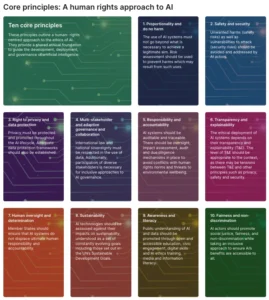
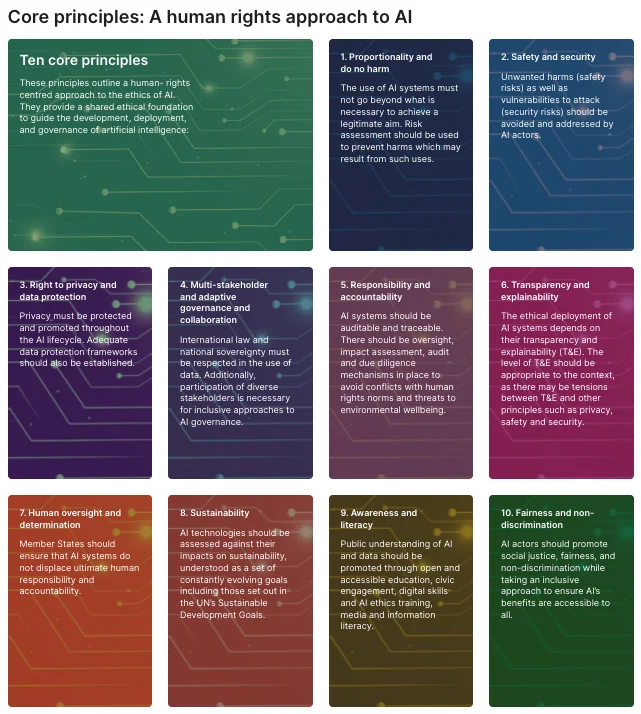
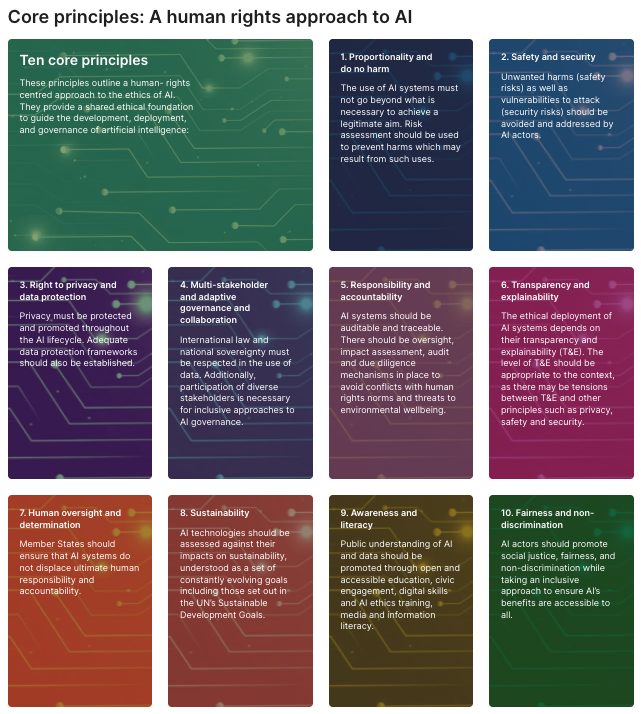
To ensure the study adheres to global standards of ethical inquiry, the research team is utilizing the ten principles established in UNESCO’s Recommendation on the Ethics of Artificial Intelligence. This framework provides a holistic lens through which students can evaluate technology. The principles include:
- Proportionality and Do No Harm: Ensuring AI use does not exceed what is necessary for a legitimate aim.
- Safety and Security: Protecting users from unintended risks.
- Fairness and Non-discrimination: Actively identifying and mitigating bias.
- Sustainability: Assessing the environmental, social, and economic impacts throughout the AI lifecycle.
- Right to Privacy and Data Protection: Upholding individual autonomy over personal information.
- Human Agency and Oversight: Ensuring humans remain in control of automated systems.
- Transparency and Explainability: Making AI decision-making processes understandable.
- Responsibility and Accountability: Assigning clear roles for the outcomes of AI systems.
- Awareness and Literacy: Empowering the public to understand AI’s role in society.
- Multi-stakeholder and Adaptive Governance: Encouraging collaboration across sectors.
By integrating these principles into the secondary school curriculum, the Raspberry Pi Computing Education Research Centre hopes to move beyond "black box" education, where students simply observe inputs and outputs, toward a model of "socio-technical" understanding.
The Environmental Impact of AI: A Critical New Frontier
A primary objective of the new research study is to bring the environmental cost of the digital age to the forefront of computing education. While often marketed as "cloud-based" and "weightless," the infrastructure supporting AI is resource-intensive. Training a single large language model can consume as much energy as several hundred households use in a year. Furthermore, the cooling requirements for the massive data centers that house AI servers require millions of gallons of water, often in regions already facing water scarcity.
"The environmental impact of AI is one of the most pressing ethical issues of our time, yet it is often invisible to the end-user," the research team noted in their project brief. "By teaching students about the carbon footprint of their digital queries, we are fostering a sense of digital citizenship that extends to the health of the planet."
The study will encourage students to engage in ethical reasoning by presenting real-world trade-offs. For example, a student might be asked to weigh the benefits of an AI-driven medical diagnostic tool against the environmental cost of the electricity required to run it. This type of nuanced discussion is intended to move students away from binary "good vs. bad" thinking and toward a more sophisticated understanding of technological compromise.
A Design-Based Research Methodology
The study distinguishes itself through its collaborative "design-based research" (DBR) approach. Rather than researchers developing a curriculum in isolation and handing it to teachers, the project invites educators to become co-designers. This methodology recognizes that teachers possess the pedagogical expertise and classroom experience necessary to make complex ethical concepts accessible to 11- to 14-year-olds.

Participating teachers will engage in a structured, multi-phase process:
- Collaborative Workshops: Teachers will attend two in-person workshops in Cambridge. These sessions will serve as a forum for sharing best practices, exploring the UNESCO framework, and brainstorming lesson ideas that resonate with the target age group.
- Co-design Phase: Working alongside researchers, teachers will develop a specialized unit of work. This unit will include lesson plans, digital assets, and assessment tools focused on AI ethics and sustainability.
- Classroom Implementation: Teachers will pilot the unit in their own schools, providing a real-world testbed for the materials.
- Evaluation and Iteration: The study will involve comprehensive evaluation activities, including surveys, interviews, and observations. The feedback gathered from both teachers and students will be used to refine the curriculum before it is shared more broadly with the global computing education community.
To facilitate participation, the Raspberry Pi Computing Education Research Centre has committed to providing financial support where necessary. This includes covering the costs of travel and accommodation for the Cambridge workshops, as well as providing funds for "supply cover" to ensure that teachers can attend without disrupting their school’s operations.
Timeline and Participation Requirements
The project is currently in its recruitment phase, seeking computing teachers from diverse school settings across England, Scotland, and Wales. The timeline for the study is as follows:
- Phase 1 (Autumn 2024): Recruitment of participating teachers and initial introductory sessions.
- Phase 2 (Winter 2024 – Spring 2025): The two primary workshops in Cambridge and the finalization of the co-designed curriculum.
- Phase 3 (Summer 2025): Classroom teaching phase and data collection.
- Phase 4 (Late 2025): Analysis of findings and publication of the refined teaching resources.
Eligible participants must be currently teaching computing to students in Years 7, 8, or 9 (England and Wales) or S1, S2, or S3 (Scotland). The research team is particularly interested in teachers who are passionate about social justice, environmental issues, and the future of technology.
Broader Implications for Global Education
The findings of this study are expected to have a ripple effect far beyond the borders of the United Kingdom. As nations worldwide grapple with how to regulate AI, the role of education has emerged as a primary defense against misinformation and the unethical use of technology. By creating a proven model for teaching AI sustainability, the Raspberry Pi Computing Education Research Centre is positioning the UK as a leader in "responsible AI" education.
The study also addresses a critical need for professional development. Many computing teachers have expressed concerns about keeping pace with AI developments. This project provides a structured environment for teachers to enhance their own subject knowledge while contributing to the wider academic field.
"Our goal is to empower teachers," said Katharine Childs, a key researcher on the project. "By working together, we can ensure that the way we teach AI reflects the complexity of the world our students will inherit. We want them to be not just consumers of AI, but critical thinkers who can demand better, more sustainable technology."
How to Get Involved
The Raspberry Pi Computing Education Research Centre invites all interested secondary computing teachers to register their interest. This is a unique opportunity to contribute to a study that will be presented at international conferences and will likely influence future national curriculum reviews.
Interested educators can register via the official application form at: http://rpf.io/sage-application.
For specific inquiries regarding the study’s methodology, the Cambridge workshops, or the UNESCO framework integration, please contact Katharine Childs directly at [email protected].
As AI continues to reshape the labor market, the environment, and the social fabric, the importance of this research cannot be overstated. By focusing on the ethical and sustainable dimensions of computing today, the Raspberry Pi Computing Education Research Centre and its network of participating teachers are laying the groundwork for a more thoughtful and responsible technological future.