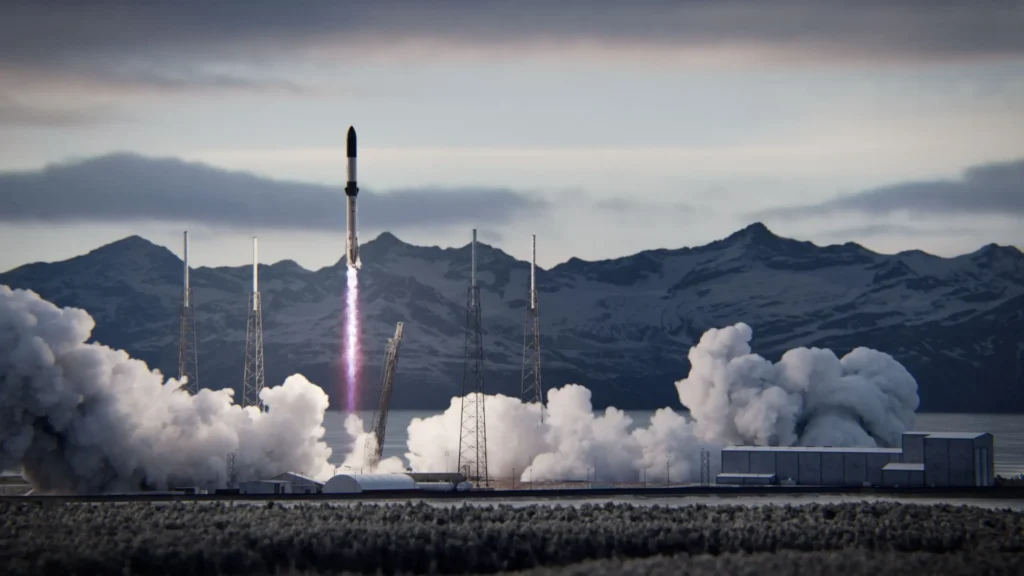
Toronto-based Canada Rocket Company (CRC) is on the cusp of a significant milestone, preparing for critical hot-fire testing of engine components for its R-2 medium-lift rocket later this year. This pivotal development marks a substantial step forward in CRC’s ambitious journey to establish a robust domestic launch capability, a national objective actively supported by the Canadian government. The company’s strategic push coincides with broader governmental investments aimed at bolstering Canada’s presence in the global space economy and ensuring sovereign access to orbit.
The R-2, designed by CRC, is envisioned as a medium-lift launch vehicle with the capacity to deliver payloads of up to 15,000 kilograms to low-Earth orbit. This capability positions CRC to address a growing segment of the satellite launch market, catering to a range of scientific, commercial, and governmental needs. The company’s progress is intrinsically linked to a broader national initiative, which saw CRC, alongside Nordspace and Reaction Dynamics, receive a combined $8.3 million in government funding earlier this year. This funding injection is specifically earmarked for the development of Canadian launch vehicles, signaling a concerted effort to cultivate domestic expertise and infrastructure within the burgeoning space sector.
Nordspace, another Toronto-area entity, and Reaction Dynamics, based in the Montreal region, are also actively pursuing small-lift launch vehicle designs, targeting payloads under 1,100 kilograms. Nordspace, however, has indicated its long-term vision includes developing a larger rocket capable of lifting between 5,000 and 10,000 kilograms, further diversifying Canada’s potential launch offerings.
CRC’s immediate focus is on the rigorous testing of its engine systems. The initial hot-fire test, slated for December, will concentrate on a gas generator designed for turbine ignition. This crucial test, according to CEO and co-founder Hugh Kolias, will serve as the foundational step in the company’s core engine test and development cycle. “We’ll be hot-firing that generator at our test facility in December of this year,” Kolias stated in a recent interview. “That really kicks off the beginning of our core test and development cycle for our engine that will extend to about 2028, when we should have a fully assembled engine with turbopump ready for hot fire. And then we’re looking at about a 2032 launch attempt.” This timeline underscores the complex and lengthy nature of rocket engine development, requiring meticulous engineering, testing, and refinement.
National Investment in Sovereign Launch Capability
The Canadian government’s commitment to fostering a domestic launch industry extends beyond direct funding for private companies. In March, the Department of National Defence announced a significant allocation of $200 million towards the development of a spaceport on the Atlantic coast of Nova Scotia. This strategically important infrastructure project is currently under construction and is poised to become a critical hub for Canadian space activities. The rationale behind this substantial investment is rooted in national security and the increasing reliance of modern services on space-based assets.
An official announcement regarding the spaceport development emphasized the strategic imperative: "With military, emergency response, and government services increasingly dependent on space-based systems, sovereign launch protects national interests and enables continuity of operations." This sentiment highlights a global trend among nations to secure independent access to space, mitigating geopolitical risks and ensuring uninterrupted critical services.
R-2 Engine Design and Propellant Choices
CRC’s R-2 rocket is being engineered with a sophisticated propulsion system. The vehicle will feature nine engines that will utilize methalox – a propellant combination of liquid methane and liquid oxygen. This choice of propellant is significant, as methalox is increasingly favored in the aerospace industry for its performance characteristics, cleaner combustion byproducts, and potential for in-situ resource utilization in future space exploration. Notably, this is the same propellant combination powering the first stages of prominent launch vehicles such as SpaceX’s Starship, Blue Origin’s New Glenn, and Rocket Lab’s Neutron launchers.
The structural integrity of the R-2 is also being carefully considered. Kolias indicated that the rocket’s structure will likely be predominantly constructed from an aluminum-lithium alloy. This advanced material is renowned for its high strength-to-weight ratio, making it an ideal choice for aerospace applications where mass reduction is paramount. SpaceX, a leader in the private space industry, also employs this material for its Falcon 9 boosters, attesting to its proven performance in demanding launch environments.
Funding, Facilities, and Market Outlook
Canada Rocket Company has successfully secured $22 million in funding to date, a figure that includes the government grants. Looking ahead, the company has ambitious plans to raise an additional $650 million over the next few years as its testing and development programs progress. These substantial capital requirements reflect the capital-intensive nature of the aerospace industry.
To support its upcoming testing phases, CRC is actively working on establishing the necessary infrastructure. Plans are in motion to build a dedicated facility for the December hot-fire tests and other essential development activities, with construction expected to commence this fall. Beyond immediate testing needs, CRC is exploring the acquisition of a separate, expansive 500,000-square-foot (46,450-square-meter) facility. This larger site would be dedicated to the manufacturing of the R-2 rockets. A key consideration for this manufacturing site is its proximity to a navigable waterway. Kolias explained that the rockets will be transported to the Atlantic launch site via barge, necessitating a location that facilitates efficient and cost-effective logistics.
The strategic timing of CRC’s development is informed by a keen analysis of the global satellite launch market. Kolias highlighted that current research indicates a significant imbalance between the demand for satellite launches and the available launch capacity. This demand is projected to intensify further, especially in light of SpaceX’s stated intentions to gradually phase out its highly successful Falcon 9 launch vehicle. Elon Musk, founder of SpaceX, indicated on the social media platform X (formerly Twitter) in August that Falcon operations would be "winding down" once Starship achieves reliable, frequent flights. This transition from Falcon 9, a workhorse of the launch industry for over a decade, is expected to create a substantial gap in launch availability, particularly for medium-lift payloads.
A spokesperson for CRC elaborated on this market dynamic, stating via email that approximately 80% of current satellite launch demand is presently without a contracted ride to orbit, a figure CRC anticipates will continue to rise. This unmet demand presents a compelling opportunity for new launch providers like CRC.
Industry Perspectives and Market Dynamics
The burgeoning demand for medium-lift launch capabilities, coupled with the potential void left by SpaceX’s Falcon 9 retirement, is a recognized trend within the space industry. Chris Quilty, a seasoned space business analyst based in Florida, commented on the evolving landscape. "It’s unclear what will fill the gap," Quilty stated. "SpaceX took 83% of global mass to market in 2025, and they are switching over to Starship, but it is unlikely they will make Starship available to commercial customers for two to three years while they focus on their own needs, such as launching Starlink or orbital data centers, and government launches, such as those for NASA’s Artemis moon program."
Quilty further categorized the competitive environment, noting that in the heavy-lift sector, Blue Origin’s New Glenn is considered the primary contender. However, he also pointed to a dynamic race among over a dozen small, medium, and heavy-lift vehicles aiming to commence operations. This suggests a highly competitive, albeit opportunity-rich, market for new entrants.
However, not all industry observers are convinced that SpaceX will entirely retire the Falcon 9 in the near future. Liang Sim, a space analyst with the Michigan-based consultancy AeroDynamic Advisory, offered a contrasting perspective. "It would be silly to retire what is one of the biggest cash cows," Sim remarked, suggesting that the economic viability of continuing Falcon 9 operations, at least for a transitional period, might persist.
Broader Implications for Canada’s Space Sector
The concerted efforts by Canada Rocket Company and its domestic counterparts, supported by significant government investment, signal a strategic pivot towards establishing a more independent and capable Canadian space sector. The development of indigenous launch vehicles and the construction of a national spaceport are critical components of this strategy. These advancements are not merely about commercial ventures; they are intrinsically linked to national sovereignty, economic diversification, and Canada’s ability to participate fully in the global space economy.
The R-2’s medium-lift capability is particularly relevant as many commercial and scientific missions require the deployment of satellites that fall within this payload class. By developing this capability domestically, Canada can reduce its reliance on foreign launch providers, potentially lowering costs and increasing flexibility for Canadian organizations. Furthermore, the expertise gained through these development programs will foster a highly skilled workforce and stimulate innovation across various technological disciplines.
The timeline for CRC’s R-2, targeting a 2032 launch attempt, positions it within a crucial period of projected market growth and potential capacity shortfalls. The success of CRC and other Canadian launch companies will depend on their ability to navigate the complex technical, financial, and regulatory challenges inherent in rocket development, while also effectively capitalizing on the identified market opportunities. The next few years, marked by critical testing and fundraising, will be formative for Canada Rocket Company and its contribution to Canada’s evolving space ambitions.