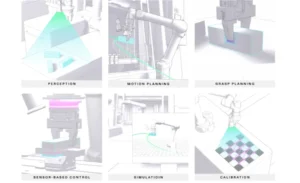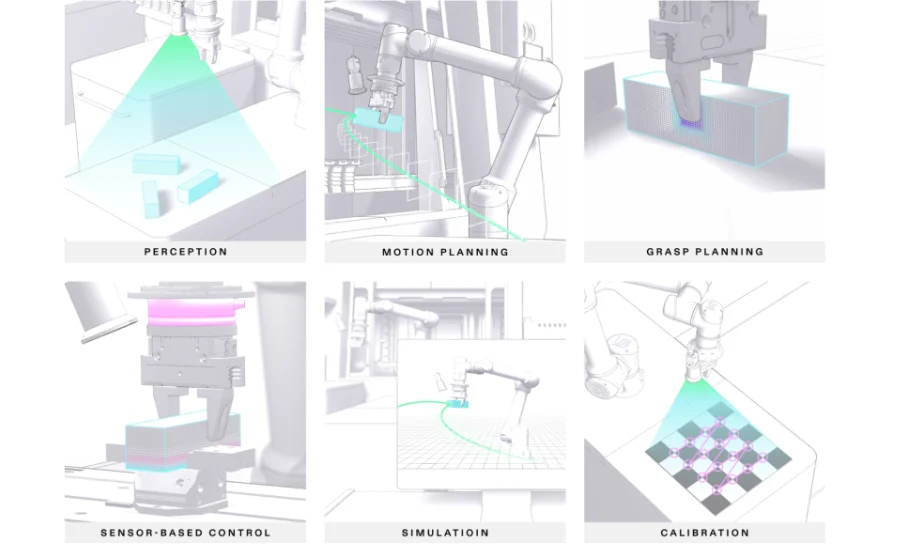
MOUNTAIN VIEW, Calif. — Intrinsic, the industrial robotics software company operating under the Alphabet (Google) umbrella, has announced the open-sourcing of foundational components of its robotics platform, Intrinsic Core. This strategic move aims to significantly reduce the engineering burden associated with building and deploying advanced AI-enabled automation solutions, making sophisticated industrial robotics more accessible to a wider range of developers and manufacturers. Released under an Apache 2.0 license, Intrinsic Core provides a comprehensive suite of ROS-compatible software tools designed to streamline robot control, motion and grasp planning, machine vision, simulation, and hardware integration.
Google’s Renewed Push into Industrial Robotics
Intrinsic’s formation in 2021 marked a significant re-entry for Alphabet into the core industrial robotics space, following a period of strategic divestment from previous robotics ventures like Boston Dynamics. Google’s broader history in robotics is extensive, spanning early acquisitions, significant research by DeepMind in AI for robotics, and the development of autonomous driving technology through Waymo. However, Intrinsic’s mandate is specifically focused on addressing the persistent challenges that have historically hampered the widespread adoption of advanced automation in manufacturing: namely, the immense complexity, high cost, and lack of flexibility in deploying robotic systems, particularly those integrated with artificial intelligence.
The industrial automation sector, estimated to be a multi-billion dollar market and projected to grow substantially in the coming years, faces a critical bottleneck. While demand for automation is surging due to labor shortages, supply chain vulnerabilities, and the need for increased productivity and quality, the development cycle for new robotic applications remains protracted and resource-intensive. Each new application often requires extensive custom engineering, from developing basic robot infrastructure and hardware drivers to integrating complex AI algorithms for perception and decision-making. Intrinsic’s open-source initiative directly tackles this issue by offering a robust set of reusable building blocks, allowing developers to bypass the need to "reinvent the wheel" for fundamental robotics capabilities.
Unpacking Intrinsic Core: A Foundation for Innovation
Intrinsic Core is not merely a collection of tools; it represents a carefully engineered ecosystem designed to foster rapid development and deployment of intelligent automation. Its components are battle-tested, drawing directly from capabilities Intrinsic itself utilizes in demanding manufacturing deployments.
One of the cornerstone components is Intrinsic Control, a hardware-agnostic, real-time control framework. This innovative architecture allows for dynamic adjustment of robot behavior during a trajectory, leveraging real-time sensor feedback. This capability is crucial for tasks requiring precision and adaptability in variable environments, such as assembly, inspection, or material handling where part positions may not be perfectly consistent. Crucially, Intrinsic Control is designed to enable developers to interchange robot arms, grippers, and sensors without necessitating a complete rewrite of hardware drivers. This level of modularity is a game-changer, significantly reducing integration time and cost, and promoting hardware vendor independence—a common pain point in the robotics industry.
Further enhancing the platform’s capabilities are advanced planning modules. Automated motion planning generates collision-free robot paths efficiently and safely, a fundamental requirement for any industrial robot. This goes beyond simple point-to-point movements, incorporating obstacle avoidance and path optimization. Grasp planning adapts dynamically to the position and orientation of parts, a critical feature for tasks involving bin picking or handling randomly oriented objects. Traditional robotic systems often require highly structured environments with fixed part presentations, which limits their applicability. Intrinsic’s adaptable grasp planning, powered by AI, helps overcome this limitation.
A particularly notable inclusion is the pose-estimation technology based on NVIDIA FoundationPose. This capability allows robots to accurately locate and manipulate 3D parts dynamically within their workspace. By enabling robots to understand the exact position and orientation of objects without rigid fixturing, manufacturers can achieve greater flexibility on the factory floor, reduce tooling costs, and simplify setup processes. This is a significant step towards truly flexible manufacturing systems that can adapt to product variations and smaller batch sizes without extensive retooling.
Beyond these core functionalities, Intrinsic Core also integrates essential development and deployment tools. Simulation services based on Gazebo provide a virtual environment for developing, testing, and validating robot applications without requiring access to physical hardware, thereby accelerating development cycles and reducing risks. Automated camera calibration simplifies the setup of vision systems, a notoriously complex task that often requires specialized expertise. Finally, the platform includes preconfigured ROS-compatible drivers for a range of supported robots, grippers, and 3D cameras, further lowering the barrier to entry for developers by providing out-of-the-box compatibility with common industrial hardware.
Validated Performance: The AI for Industry Challenge
The robustness and efficacy of Intrinsic’s underlying technology have been rigorously tested and validated through real-world challenges. The company recently conducted its "AI for Industry Challenge," which specifically tasked developers with automating the notoriously difficult task of inserting flexible cables into corresponding ports. Unlike rigid components, flexible cables present a unique challenge due to their unpredictable bending and movement, making reliable automation exceedingly difficult with traditional, rule-based robotic systems.

The results of the challenge provided compelling evidence of the platform’s potential. Intrinsic reported that two participating teams achieved an impressive 100 percent success rate during final testing on a physical robot. These teams leveraged several of the same software building blocks now being released through Intrinsic Core, combining them with their own AI models to develop highly effective applications. This success underscores the platform’s ability to empower developers to tackle complex, previously unautomatable tasks, moving beyond repetitive, structured operations into more adaptable and intelligent automation. The challenge served as a powerful demonstration that the combination of robust software infrastructure and cutting-edge AI can unlock significant advancements in manufacturing.
Reference Applications: The Open Machine Tending Solution
To further facilitate adoption and provide a tangible starting point for developers, Intrinsic is also releasing an Open Machine Tending Solution as a reference application for the platform. Machine tending—the task of loading and unloading parts from CNC machines—is one of the most common and labor-intensive applications in manufacturing. By providing a pre-built, AI-enabled solution, Intrinsic offers developers and integrators a robust foundation upon which to build customized applications. This solution is designed to be adaptable for various equipment, including popular systems from FANUC and Universal Robots, demonstrating the platform’s versatility and real-world applicability across different hardware ecosystems. This initiative directly supports Intrinsic’s stated goal: to make it significantly easier for developers to transition robotics applications from initial prototype to full-scale production, thereby accelerating the deployment of advanced automation across industries.
Broader Implications and Industry Impact
Intrinsic’s decision to open-source its foundational robotics platform components carries significant implications for the industrial automation landscape.
Firstly, it represents a substantial step towards democratizing advanced robotics. By providing free access to sophisticated software tools that address fundamental challenges in robot control, perception, and planning, Intrinsic is lowering the barrier to entry for smaller companies, startups, and academic institutions that may lack the resources to develop such infrastructure from scratch. This could unleash a wave of innovation, as more developers can focus their efforts on specialized AI algorithms and application-specific solutions rather than foundational engineering.
Secondly, this move aligns with the growing trend towards open-source collaboration in robotics. The success of projects like ROS (Robot Operating System) has demonstrated the power of community-driven development in accelerating innovation and establishing de facto standards. By contributing robust, Google-backed components to this ecosystem, Intrinsic is poised to become a central player, potentially influencing future directions and fostering greater interoperability across a fragmented industry. This open approach can lead to faster development cycles, more robust software, and ultimately, more widespread adoption of robotics.
Thirdly, the focus on AI-enabled automation directly addresses the evolving needs of modern manufacturing. As industries move towards higher product customization, shorter production runs, and more dynamic supply chains, the demand for flexible, intelligent robots that can adapt to changing conditions is paramount. Intrinsic Core’s capabilities in dynamic pose estimation, adaptable grasp planning, and real-time control are precisely what is needed to move beyond rigid, repetitive automation to truly adaptable and intelligent systems. This will be critical for factories aiming to implement Industry 4.0 principles and achieve greater agility.
Economically, the reduction in engineering work and deployment complexity promised by Intrinsic Core could lead to significant cost savings and accelerated ROI for manufacturers. The ability to prototype and deploy advanced robotic solutions more quickly and affordably could unlock new applications and expand the market for automation, particularly among small and medium-sized enterprises (SMEs) that have traditionally found advanced robotics prohibitively expensive and complex. This could lead to enhanced productivity, improved quality, and a more competitive manufacturing sector globally.
While Intrinsic is making its core software available, the business model likely involves offering higher-level services, specialized AI models, cloud integration, and support to enterprises. This hybrid approach, common in the open-source world, allows for broad adoption of the core technology while creating avenues for commercial success.
Conclusion
Intrinsic’s open-sourcing of its foundational robotics platform marks a pivotal moment in the evolution of industrial automation. By providing a comprehensive, battle-tested, and ROS-compatible suite of tools under an open license, the Google-owned company is poised to accelerate the development and deployment of AI-enabled robotics across manufacturing and beyond. This initiative not only simplifies complex engineering challenges but also fosters collaboration, drives innovation, and democratizes access to advanced automation capabilities. As industries increasingly turn to intelligent robots to meet the demands of a dynamic global economy, Intrinsic Core stands to become a critical enabler, helping to bridge the gap between prototype and production for the next generation of industrial AI. Intrinsic Core is currently available for developers to explore and integrate through the company’s GitHub repository.