The realm of modern manufacturing is undergoing a profound transformation, driven by an insatiable demand for higher precision, increased efficiency, and enhanced safety. At the heart of this evolution lies motion control technology, the sophisticated engine that translates intricate digital commands into the precise, repeatable movements of actuators, motors, and other mechanical components vital for operating advanced production equipment such as conveyors, robotics, and assembly lines. This technological backbone empowers manufacturers to achieve unprecedented levels of accuracy, flexibility, and reliability, paving the way for the smart factories of tomorrow. The continuous refinement of these systems, coupled with groundbreaking advancements in digital simulation, robust safety mechanisms, and intelligent sensing, is redefining what is possible on the factory floor.
The Evolving Landscape of Motion Control in Industry 4.0
The global motion control market, valued at approximately $15 billion in 2023, is projected to grow steadily, driven by the escalating adoption of automation across diverse industrial sectors. This growth reflects a broader shift towards Industry 4.0 principles, where interconnected systems, real-time data analysis, and intelligent machines collaborate to optimize production processes. Manufacturers are increasingly seeking solutions that not only streamline operations but also enhance product quality, reduce operational costs, and improve workplace safety. The integration of advanced motion control components is paramount to achieving these objectives, enabling faster cycle times, finer positional accuracy, and greater adaptability to changing production demands. From high-speed pick-and-place robots to intricate semiconductor manufacturing equipment, precise motion control is the silent orchestrator of modern industrial efficiency.
Digital Twins Revolutionize Engineering with Virtual Prototyping

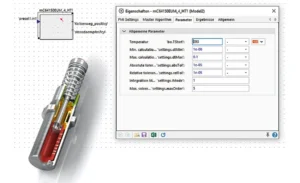
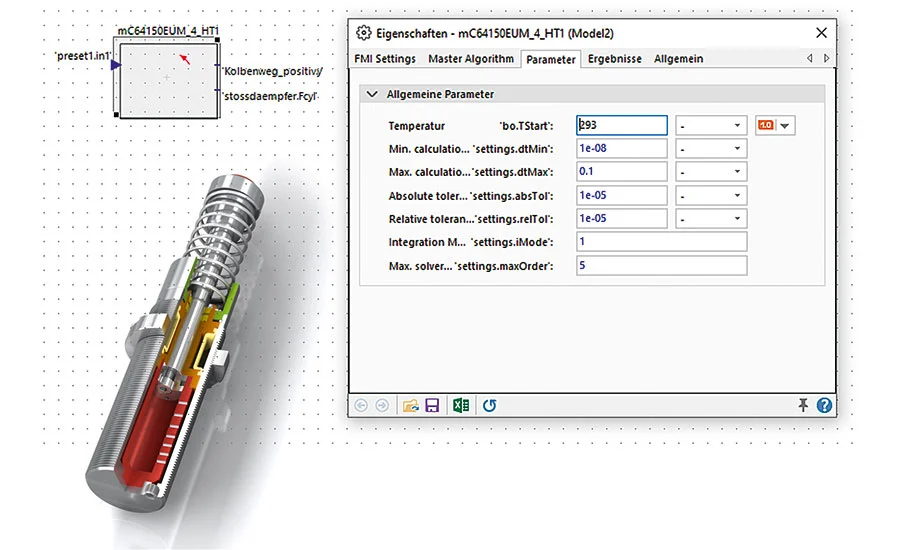
A significant leap forward in product development and engineering efficiency comes through the application of digital twin technology, particularly in the realm of industrial shock absorbers and dampers. ACE Controls Inc. highlights how virtual prototyping, facilitated by functional mockup units (FMUs), allows engineers to integrate highly accurate digital representations of these critical components into comprehensive simulation models. These FMUs are not merely static models; they are imbued with the dynamic physical behaviors of hydraulics, thermals, and mechanics that characterize real-world industrial shock absorbers. This capability enables engineers to meticulously calculate the precise influence of various environmental factors, such as input temperature, on damping behavior. Crucially, it allows them to examine the effect of these variables on an overall system design well in advance of physical prototyping.
The implications of this technology are far-reaching. Historically, developing and testing industrial components involved numerous iterations of physical prototypes, a process that was both time-consuming and resource-intensive. By moving much of this experimentation into the virtual domain, manufacturers can realize substantial time and cost savings. Project timelines are compressed, and the financial burden associated with material waste, manufacturing, and shipping of multiple physical samples is drastically reduced. Beyond the immediate economic benefits, there are significant sustainability advantages. The need for fewer physical samples translates directly into a reduced consumption of raw materials and energy, aligning with global efforts towards more environmentally responsible manufacturing practices. Industry experts suggest that the adoption of digital twin technology can cut development cycles by up to 30% and reduce physical prototyping costs by as much as 50% in complex engineering projects. This paradigm shift in design and validation not only accelerates innovation but also fosters a more sustainable approach to industrial development.
Precision Rotary Stages Drive High-Tech Applications
In fields demanding extreme precision and reliability, such as automation, photonics, semiconductor manufacturing, and life sciences, the quality of motion control components can directly impact the success of highly sensitive operations. Allient Inc. has introduced the ThruSight-Theta continuous rotation rotary stage, engineered specifically to meet these rigorous requirements. This innovative rotary stage distinguishes itself with several key features designed to optimize performance in demanding environments.
A standout attribute is its ultra-low profile, measuring only 25 millimeters in overall height. This compact design is crucial for applications where space is at a premium, enabling seamless integration into tightly packed systems without compromising performance. The ThruSight-Theta employs axial flux technology within an ironless motor architecture, a design choice that delivers zero cogging torque. Cogging torque, an undesirable characteristic in many motor types, can lead to jerky motion and reduced precision, making its elimination a significant advantage for smooth, repeatable rotary motion. This is particularly vital in applications requiring continuous, uniform movement or extremely precise indexing.

Furthermore, the rotary stage features a large 110-millimeter through-hole aperture. This aperture provides valuable backside accessibility, allowing for the routing of cables, optical pathways, or other components directly through the center of the stage, simplifying system design and reducing clutter. Designed for demanding move-and-settle applications, where rapid, accurate positioning followed by stable holding is critical, the ThruSight-Theta ensures consistent and reliable operation. This level of precision is indispensable in processes like wafer inspection, laser beam steering, microscopy, and robotic surgery, where even microscopic deviations can lead to significant errors. The market for high-precision motion systems continues to expand, driven by advancements in miniaturization and the increasing complexity of scientific and industrial processes, making components like the ThruSight-Theta essential for next-generation applications.
Robust Safety Switches Ensure Reliable Operator Control
As automation becomes more pervasive, the integration of effective safety measures is not merely a regulatory requirement but a fundamental aspect of responsible industrial operation. IDEM Safety Switches Ltd. addresses this critical need with its DS range of safety switches. These units are engineered to provide reliable operator control in even the most demanding industrial environments, ensuring the safety of personnel and the integrity of machinery.
The DS range offers both preconfigured and configurable push-button control units, providing machine builders, system integrators, and end-users with a flexible framework for standardizing control station design while simultaneously addressing application-specific safeguarding requirements. This modularity is key in an industrial landscape characterized by diverse machinery and operational protocols. The robust construction of these safety switches is a primary feature; heavy-duty die-cast materials are used to ensure long-term durability, safety, and dependable performance even under harsh conditions such as exposure to dust, moisture, or impact. This ruggedness contributes significantly to reducing maintenance overhead and extending the operational lifespan of the control units.
A practical design consideration is the narrow 40-millimeter profile of the DS units. This compact footprint allows them to be mounted directly onto guard frames or within confined spaces, optimizing valuable floor space and simplifying installation. The ease of integration and the ability to customize configurations for specific safety functions—such as emergency stops, start/stop controls, or mode selection—make the DS range a versatile solution for a wide array of industrial applications. Compliance with international safety standards (e.g., ISO 13849, IEC 62061) is paramount in this sector, and products like the DS range are designed to meet these stringent requirements, contributing to a safer working environment and reducing the risk of industrial accidents. Statistics consistently show that well-implemented safety systems drastically reduce workplace injuries and associated costs, underscoring the value of dependable components like the DS safety switches.

Edge AI Sensor Modules Advance Predictive Maintenance
The shift from reactive to proactive maintenance strategies represents a significant opportunity for manufacturers to enhance operational efficiency and reduce costly downtime. TDK Corp. is at the forefront of this evolution with its Edge RX Pro sensor module, a compact, IP67-rated device that integrates multiple sensing capabilities with edge AI processing. This module is specifically designed to provide deeper insights for predictive maintenance applications across a wide range of industrial settings.
The Edge RX Pro consolidates vibration, acoustic, magnetic, temperature, and rotational motion sensing into a single unit, leveraging an integrated six-axis IMU (Inertial Measurement Unit) for comprehensive data collection. The inclusion of edge AI processing means that data analysis and anomaly detection can occur directly on the device, rather than requiring constant data transmission to a centralized cloud server. This localized processing reduces latency, conserves bandwidth, and enhances data security, making it ideal for real-time monitoring in critical applications. The IP67 rating ensures the module’s resilience against dust and water ingress, allowing it to be deployed reliably in harsh industrial environments where exposure to elements is common.
This multi-sensor, AI-powered approach enables the detection of subtle anomalies that might otherwise go unnoticed until they lead to catastrophic equipment failure. The module addresses a wide array of industrial applications, including:
- Compressed air leak detection: Identifying costly air leaks that waste energy.
- Acoustic anomaly detection: Pinpointing unusual sounds indicative of impending mechanical failure.
- Rotational and alignment analysis: Monitoring the health and alignment of rotating machinery like motors and pumps.
- Oil and gas leak detection: Early identification of leaks in critical infrastructure.
- Bearing anomaly detection: Detecting the earliest signs of wear and tear in bearings, a common point of failure.
By delivering deeper insights into equipment health, the Edge RX Pro module empowers maintenance teams to schedule interventions precisely when needed, minimizing unplanned downtime and extending the lifespan of valuable assets. Industry reports indicate that predictive maintenance strategies can reduce equipment downtime by 25-50% and extend equipment lifespan by 20-40%, leading to significant returns on investment. The convergence of advanced sensing and edge AI is thus a cornerstone of the modern industrial IoT ecosystem, driving unprecedented levels of operational intelligence.

Broader Implications and the Future of Manufacturing
The innovations highlighted by ACE Controls, Allient, IDEM Safety Switches, and TDK Corp. collectively underscore the ongoing advancements shaping the future of manufacturing. These developments are not isolated but rather interconnected threads in the larger tapestry of Industry 4.0 and the pursuit of smart manufacturing. The integration of digital twins fundamentally transforms design and engineering, allowing for faster, more sustainable product development. Precision motion control systems enable the creation of increasingly complex and accurate machinery, pushing the boundaries of what is possible in high-tech industries. Robust safety solutions ensure that this technological progress does not come at the expense of human well-being, providing essential layers of protection. Finally, intelligent sensing combined with edge AI empowers a paradigm shift in maintenance, moving from reactive fixes to predictive, data-driven interventions that optimize asset performance and operational continuity.
The trajectory for the manufacturing sector points towards even greater levels of automation, intelligence, and connectivity. Future factories will likely feature more autonomous systems, sophisticated human-robot collaboration, and an even tighter integration of the digital and physical realms. The continuous drive for efficiency, sustainability, and safety will necessitate ongoing innovation in motion control, sensor technology, and AI-driven analytics. As global supply chains face increasing pressures and demands for customization grow, the ability of manufacturers to rapidly adapt, optimize, and secure their operations will be paramount. These advancements represent critical building blocks in creating a more resilient, productive, and intelligent industrial landscape for decades to come.