Patek Philippe, a venerable institution in haute horlogerie, has once again captivated the watchmaking world with its latest releases, sparking both admiration and debate. As the brand prepares for its prestigious Watch Art Grand Exhibition in Milan from October 2nd to 18th, a closer examination of its recent offerings, particularly the technically intricate Celestial Ref. 6105G, offers a compelling glimpse into the future trajectory of this esteemed Maison. While the anniversary Nautilus models understandably commanded significant attention, Patek Philippe’s strategic releases at Watches & Wonders revealed a deliberate, forward-thinking approach, aimed at engaging both seasoned collectors and a new generation of enthusiasts.

A Glimpse into Patek Philippe’s Strategic Vision
The year has been marked by a series of releases that, while at times surprising and even divisive, collectively paint a picture of Patek Philippe’s evolving identity. The author, preparing to attend the upcoming Milan exhibition for an exclusive preview, has been meticulously examining these new timepieces. Among the most technically ambitious and conversation-starting are the Cubitus perpetual calendar and the Celestial Ref. 6105G. These watches, far from being mere variations on established themes, represent a bold step forward, signaling Patek Philippe’s commitment to innovation while respecting its rich heritage.
The Celestial Ref. 6105G, in particular, stands out. It is a wristwatch that pushes the boundaries of what is achievable in mechanical watchmaking, boasting a complication previously reserved for only a handful of other esteemed brands, and never before realized in a Patek Philippe wristwatch. This level of technical prowess, combined with a distinctly modern aesthetic, suggests a deliberate strategy to reinterpret the brand’s classic appeal for a contemporary audience.

The Celestial Ref. 6105G: Reaching for the Stars
The Patek Philippe Celestial Ref. 6105G is more than just a timekeeping instrument; it is a celestial observatory on the wrist. In the frenetic pace of major watch events, this particular model, despite its technical sophistication, may have initially been overshadowed by more widely anticipated releases. However, its unique blend of historical reference and avant-garde execution has ensured it remains a focal point of discussion.
Building upon the lineage of its predecessors, the discontinued Ref. 6102 and the current Ref. 6104, the Ref. 6105G presents a visually striking interpretation of the night sky. While sharing a similar aesthetic with its celestial dials – a clear sapphire crystal revealing a meticulously rendered depiction of the heavens over the Northern Hemisphere – the Ref. 6105G introduces a novel integrated rubber strap. This is not the utilitarian rubber found on the Aquanaut, but rather a sleek, lugless design that contributes to the watch’s futuristic "flying saucer" appearance.
Beyond its captivating dial, the Ref. 6105G incorporates a sunrise and sunset display, a complication of immense technical difficulty that has historically been confined to Patek Philippe’s most exclusive pocket watches and only a select few other high-end wristwatches. This feature, along with an annual calendar indication, elevates the Ref. 6105G into the realm of exceptional horological achievement.
A Heritage of Celestial Observation
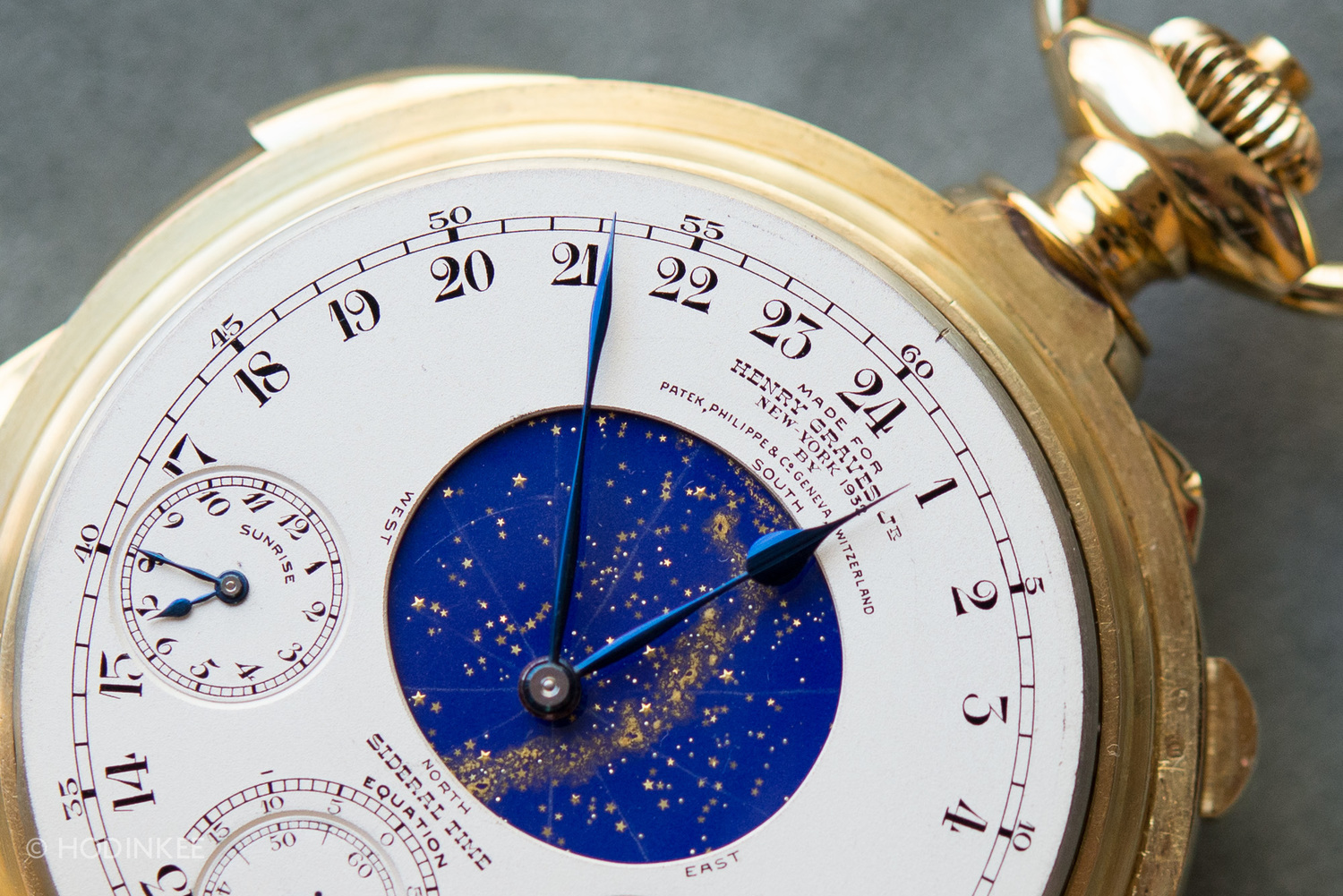
The concept of displaying celestial movements on a watch is deeply rooted in Patek Philippe’s history. The Ref. 6105G draws inspiration from iconic timepieces that have pushed the boundaries of mechanical complexity and astronomical representation. Its lineage can be traced back to the legendary 1933 Henry Graves Supercomplication, the first Patek Philippe watch to feature a sunrise and sunset complication. This historical connection is further strengthened by the Caliber 89 and the Star Caliber 2000, both of which showcased Patek Philippe’s mastery in horological astronomy.
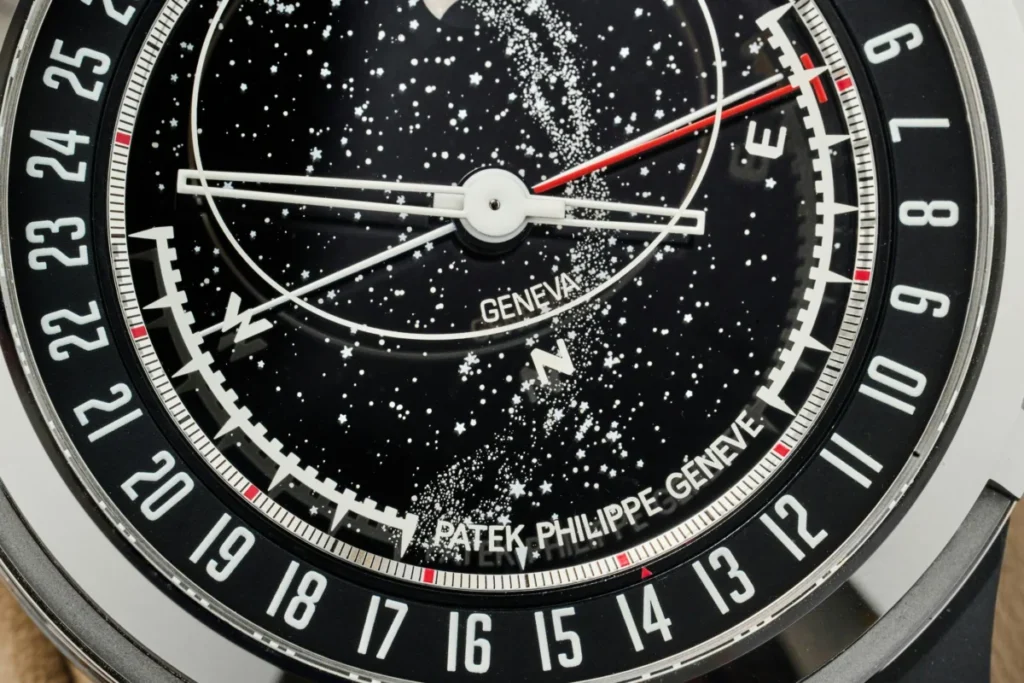
The dial of the Ref. 6105G is a testament to this heritage. It features a transparent sapphire crystal with white transfer-printed stars overlaying a dark, smoked sapphire background. This creates a mesmerizing view of the night sky, specifically depicting the celestial sphere over Geneva and all cities situated at the same latitude. This means that for collectors in locations like Milan, Portland, Oregon, or New York, the watch offers a personalized astronomical display, reflecting the brand’s attention to detail and the universal appeal of celestial phenomena.
Unraveling the Celestial Dial: A Symphony of Complications
The complexity of the Celestial Ref. 6105G is elegantly managed through a sophisticated dial layout. Large, skeletonized hands indicate the hours and minutes, while two slender hands point to the sunrise and sunset track located at the edge of the celestial disc. Above this, a transfer-printed circle highlights the celestial vault, situated on another sapphire disc that remains stationary while the sky beneath it rotates in sync with sidereal time, or celestial time. This allows for a complete and uninterrupted view of the night sky.
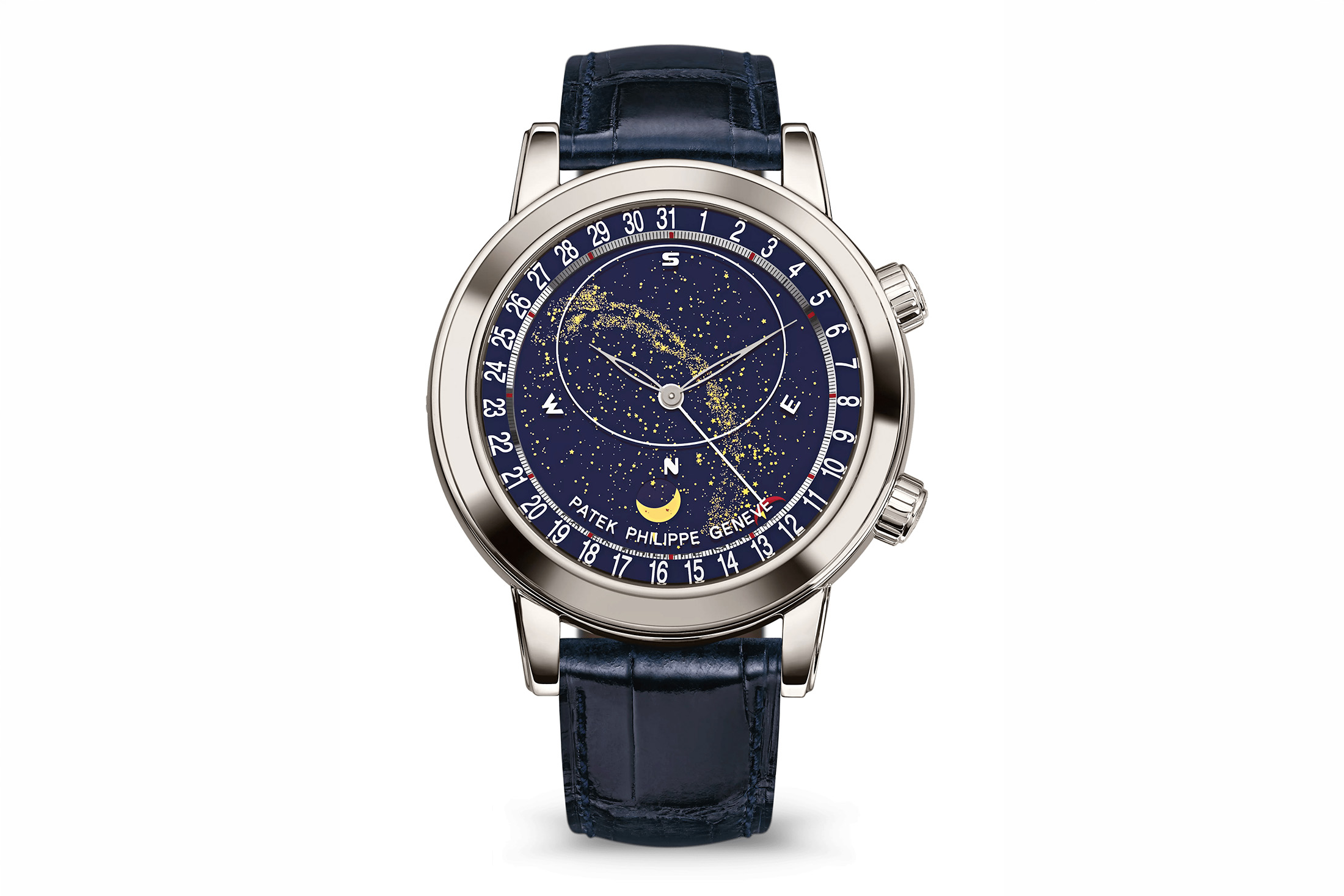
The dark sky itself serves a dual purpose, acting as the moon phase disc, which rotates according to lunar time. A distinctive T-shaped red hand indicates the date along the watch’s periphery. The intricacies of the date display are particularly noteworthy: the date numerals are not uniformly placed at the top of the dial. Instead, the sunrise and sunset track is calibrated to align with the correct hours. The dates function as a 24-hour scale, with the 4th to 10th representing 4:00 to 10:00, and the 16th to 22nd corresponding to 16:00 to 22:00. This innovative approach ensures that the sunrise and sunset indications are accurately displayed throughout the year.
Setting the watch, while complex, is made manageable by Patek Philippe’s meticulous instructions. The crown at 2 o’clock controls the annual index, moon phase, and sky chart, while the lower crown is dedicated to time setting. Correctors located at the 9 o’clock position allow for adjustments to daylight saving time (winter and summer time) and the date for the five shorter months of the year. The watch also features an annual index, indicated by a small red triangle that circles the dial, requiring reference to Patek Philippe’s website for precise setting, a testament to the watch’s sophisticated annual calendar mechanism.
Technical Mastery: The Caliber 240 C LU CL LCSO
The true marvel of the Celestial Ref. 6105G lies within its intricate movement, the Caliber 240 C LU CL LCSO. Developed over five years, this automatic movement is a testament to Patek Philippe’s engineering prowess, boasting six pending patents. While the movement itself is concealed behind a solid caseback, its technical achievements are significant.
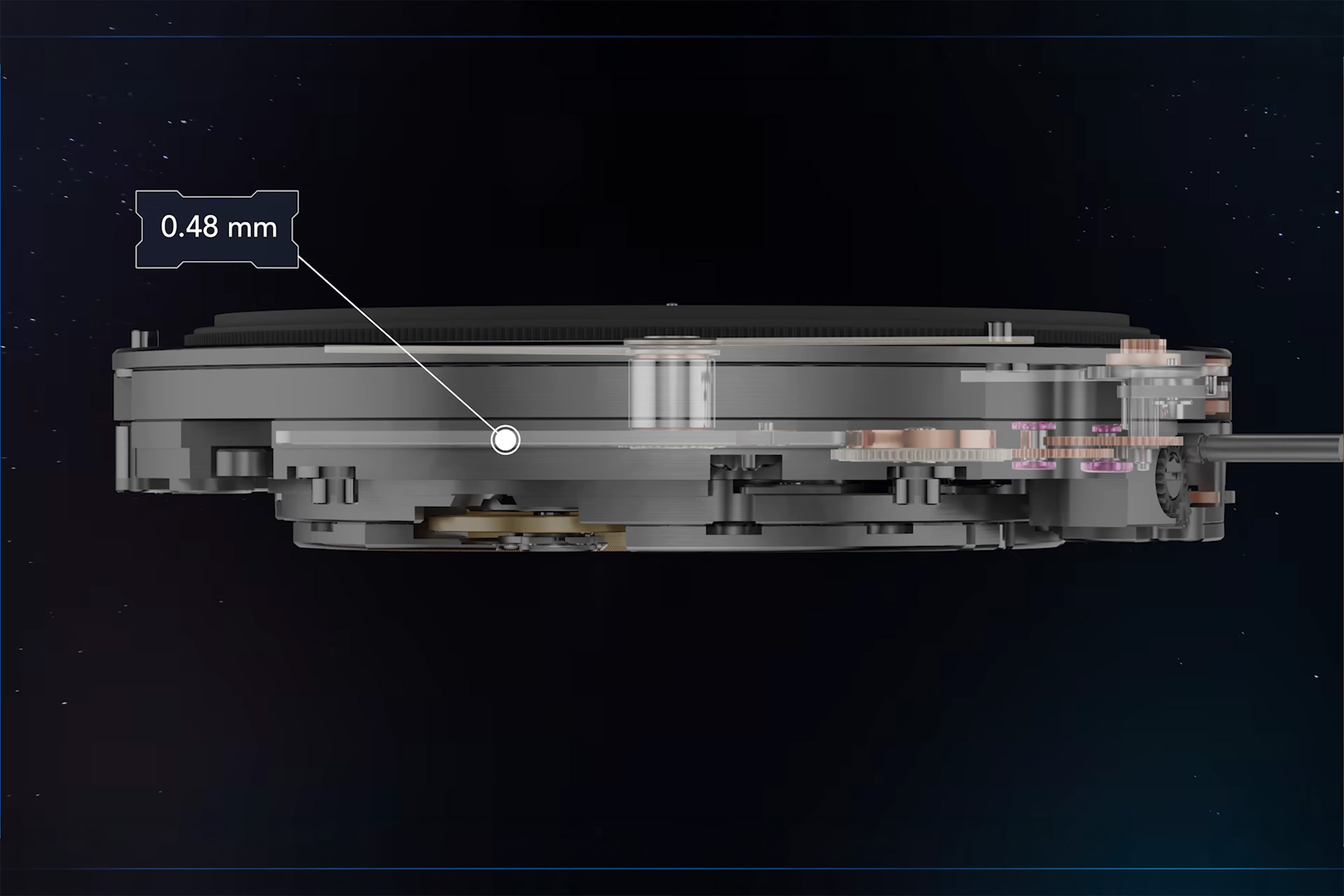
The movement measures a respectable 7.93mm in thickness and incorporates 121 additional components for the new complications, remarkably occupying only 1.12mm of vertical space. The base movement, a variant of the established Caliber 240 micro-rotor caliber first introduced in 1977, is compact. The increased diameter of the 6105G case, measuring 47mm compared to the 44mm of the 6104, is primarily attributed to the lateral space required for the sunrise and sunset mechanism.

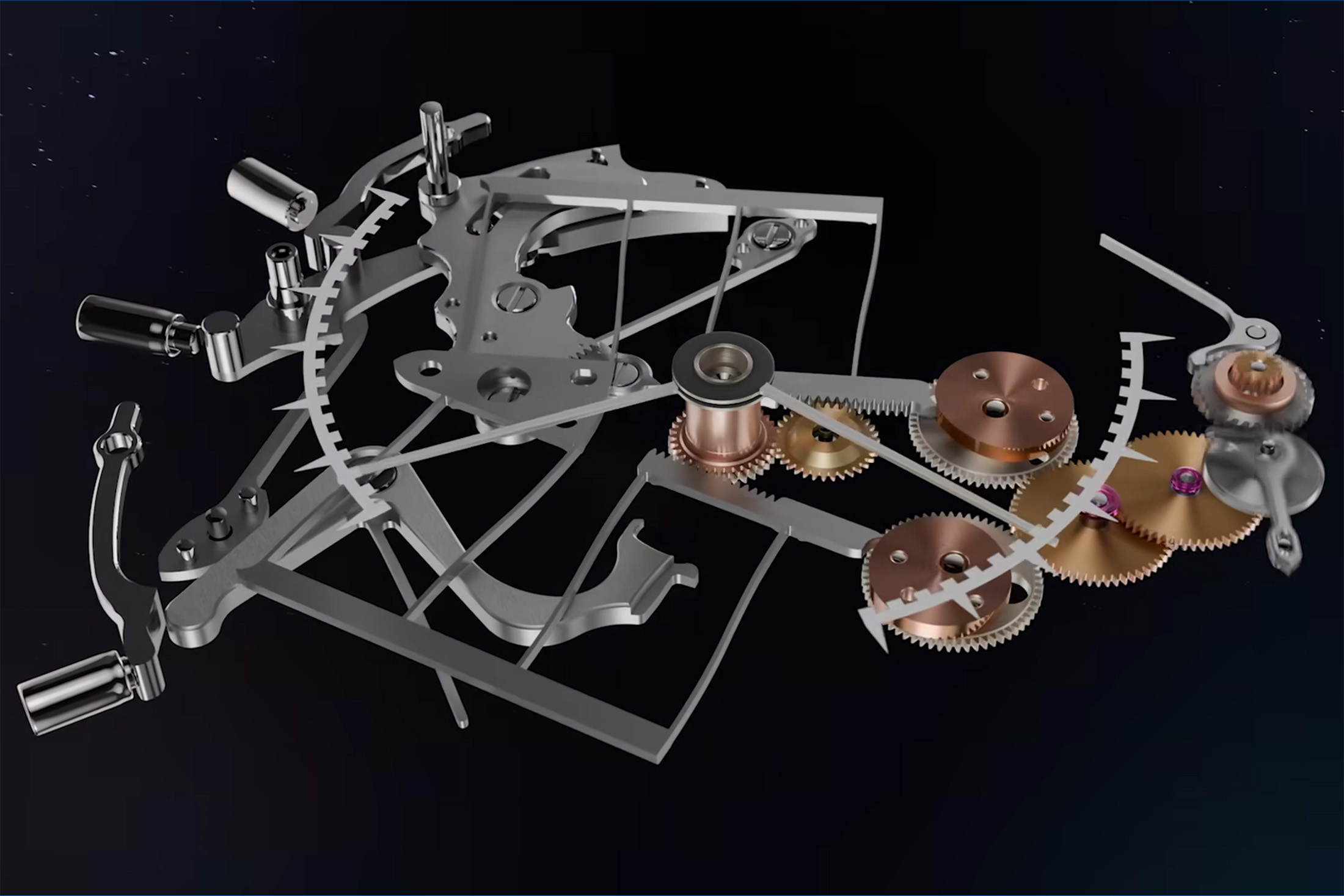
One of the key innovations, and the subject of a patent filed in 2019 by Marc Lemonnier (EP3740821B1), is a compliant mechanism utilizing a flexible blade spring. This system, reminiscent of mechanisms found in other high-complication watches, operates under tension, flexing and deforming to achieve precise movements. The blade spring features sets of four spring arms on each side. These arms are connected to anchor points and then to movable parts, which in turn are linked to a geared feeler. This intricate system is designed to move slowly over the course of the year, precisely tracking the changing lengths of day and night.
The sunrise and sunset indications are driven by a cam-and-lever system, a common but highly precise method in horology. The Ref. 6105G features two stacked, opposing cams, each with 365.25 steps, meticulously replicating the solar cycle. These cams press against two spring-tensioned U-shaped racks – one for sunrise and one for sunset. The shape of these cams is crucial, reflecting the greatest changes in daylight length near the equinoxes and slower transitions during the solstices. This level of detail ensures the astronomical accuracy of the display.
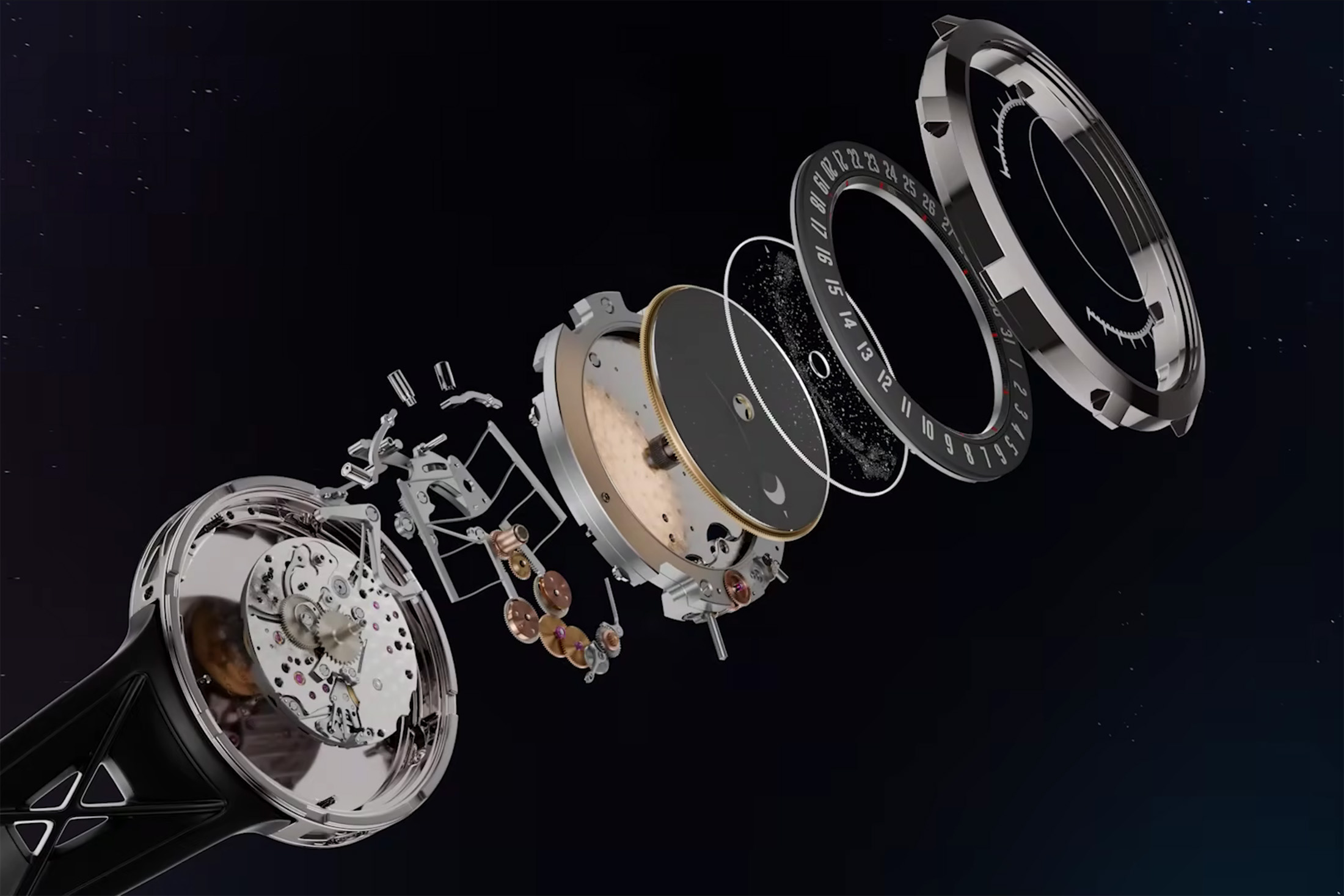
The system’s novelty lies in its "compliant mechanism" – a flexible blade spring that, like TAG Heuer’s nickel-phosphorus system in the Evergraph, exhibits bistable properties, snapping between two configurations. Patek Philippe has not disclosed the material of this blade spring, but its substantial size necessitates the increased lateral space within the movement. The drive system involves an eccentric finger piece that powers the annual index and, through a step-down system, drives two program cams. The interaction between the cams and feelers, which move in and out of contact, incrementally advances the gears and the respective sunrise and sunset hands.
The offset mechanism for the sunrise feeler, which requires an intermediary gear for vertical adjustment, is another example of Patek Philippe’s innovative approach. Despite the complexity, the system is designed for reliability and simplicity, a hallmark of high horology. The inclusion of the Patek Philippe Seal, Gyromax balance, and Spiromax balance spring further underscores the movement’s exceptional quality and adherence to the brand’s stringent standards.
Wearability and Design: A Modern Interpretation of Grandeur
While the technical intricacies are profound, the wearability of the Celestial Ref. 6105G is a critical consideration. The watch measures 47mm in diameter and 12.39mm in thickness. This substantial size, particularly for a lugless watch, might suggest a challenging fit. However, Patek Philippe has engineered the case to optimize comfort. The sandblasted and carved sides of the white gold case reduce weight, while the internal space dedicated to the sunrise/sunset mechanism contributes to a lighter overall construction.
The integrated rubber strap, similar in its deployant clasp to the Aquanaut, enhances wearability. While the 47mm measurement might seem imposing, the absence of lugs means the watch wears similarly to a 46mm watch with a conventional lug-to-lug dimension comparable to an Omega Speedmaster Professional. The significant dial size and the watch’s overall width are undeniably prominent, and the flat caseback contributes to its substantial presence on the wrist. However, the gradual drop from the case to the strap ensures a comfortable fit, even on a 7.25-inch wrist.
The design aesthetic of the Ref. 6105G evokes a modern "flying saucer" or "disco volante" chronograph, a bold departure from Patek Philippe’s traditionally more reserved designs. This visual boldness, coupled with the technical sophistication, suggests a deliberate effort to appeal to a younger demographic of collectors who may be drawn to more contemporary and avant-garde timepieces, yet still value the prestige and heritage of Patek Philippe.
Strategic Implications: A New Era for Patek Philippe
The introduction of watches like the Celestial Ref. 6105G signifies a strategic shift for Patek Philippe. In an interview with Luxury Society in 2014, Patek Philippe President Thierry Stern emphasized the brand’s inability to compete on market share with larger conglomerates, focusing instead on quality and innovation. He has consistently stated that flashy technology and materials like carbon fiber do not impress him and are unlikely to endure. However, the Ref. 6105G, with its contemporary design and advanced complications, represents a nuanced approach. It is "classic Patek" reinterpreted for a modern era, retaining the brand’s core values while embracing new aesthetic and technical directions.

The astronomical price point of the Ref. 6105G, $437,610, underscores its exclusivity and the significant investment in its development. Yet, the questions surrounding its "whys" are critical. Patek Philippe’s primary competition, historically, has often been its own archival pieces, which continue to hold their value and desirability on the secondary market. To ensure continued growth and relevance, the brand must innovate and create new desirability that transcends its past. The Ref. 6105G, with its bold design and complex astronomical functions, is a clear testament to this strategy.
While Patek Philippe will undoubtedly continue to produce watches that honor its heritage, such as the recent ref. 6196, the direction indicated by the Ref. 6105G suggests a future where the brand embraces larger case sizes, more contemporary design elements, and increasingly complex, novel complications. This evolution is not about abandoning its core identity but about adapting it to meet the expectations of a new generation of collectors who seek timepieces that are not only technically masterful but also visually striking and reflective of contemporary tastes. The Patek Philippe Celestial Ref. 6105G is not merely a watch; it is a declaration of intent, a bold step into the future for a brand steeped in history.