Cambridge, MA – Researchers at the Massachusetts Institute of Technology (MIT) have developed a groundbreaking technique, dubbed HardFlow, designed to empower generative artificial intelligence models to consistently identify high-quality solutions for complex, high-stakes problems while rigorously adhering to non-negotiable requirements. This innovation addresses a significant challenge in the burgeoning field of AI: ensuring that the outputs of powerful generative models, which are adept at exploring vast possibility spaces, always satisfy critical safety, physical, or task-specific mandates, commonly referred to as "hard constraints."
The advent of generative AI has ushered in an era of unprecedented creativity and efficiency across numerous sectors, from artistic creation to complex scientific discovery. However, its widespread adoption in domains where even minor errors can have catastrophic consequences—such as autonomous navigation, medical diagnostics, or industrial control—has been tempered by the inherent difficulty of guaranteeing that AI-generated solutions unfailingly respect stringent, real-world limitations. HardFlow offers a robust solution, allowing these sophisticated models to meet strict requirements without sacrificing the quality or optimality of their outputs.
The fundamental insight behind the HardFlow technique lies in a subtle yet profound shift in how constraints are enforced during the AI’s generation process. Instead of imposing these rigid requirements at every intermediate step, which can unduly restrict the model’s exploratory capabilities, HardFlow grants the model greater freedom throughout its iterative generation, enforcing the hard constraints only on the final, refined output. This strategic relaxation during the intermediate phases enables the model to traverse a richer landscape of potential solutions, ultimately leading to superior outcomes that are both compliant and optimized.
Navigating the Complexities of High-Stakes AI
Generative AI models, such as advanced diffusion models like Stable Diffusion and flow-matching models like FLUX, have become increasingly sophisticated and accessible. These models learn to synthesize new data by progressively transforming random noise into coherent, meaningful outputs. Their remarkable ability to learn intricate data distributions and generate novel content has opened doors to applications previously unimaginable, ranging from realistic image generation to the design of novel proteins. However, the very power that makes these models so versatile—their capacity for open-ended exploration—also presents a significant hurdle when deployed in environments where strict adherence to rules is paramount.
In high-stakes scenarios, a "plausible" or "nearly correct" answer is simply insufficient. Consider the path planning for a robotic arm on a bustling factory floor. A path that is "almost" collision-free might still result in significant damage to equipment or, more critically, injury to human co-workers. Similarly, in medical imaging, an AI-generated diagnosis or treatment recommendation must strictly adhere to known biological parameters and safety protocols; any deviation could jeopardize patient health. The economic and ethical implications of failure in such contexts are immense, underscoring the urgent need for AI systems that are not only intelligent but also infallibly reliable.
Historically, researchers have attempted to tackle this problem using methods like projection-based sampling. This approach repeatedly forces the model’s partial solutions, or "intermediate samples," to satisfy strict requirements throughout the entire generation process. While seemingly logical, this continuous imposition of constraints can be counterproductive. By constantly pulling the model back into the "feasible region" at every step, these methods can inadvertently prevent the AI from exploring divergent paths that, while temporarily outside the strict boundaries, might ultimately lead to a more optimal and still compliant final solution. This often results in a trade-off where constraint satisfaction is achieved, but at the cost of solution quality, such as a longer robot trajectory or a less efficient design.
HardFlow’s Innovative Approach: Freedom and Precision
The HardFlow algorithm fundamentally re-conceptualizes this challenge. "The promise of generative AI is its ability to explore a rich space of possibilities, but the real world places boundaries on which possibilities are acceptable," explains Navid Azizan, the Alfred H. and Jean M. Hayes Career Development Associate Professor in the Department of Mechanical Engineering and the Institute for Data, Systems, and Society (IDSS), a principal investigator of the Laboratory for Information and Decision Systems (LIDS), and the senior author of the paper describing this technique. "Our approach lets us preserve that generative power while enforcing the nonnegotiable requirements of high-stakes or safety-critical applications."
Lead author Zeyang Li, a graduate student in mechanical engineering and LIDS, further elaborates on this core principle: "For constraint satisfaction, what ultimately matters is the model’s final output, since the internal process is discarded. By not requiring every intermediate step to satisfy the constraints, we give the model more freedom to find high-quality solutions that are still feasible in the end."
At a technical level, HardFlow reformulates hard-constrained sampling as a trajectory-optimization problem, leveraging sophisticated tools from the field of optimal control. This allows the framework to subtly steer the model’s sampling trajectory toward a desired goal, making judicious corrections along the way, while critically enforcing the hard constraints only on the ultimate output. This "subtle steering" mechanism is key to its success, enabling a balance between exploration and adherence.
The computational challenge of solving a trajectory-optimization problem around an enormous neural network, potentially comprising hundreds of interconnected layers, is significant. To make this tractable, the MIT researchers capitalized on the inherent structure of flow-matching models. They decomposed the complex problem into a sequence of smaller, more manageable single-step subproblems. Through systematic transformations and approximations, they derived an efficient and scalable algorithm that, despite its computational elegance, reliably identifies feasible and high-quality solutions. "Essentially, we transformed the trajectory-optimization problem into something that preserves the key properties of the original problem, but can be solved very efficiently at deployment time," Azizan adds.
Crucially, HardFlow’s design as an optimization problem allows it to incorporate additional objectives beyond mere constraint satisfaction. For instance, in a robotic application, HardFlow could find a path that is not only collision-free but also the shortest possible distance to the target. This dual capability to handle both constraints and quality metrics simultaneously is a significant differentiator. "Our framework can jointly handle both aspects, which helps it perform much better than existing methods," Li notes.
Empirical Validation and Unparalleled Performance
The efficacy of HardFlow was rigorously tested across a diverse range of challenging experimental settings, spanning robotics, control of physical processes, and computer vision. The results were compelling and consistent: HardFlow achieved perfect constraint satisfaction across all experiments while consistently outperforming existing baseline methods on measures of solution quality.
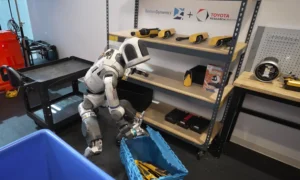
In robotic manipulation tasks, HardFlow enabled robotic arms to navigate complex environments, expertly avoiding collisions with obstacles while simultaneously identifying the quickest and most efficient path to a target object. Competing methods frequently resulted in either collision incidents or generated paths that were significantly longer and less efficient. In maze navigation, the algorithm reliably found routes that adhered to all boundaries while being shorter than those produced by alternative techniques. For text-guided image editing, HardFlow could ensure that generated images conformed to specific structural or aesthetic rules without compromising the creative fidelity or visual quality.
A critical advantage highlighted by the research is HardFlow’s "plug-and-play" nature. It operates at deployment time, meaning it can be applied to already pretrained generative models without requiring costly and time-consuming retraining. This feature significantly lowers the barrier to adoption, making it a highly practical solution for integrating safety and reliability into existing AI systems across various industries. Furthermore, HardFlow’s computational time was found to be comparable to, or even lower than, that of most competing methods, debunking the notion that superior constraint satisfaction must come at the expense of computational efficiency.
The research findings, co-authored by Kaveh Alim, a graduate student in IDSS and LIDS, were published this week in the prestigious IEEE Transactions on Pattern Analysis and Machine Intelligence.
Broader Impact and Future Horizons
The development of HardFlow represents a pivotal advancement in the journey toward more trustworthy and reliable artificial intelligence. Its implications are far-reaching, promising to unlock new applications for generative AI in sectors where safety, precision, and regulatory compliance are non-negotiable.
- Autonomous Systems: For self-driving cars, drones, and other autonomous vehicles, HardFlow could ensure that navigation systems strictly adhere to traffic laws, avoid obstacles, and maintain safe distances, even in novel or unpredictable scenarios. The global market for autonomous vehicles is projected to exceed $500 billion by the end of the decade, with safety being the paramount concern for widespread adoption.
- Manufacturing and Industrial Automation: In smart factories, robotic systems can be programmed with greater confidence to perform complex tasks, ensuring they operate within designated safe zones, avoid human workers, and adhere to production tolerances, thereby reducing costly errors and enhancing worker safety. The industrial robotics market is forecast to reach over $70 billion by 2028, with AI integration driving efficiency and safety.
- Healthcare and Biotechnology: HardFlow could enable generative models to design novel drugs or personalized treatment plans that strictly comply with biological constraints and patient safety parameters. It could also aid in generating medical images that adhere to specific diagnostic criteria, reducing the risk of misinterpretation. The stakes in healthcare AI are arguably the highest, where human lives depend on the accuracy and reliability of AI outputs.
- Engineering and Design: Engineers could leverage generative AI to design complex structures, materials, or components that inherently satisfy physical laws, material science constraints, and safety regulations from the outset, significantly accelerating innovation cycles while minimizing design flaws.
- Financial Services: AI models used for algorithmic trading, fraud detection, or risk assessment could be ensured to operate within strict regulatory frameworks and risk tolerances, preventing potentially devastating financial losses or compliance breaches.
Experts in AI ethics and safety are likely to welcome this development as a crucial step towards "responsible AI." The ability to guarantee hard constraint satisfaction without compromising quality addresses a core concern in the AI alignment problem—ensuring that AI systems operate in a manner consistent with human values and safety requirements. As generative AI continues its exponential growth, with market valuations projected to reach hundreds of billions of dollars, foundational research like HardFlow becomes indispensable for ensuring its positive and safe integration into society.
Looking ahead, the MIT researchers are exploring extensions of the HardFlow framework. Future work could involve adapting the technique to settings where the AI model itself can be updated, allowing for even more adaptive improvements in constraint satisfaction and sample quality. This continuous evolution of AI safety mechanisms will be critical as AI systems become increasingly integrated into the fabric of daily life and critical infrastructure. The HardFlow technique stands as a testament to MIT’s ongoing commitment to pushing the boundaries of AI research while prioritizing safety, reliability, and real-world applicability.