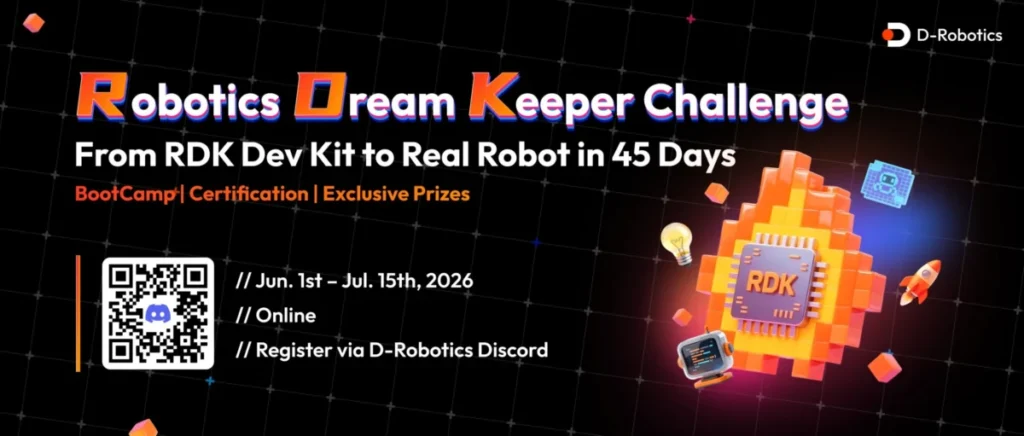
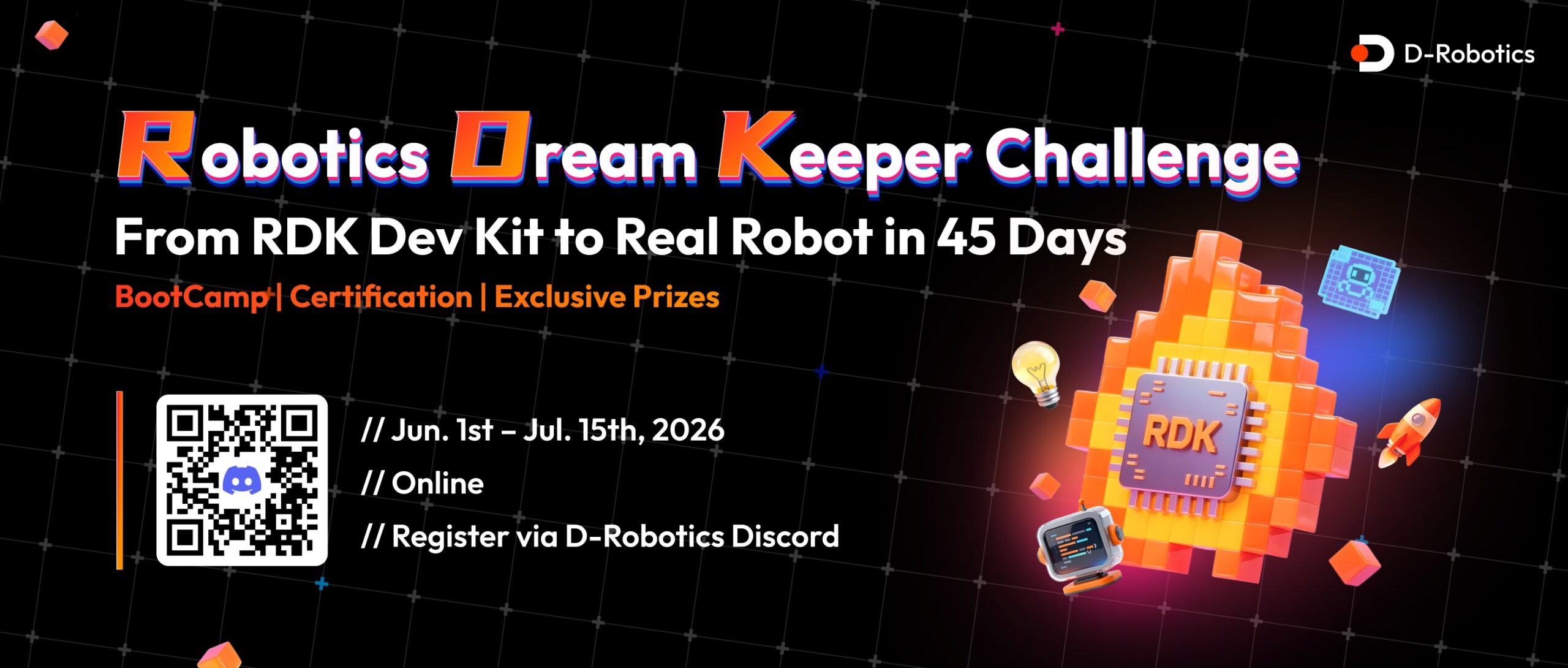
D-Robotics has officially launched the Robotics Dream Keeper Challenge (RDK Challenge), a groundbreaking initiative poised to revolutionize how makers, students, hobbyists, and experienced builders approach intelligent robot development. At its core, the challenge leverages the RDK X5, a powerful yet accessible edge AI development board, aiming to transform abstract robotic concepts into tangible, functional prototypes. This program is specifically designed to dismantle common barriers to entry in robotics, such as complex wiring, convoluted software, and the overwhelming question of where to begin, by offering a structured, supportive, and incentivized pathway to innovation.
The Evolving Landscape of Personal Robotics and Edge AI
For years, the dream of creating personalized autonomous devices—from a snack-delivering rover to a voice-controlled desk assistant—has captivated enthusiasts. However, the intricate world of robotics, often requiring deep expertise in hardware integration, embedded programming, and artificial intelligence, has traditionally presented a formidable hurdle. The rise of open-source hardware and software, coupled with advancements in AI, has begun to democratize technology, but the synthesis of these elements into a cohesive, intelligent robot still demands significant effort and guidance.
D-Robotics enters this landscape with a clear vision: to bridge the gap between aspirational ideas and practical execution. The company recognizes the untapped potential within the global maker community and seeks to provide the tools and ecosystem necessary for rapid prototyping and deployment of AI-driven robotics. The RDK X5 board, positioned as a "hidden gem" in the edge AI development space, is central to this mission. Edge AI, which involves processing AI algorithms directly on the device rather than relying on cloud servers, offers significant advantages in terms of real-time responsiveness, data privacy, reduced latency, and lower operational costs—critical factors for practical robotic applications. The RDK X5 is engineered to deliver robust on-device AI performance while maintaining a user-friendly interface, making sophisticated AI capabilities accessible to a broader audience.
A Structured Journey: The Three-Stage Build Path
The RDK Challenge is meticulously structured into three progressive stages, designed to gradually build participants’ skills and confidence over approximately 35-45 days. This modular approach ensures that participants, regardless of their initial skill level, receive the necessary support to succeed without feeling overwhelmed.
Stage 1: Ignite (5-10 Days) – Powering On the Robot’s Brain
The initial phase focuses on foundational setup and basic AI deployment. Participants begin by unboxing their RDK X5 and familiarizing themselves with its core components. Tasks include flashing the operating system onto an SD card, configuring the board, activating essential sensors (such as cameras and microphones), and successfully running their first pre-built AI demonstration. This stage is akin to a guided tour, ensuring participants grasp the fundamental interactions with the RDK X5 platform. For those with prior experience in single-board computers like Raspberry Pi or NVIDIA Jetson, the process of SSH-ing into the board and deploying basic scripts will feel familiar, while newcomers will find ample documentation and community support to guide them. The goal is to ignite interest and demonstrate the RDK X5’s immediate capabilities, showcasing its potential to bring intelligent functions to life quickly.
Stage 2: Build (10-15 Days) – Designing an Intelligent Robot System
Building on the "Ignite" phase, Stage 2 shifts from executing pre-made demos to conceptualizing and designing a unique intelligent robot system. This is where creativity truly takes center stage. Participants are tasked with defining their project concept, outlining the specific problem their robot will solve or the function it will perform. A critical component of this stage is architecting the AI pipeline, which involves deciding what AI models will be used (e.g., object detection, voice recognition, gesture control), how data will flow through the system, and how the AI will interact with the robot’s physical actuators. Concurrently, participants finalize their hardware setup, selecting additional components like motors, servos, specialized sensors, and structural elements. Crucially, mentors are available to provide guidance and "sanity-check" participants’ plans, offering expert advice to ensure feasibility and optimize design choices before significant development work begins. This structured feedback loop helps prevent common pitfalls and steers projects toward successful outcomes.
Stage 3: Launch (20 Days) – Shipping a Working, Demo-Ready AI Robot
The final and most intensive stage, "Launch," is dedicated to the full integration, optimization, and presentation of the AI robot. Participants wire up all the chosen hardware components, integrating them seamlessly with the RDK X5. A key technical focus here is optimizing AI inference using the board’s BPU (Brain Processing Unit) acceleration. The BPU is a dedicated hardware accelerator designed to execute AI models with high efficiency and low power consumption, crucial for real-time performance on edge devices. Participants learn to leverage this capability to ensure their AI models run smoothly and quickly. The culmination of this stage is the production of a polished, shareable project package, complete with code, documentation, and a compelling demonstration. This final project serves as a valuable portfolio piece, ready to be showcased in YouTube demos, presented at conferences, or highlighted in job interviews, marking a significant milestone in the participant’s robotics journey.

Inspiring Creations: Projects Already Thriving on RDK X5
Even before the official launch of the challenge, the RDK X5 has proven its versatility through a series of impressive projects developed by early adopters, showcasing the board’s robust capabilities across different domains of robotics and interactive technology.
- OpenDuck Mini – RDK X5: Created by AI Researcher and Robotics Developer Frank Fu, the OpenDuck Mini is a brilliant bipedal robot that demonstrates sophisticated reinforcement learning and achieves real sim-to-real walking. This project highlights the RDK X5’s capacity to handle complex control algorithms and computational demands for dynamic locomotion, a significant achievement in robotics where bridging the gap between simulated and real-world performance is notoriously difficult.
- An Arc Reactor That Beats With My Heart: MateoTechLab pushed the boundaries beyond traditional robotics with a glowing, heartbeat-synchronized Arc Reactor. This project exemplifies the RDK X5’s creative potential, demonstrating its ability to integrate biometric data (from a smartwatch heart rate display) with visual outputs, creating an interactive art piece. It showcases the board’s versatility for projects requiring real-time sensor data processing and dynamic visual feedback, extending its utility into interactive art and wearable tech.
- Valentine’s Day AI Robot With RDK X5: Developed by Pro Know, this adorable interactive companion robot embodies charm and functionality. Equipped with vision, touch, and sound reactions, the robot exhibits a captivating personality. This project underlines the RDK X5’s suitability for multi-modal AI applications, integrating camera input for object recognition or facial expressions, touch sensors for tactile interaction, and microphones for sound processing and voice commands. Such a creation is a perfect example of how edge AI can enable engaging, personalized human-robot interaction.
These diverse builds underscore that the RDK X5 offers strong on-device AI performance while remaining genuinely maker-friendly. Make: Magazine itself has showcased live demos of the RDK X5 during its YouTube live streams, further validating its capabilities and ease of use within the maker community.
A Community-Driven Ecosystem of Support
Understanding that the journey into advanced robotics can be challenging, D-Robotics has cultivated a robust, community-driven support system for the Dream Keeper Challenge. This is not a solitary contest but a collaborative learning experience designed to foster growth and innovation.

The core of this support lies in the dedicated Discord community, structured as a progressive growth ecosystem: Explorer ➡️ Builder ➡️ Creator ➡️ Core Developer. This clear pathway ensures that everyone, from novices taking their first steps ("Explorers") to seasoned developers pushing the boundaries ("Core Developers"), finds their place and receives appropriate mentorship and resources. New participants are welcomed into a nurturing environment where they can ask questions, share progress, and receive peer-to-peer assistance.
Beyond the Discord community, D-Robotics offers a wealth of structured support mechanisms. Free bootcamps provide in-depth tutorials and workshops on various aspects of RDK X5 development, AI model deployment, and robotics principles. Weekly events, including Q&A sessions, project showcases, and technical deep-dives, keep the community engaged and informed. A network of experienced mentors provides personalized guidance, helping participants troubleshoot issues, refine their designs, and overcome technical hurdles. This rich array of open resources, documentation, and expert support ensures that participants can focus on creating and innovating, rather than getting stuck in technical quagmires.
Rewarding Innovation: Incentives and Future Prospects
D-Robotics has designed a comprehensive reward system to incentivize participation and celebrate achievement in the Dream Keeper Challenge. These incentives are crafted to appeal to both newcomers and seasoned developers, offering tangible benefits that extend beyond the immediate challenge.
A key financial incentive is the full cash rebate on the purchase of the RDK X5 and accessory kits for participants who successfully complete all three challenge stages. This effectively makes the hardware free for committed builders, significantly lowering the financial barrier to entry. Additionally, the most outstanding project developed during the challenge will be awarded a $1,000 grand prize, recognizing exceptional innovation and execution. Top community advocators, who actively contribute to supporting and mentoring fellow participants, can also earn an extra $500 cash reward, underscoring the value D-Robotics places on community engagement.

Beyond these immediate rewards, D-Robotics is committed to unlocking further opportunities for challenge participants. Future surprises will include:
- Opportunity to work with the D-Robotics team: This could range from internships and collaborative projects to potential roles in product development, offering a direct pathway into the professional robotics industry.
- Interviews with global developers: Participants may gain exposure through interviews, allowing them to share their experiences and projects with a wider international audience, boosting their personal and professional profiles.
- Participation in the annual D-Robotics Developers Conference: This offers a prime platform to showcase their creations, network with industry leaders and peers, and stay abreast of the latest advancements in AI and robotics.
- A chance to win a visit to the Robot Innovation Center in Shenzhen: Shenzhen, China, is widely recognized as a global hub for hardware innovation and robotics manufacturing. A visit to such a center would provide an unparalleled learning experience, offering insights into advanced robotics research, development, and production processes.
These long-term incentives highlight D-Robotics’ dedication to nurturing talent and integrating successful participants into a broader ecosystem of innovation and professional development.
Implications and Broader Impact
The Robotics Dream Keeper Challenge carries significant implications for the broader fields of AI, robotics, and STEM education. By offering a guided, supportive, and incentivized pathway, D-Robotics is actively contributing to the democratization of advanced robotics. This initiative lowers the barrier to entry, enabling a more diverse group of individuals to engage with and contribute to the development of intelligent autonomous systems. This increased accessibility can foster a new wave of innovation, leading to novel applications and solutions across various industries.
From an educational standpoint, the challenge serves as a powerful practical learning experience. Participants gain hands-on skills in hardware integration, embedded programming, AI model deployment, and project management—skills that are highly sought after in today’s technology-driven job market. The structured stages, coupled with community mentorship, provide an effective framework for skill acquisition that complements formal education.

"We believe the future of robotics lies in empowering every innovator, regardless of their starting point," stated a spokesperson for D-Robotics. "The RDK X5 and the Dream Keeper Challenge are designed to dismantle the traditional barriers to entry, providing a robust platform and a supportive ecosystem for bringing intelligent robot ideas to life. We are not just offering a contest; we are building a community of future robotics pioneers."
Make: Magazine, a long-standing advocate for the maker movement, echoes this sentiment. "Make: has always been at the forefront of inspiring, educating, and connecting makers worldwide," commented an editorial representative. "Initiatives like the RDK Challenge align perfectly with our mission, offering a unique blend of cutting-edge technology and crucial community support. This program is instrumental in fostering the next generation of robotics innovators."
The success of the RDK Challenge could also catalyze further development in edge AI hardware and software, as D-Robotics gathers feedback and insights from its diverse user base. The focus on real-world, functional prototypes encourages practical problem-solving and application-driven innovation, pushing the boundaries of what small-scale, affordable robotics can achieve.
How to Jump In
For those ready to embark on this exciting journey into modern robotics and embodied AI, joining the Robotics Dream Keeper Challenge is straightforward:

- Join the lively Discord community: This is your gateway to mentorship, peer support, and all official announcements.
- Submit the quick application form: Express your interest and provide basic details.
- Download RDK Studio and register: RDK Studio is the integrated development environment for the RDK X5, providing essential tools and resources.
Acquire Your Hardware
To participate fully, you will need the RDK X5 development board and any necessary accessories for your project. These can be acquired through D-Robotics’ official partnered channels:
- Official Distributors: Visit en.d-robotics.cc/distributor
- Accessories: Explore available components at en.d-robotics.cc/accessories
The D-Robotics Dream Keeper Challenge represents a rare opportunity to engage with cutting-edge AI robotics with strong guidance, community support, and compelling rewards. The RDK X5 is still early in its adoption cycle, meaning participants who join now will play a pivotal role in shaping its community and future applications. This is a call to action for every aspiring roboticist: stop watching, start building. Grab your board, join the Discord, and contribute to shaping the future of intelligent machines.