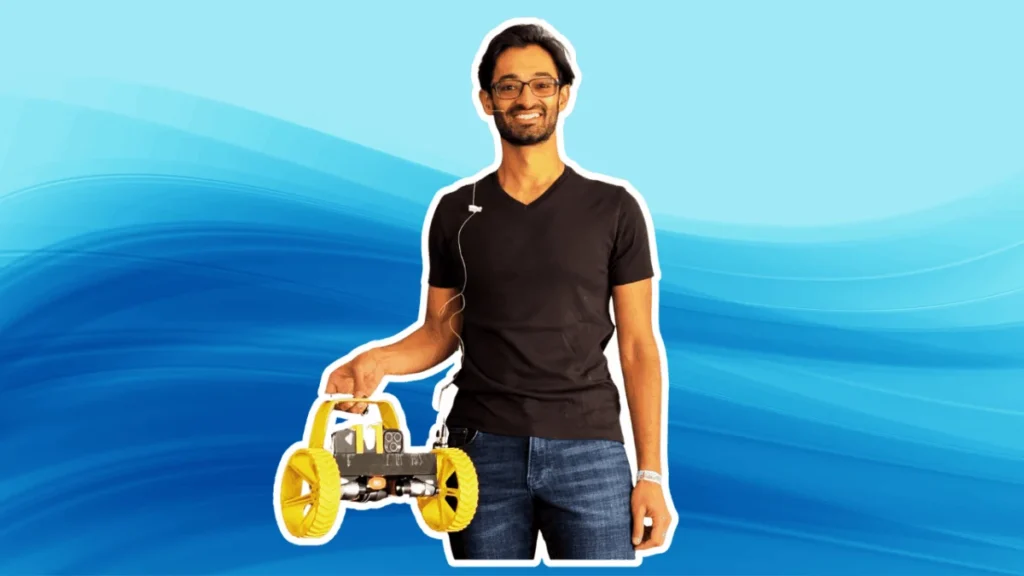
The annual Maker Faire Bay Area recently served as a vibrant stage for innovators to unveil their creations, and among the myriad displays of ingenuity, one project particularly captured the essence of grassroots engineering: Survy Vaish’s journey from a rudimentary shoe box on wheels to a sophisticated, phone-powered outdoor autonomous robot. Survy’s presentation underscored a fundamental principle often overlooked in an era of advanced research labs and multi-million dollar budgets: that groundbreaking innovation can germinate from the simplest of beginnings, fueled primarily by curiosity, perseverance, and an iterative problem-solving approach. His demonstration provided a compelling narrative for aspiring engineers, hobbyists, and educators alike, proving that the pathway to complex robotic systems is not necessarily paved with exotic materials or prohibitive costs, but rather with a commitment to continuous testing, refinement, and a willingness to learn from every setback.
The Genesis of Autonomy: From Concept to Cardboard
The initial spark for Survy’s project was a seemingly abstract aspiration: to construct an autonomous robot capable of navigating dynamic outdoor environments and identifying specific objects within them. Such a goal, typically associated with advanced research institutions or industrial robotics firms, often appears daunting to individual makers. However, Survy approached this challenge with a pragmatic mindset, recognizing that complex systems are best built incrementally. His inaugural prototype, a testament to the "minimum viable product" philosophy, was nothing more than a shoe box affixed with basic motors and wheels. This humble contraption, devoid of any intelligence or sophisticated sensors, served a singular, critical purpose: to validate the fundamental mechanics of locomotion. It demonstrated that a mobile platform could be built from readily available, low-cost materials, thereby establishing a tangible starting point for subsequent development. The simplicity of this initial design was deliberate, allowing for easy modifications and a clear understanding of basic mechanical principles before introducing layers of complexity. This stage, while seemingly primitive, was crucial in proving the feasibility of mechanical movement and identifying initial friction points in the design.
The Iterative Engine: A Masterclass in Problem-Solving
Survy’s journey truly blossomed through a relentless and systematic process of iteration—a cycle of testing, identifying flaws, implementing fixes, and retesting. This approach, central to all engineering disciplines, was vividly showcased in his development timeline. Each phase of the robot’s evolution was a direct response to a real-world problem encountered during field trials. The initial shoe box, while capable of movement, possessed no awareness of its surroundings. It couldn’t detect obstacles, follow a path, or even maintain a straight trajectory. This immediate deficiency highlighted the need for sensory input, pushing Survy to the next stage of development.
Integrating Intelligence: The Raspberry Pi and Sensor Suite
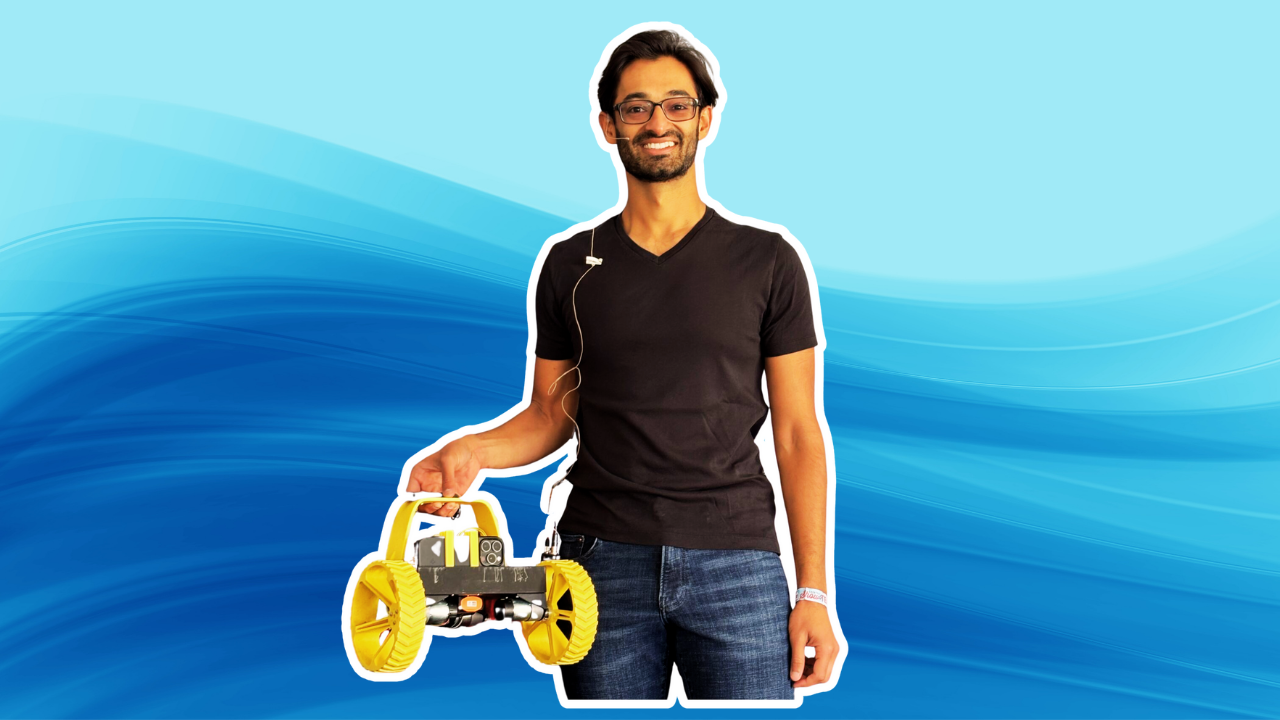
The first major leap in functionality involved equipping the robot with an array of sensors. Early iterations likely integrated rudimentary distance sensors, such as ultrasonic modules, to detect immediate obstacles. As the project progressed, the need for more comprehensive environmental understanding became apparent. This led to the incorporation of a Raspberry Pi, a credit-card-sized single-board computer, which served as the central processing unit, or the "brain," of the robot. The Raspberry Pi’s affordability, versatility, and robust ecosystem of open-source software made it an ideal choice for a DIY project. It allowed Survy to process data from multiple sensors, execute navigation algorithms, and control the motors with greater precision.
The sensor suite expanded to include more advanced components. For effective outdoor navigation, a robot requires not only obstacle detection but also localization and environmental mapping capabilities. This would typically involve:
- Global Positioning System (GPS) Module: Essential for determining the robot’s geographical coordinates, enabling it to follow predefined paths or navigate to specific waypoints in an outdoor setting.
- Inertial Measurement Unit (IMU): Combining accelerometers and gyroscopes, an IMU helps the robot understand its orientation, speed, and angular velocity, crucial for stable movement and dead reckoning when GPS signals are intermittent.
- Encoders on Wheels: Providing feedback on wheel rotations, these sensors allow the robot to calculate distance traveled and estimate its position relative to a starting point, complementing GPS data.
- Lidar or Depth Cameras (optional but highly beneficial): While not explicitly detailed in the brief, for robust object identification and environmental mapping, more advanced perception sensors like 2D or 3D lidar (Light Detection and Ranging) or depth cameras (e.g., Intel RealSense, Microsoft Azure Kinect) would offer superior environmental awareness. These sensors create detailed maps of the surroundings, enabling sophisticated obstacle avoidance and object recognition. Survy’s approach, however, highlights leveraging a smartphone’s existing capabilities for similar functions, demonstrating ingenuity in resource utilization.
The Raspberry Pi, running custom software written in languages like Python, would then fuse data from these diverse sensors. This sensor fusion is critical for creating a coherent understanding of the robot’s position and environment, allowing it to make informed decisions about movement and object interaction. For instance, GPS data provides a global position, while IMU data refines local positioning and orientation, and camera vision identifies objects.
Smartphone as a Visionary: Leveraging Consumer Technology
Perhaps one of the most innovative aspects of Survy’s design was the integration of a common smartphone into the robot’s architecture. Modern smartphones are veritable powerhouses of computational ability, equipped with high-resolution cameras, accurate GPS receivers, powerful processors, and a plethora of other sensors (accelerometers, gyroscopes, magnetometers) that are highly relevant to robotics. Survy ingeniously repurposed a smartphone to serve as the robot’s primary "eyes" and an additional "brain."
The smartphone’s camera was utilized for:
- Object Identification: Using computer vision libraries (e.g., OpenCV) and potentially pre-trained machine learning models (e.g., TensorFlow Lite, PyTorch Mobile), the robot could process video streams in real-time to detect and classify specific objects in its path, such as trees, benches, or even predefined markers. This capability is fundamental for tasks like surveying, monitoring, or targeted interaction.
- Simultaneous Localization and Mapping (SLAM): While complex, a smartphone’s camera and IMU can contribute significantly to SLAM algorithms, allowing the robot to build a map of an unknown environment while simultaneously tracking its own position within that map. This is particularly useful for navigation in areas where GPS signals might be unreliable.
- Visual Odometry: By tracking features in successive camera frames, the robot can estimate its own movement and orientation, providing another layer of positional data.
Furthermore, the smartphone’s integrated GPS provided highly accurate location data, supplementing or even acting as the primary source for global positioning. Its processing power could offload some of the computational burden from the Raspberry Pi, especially for image processing tasks that are computationally intensive. The phone’s wireless connectivity (Wi-Fi, cellular) also offered capabilities for remote monitoring, control, and data transmission, enabling Survy to supervise the robot’s operations and collect data from a distance. This synergistic relationship between the Raspberry Pi and the smartphone exemplifies a clever approach to robotics, leveraging readily available, high-performance consumer electronics to achieve sophisticated functionalities without the need for specialized, expensive components.

The Maker Faire Showcase: A Triumph of DIY Robotics
The culmination of Survy’s iterative development was his presentation at the Maker Faire Bay Area. The Maker Faire, often dubbed "The Greatest Show (and Tell) on Earth," is a global movement celebrating creativity, innovation, and the spirit of making. Originating in the Bay Area in 2006, it provides a platform for individuals and organizations to showcase their projects, share knowledge, and inspire others. Its mission is to entertain, inform, and connect a community of makers, from tech enthusiasts to crafters, scientists to artists. Survy’s robot, transitioning from a simple concept to an autonomous machine capable of navigating a park and identifying objects, perfectly embodied the Faire’s ethos.
His demonstration at the event was not merely a display of a finished product but a narrative of the entire engineering journey. Attendees were treated to a behind-the-scenes look at the trials, errors, and incremental successes that led to the final design. This transparency is a hallmark of the maker movement, emphasizing that the process of creation is as valuable as the creation itself. The successful execution of its outdoor mission—navigating obstacles, adhering to a programmed path, and correctly identifying specified targets—served as a powerful validation of his methodology. The robot’s ability to operate autonomously in a real-world, unpredictable environment, rather than a controlled laboratory setting, underscored the robustness and practicality of his design choices. The excitement generated among the audience and fellow makers was palpable, reflecting an appreciation for the ingenuity and accessibility of his approach.
Democratizing Robotics: Implications for Innovation and Education
Survy’s project carries significant implications beyond his personal achievement. It stands as a powerful testament to the democratization of robotics and engineering. Historically, robotics research and development were confined to well-funded university labs or corporate R&D departments. However, the advent of affordable microcontrollers like the Raspberry Pi, open-source software libraries, and the ability to repurpose consumer electronics like smartphones, has drastically lowered the barrier to entry. This has empowered individuals like Survy to undertake complex engineering projects with minimal budgets, fostering a new wave of grassroots innovation.
Economic Accessibility and Open-Source Spirit
The cost-effectiveness of Survy’s robot is a critical factor. By utilizing off-the-shelf components, a Raspberry Pi (which can cost as little as $35-$75), and an existing smartphone, the total expenditure remains a fraction of what would be required for a commercially developed autonomous robot. This economic accessibility means that individuals, small educational institutions, and hobbyists can now engage in advanced robotics without significant financial investment. The reliance on open-source software further reduces costs and promotes collaboration, allowing makers to leverage a global community’s collective knowledge and contribute their own solutions. This model accelerates development and fosters a culture of shared learning and continuous improvement, contrasting sharply with proprietary, closed-source development cycles.

Cultivating Future Innovators
From an educational standpoint, Survy’s project serves as an inspiring blueprint for STEAM (Science, Technology, Engineering, Arts, and Mathematics) education. The iterative process he employed—identifying a problem, conceptualizing a solution, building a prototype, testing it, and refining it based on feedback—is the very essence of scientific inquiry and engineering design. This hands-on, problem-based learning approach is far more engaging and effective than purely theoretical instruction. It teaches critical thinking, resilience in the face of failure, and practical application of scientific principles. Projects like Survy’s can motivate students to pursue careers in STEM fields, demonstrating that complex challenges are surmountable with creativity and perseverance, regardless of initial resources. It transforms abstract concepts into tangible, functional creations, making learning both relevant and exciting.
Looking Ahead: The Future of Grassroots Robotics
The successful deployment of Survy’s phone-powered outdoor robot at Maker Faire Bay Area heralds a promising future for accessible robotics. Such low-cost, adaptable autonomous platforms have a vast array of potential applications that extend beyond mere hobbyist pursuits. In precision agriculture, they could monitor crop health, detect pests, or assist with targeted irrigation. In environmental monitoring, they could collect data on air quality, water pollution, or wildlife in remote areas. For security, simple patrols or perimeter monitoring could be automated. Furthermore, in disaster relief scenarios, these robust and easily deployable robots could aid in reconnaissance or delivering small payloads in hazardous environments. The modularity and open-source nature of such projects mean they can be easily customized and scaled for specific needs, allowing communities and small businesses to develop tailored solutions.
Survy’s journey from a shoe box to a smart robot is more than just a technical achievement; it is a powerful narrative about the spirit of innovation inherent in the maker community. It reminds us that every grand endeavor begins with a single, often imperfect, step. His work serves as an open invitation to anyone with an idea and a willingness to experiment: the tools for innovation are more accessible than ever before, and the only true prerequisite is the courage to begin. The road may be paved with failures, but each one is a stepping stone to a refined understanding and, ultimately, a successful creation.
Watch the Journey Unfold:
For those eager to witness the detailed evolution of this remarkable project, the full build journey is available to watch here. The video provides an invaluable look into the practical challenges and innovative solutions that characterized Survy’s inspiring venture into autonomous robotics.