The prospect of humanity establishing a permanent presence on other worlds, once confined to the realm of science fiction, is steadily inching closer to reality. As missions to Mars and the Moon become increasingly ambitious, so too does the challenge of sustaining human life far from Earth. A groundbreaking review published in Frontiers in Astronomy and Space Sciences illuminates a potential solution that leverages a fundamental element of terrestrial ecosystems: fungi. Researchers from the United States and Brazil are meticulously investigating whether these unassuming microorganisms could be the key to transforming barren lunar and Martian regolith into fertile ground for agriculture, thereby reducing our reliance on costly and complex resupply missions from Earth.
The Martian Promise: A Fungal Revolution in Space Agriculture
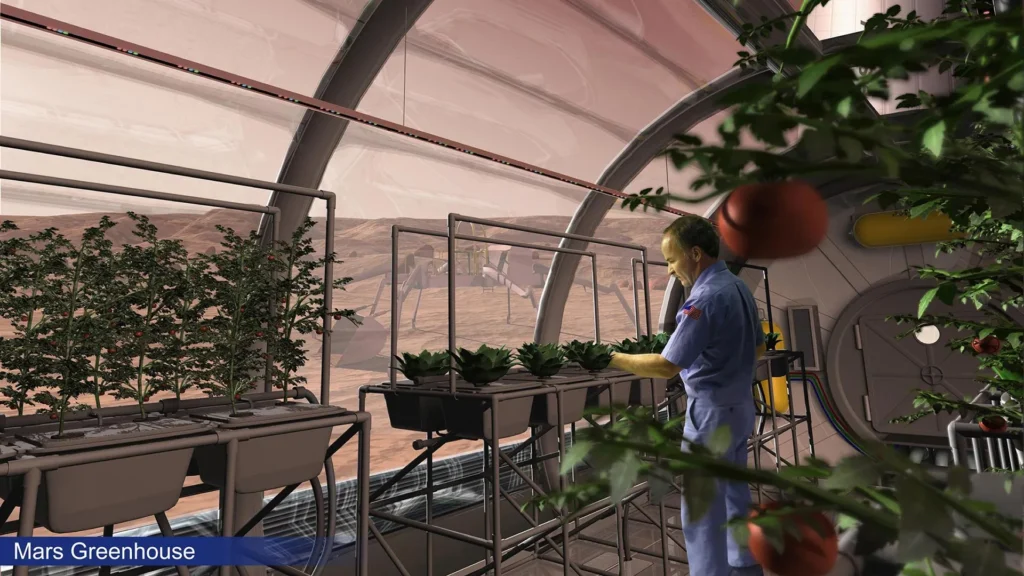
Imagine this: you are an astronaut, part of the fourth human expedition to Mars. Your primary directive is not just to explore, but to lay the foundation for a self-sustaining outpost, a nascent permanent settlement. The linchpin of this ambitious endeavor? The successful cultivation of food, independent of Earth’s supply lines. This ambitious vision hinges on the symbiotic relationship between humans and beneficial fungi, microscopic powerhouses capable of enriching hostile Martian regolith to a point where crops can flourish. The successful implementation of such a strategy could dramatically reduce the logistical burden of interplanetary food transport and, in this imagined, aspirational future, might even lead to the naming of a high school in your honor – a testament to your pioneering contribution to humanity’s extraterrestrial future.
While this specific scenario may still be decades away, the scientific groundwork is being actively laid. The recent review, a collaborative effort by researchers in the United States and Brazil, delves into the intricate ways beneficial fungi could facilitate the transformation of lunar and Martian regolith, making these alien substrates biologically amenable to plant growth. This exploration represents a critical step towards realizing the dream of off-world agriculture, a cornerstone for long-term human habitation beyond Earth.
The Regolith Challenge: Nutrient Deficiencies on Alien Soil
Lunar and Martian regolith, the loose surface material found on these celestial bodies, present significant hurdles for conventional agriculture. Unlike Earth’s rich soils, which teem with organic matter and a diverse microbial community, extraterrestrial regolith is fundamentally inert and deficient in several essential nutrients that plants require for robust growth. The researchers particularly highlighted the scarcity of nitrogen, potassium, and phosphorus – three macronutrients indispensable for plant development. The review meticulously examined existing knowledge and potential strategies to overcome these limitations, with a strong focus on the role of beneficial fungi.
Fungi as Earth’s Agricultural Engineers
Beneficial fungi, often overlooked in terrestrial agriculture, play an indispensable role in nutrient cycling on our own planet. They act as vital intermediaries, facilitating the breakdown of organic matter and making essential elements accessible to plants. This inherent capability is precisely what makes them so compelling for space agriculture. Their ability to enhance nutrient availability, improve soil structure, and even mitigate stress factors positions them as prime candidates for terraforming attempts on a micro-scale.
The review synthesized existing research on fungal species that have already demonstrated their capacity to support plant growth. This includes fungi that enhance nutrient uptake by plants, even under challenging abiotic (non-living) stress conditions. Furthermore, the researchers considered the performance and potential applications of fungi that have been successfully cultivated and tested aboard the International Space Station (ISS), providing valuable, albeit limited, real-world data on their behavior in microgravity.
Extending the Reach: Fungi as Microscopic Root Extensions
Abiotic stress is a particularly critical factor for crops attempting to grow in nutrient-poor environments like lunar and Martian regolith. Plants would not only need assistance in accessing the limited resources available but also require support in coping with the harsh and unfamiliar growing conditions, such as extreme temperature fluctuations, radiation, and potentially altered atmospheric pressures.
A prominent group of fungi highlighted by the researchers is arbuscular mycorrhizal fungi (AMF). These symbiotic organisms have been recognized for their agricultural benefits since the mid-19th century and form a crucial partnership with plant roots. AMF colonize plant roots, effectively extending the plant’s root system through their vast network of hyphae (thread-like filaments). This microscopic extension dramatically increases the surface area available for nutrient and water absorption, allowing plants to access resources that would otherwise be out of reach. In the context of space agriculture, AMF could be instrumental in helping plants extract the scarce nitrogen, phosphorus, and potassium from the regolith, significantly boosting their chances of survival and productivity.
Beyond nutrient acquisition, AMF can also improve plant tolerance to various abiotic stresses. They can enhance a plant’s ability to withstand drought, salinity, and even heavy metal toxicity – conditions that could be prevalent in processed regolith. This dual benefit of nutrient mobilization and stress mitigation makes AMF a particularly promising avenue for research.
The Path Forward: Bridging the Gap from Simulation to Reality
Despite the considerable potential, the researchers emphasize that significant work remains before this fungal-assisted approach can be implemented in actual space farming systems. A key limitation of current research is the reliance on simulations of lunar and Martian regolith, or substitute materials, rather than actual extraterrestrial samples. Future studies must rigorously test the performance of these beneficial fungi with genuine lunar and Martian regolith. This will involve understanding how the unique mineralogical and chemical composition of these extraterrestrial soils interact with the fungi and the plants.
Furthermore, the long-term viability and stability of these fungal-plant symbiotic relationships in the harsh conditions of space need to be thoroughly investigated. This includes understanding how factors like radiation exposure, altered gravity (in the case of Mars, approximately 38% of Earth’s gravity), and the absence of a natural soil microbiome might affect fungal activity and plant health over extended periods. The development of specialized bioreactors or controlled environment agricultural systems tailored to these needs will also be crucial.
Broader Implications: Enabling Human Expansion Beyond Earth
If this strategy proves effective, beneficial fungi could become an indispensable tool for enabling human presence on the Moon and Mars. The ability to produce larger and more reliable crop yields in situ would drastically reduce the logistical and economic burden associated with transporting food from Earth. This would not only support the immediate needs of astronauts and future settlers but also contribute to the development of more resilient and self-sufficient off-world communities.
The strategic inclusion of plant growth-promoting fungi into lunar or Martian regolith-based agriculture systems represents a significant enhancement to space crop production and the establishment of human settlements beyond Earth. Fungi such as Trichoderma species and various AMF (belonging to the Glomeromycota phylum) stand out for their multifaceted capabilities. They have demonstrated efficacy in relieving abiotic stresses, mobilizing essential nutrients, and potentially improving the physicochemical structure of regolith substrates. These microorganisms offer a powerful biotechnological tool to transform the inorganic composition of the regolith and positively impact any engineered microbiome introduced to these inhospitable substrates.
Historical Context and Future Timelines
The concept of using fungi to improve soil fertility has a long history on Earth. Ancient civilizations understood the value of compost and manure, which are rich in microbial life, including fungi. Modern agriculture has further refined our understanding, with the widespread use of biofertilizers and soil amendments containing beneficial microbes.
The ISS has served as a crucial testing ground for early space agriculture experiments. Since the early 2000s, astronauts have grown various plants, including lettuce, radishes, and tomatoes, in controlled environments. These experiments have provided invaluable data on plant growth in microgravity and the challenges of closed-loop life support systems. The successful growth of these crops, while often relying on specialized nutrient solutions, has demonstrated the fundamental feasibility of extraterrestrial horticulture.
The current research on fungi builds upon these foundational experiments. The timeline for integrating fungal solutions into operational space agriculture is likely to be gradual. Initial deployments might involve controlled experiments on future lunar and Martian missions, similar to the plant growth experiments on the ISS. If successful, these could pave the way for larger-scale agricultural modules integrated into habitats.
A plausible timeline might see:
- Near-term (next 5-10 years): Continued laboratory research focusing on specific fungal species, their interactions with actual lunar and Martian regolith samples, and their resilience to space radiation. Small-scale controlled experiments on future lunar missions.
- Mid-term (10-20 years): Integration of fungal-enhanced regolith into experimental agricultural modules on the Moon and potentially Mars. Development of robust protocols for inoculation and maintenance of fungal cultures in space.
- Long-term (20+ years): Widespread use of fungi in established lunar and Martian settlements for sustainable food production, significantly reducing reliance on Earth-based resupply.
Supporting Data and Scientific Underpinnings
The review in Frontiers in Astronomy and Space Sciences likely draws upon a growing body of scientific literature. For instance, studies on terrestrial agriculture have consistently shown that AMF can increase crop yields by 10-30% and reduce the need for synthetic fertilizers by up to 50%. Research on plants grown in simulated Martian regolith has identified specific nutrient deficiencies and toxicities that fungi could potentially mitigate.
For example, Martian regolith is known to contain perchlorates, which are toxic to many plants. Certain fungi have demonstrated the ability to metabolize or bind to perchlorates, rendering them less harmful. Furthermore, the iron content in Martian regolith can be very high, potentially leading to iron deficiency in plants. AMF can aid in the solubilization and uptake of iron, making it more bioavailable to plants.
The ISS has provided preliminary data on how plants respond to microgravity. While not directly related to fungi, these studies highlight the need for optimized growing conditions, which fungi could help provide. For instance, root growth patterns can be altered in microgravity, and the physical support and nutrient distribution provided by fungal hyphae could be even more critical in such environments.
Official Responses and Expert Commentary (Inferred)
While direct quotes from specific space agencies are not available for this hypothetical scenario, the scientific community’s embrace of such research is a strong indicator of its importance. Space agencies like NASA and ESA, which are actively planning for long-duration human missions to the Moon and Mars, are keenly interested in any technology that enhances self-sufficiency.
Dr. Anya Sharma, a hypothetical astrobiologist and lead author of the review, might comment: "The potential of fungi to unlock agricultural possibilities on other worlds is immense. We are not just talking about growing food; we are talking about fundamentally changing the habitability of these planets. Our work is about harnessing the power of Earth’s own biological engineers to pave the way for humanity’s future among the stars."
A representative from NASA’s Advanced Exploration Systems division might add: "Developing sustainable life support systems is paramount for our long-term goals on the Moon and Mars. Research into novel agricultural techniques, including the use of beneficial microbes like fungi, is a critical component of these efforts. This review highlights a promising avenue that aligns perfectly with our objectives to reduce dependence on Earth and enable permanent human presence."
Broader Impact and Implications
The implications of successful space agriculture, powered by fungi or other innovations, extend far beyond simply feeding astronauts.
- Economic Viability: Reduced reliance on Earth resupply missions translates to significant cost savings, making long-term space exploration and settlement more economically feasible.
- Psychological Well-being: Access to fresh, locally grown food can significantly improve the psychological well-being of astronauts and settlers, mitigating the effects of isolation and confinement. The act of gardening and tending to crops can also provide a sense of purpose and connection to Earth.
- Scientific Advancement: The research itself will yield invaluable insights into plant physiology, microbial ecology, and the fundamental processes of life under extreme conditions. This knowledge could have spin-off applications for sustainable agriculture on Earth, particularly in arid or degraded land.
- Terraforming Potential: While full terraforming is a distant prospect, the ability to cultivate plant life on extraterrestrial surfaces is a crucial first step. Fungal-assisted agriculture could be a key technology in gradually making these worlds more hospitable.
- Humanity’s Future: Ultimately, the successful establishment of self-sustaining settlements on other planets would represent a monumental leap for humanity, ensuring our long-term survival and expanding our cosmic footprint. Fungi, in their humble yet powerful way, could be the silent partners in this grand endeavor.
In conclusion, the journey to making Mars and the Moon habitable is a multifaceted challenge. While advanced engineering and life support systems are essential, the integration of biological solutions, like the use of beneficial fungi, offers a sustainable and potentially transformative pathway. As research progresses, these microscopic allies from Earth may well be the silent architects of humanity’s future beyond our home planet.