The Astronomy Picture of the Day (APOD) program, a cornerstone of astronomical outreach, has once again presented the public with a captivating glimpse into the cosmos, this time focusing on our nearest major galactic neighbor, the Andromeda Galaxy (M31). The featured image, a testament to both the beauty of distant galaxies and the challenges of capturing them from Earth, highlights a crucial aspect of astronomical imaging: the pervasive influence of our own planet’s atmosphere and human activity on observational data. This APOD presentation, accompanied by a detailed explanation from a professional astronomer, offers a unique opportunity to explore not only the Andromeda Galaxy itself but also the intricate process of astronomical photography and data refinement.
Unveiling Andromeda: A Tale of Two Images
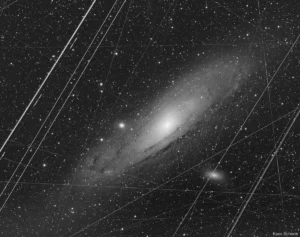
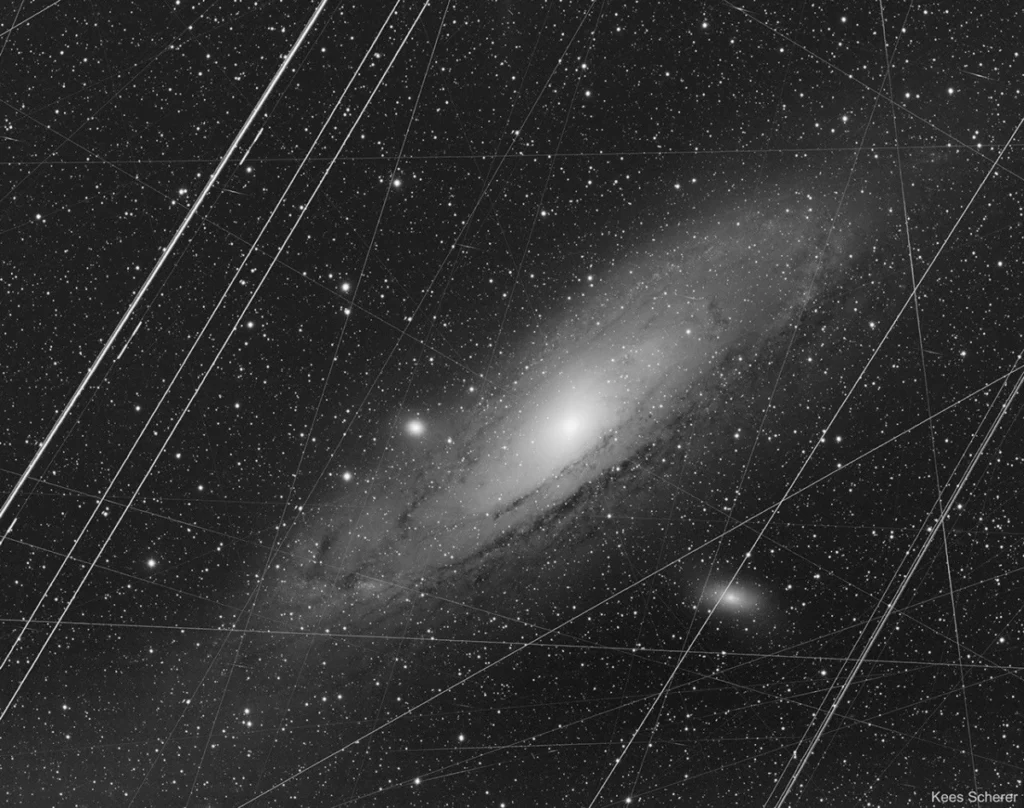
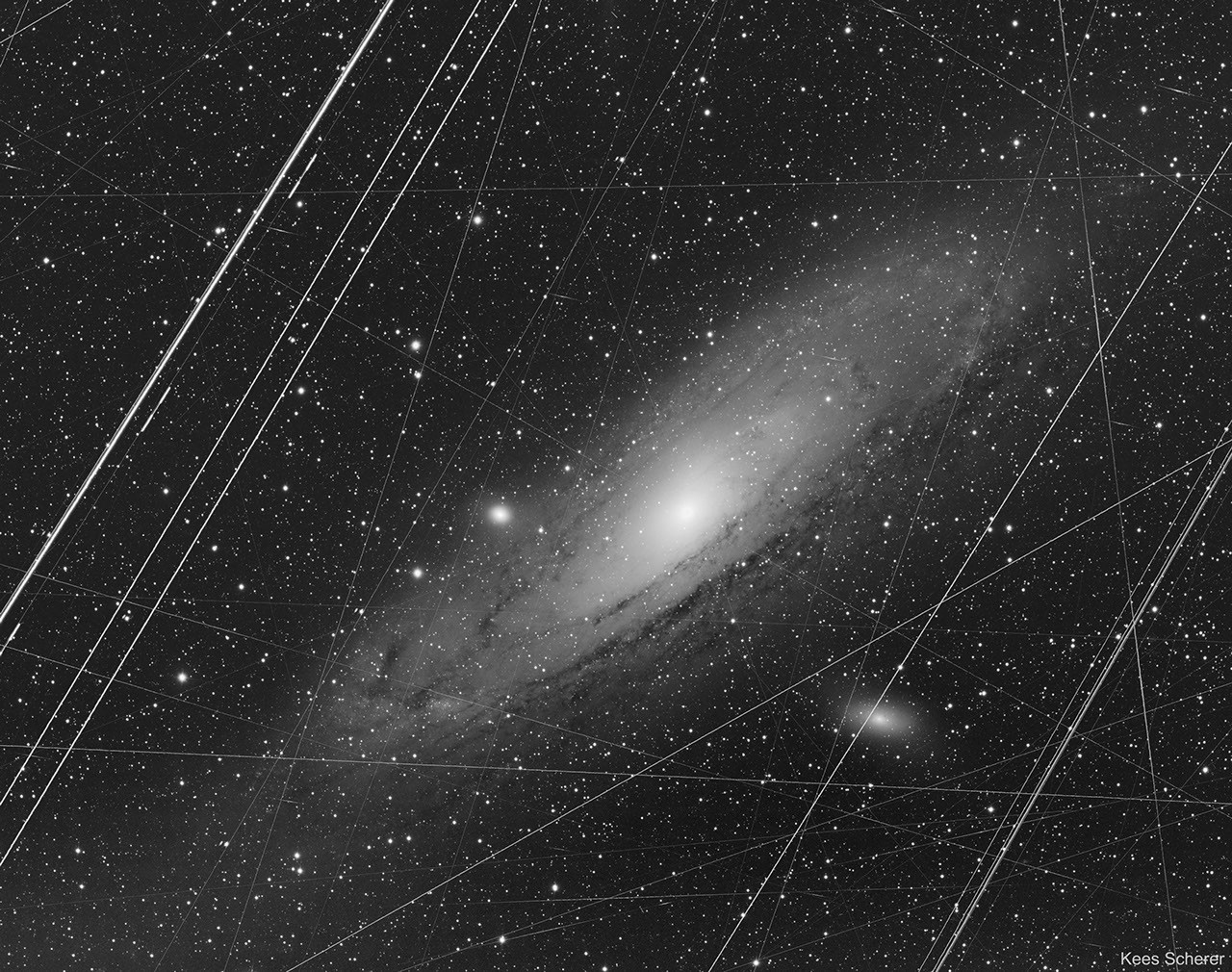
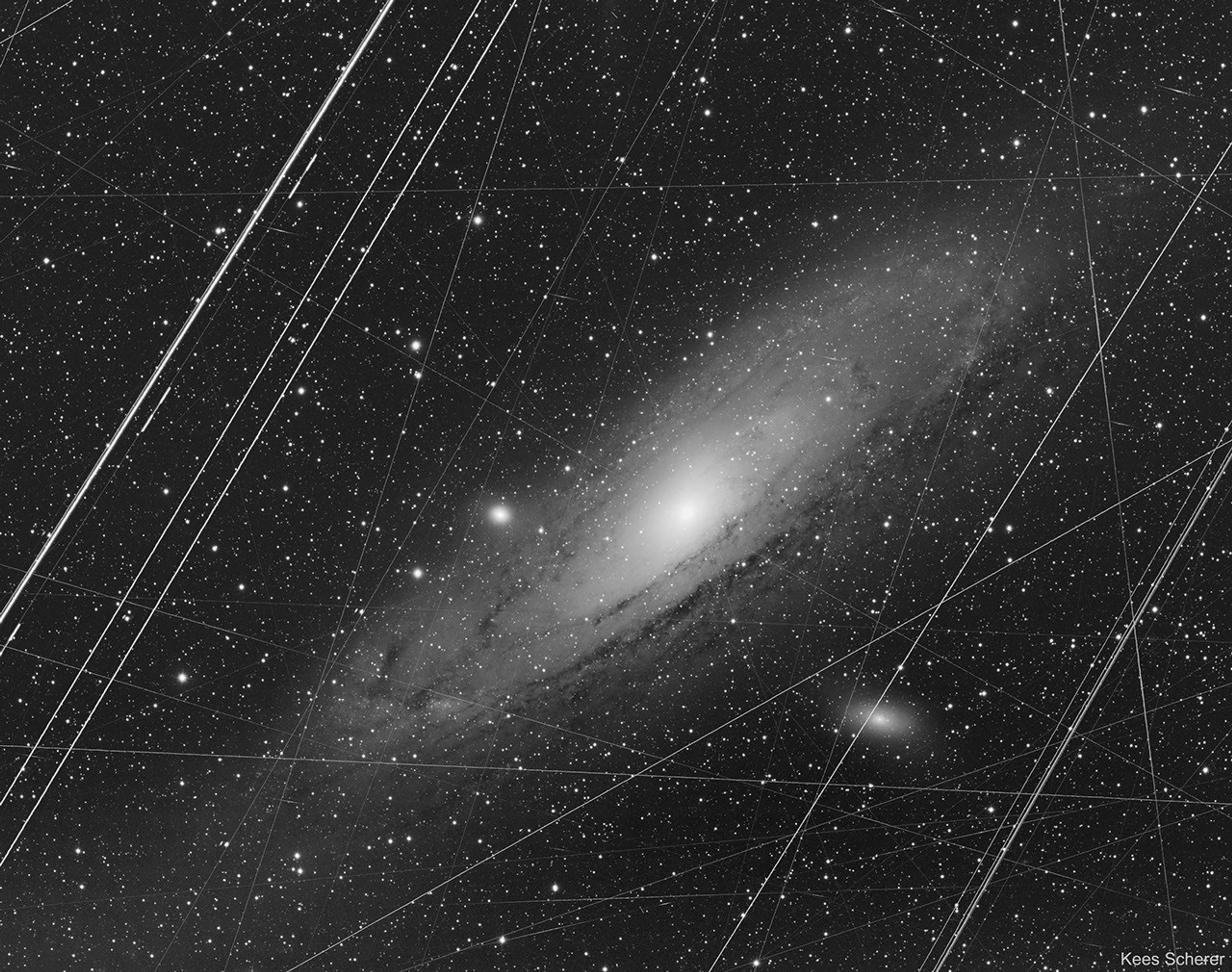
The core of this APOD feature lies in the juxtaposition of two images of the Andromeda Galaxy. The "before" image, a composite of 223 individual exposures each lasting 300 seconds, reveals the raw, unadulterated data captured by a digital camera from a garden observatory in Portugal during 2019. This initial view, while showcasing the majestic spiral structure of M31, is visibly marred by a host of Earth-based and instrumental artifacts. These include the bright, linear streaks of airplane trails, the longer, more persistent trails of satellites, the sharp, pinpoint blemishes of cosmic rays impacting the sensor, and the less conspicuous but still problematic "dead" or "bad" pixels inherent in digital imaging technology.
In stark contrast, the "after" image presents a significantly cleaner and more refined view of the Andromeda Galaxy. The explanation accompanying the images clarifies that this improvement was not achieved through specific manipulation in software like Adobe Photoshop, but rather through a sophisticated pipeline of specialized astronomical image processing packages. Tools such as Astro Pixel Processor, DeepSkyStacker, and PixInsight were employed to meticulously reduce the impact of these terrestrial imperfections. The stated objective was not to fabricate a "digital fantasy" divorced from reality, but to meticulously remove artifacts that have no connection to the Andromeda Galaxy itself, thereby allowing the true appearance of M31 to shine through more clearly.
The Andromeda Galaxy: A Cosmic Neighbor
The Andromeda Galaxy, officially designated Messier 31 (M31) and also known as NGC 224, is a barred spiral galaxy located approximately 2.537 million light-years away from Earth. It is the closest large galaxy to our own Milky Way Galaxy and is one of the most distant objects visible to the naked eye. Andromeda is a truly colossal structure, estimated to contain approximately one trillion stars, significantly more than the estimated 100-400 billion stars in our Milky Way. Its sheer size and proximity make it a prime target for astronomical study, offering invaluable insights into galactic evolution, stellar populations, and the dynamics of galactic interactions.
A Chronology of Observation and Refinement
The APOD presentation implicitly outlines a timeline that is crucial to understanding the imaging process. The initial capture of the Andromeda Galaxy took place in 2019 from a garden observatory in Portugal. This period represents the raw data acquisition phase. The subsequent processing, utilizing advanced astronomical software, likely occurred over a period following the initial observation, as astronomers meticulously worked to refine the data. The APOD release date, though not explicitly stated in the provided content, places this refined image within the ongoing narrative of astronomical discovery and public engagement.
The Science Behind the Streaks and Spots: Understanding Astronomical Artifacts
The explanation provided by APOD delves into the specific types of artifacts that plague astronomical images taken from Earth:
-
Airplane Trails: These are a common nuisance in long-exposure astrophotography. The bright lights of aircraft traversing the night sky leave distinct, continuous streaks across the image as they fly between the camera and the celestial target. The duration and intensity of these trails depend on the aircraft’s altitude, speed, and the direction of its flight relative to the observer.
-
Satellite Trails: Similar to airplane trails, satellite trails are caused by artificial satellites reflecting sunlight as they orbit Earth. These trails can be longer and thinner than airplane trails, and their appearance depends on the satellite’s orbit, speed, and the angle of sunlight. The increasing number of satellite constellations, such as SpaceX’s Starlink, has become a growing concern for ground-based astronomers, as they can significantly interfere with observations.
-
Cosmic Ray Streaks: High-energy particles from outer space, known as cosmic rays, can strike the imaging sensor of a digital camera. When they hit the pixels, they can deposit enough energy to create a visible streak or dot, often appearing as sharp, bright lines or points of light. These are inherent to the nature of digital sensors and the high-energy particles that permeate space.
-
Bad Pixels: Digital imaging sensors are composed of millions of individual pixels. Over time, and due to manufacturing defects or exposure to harsh conditions, some pixels can become "stuck" in a particular state, either always on (hot pixels) or always off (dead pixels), or they can exhibit erratic behavior. These pixels can manifest as individual bright or dark spots in an image.
The Art and Science of Image Processing in Astronomy
The transformation from the "before" to the "after" image is a powerful demonstration of the sophisticated techniques employed in modern astronomical image processing. This is not merely about aesthetic enhancement; it is a crucial scientific endeavor to extract the most accurate and meaningful data from observations.
-
Stacking (Image Combination): The initial "before" image is a stack of multiple exposures. Stacking is a fundamental technique where multiple images of the same object are combined. This process significantly improves the signal-to-noise ratio, meaning that faint details become more apparent while random noise is averaged out. However, it also means that any artifact present in multiple individual frames will be reinforced in the stacked image.
-
Calibration Frames: Astronomical image processing typically involves using "calibration frames" – dark frames, bias frames, and flat frames – taken under specific conditions. These frames help to remove instrumental signatures, such as thermal noise, readout noise, and variations in pixel sensitivity across the sensor.
-
Cosmic Ray Removal: Specialized algorithms are employed to identify and remove cosmic ray hits. These algorithms often look for sharp, linear features that differ significantly from the surrounding background and celestial objects.
-
Satellite and Airplane Trail Removal: Techniques for removing these trails often involve identifying the linear streaks and then interpolating the background from adjacent pixels to fill in the gaps. This can be challenging, especially if the trails are bright and wide.
-
Stretching and Contrast Enhancement: Once the artifacts are minimized, astronomers use techniques like "stretching" to reveal faint details in the image. This involves adjusting the contrast and brightness levels to bring out subtle structures and variations in luminosity that would otherwise be imperceptible.
The use of software like Astro Pixel Processor, DeepSkyStacker, and PixInsight signifies a commitment to rigorous scientific methodology. These programs are designed with the specific needs of astrophotographers and professional astronomers in mind, offering advanced tools for calibration, alignment, stacking, and artifact removal.
Implications for Astronomical Research and Public Understanding
The APOD feature serves a dual purpose: it educates the public about the wonders of the universe and simultaneously demystifies the process of astronomical observation.
-
Enhancing Scientific Accuracy: By demonstrating how terrestrial artifacts are removed, APOD underscores the importance of careful data processing in ensuring the scientific accuracy of astronomical images. It highlights that what we see in a polished astronomical photograph is often the result of extensive work to isolate the genuine celestial signal from noise and interference.
-
Promoting STEM Education: The clear explanation of the challenges and solutions involved in capturing and processing astronomical images can inspire interest in science, technology, engineering, and mathematics (STEM) fields, particularly among younger audiences. It shows that scientific inquiry involves problem-solving and the application of complex tools and techniques.
-
Addressing Misconceptions: The explicit mention that the processing was not intended to "deceive you with a digital fantasy" is crucial. It preempts potential skepticism about the authenticity of astronomical images and emphasizes the scientific integrity behind the presentation.
-
The Growing Challenge of Light Pollution and Satellite Constellations: The presence of airplane and satellite trails, particularly the latter, points to an evolving challenge for ground-based astronomy. The increasing number of satellites in low Earth orbit poses a significant threat to astronomical observations, potentially obscuring faint objects and interfering with crucial research. This APOD serves as a visual reminder of this growing concern.
A Glimpse into the Future of APOD and Astronomy
The APOD website itself is undergoing a transition, moving from apod.nasa.gov to science.nasa.gov/apod. This indicates an ongoing effort by NASA to consolidate its digital presence and streamline access to its vast scientific resources. Furthermore, the announcement about APOD’s email for image submissions changing suggests a dynamic and evolving operational framework for the program.
The mention of "Tomorrow’s picture: cosmic latte" provides a tantalizing hint of what lies ahead, continuing the daily tradition of unveiling the universe’s marvels. The "cosmic latte" refers to the average color of the universe, a fascinating concept derived from studies of the light emitted by galaxies.
In conclusion, this particular Astronomy Picture of the Day, focusing on the Andromeda Galaxy, offers a profound lesson. It not only showcases the breathtaking beauty of a neighboring galaxy but also provides an invaluable insight into the meticulous, often challenging, process of astronomical imaging. By presenting both the raw, imperfect data and its refined counterpart, APOD empowers viewers with a deeper appreciation for the science, technology, and dedication that go into revealing the universe’s secrets, all while reminding us of the delicate balance between observing the cosmos and the ever-present influences of our own dynamic planet.