The convergence of high-performance computing, generative artificial intelligence, and advanced LED technology will take center stage at the upcoming Maker Faire Bay Area 2026, held at the historic Mare Island Naval Shipyard. From September 25th through 27th, Building 101 will be transformed into the "Dark Room," a dedicated pavilion showcasing the cutting edge of light-based installation art. This year’s exhibition marks a significant shift in the maker movement, transitioning from static light displays to responsive, agentic systems that blur the lines between the observer and the observed.
Since its inception in 2006, Maker Faire has served as a global barometer for DIY innovation. The 2026 iteration reflects a decade of rapid democratization in hardware and software, where addressable LEDs and Large Language Models (LLMs) have become standard tools for the modern creative. The Dark Room serves a dual purpose: it provides the necessary low-light environment to appreciate the nuances of modern luminescence while creating a high-contrast laboratory for experimental human-computer interaction.
The Evolution of Generative Light and AI Integration
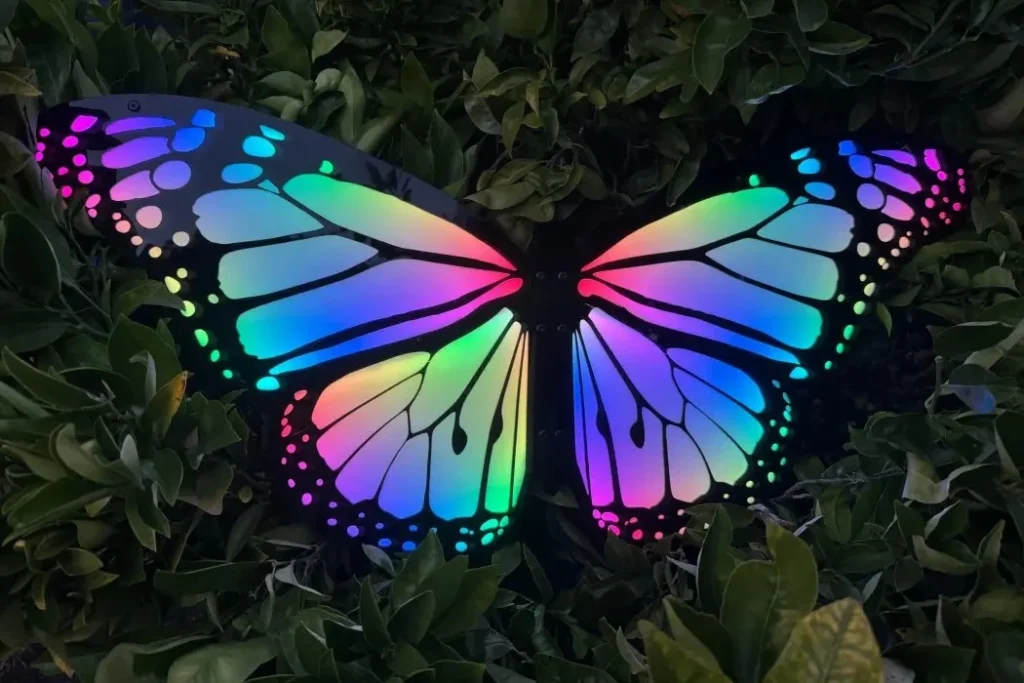
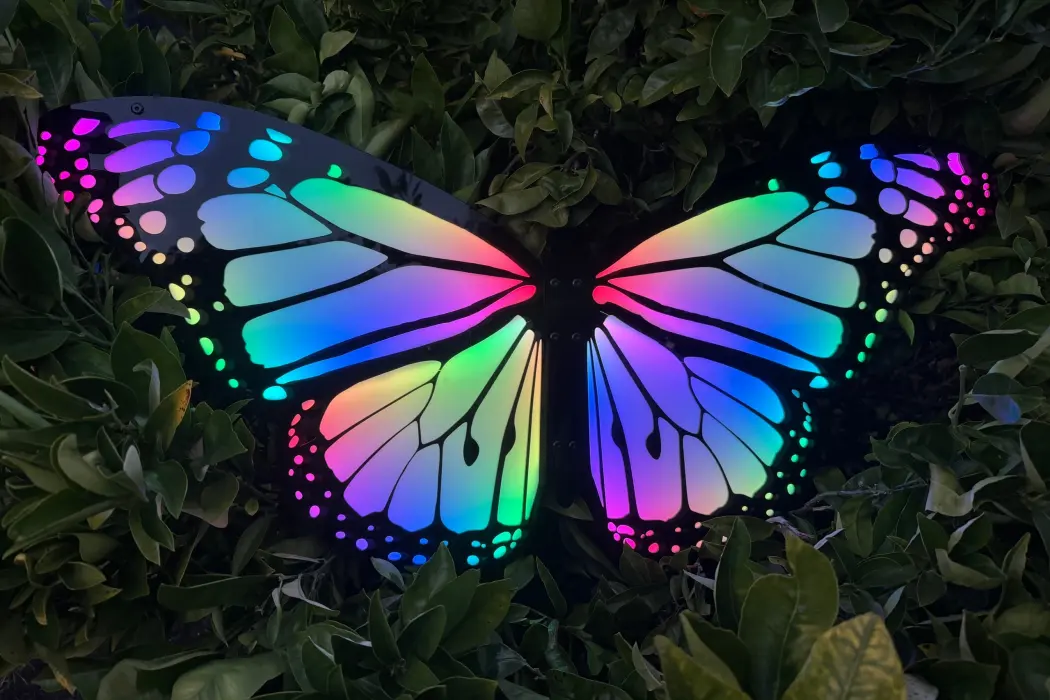
The cornerstone of the 2026 Dark Room is the integration of generative AI into physical hardware. A primary example is Lepidoptera Imaginaria, an interactive light sculpture by Grant Patterson. A Stanford-trained computer scientist with an extensive background in Internet of Things (IoT) architecture, Patterson has utilized 570 full-color addressable LEDs to create a visual representation of migratory monarch butterflies.

The installation is notable for its use of "on-the-fly" code generation. When a participant speaks into a vintage microphone, an integrated LLM processes the vocal input and generates software code in real-time. This code dictates the color, frequency, and pattern of the LED array. This project highlights a growing trend in the maker community: the use of AI to lower the barrier to entry for complex programming. However, Patterson’s work also offers a meta-commentary on the nature of modern technology; by making "code slop"—the raw, often messy output of generative AI—visible to the public, the piece challenges viewers to consider the lack of transparency and "debuggability" in black-box algorithmic systems.
Complementing this is the work of Vrch.io, a boutique art-tech studio. Founded by a collaboration between a computational artist and an AI engineer, their "agentic VJ system" utilizes latent space—the mathematical space where AI models organize data—as a medium for artistic expression. Their system translates human emotion and gesture into immersive spatial environments, suggesting a future where lighting systems in public spaces are not just programmed, but are capable of empathetic response.

Sonic Luminescence: The Intersection of Sound and Vision
A recurring theme in the 2026 exhibition is the synchronization of visual light effects with complex audio signals. This is achieved through integrated hardware devices and custom Printed Circuit Boards (PCBs) designed to process MIDI and analog audio inputs with millisecond precision.
Jenia Varavva, a prominent Bay Area software engineer and DJ, will present Night Canopy, a room-scale musical instrument. The installation consists of hanging fluorescent strands that glow under ultraviolet light. These strands act as tactile sensors; when a visitor brushes against them, the system triggers specific audio loops and soundscapes. The ceiling, constructed from reflective materials, amplifies the visual feedback, creating a feedback loop between the player’s physical movement and the room’s ambient environment.

Similarly, the Morphoresonator—a nine-foot-tall chandelier—combines low-tech materials with high-tech generative music systems. Hand-sculpted from cellophane and industrial packing tape, the sculpture utilizes the unique refractive properties of these everyday materials to diffuse light. The system is equipped with acoustic sensors that capture ambient sounds—claps, humming, or speech—and process them through a live music system that plays the sound back with digital modifications, simultaneously shifting the light patterns to match the frequency of the audio.
Precision Engineering in Theatrical and Public Art
The Dark Room also highlights the professional application of maker-built technology in traditional arts. Chromolume, created by Sydney Parcell, was originally developed for the Shotgun Players’ production of Sunday in the Park with George in Berkeley. This piece utilizes the DMX512 protocol—the industry standard for digital communication networks commonly used to control stage lighting and effects. By allowing sound and light designers to collaborate via a unified control interface, Chromolume demonstrates how maker-driven innovation is being absorbed into professional theatrical workflows.

In the realm of physics and optics, Johan Fredrik Källman’s Luxtriplicata offers an educational perspective on light behavior. The installation features a rotatable plate embedded with glass prisms. As white light passes through these prisms, visitors can manipulate the refraction and dispersion of the spectrum. Källman’s work emphasizes the "science" in the "art and science" of the maker movement, providing a hands-on laboratory for understanding the fundamental properties of the visible spectrum.
Regional Innovation and the Portland Contingent
The 2026 Faire sees a significant influx of talent from the Pacific Northwest, specifically from Portland’s renowned light art community. The creative partnership "Twisty Maurice," consisting of Misty Post and Therese Gietler, will debut several nature-inspired pieces that push the boundaries of biomimicry in LED design.

- Oscillara: An interactive console that allows users to create "ripples" of light that propagate through a larger illuminated structure, mimicking the fluid dynamics of water.
- Samyra Drift: A four-foot-tall octopus sculpture constructed from LEDs and meticulously folded paper. This piece mimics the "chromatophores" (color-changing cells) of cephalopods, utilizing thousands of tiny paper components to diffuse light in a way that suggests biological breathing.
The presence of these artists underscores the importance of regional festivals, such as Portland’s winter light celebrations, in fostering a talent pipeline for international events like Maker Faire.
Large-Scale Installations and the "Burning Man" Legacy
The influence of the Burning Man festival on the Bay Area maker scene remains profound, particularly in the development of "art cars"—mobile, illuminated sculptures. While many of these roam the Mare Island esplanade, several key pieces will be docked within the Dark Room to allow for closer technical inspection.

Sepia Lux, a 35-foot-long animatronic inflatable cuttlefish, represents the pinnacle of mobile LED art. It is joined by Flash the Tortoise, a vehicle constructed from custom-formed High-Density Polyethylene (HDPE) panels. These installations are not merely visual; they are participatory. Visitors are encouraged to "play" the lights using integrated piano keyboards and drum sets, which translate percussive and melodic inputs into large-scale light animations across the vehicles’ surfaces.
Technical Analysis and Economic Implications
The proliferation of these high-complexity projects is supported by a significant decrease in the cost of hardware. In 2026, the price per unit for high-density, addressable LED strips has reached an all-time low, while the processing power of microcontrollers like the ESP32 and Raspberry Pi series has increased exponentially. This allows makers to implement sophisticated features—such as real-time FFT (Fast Fourier Transform) for audio analysis and wireless mesh networking for synchronized displays—on budgets that would have been impossible a decade ago.

Furthermore, the choice of Mare Island’s Building 101 as the venue is symbolic of the "Fourth Industrial Revolution." The transition of a former naval shipyard into a hub for digital fabrication and interactive art reflects the broader economic shift in the North Bay. Vallejo and the surrounding Solano County have seen a 12% increase in tech-related tourism and "maker-space" memberships since the Faire moved to Mare Island, suggesting that cultural events of this scale serve as significant catalysts for urban revitalization.
Conclusion: The Cultural Impact of the Maker Movement
Maker Faire Bay Area 2026 stands as a testament to the enduring human desire to master and manipulate light. The "Dark Room" exhibits represent more than just technical prowess; they represent a move toward a more interactive and democratic form of public art. By integrating AI, sound, and physical engineering, these makers are creating environments that respond to the presence and actions of the public, effectively turning the audience into co-creators.

As LED technology continues to evolve toward higher efficiency and greater integration with smart-city infrastructure, the projects seen at Mare Island this year may well serve as the prototypes for the interactive public spaces of the next decade. For the thousands of visitors expected to attend, the Dark Room offers a glimpse into a future where technology is not just a tool for productivity, but a medium for shared wonder and collective experimentation.