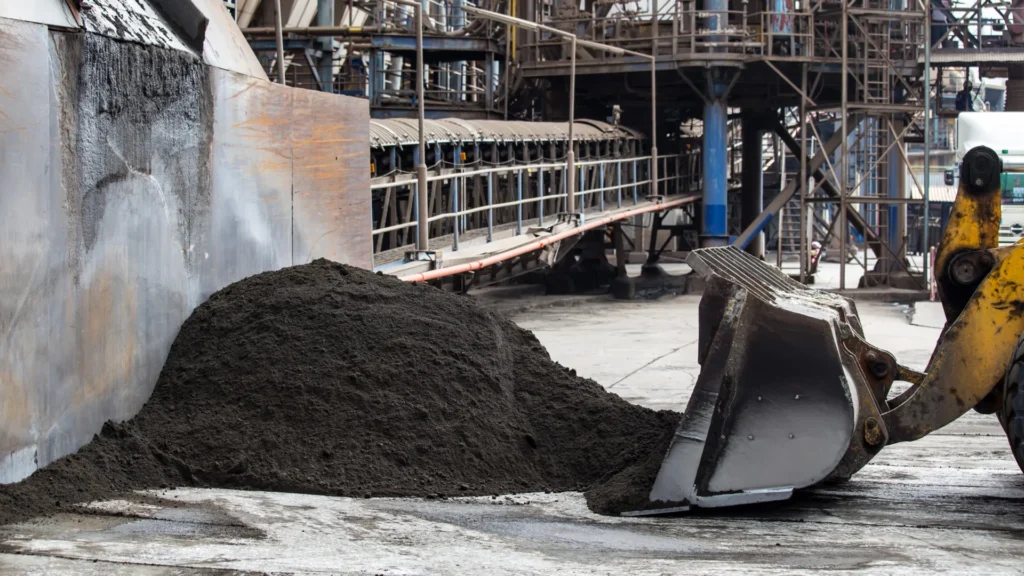
Coal ash, red mud, and mine tailings, often relegated as monumental waste problems, are now being viewed through a revolutionary lens by a team of researchers led by Worcester Polytechnic Institute (WPI). These vast industrial byproducts harbor a hidden trove of valuable materials, including essential silica, rare earth elements (REEs), and other critical minerals, whose recovery could fundamentally reshape global resource management and supply chains.
The National Science Foundation’s (NSF) Growing Convergence Research program has recognized the profound potential of this innovative approach, awarding a WPI-led research consortium a substantial $3.3 million grant. This five-year, two-phase endeavor will delve into whether sophisticated biological strategies, naturally employed by organisms such as diatoms, sea sponges, and various plants, can be harnessed to extract these precious resources. The core objective is to achieve this with significantly less energy and a reduced reliance on the harsh chemicals typically associated with conventional mineral extraction processes.
Addressing a Dual Global Challenge: Waste and Resource Scarcity
The urgency of this research stems from two interconnected global challenges: the ever-increasing volume of industrial waste and the burgeoning demand for critical minerals. Industrial activities worldwide generate billions of tons of waste annually. In the United States alone, vast quantities of coal ash, red mud (a byproduct of aluminum refining), and mine tailings accumulate in landfills, impoundments, and enormous waste piles. These disposal methods not only consume valuable land but also pose significant environmental risks, including potential groundwater contamination from leaching heavy metals and other toxic substances. For instance, the U.S. Environmental Protection Agency (EPA) estimates that coal-fired power plants generate over 100 million tons of coal ash annually. Similarly, global aluminum production leaves behind approximately 150 million tons of red mud each year, with existing stockpiles exceeding 4 billion tons.
Simultaneously, the world faces a critical mineral crunch. Rare earth elements and other critical minerals are indispensable components in modern technology, powering everything from smartphones and electric vehicles to wind turbines, advanced defense systems, and medical devices. The global supply chains for many of these minerals are concentrated in a few countries, leading to geopolitical vulnerabilities and economic instability. The U.S. Department of Energy (DOE) identifies dozens of critical minerals essential for economic and national security, many of which face high supply risk. Estimates suggest that 11 million tons of REEs alone, currently trapped within U.S. coal ash landfills, could be worth an staggering $8.4 billion—nearly eight times the nation’s current raw domestic reserves. Tapping into this domestic reservoir of critical minerals, currently treated as waste, offers a strategic pathway to bolster national security and economic independence.
A New Paradigm: Learning from Nature’s Efficiency
Traditional methods for extracting critical minerals and processing silicon-derived materials (used extensively in concrete, glass, ceramics, semiconductors, and silicones) are notoriously energy-intensive and chemically demanding. They often require extremely high temperatures and large volumes of corrosive chemicals, contributing to substantial carbon footprints and generating additional waste streams.
The WPI-led team proposes a radical departure from these conventional approaches by looking to nature for inspiration. Diatoms, single-celled algae, are renowned for their intricate, highly structured silica cell walls, which they construct from dissolved silicon in water under ambient temperatures and pressures. Sea sponges similarly employ sophisticated biological mechanisms to create complex silica skeletons. Certain plants also exhibit a remarkable ability to accumulate and organize silicon within their tissues. These organisms achieve this feat using specialized biological molecules and organic scaffolds that precisely control the deposition and polymerization of silica under relatively mild, environmentally benign conditions.
The researchers aim to decode and adapt these natural processes, known as biosilicification, to develop lower-energy, more sustainable methods for breaking down silicon-rich industrial waste. The vision is two-fold: not only to liberate the valuable rare earth elements and other critical minerals embedded within these materials but also to convert the remaining silica itself into useful, marketable products. This "whole-material approach" represents a paradigm shift, transforming what was once a liability into a valuable resource stream.
A Convergence of Expertise: The Research Team and Collaborative Network
This ambitious five-year, two-phase project is spearheaded by Professor Mingjiang Tao, an associate professor in WPI’s Department of Civil, Environmental, and Architectural Engineering. Professor Tao, serving as the lead principal investigator, will oversee the entire project, while also directly guiding research into biosilicification and the development of bio-enabled metallurgy techniques for recovering rare earth elements from silicon-rich wastes. His expertise lies at the intersection of materials science and environmental engineering, making him uniquely suited to lead this interdisciplinary effort.
Supporting Professor Tao are co-principal investigators Professor Carrick Eggleston and Professor Yan Wang. Professor Eggleston, also from the Department of Civil, Environmental, and Architectural Engineering, brings extensive knowledge in geochemistry. His research will focus on the fundamental chemical reactions involved in the breakdown and subsequent rebuilding of silicate materials. This includes meticulously examining reaction pathways, rates of silicate dissolution, repolymerization processes, carbonation, glass formation, and silicone synthesis, all critical steps in understanding and optimizing the bio-inspired recovery methods.
Professor Yan Wang, the William B. Smith Professor of Mechanical and Materials Engineering, is a globally recognized pioneer in the fields of battery recycling and sustainable manufacturing. His expertise will be instrumental in developing the bioengineered methods for the efficient recovery of rare earth elements and other critical minerals, ensuring that the developed processes are not only effective but also scalable and environmentally sound.
The collaborative nature of this project, a hallmark of NSF’s Growing Convergence Research program, extends beyond WPI. The research consortium includes leading experts from George Mason University, the University of California San Diego, the University of Massachusetts Amherst, and the University at Buffalo. This diverse academic network brings together a formidable array of disciplines, including biology, geochemistry, materials science, metallurgy, engineering, computational chemistry, and artificial intelligence, ensuring a holistic and multifaceted approach to the complex challenges at hand.
Accelerating Discovery with AI and Computational Chemistry
A key innovative element of this project is the strategic integration of advanced computational modeling and artificial intelligence (AI). Researchers plan to leverage these powerful tools to design specialized biomolecules with tailored properties and to predict with high accuracy how these biomolecules will interact with various silicon-rich waste streams. This predictive capability is expected to significantly accelerate the discovery process, allowing the team to identify the most promising approaches for mineral recovery and materials manufacturing much more quickly and efficiently than traditional trial-and-error experimental methods. AI will serve as a virtual laboratory, rapidly screening countless molecular combinations and reaction pathways, thereby streamlining the research pipeline and optimizing the design of bio-inspired solutions.
Transforming Waste into Marketable Products: Economic and Environmental Implications
The ultimate success of this research hinges on the ability to scale these bio-inspired technologies for practical industrial application. The project will include rigorous techno-economic analyses to assess the commercial viability and scalability of the developed processes. If successful, the implications would be far-reaching, potentially ushering in a new era of sustainable industrial practices.
Economically, this approach could unlock new revenue streams from materials currently treated as waste, creating new industries and job opportunities. By converting large volumes of industrial waste into valuable, marketable products, it could significantly reduce operational costs for industries and lessen the financial burden associated with waste disposal.
Environmentally, the benefits are substantial. A lower-energy, less chemically intensive recovery process would dramatically reduce the carbon footprint of materials production. It would also minimize the generation of hazardous secondary waste, mitigating the environmental risks associated with current waste disposal methods and preserving landfill space. This aligns perfectly with the principles of a circular economy, where resources are kept in use for as long as possible, extracting maximum value from them, and then recovering and regenerating products and materials at the end of each service life.
From a geopolitical perspective, strengthening domestic supplies of critical minerals and rare earth elements would significantly reduce reliance on volatile foreign sources, enhancing national security and economic resilience. This aligns with broader U.S. strategic initiatives to secure critical mineral supply chains. The availability of domestically recovered critical minerals could also foster innovation in high-tech sectors, from advanced electronics to clean energy technologies, by providing a stable and ethical supply.
Building a Future Ecosystem: Education and Broader Impact
Beyond the immediate research outcomes, the WPI-led project is designed to have a lasting impact on education and the broader scientific and industrial landscape. Graduate and undergraduate students at WPI will be deeply involved in this multiyear project, gaining invaluable hands-on experience in cutting-edge, interdisciplinary STEM research through the university’s immersive project-based learning model. This will cultivate a new generation of scientists and engineers equipped to tackle complex global challenges.
Furthermore, the effort aims to foster a broader bioengineered, silicon-based materials ecosystem. By actively connecting researchers across diverse fields, engaging with industry partners, informing policymakers, and collaborating with educators, the project seeks to establish a robust network that can drive future innovations. This ecosystem will serve as a platform for knowledge exchange, technology transfer, and the development of new curricula, ensuring that the advancements made in the lab translate into tangible societal benefits and inspire future innovators across multiple disciplines and sectors. The collaboration underscores a collective commitment to sustainability, biotechnology, materials science, data science, and artificial intelligence, all converging to create a more resource-efficient and environmentally responsible future.