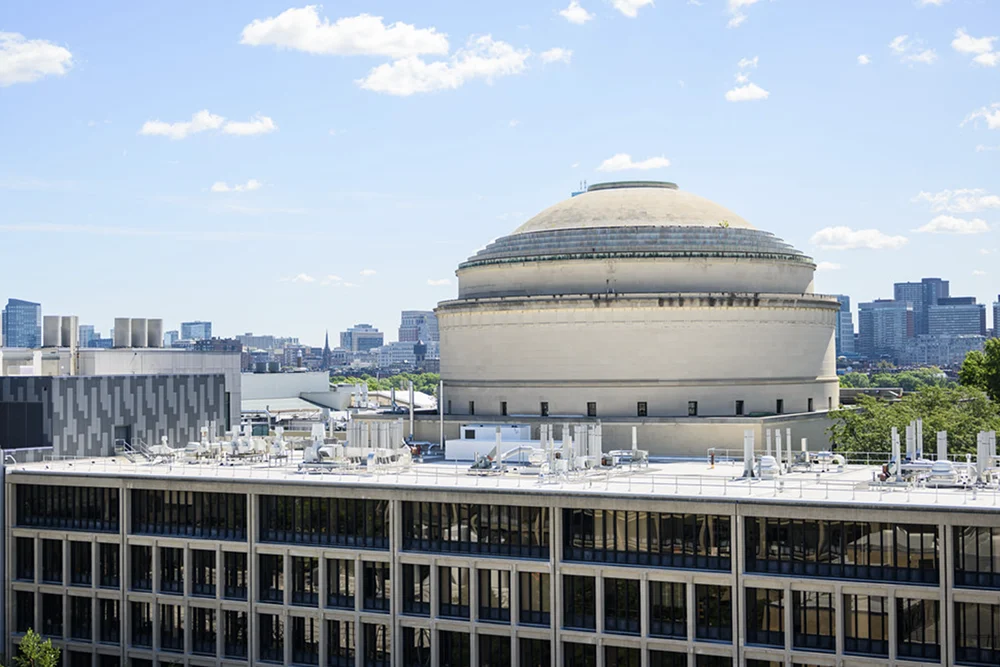
The National Science Foundation (NSF) has officially designated the Massachusetts Institute of Technology (MIT) as the lead institution for a new Materials Research Science and Engineering Center (MRSEC). This prestigious appointment, announced on July 30, positions MIT at the forefront of a multi-institutional effort to revolutionize materials technologies. The center will prioritize three critical areas of modern industry: medical imaging enhancement, sustainable metals production, and the development of next-generation semiconductors. With an expected $18 million in research funding distributed over a six-year period, the center represents a significant federal investment in the foundational science that underpins American technological competitiveness and public health.
The establishment of this MRSEC brings together a formidable coalition of 16 research groups drawn from nine distinct academic departments across four premier institutions. While the administrative heart of the center will reside within the MIT Materials Research Laboratory, the project integrates expertise from five MIT departments, three collaborating universities—including Yale University and the University of California at Santa Barbara—and the Department of Radiology at Massachusetts General Hospital and Harvard Medical School. This interdisciplinary structure is designed to break down the traditional "silos" of academia, fostering a collaborative environment where physicists, chemists, and engineers can address complex challenges that no single discipline could solve in isolation.
Strategic Research Thrusts: From Medical Diagnostics to Industrial Sustainability
The MIT MRSEC will organize its primary scientific inquiries into two main "research thrusts," each targeting a specific set of societal and industrial needs. These thrusts are designed not only to advance theoretical understanding but to provide practical, scalable solutions for the private sector.
Thrust 1: Nanoscale Engineering for Advanced X-ray Detection
The first research thrust focuses on the re-engineering of scintillators—specialized materials that possess the unique ability to convert high-energy X-rays into visible light. Current medical imaging technologies, while revolutionary, often face limitations in terms of resolution, speed, and the amount of radiation exposure required to produce a clear image. By manipulating these materials at the nanoscale, researchers aim to create detectors that are significantly more sensitive and faster than those currently available.
The implications for healthcare are profound. Higher sensitivity in X-ray detection could lead to earlier and more accurate cancer diagnoses, as smaller anomalies become visible to clinicians. Furthermore, more efficient scintillators would allow for a reduction in radiation dosages, enhancing patient safety during routine screenings and complex procedures. Beyond the clinic, these advancements have applications in industrial non-destructive testing and national security, where improved imaging speed and resolution are critical for scanning cargo and infrastructure. This effort is expected to be led by optical materials experts Professor Marin Soljačić of the Department of Physics and Professor Juejun Hu of the Department of Materials Science and Engineering (DMSE).
Thrust 2: High-Temperature Sulfur Chemistry and Sustainable Metallurgy
The second research thrust addresses the environmental and economic challenges of metals production. Led by Associate Professor Rafael Jaramillo, the center’s director, this group will explore the properties of high-temperature, sulfur-based molten materials. In the current industrial landscape, the production of critical metals such as copper is often energy-intensive and environmentally taxing. As global demand for these materials rises—driven by the transition to renewable energy and electric vehicles—finding more efficient extraction and processing methods is a matter of national importance.
The research will investigate how sulfur-based liquids can be used to improve the yield and efficiency of metal production. Furthermore, this thrust seeks to unlock new pathways for thin-film semiconductor technologies. By gaining a deeper understanding of these complex fluids, the center aims to rebuild a "center of gravity" for high-temperature chemistry in the United States, a field that Jaramillo notes has seen a decline in academic focus over recent decades. This revitalization is essential for ensuring that the U.S. maintains the domestic expertise necessary to secure critical material supply chains.
Expanding the National Research Infrastructure
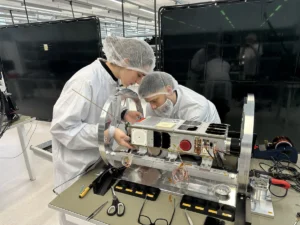
A core component of the new MRSEC is the development of a shared laboratory facility managed by MIT.nano. This laboratory will be dedicated to testing magnetic materials and observing materials under extreme conditions, such as ultra-high temperatures or intense pressures. By providing state-of-the-art instrumentation, the facility will serve as a vital resource not only for MIT researchers but also for external academic and industrial users.
This expansion of the nationwide portfolio of NSF-supported research facilities is intended to accelerate the "lab-to-market" pipeline. When startups and established companies have access to high-end characterization tools, the time required to validate new materials is significantly reduced. This shared-use model reflects a broader federal strategy to democratize access to expensive scientific equipment, thereby fostering innovation across the broader engineering community.
A Sixty-Year Legacy of Materials Innovation
The selection of MIT for this award is a testament to the Institute’s long-standing leadership in the field. The new center builds upon nearly 60 years of interdisciplinary materials research at MIT, a legacy that traces back to the 1960s. During that era, the U.S. Department of Defense supported specialized laboratories at the Institute to bolster national security through materials science. Over the subsequent decades, this foundation evolved into a series of NSF-funded centers that have consistently pushed the boundaries of the field.
Previous MRSEC investments at MIT were instrumental in the creation of other centers of excellence, such as the MIT Microphotonics Center and the Microsystems Technology Laboratories (MTL). These entities have played pivotal roles in the development of the fiber optics that power the internet and the microchips that drive modern computing. By securing this new award, MIT continues its role as a primary engine of American industrial innovation.
Education and Public Outreach: The DISASTER! Initiative
Beyond the laboratory, the MIT MRSEC is committed to shaping the next generation of scientists and informing the public about the importance of materials science. Director Rafael Jaramillo has highlighted a specific regional need: increasing the workforce in materials processing within the Boston area. While other industrial hubs in the U.S. have robust materials science programs at the community college level, the Northeast has a gap that the center intends to address.
One of the most innovative outreach programs planned is titled "DISASTER!" This initiative will engage MIT undergraduates in the study of forensic materials science. By analyzing real-world catastrophes where material failure played a central role, students will learn to communicate complex scientific concepts to the public. Jaramillo points to historical examples such as the RMS Titanic, where brittle rivets contributed to the ship’s sinking, and the de Havilland Comet, the world’s first commercial jetliner, which suffered catastrophic crashes due to metal fatigue around its square windows.
By telling these stories, the center aims to illustrate how understanding "why things fail" is just as important as inventing new materials. This forensic approach not only serves as an effective educational tool but also underscores the life-saving importance of rigorous materials testing and engineering standards.
The Broader Context: NSF’s $108 Million Investment
The MIT award is part of a larger, $108 million investment by the National Science Foundation into six new or renewed MRSECs across the United States. This broader initiative reflects the federal government’s strategic focus on "frontier" technologies. Other centers in this cohort will explore topics such as:
- Artificial Intelligence-Driven Laboratories: Using machine learning to automate the discovery of new materials.
- Hybrid Quantum Materials: Exploring the intersection of light and matter to develop quantum computing components.
- Sustainable Polymers: Creating new plastics that are more easily recycled or biodegradable.
The NSF MRSEC program is designed to tackle "grand challenges" that require long-term funding and large, multi-disciplinary teams. By funding these centers for six-year terms, the NSF provides the stability necessary for researchers to take high-risk, high-reward approaches to scientific discovery.
Analysis of Implications: Economic and Scientific Impact
The establishment of the MIT MRSEC comes at a critical juncture for U.S. industrial policy. With the passage of the CHIPS and Science Act, there is a renewed national focus on domestic semiconductor manufacturing and material self-sufficiency. The center’s work on high-temperature sulfur chemistry directly aligns with these goals by addressing the "upstream" portion of the supply chain—the production of the raw metals and thin films required for electronics.
From a scientific perspective, the center’s focus on "extreme conditions" research is likely to yield insights that transcend its primary thrusts. Understanding how materials behave at the limits of temperature and pressure is essential for aerospace, deep-sea exploration, and fusion energy research.
Furthermore, the collaboration with Massachusetts General Hospital ensures that the materials developed in the lab are grounded in clinical reality. This direct link between material scientists and medical practitioners is expected to shorten the development cycle for new diagnostic tools, potentially lowering healthcare costs by improving the efficiency of hospital workflows and reducing the need for invasive diagnostic procedures.
Future Outlook and Sustainability
As the center begins its initial six-year term, the leadership team is already looking toward the future. Director Jaramillo envisions the MRSEC becoming a "self-sustaining hub" for materials research that will outlast its initial funding cycle. The goal is to rebuild the "muscle memory" of interdisciplinary collaboration, ensuring that MIT remains the premier location for materials innovation for the next 60 years.
The formal research agreement between MIT and the NSF is currently under negotiation, with operations expected to commence shortly thereafter. The involved faculty represent a "who’s who" of MIT’s scientific leadership, including Moungi Bawendi (Chemistry), Martin Bazant (Chemical Engineering), and Nicole Nie (EAPS), among others. With a diverse team and a clear mandate, the MIT Materials Research Science and Engineering Center is poised to deliver transformative results for the global scientific community and the American public.