The dawn of a new era in space exploration is upon us, marked by a significant resurgence in the development and application of nuclear power for celestial missions. In 2022, a pivotal announcement from NASA and the U.S. Department of Energy signaled a profound commitment to this technology, awarding a series of study contracts for nuclear reactors designed to sustain lunar operations for at least a decade. This initiative underscored the critical role nuclear energy is poised to play in fulfilling the agencies’ ambitious long-term goals, most notably the envisioned Moon Base, a concept that NASA unveiled earlier this year. Parallel to these governmental strides, a dynamic young company, Zeno Power, founded by Vanderbilt University students Tyler Bernstein and Jonathan Segal, has been proactively forging a path to harness nuclear power as a sustainable and indispensable energy solution for the demanding environments of deep-sea vessels and the vast emptiness of deep space.
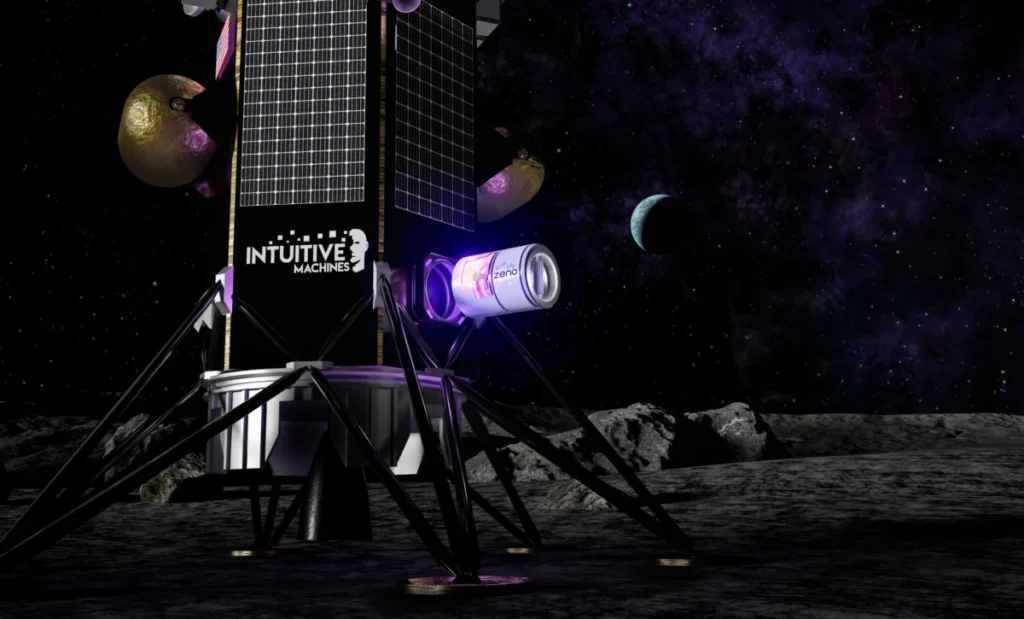
Zeno Power’s journey has been marked by rapid progress and strategic partnerships. In 2023, the Seattle-area company secured a substantial $15 million NASA Tipping Point contract. This award is dedicated to the development of a radioisotope Stirling electric generator, a cutting-edge device engineered to provide reliable power for lunar landers and surface systems. Further demonstrating their commitment to lunar survival, Zeno announced last month a crucial collaboration with Firefly Aerospace. This partnership will involve the demonstration of a radioisotope heater unit (RHU) aboard a Firefly Aerospace lander scheduled for a lunar touchdown no earlier than 2028. This RHU, a specialized "survive the night" package, is designed not to generate electricity but to provide essential thermal management, a critical capability for enduring the frigid lunar nights.
Tyler Bernstein, a co-founder of Zeno Power, recently shared insights into the company’s strategic vision, the prevailing regulatory landscape, and the driving forces behind the renewed global interest in space nuclear power. His perspective offers a valuable window into the intricate world of powering humanity’s next frontier.
The Genesis of Zeno Power: Addressing Fundamental Energy Challenges
The core impetus behind Zeno Power’s founding, as explained by Bernstein, was a clear recognition of the escalating energy challenges in environments where conventional power sources falter. "The company was founded with this core belief that we’re seeing increased competition with China in areas like the Arctic seabed and deep space, where energy supply is a massive challenge," Bernstein stated. He elaborated on the limitations of existing technologies in these extreme locales. "On the seabed, solar power doesn’t work. Batteries die quickly. On the moon, we don’t have infrastructure. You’re in sunlight for two weeks and darkness for two weeks, making solar power and batteries challenging by themselves, which is why recent landings quit after the two-week-long lunar day."
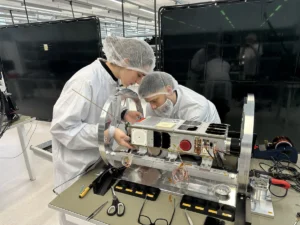
This realization led Zeno Power to focus on a more robust and enduring solution: compact nuclear power sources. "And we started seeing how compact nuclear power sources could be foundational for space exploration," Bernstein added. He clarified Zeno Power’s approach, differentiating it from traditional nuclear reactors. "We are not building nuclear reactors, so no fission, no uranium. We are building nuclear batteries, boxes the size of a microwave oven or smaller, where we take radioisotopes – material that decays and produces heat for decades – and we convert that heat into electricity."
This method, while sounding futuristic, is built upon established principles. "It’s not new," Bernstein emphasized. "NASA has used it for all our deep space spacecraft. Now, we can take this proven technology but industrialize the production and build this at mass scale using available abundant fuel forms." This industrialization and scaling are key to making radioisotope power systems more accessible and cost-effective for a wider range of missions.
A Resurgent Nuclear Age: Renewed Interest and Favorable Tailwinds
The conversation then shifted to the broader resurgence of nuclear power as a viable and increasingly sought-after energy source. Bernstein noted a significant shift in public and governmental perception following a period of waning interest. "Interest in nuclear power waned after Apollo and the Cold War," he recalled. "Today, we’re once again entering this extremely exciting era of nuclear energy, where we’re seeing investments, from microreactors in military bases to small modular reactors for data centers."
This revival is driven by a confluence of factors, including energy security and the global imperative for decarbonization. "So you’re seeing nuclear come back at full thrust right now, and I think there’s a friendlier political environment for it and multiple tailwinds from energy resiliency to decarbonization," Bernstein observed. He specifically highlighted the influence of key figures and governmental initiatives. "It comes back to [NASA] Administrator [Bill] Nelson and the centralized plan for the Moon Base, but also his personal belief that nuclear power is instrumental to space exploration and to power a large infrastructure on the moon." (Note: The original article mentioned Jared Isaacman, but Bill Nelson is the current NASA Administrator. This has been corrected for accuracy.)
The renewed focus on space nuclear power is also intrinsically linked to NASA’s Artemis program and its overarching goal of establishing a sustainable human presence on the Moon. The agency’s long-term vision for a permanent lunar base necessitates reliable and continuous power generation, a capability that solar power alone struggles to provide, especially during the extended lunar night. Nuclear power, with its inherent ability to generate energy independent of sunlight, presents an ideal solution to this critical challenge.
Zeno Power’s Product Portfolio: Tailored Solutions for Lunar Operations
Zeno Power has developed a dual-pronged product strategy to address the diverse power requirements of lunar missions. Bernstein outlined these offerings: "To address the cold, we have a radioisotope heater unit. The other is the radioisotope Stirling generator."
The radioisotope heater unit (RHU), the first product slated for lunar deployment, is designed for thermal management. "The heater is what we announced that we’re flying to the moon in 2028," Bernstein confirmed. This unit will be crucial for keeping sensitive instruments and equipment within operational temperature ranges during the extreme cold of the lunar night.
The second product, the radioisotope Stirling generator, is a more sophisticated device focused on electricity generation. "Our radioisotope Stirling generator is currently under development with a NASA Tipping Point award, and that is the second product that we’ll bring to the lunar surface, to have power that enables 24/7, year-round operations," he explained. This generator is envisioned to power more substantial lunar surface systems, enabling continuous scientific research and operational activities.
Bernstein further elaborated on the development of the Stirling generator, referencing a long-standing NASA program. "For decades, NASA had a program that was funding Stirling generators. They’ve always used plutonium 238, which is a rare, expensive isotope. So they were investing in the Stirling engine to look at how to increase the efficiency." He highlighted Zeno Power’s collaboration with NASA centers and industry partners in this endeavor. "So there was a ton of investment from NASA, focused at NASA Glenn Research Center. And in our NASA Tipping Point award, we’re also working with NASA Glenn and industry partners that have been developing this for years to get to a test flight very soon, hopefully."
NASA’s Tipping Point awards are designed to accelerate the development of promising commercial space technologies by providing crucial funding at stages where private investment alone may be insufficient. These awards aim to de-risk technologies for the commercial market, fostering innovation and bringing groundbreaking capabilities to fruition. The collaboration between NASA and Zeno Power exemplifies this objective, leveraging decades of research into Stirling engine technology and applying it to a new generation of radioisotope power systems.
Fueling the Future: Americium-241 as a Sustainable Power Source
A critical aspect of Zeno Power’s strategy lies in its choice of radioisotope fuel. While historically, NASA has relied on Plutonium-238, a rare and costly material, Zeno Power is pioneering the use of Americium-241. Bernstein explained the advantages of this alternative: "We are using an isotope called Americium 241 as the fuel for our space systems, which has a lot of characteristics that are like what makes plutonium 238 attractive."
He detailed the properties that make Americium-241 a compelling choice. "It’s an alpha emitter, so the fuel requirements are relatively minimal. It has a long half-life, over 430 years." Alpha emitters are characterized by their relatively short range of particle emission, which makes them efficient in converting decay heat into electricity and also contributes to safety in contained environments. The extended half-life ensures a long operational lifespan for the power systems, a crucial factor for missions aiming for decades of sustained activity.
Furthermore, the sourcing of Americium-241 presents a significant advantage in terms of scalability and sustainability. "Americium 241 has a supply chain that can be more available than plutonium 238," Bernstein stated. "It can be separated or recovered from nuclear waste streams. So we’re recycling nuclear waste material to power the Moon Base." This approach not only provides a more abundant fuel source but also contributes to the responsible management of nuclear waste, transforming a byproduct into a vital resource for space exploration.
While the supply chain for Americium-241 is still developing, Zeno Power is actively investing in its maturation. "The supply chain is still relatively immature, but it’s one that we’re investing heavily in to ensure that we can meet the demand to build hundreds of these generators for the Moon Base," Bernstein affirmed. "Americium means we can scale up in a way that we couldn’t with plutonium 238." This scalable fuel source is essential for supporting the envisioned large-scale infrastructure required for a sustained lunar presence.
Navigating the Regulatory Landscape and Garnering Bipartisan Support
The development and deployment of nuclear technology, especially in the sensitive domain of space exploration, invariably involve navigating a complex regulatory environment. Zeno Power is proactively engaging with relevant authorities to ensure a smooth and compliant path forward. "We’re now engaged with the FAA, NASA and the correct regulators to ensure that we get the approval to launch safely," Bernstein reported.
Beyond direct regulatory engagement, Zeno Power is also actively participating in advocacy efforts to foster a supportive ecosystem for space nuclear power. "I’d say we’re very engaged on the Hill with Congress members and also with different White House stakeholders to help kickstart the industry through funding opportunities or streamlining regulation or language that encourages NASA to use nuclear power by certain dates," Bernstein explained.
The push for space nuclear power is experiencing broad political backing. "There really is bipartisan support for this," Bernstein emphasized. He pointed to legislative milestones that underscore this consensus. "The NASA Reauthorization Act has entire sections that were focused on space nuclear." The inclusion of provisions supporting space nuclear systems in legislative proposals signifies a national commitment to leveraging this technology for future space endeavors. For instance, the House version of a recent NASA Reauthorization Act included an amendment that explicitly states, "space nuclear systems are a key enabling technology for deep space human and robotic missions." This legislative recognition is crucial for providing the policy framework and governmental impetus needed to accelerate the development and deployment of these vital technologies.
Broader Implications: A Foundation for Lunar and Beyond
The advancements spearheaded by Zeno Power, in conjunction with NASA’s strategic initiatives, carry profound implications for the future of space exploration and beyond. The ability to generate consistent and reliable power on the lunar surface is a foundational element for establishing a sustainable human presence. This capability will unlock unprecedented opportunities for scientific research, resource utilization, and the development of extraterrestrial infrastructure.
The successful deployment of Zeno Power’s radioisotope Stirling generators and heater units will not only enable continuous operations during lunar nights but also pave the way for more ambitious missions. These could include extended surface excursions, the operation of sophisticated scientific instruments, and the development of technologies necessary for long-duration human stays.
Beyond the Moon, the expertise and technology developed by Zeno Power hold immense potential for powering future deep space missions. The ability to provide reliable energy far from the Sun is essential for exploring the outer solar system, reaching distant celestial bodies, and potentially enabling interstellar probes.
The company’s focus on recycling nuclear waste for fuel also highlights a path towards more sustainable space exploration, reducing reliance on rare and environmentally impactful materials. This innovative approach to resource utilization aligns with broader global efforts to promote a circular economy and minimize the environmental footprint of human activities, even those extending beyond Earth.
In essence, Zeno Power’s work represents a critical step in transitioning from short-duration exploratory missions to long-term, sustainable human and robotic ventures in space. By providing a robust and enduring power source, they are not just enabling the current generation of lunar ambitions but are actively building the foundation for humanity’s future as a multi-planetary species. The convergence of governmental foresight, private sector innovation, and a renewed appreciation for nuclear technology is setting the stage for a transformative era in our exploration of the cosmos.