A groundbreaking innovation from researchers at the Massachusetts Institute of Technology (MIT), in collaboration with Sumitomo Heavy Industries, promises to fundamentally transform how heavy machinery, particularly excavators, are operated and how new operators are trained. Dubbed the "World-Space Interface" (WSI), this novel control system replaces traditional joysticks with a miniature robotic arm that intuitively mimics the movements of the excavator’s own arm and bucket, significantly reducing the cognitive load on operators and dramatically accelerating the training process. This development addresses critical challenges faced by the global construction and heavy industries, including an aging workforce, skilled labor shortages, and the increasing demand for safer, more efficient remote operations.
"This is a more intuitive way to command the machine," states Hermano Krebs, principal research scientist in MIT’s Department of Mechanical Engineering and a leading figure in the project. "With this new interface, we can eliminate a lot of the mental maps that an operator would need to build in order to operate an excavator." Krebs envisions the WSI not only as a faster method for training the next generation of excavator operators but also as a versatile new platform for physically controlling these formidable machines, both directly on-site and remotely from a safe distance. The team’s open-access findings, detailing the efficacy and potential of the WSI, were published this week in the Journal of Computing and and Civil Engineering. MIT co-authors include Moises Alencastre-Miranda, Joao Buzzatto, and Eran Beeri Bamani, alongside collaborators from Sumitomo Heavy Industries, a prominent industrial machinery manufacturer based in Japan.
The Intuitive Leap: Understanding the World-Space Interface
At its core, the World-Space Interface is designed to bridge the gap between human intention and machine action with unprecedented directness. Traditional excavator controls, typically a pair of joysticks, require operators to develop complex "mental maps" – a learned translation process between joystick movements and the resulting actions of the excavator’s various components: the arm, bucket, and cab rotation. This abstract mapping is counter-intuitive and constitutes a significant barrier to entry, demanding extensive practice and cognitive effort to master.
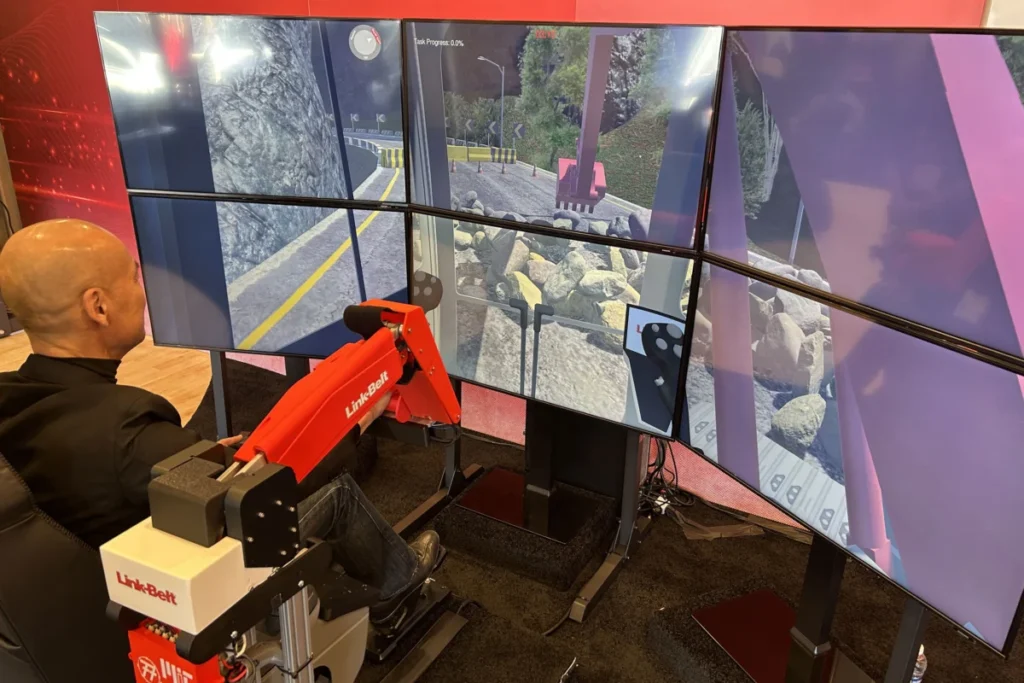
The WSI bypasses this cognitive hurdle by providing a physical, mimetic control. "Instead of having joysticks, you might have this miniature arm on the side, where the operator would place their own arm, kind of like an exoskeleton, which would allow them to operate the excavator in the cab," Krebs explains. This direct physical resemblance to the excavator’s working arm allows operators to simply "mime" the desired actions – scooping, digging, lifting – and the machine translates these natural human movements into corresponding excavator operations. The term "world-space" itself is central to this paradigm shift. "‘World-space’ refers to everything in the world that is outside of yourself, or in this case, outside of the excavator’s cab," Krebs elaborates. "Normally, operators have to build a mental map of how to manipulate things in the world-space. But now, we can just mime picking up rocks or dirt, and the computer will do that translation to the world-space for us." This fundamentally changes the interaction from a cognitive puzzle to an instinctive physical extension of the operator’s will.
Addressing a Global Challenge: The Imperative for Innovation
The development of the WSI is particularly timely, given the pressing issues facing the global construction and heavy machinery industries. A chronic shortage of skilled labor, coupled with an aging workforce, poses significant operational and economic challenges. In many developed nations, the average age of a construction worker is steadily rising, with many experienced operators nearing retirement. For instance, in Japan, a key motivator for Sumitomo Heavy Industries’ involvement, the population of heavy machinery operators is aging rapidly, creating an urgent need for efficient training solutions to replace departing talent. The United States construction industry alone anticipates needing hundreds of thousands of new workers annually to meet demand, a figure often hampered by the lengthy and costly training required for complex machinery.
Traditional training methods for heavy equipment operators are notoriously time-consuming and expensive. Novices typically learn by operating actual excavators on controlled driving courses, a process that consumes fuel, machine hours, and requires dedicated instructors and safe environments. The months, and often years, required to achieve proficiency in coordinating joystick actions with the excavator’s movements for complex tasks like precision digging, trenching, or material handling, represent a significant bottleneck. This prolonged training period contributes to higher operational costs, delayed project timelines, and can deter potential recruits from entering the field. Furthermore, the inherent dangers of operating heavy machinery in challenging environments — such as active construction zones, mines, or disaster areas — underscore the need for advanced safety protocols and remote operation capabilities. The WSI offers a compelling solution to these multifaceted problems by dramatically shortening the learning curve and enabling safer remote control.
A Partnership Forged in Necessity: The MIT-Sumitomo Collaboration
The genesis of the World-Space Interface lies in MIT’s long-standing expertise in human-robot interactions. Hermano Krebs’ group at MIT has dedicated years to understanding how humans control their limbs and how they can most intuitively interact with machines, often with a focus on physical rehabilitation. This deep foundational knowledge in biomechanics and intuitive control proved invaluable for developing an interface that felt natural to the human operator.
The collaboration with Sumitomo Heavy Industries commenced in 2018. Sumitomo, a global leader in industrial machinery, recognized the critical need to innovate excavator operator training, driven by the demographic shifts in Japan. They sought a faster, more efficient method to bring new operators up to speed, and Krebs’ team offered a unique perspective rooted in human-centric design. The initial discussions quickly converged on the idea that eliminating the need for abstract mental mapping could be the key to significantly shortening the training process. The concept of a mechanical arm that physically mimicked the excavator’s own movements emerged as the most promising avenue, leveraging the human brain’s natural ability for imitation and direct motor control. This strategic partnership combined MIT’s cutting-edge research in robotics and human-machine interfaces with Sumitomo’s deep industrial knowledge and market insights, creating a powerful synergy aimed at a common goal.
From Concept to Control: The Development Journey
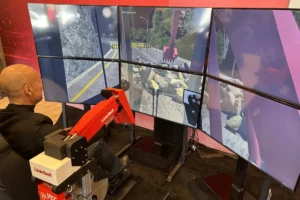
Over the subsequent years following the 2018 collaboration, the research teams at MIT and Sumitomo embarked on the intensive process of building and refining the World-Space Interface. This involved not only the engineering of the miniature mechanical arm itself but also the development of sophisticated software to seamlessly pair its movements with a virtual simulation of an excavator. The goal was to create a cohesive platform where the operator’s physical gestures were instantly and accurately translated into the virtual machine’s actions.
The mechanical arm was designed to be ergonomic and responsive, providing a comfortable and natural extension of the operator’s own arm. The accompanying software played a crucial role in interpreting these movements, filtering out extraneous data, and executing precise commands within the virtual environment. This combination of the physical arm and the virtual simulator constitutes the complete World-Space Interface, a novel training and control platform engineered to be accessible and intuitive from the very first interaction. The meticulous development process involved iterative design, extensive testing, and continuous refinement to ensure accuracy, reliability, and user-friendliness, culminating in a system that fundamentally redefines the interaction between human and heavy machinery.
Rigorous Validation: Proving the Interface’s Efficacy
To validate the effectiveness of the World-Space Interface, the research team conducted a series of rigorous training experiments. Volunteers, encompassing both expert excavator operators and complete novices, participated in a comparative study, using both the WSI and a more traditional, joystick-based excavator simulator. The experimental design meticulously mirrored a typical week-long excavator driving course, allowing for a direct comparison of learning curves and performance.
The researchers developed virtual simulations of 15 diverse and realistic excavation environments, reflecting the varied challenges operators face in real-world scenarios. These included detailed renderings of construction sites, highways, forest roads, riverbanks, mining areas, and both urban and rural settings. Within these environments, volunteers were tasked with performing a range of common excavation operations, such as scooping and dumping sand or gravel, digging and grading trenches, clearing debris from roads, removing tree branches from water edges, and breaking up rocks. Each day for seven days, participants spent one hour operating either the WSI or the joystick simulator, tackling tasks of progressively increasing difficulty.
The results of the study were stark and highly encouraging. When using the traditional joystick simulator, novices consistently performed worse than experienced operators at the outset, although their performance did show improvement over the training period. However, the World-Space Interface presented a revolutionary outcome: novices using the WSI performed just as proficiently as expert operators from their very first session. This remarkable finding underscores the WSI’s ability to eliminate the steep learning curve associated with conventional controls. "In this case, joysticks are a non-intuitive way to control and coordinate the machine," notes study co-author and MIT postdoc Joao Buzzatto. "This is the first interface that does not require me to command the excavator with joysticks." This immediate proficiency not only accelerates training but also democratizes access to operating complex machinery, potentially opening the field to a broader demographic.
Beyond the Simulator: Real-World Applications and Remote Operations
While the WSI’s immediate impact on training is undeniable, its potential applications extend far beyond the simulator. Krebs envisions the miniature arm integrated directly into an excavator cab, allowing operators to control the machine with unprecedented naturalness on-site. More significantly, the WSI offers a robust platform for advanced tele-operation. "If work has to be done in a difficult or unsafe environment, you could have an operator sitting off-site in a trailer and using this arm to remotely tele-operate the excavator," Krebs suggests.
This capability for remote operation has profound implications for safety and accessibility. Hazardous environments such as active mines, demolition sites, areas contaminated with toxic materials, or disaster zones (e.g., after earthquakes or floods) could be managed by operators working from a secure, climate-controlled location hundreds or thousands of miles away. This not only protects human lives but also allows for continuous operation in conditions that would otherwise be too dangerous or impractical for on-site personnel. For example, in mining, remote operation can mitigate risks from rockfalls or hazardous gases. In disaster relief, heavy machinery could be deployed more quickly and effectively without putting rescuers in immediate peril. The WSI’s intuitive nature makes this tele-operation far more effective than traditional joystick controls, where the lack of direct sensory feedback and the abstract control scheme can exacerbate the challenges of remote manipulation.
The Future of Heavy Machinery: Haptics and Beyond
The research team is not resting on its laurels. The next frontier in the WSI’s development involves integrating haptics, or the sense of touch and force feedback, into the physical arm. This enhancement would further immerse the operator in the experience, providing tactile confirmation of the excavator’s interactions with its environment. "Haptics would make this an even more intuitive system," says co-author and visiting engineer Solmon Jeong.
The idea is that as an operator uses the WSI arm to mime an action, such as scooping a pile of rocks, the arm would generate a corresponding force in response. This force feedback would simulate the resistance and weight an operator would feel if they were physically interacting with the material, confirming that the excavator is indeed picking up the rocks. Such haptic feedback could significantly improve precision, control, and the operator’s overall situational awareness, especially in complex tasks or low-visibility conditions. It would provide crucial sensory information that is currently lacking in most remote operation systems, bringing the "feel" of the machine directly to the operator’s fingertips. Beyond haptics, future iterations could explore integrating virtual reality (VR) or augmented reality (AR) visual overlays, further enhancing the operator’s perception of the remote environment and potentially allowing for even more complex and autonomous functions.
Industry Implications: A Paradigm Shift in Training and Operation
The introduction of the World-Space Interface represents a potential paradigm shift for the heavy construction and mining industries. Currently, major manufacturers like Caterpillar, Hyundai, and Komatsu are actively investing in virtual simulators to aid in operator training and to pave the way for remote control capabilities. However, a significant limitation of these existing simulators is their reliance on traditional joystick controllers, which, as demonstrated by the MIT research, still require considerable time and effort to master.
The WSI offers a distinct competitive advantage. By enabling novices to achieve expert-level performance from day one, it promises to drastically cut training times and associated costs. This could translate into significant economic benefits for construction companies, mining operations, and logistics firms globally. Reduced training periods mean quicker deployment of new operators, increased workforce availability, and enhanced project efficiency. Moreover, the enhanced safety offered by intuitive remote tele-operation could reduce accidents, lower insurance premiums, and foster a safer working environment for all.
Industry analysts suggest that such innovations could be particularly attractive to sectors facing severe labor shortages or operating in extremely hazardous conditions. The ability to recruit and rapidly train a new generation of operators, regardless of their prior experience with complex controls, could redefine recruitment strategies. Furthermore, the WSI could make heavy equipment operation more accessible to a broader range of individuals, potentially diversifying the workforce. As construction and industrial operations become increasingly digitized and automated, the WSI positions itself as a critical enabler for the next generation of smart, connected, and safely operated heavy machinery. If the team’s new arm-and-bucket controller were incorporated as a standard appendage in excavator cabs, or as the primary interface in tele-operational simulators, the researchers envision a future where even first-time operators can engage in productive work from day one, fundamentally altering the landscape of heavy equipment operation and training.
This transformative research, supported in part by Sumitomo Heavy Industries, not only highlights the power of cross-cultural and interdisciplinary collaboration but also underscores MIT’s continued leadership in human-robot interaction and its practical application to real-world industrial challenges. The World-Space Interface is poised to usher in a new era of intuitive, efficient, and safe heavy machinery operation.