The fundamental laws of thermodynamics, established during the height of the Industrial Revolution to optimize the efficiency of steam engines, are currently undergoing a profound transformation as they intersect with the realm of quantum physics. At the University of Basel in Switzerland, a team of researchers has developed a groundbreaking theoretical framework that successfully reconciles these two traditionally distinct branches of science. By focusing on the behavior of individual atoms and particles of light, the researchers have provided a consistent mathematical description of how microscopic systems convert energy into work, a discovery that holds significant implications for the development of future quantum technologies and high-precision measurement tools.
The Historical Divergence of Two Physical Worlds
To understand the magnitude of the research conducted at the University of Basel, one must first look at the divergent paths thermodynamics and quantum mechanics have taken over the last two centuries. Thermodynamics emerged in the 19th century as a macroscopic science. Figures such as Sadi Carnot, Rudolf Clausius, and Lord Kelvin sought to understand the flow of heat and the production of mechanical work in large-scale systems. Their work led to the formulation of the laws of thermodynamics, which dictate that energy cannot be created or destroyed, and that entropy—a measure of disorder—always increases in a closed system. These principles were designed for the "classical" world of pistons, boilers, and coal-fired engines.
In contrast, the early 20th century saw the birth of quantum mechanics, a field dedicated to the subatomic world where the rules of classical physics often fail. Pioneers like Max Planck, Albert Einstein, and Werner Heisenberg discovered that at the level of atoms and photons, energy is quantized, and particles exhibit wave-like behaviors. For decades, these two fields operated in largely separate spheres: thermodynamics governed the large, and quantum mechanics governed the small.
However, as modern technology has advanced toward the creation of nanomachines and quantum computers, the boundary between these fields has blurred. Scientists are now building "quantum machines"—devices composed of just a few atoms or photons that perform tasks like sensing, computing, and energy conversion. The challenge has been that the classical definitions of "heat" and "work" do not always translate clearly to systems where quantum fluctuations and entanglement are present.
The Basel Framework: Defining Work in the Quantum Realm
The research team, led by Professor Patrick Potts at the University of Basel’s Department of Physics, addressed a specific and persistent problem in the field: how to define energy exchange when a machine is so small that it is made of only a single atom and a few particles of light. Their findings, recently published in the prestigious journal Physical Review Letters, provide a mathematical bridge that remains valid across different scales of physical description.
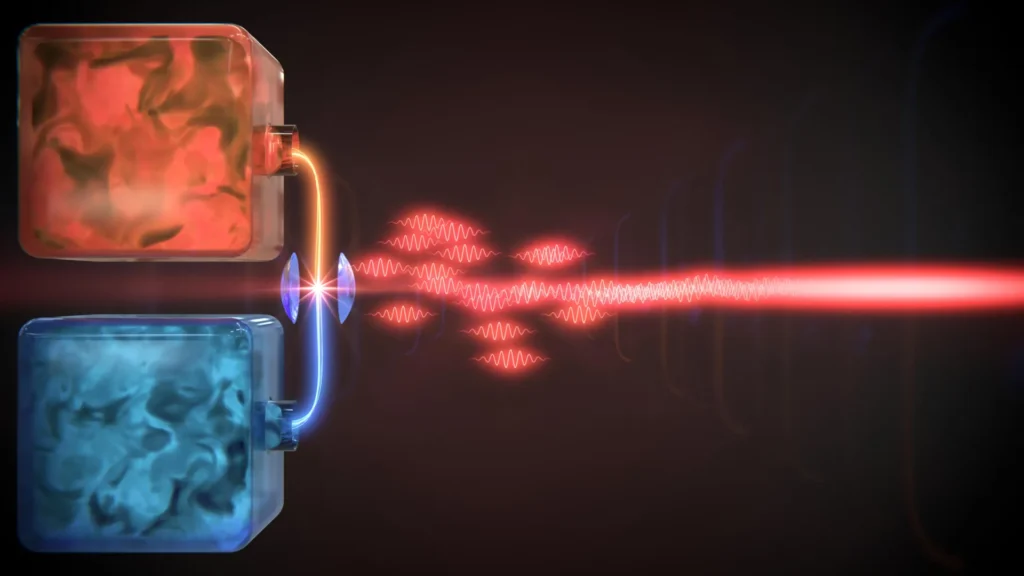
At the heart of their study is the concept of a "light engine." In this model, an atom is placed within an optical cavity—a small space between two highly reflective mirrors. A laser is used to "drive" the system, pumping photons into the cavity. The atom absorbs and emits these photons, creating a dynamic exchange of energy. Because the mirrors are not perfectly reflective, some light inevitably escapes into the surrounding environment.
Traditionally, any energy that escapes a system and is lost to the environment is classified as "heat." In classical thermodynamics, heat is considered "disordered" energy that cannot be used to perform useful work. However, Professor Potts and his colleagues, including lead author and postdoctoral researcher Marcelo Janovitch, argued that this traditional classification is too simplistic for quantum systems. They demonstrated that some of the energy carried by photons escaping the cavity is actually "coherent" or ordered enough to be utilized by another quantum system to perform work.
Navigating the Semi-Classical Limit
A critical aspect of the Basel study involves the "semi-classical limit." This is a theoretical boundary where one part of a system behaves according to quantum laws (such as the discrete energy levels of an atom), while another part can be accurately described using classical physics (such as light being treated as a continuous electromagnetic wave rather than individual photons).
"Treating the light classically makes it much easier to define which part of the energy can be used to perform work and which part is disordered heat," explained Janovitch. The difficulty for physicists has been ensuring that the math used for the fully quantum description matches the math used for the semi-classical description as the system grows or changes.
Prior to this study, the conventional approach often led to inconsistencies. If researchers counted all escaping light as heat, the transition from the quantum model to the classical model was mathematically "clunky" and failed to align. The Basel team’s new framework resolves this by correctly identifying the portion of emitted light that retains its "work" potential. When this distinction is made, the transition to the semi-classical limit becomes smooth and consistent, proving that their quantum thermodynamic description is robust.
Quantum Fluctuations as a Technological Resource
Beyond the theoretical alignment of heat and work, the researchers discovered that their framework provides a more accurate description of quantum fluctuations. In the macroscopic world, fluctuations are often seen as "noise" or interference—something to be minimized. In the quantum world, however, these fluctuations are intrinsic to the nature of matter and light.
The study found that under specific conditions, the "light engine" can actually reduce the fluctuations in the emitted light. This phenomenon is known as "squeezing" in quantum optics. When fluctuations are reduced or "squeezed" in one variable (like phase), they inevitably increase in another (like amplitude), but this trade-off can be harnessed for extreme precision.
This discovery has direct implications for quantum metrology—the science of ultra-precise measurement. By understanding how a quantum engine processes energy and heat, scientists can better control these fluctuations to create "squeezed states" of light. These states are essential for the next generation of sensors, including those used in gravitational wave detectors and atomic clocks, where even the slightest bit of thermal noise can obscure a signal.
Chronology of Development in Quantum Thermodynamics
The breakthrough at the University of Basel is the latest milestone in a timeline of evolving thought regarding the thermodynamics of small systems:
- 1824: Sadi Carnot publishes "Reflections on the Motive Power of Fire," laying the groundwork for the Second Law of Thermodynamics.
- 1900-1925: The development of quantum mechanics introduces the idea of discrete energy levels and wave-particle duality.
- 1959: Scovil and Schulz-DuBois publish a paper suggesting that masers (the microwave predecessor to lasers) can be viewed as heat engines, marking the birth of quantum thermodynamics.
- 2010s: Experimentalists begin building the first single-atom heat engines in laboratory settings using ion traps and optical cavities.
- 2020-2023: Professor Patrick Potts’ group at Basel begins publishing series of papers challenging the "all-loss-is-heat" paradigm, culminating in the current 2024 framework that integrates the semi-classical limit.
Broader Implications and Future Research
The implications of this research extend far beyond the laboratory. As the global tech industry pours billions of dollars into quantum computing, the efficiency of these systems becomes a paramount concern. Quantum computers require extremely low temperatures to operate because heat destroys the delicate "superposition" and "entanglement" of quantum bits (qubits).
By providing a clearer definition of what constitutes heat versus work, the Basel framework could allow engineers to design more efficient cooling systems for quantum processors. Furthermore, it suggests that "waste" energy from one part of a quantum circuit might be harvested and "recycled" to perform work in another part, rather than simply being vented as heat.
While the current study is primarily theoretical and mathematical, it provides the "blueprint" that experimentalists need to test these ideas in real-world setups. The next phase of research will likely involve physical experiments to measure the exact amount of "useful work" that can be extracted from the light escaping an optical cavity.
Conclusion: A New Era for Microscopic Machines
The work of Janovitch, Potts, and their colleagues represents a significant step toward a unified theory of energy. By demonstrating that the boundary between heat and work is not a fixed line but a fluid transition dependent on the scale of the system, they have opened new doors for both fundamental physics and practical engineering.
In the 19th century, the mastery of thermodynamics allowed humanity to power cities and cross oceans. In the 21st century, the mastery of quantum thermodynamics may allow us to measure the universe with unprecedented precision and build computers with capabilities that are currently unimaginable. The University of Basel’s framework ensures that as we move into this quantum future, we carry with us a consistent and reliable understanding of the most fundamental force in nature: the flow of energy.