The age-old adage, "What you see is what you get," a cornerstone principle for software engineers striving for WYSIWYG (What You See Is What You Get) interfaces, is facing a significant challenge in the realm of generative artificial intelligence and 3D printing. While AI systems can conjure visually stunning 3D models from textual or image prompts, the resulting objects often falter in their intended functionality. Imagine generating a 3D-printed mug that, despite its aesthetically pleasing design, leaks coffee. This disconnect arises because current AI models excel at understanding the appearance of an object but lack the intrinsic comprehension of its functionality. This limitation often leads to impractical designs that undermine the very purpose of the item, and even when users identify these flaws, the complex nature of AI models makes them difficult to edit, particularly for those without extensive 3D design expertise.
However, a groundbreaking new approach, dubbed InstructMesh, is poised to revolutionize this landscape. Developed by a collaborative effort between researchers at MIT’s Computer Science and Artificial Intelligence Laboratory (CSAIL), Google, and Northeastern University, InstructMesh offers a significantly more intuitive and effective way to design and 3D print functional objects. This innovative design software empowers users to generate complex 3D designs – from everyday household items and accessories to intricate robots – that are not only visually appealing but also practical for real-world use.
The Genesis of InstructMesh: Addressing the Functional Deficit in AI-Generated Designs
The core of the problem InstructMesh addresses lies in the fundamental difference between visual representation and functional understanding. Generative AI models, trained on vast datasets of images and 3D models, can learn to associate text prompts with specific visual characteristics. For instance, a prompt like "a red sports car" will likely result in a model that accurately depicts the shape, color, and general form of a sports car. However, the AI does not inherently understand the physics of combustion engines, aerodynamics, or the structural integrity required for a vehicle to actually drive.
This same principle applies to 3D printing. When a user requests a 3D-printed mug, an AI might generate a visually accurate representation of a mug, complete with a handle and a rim. Yet, without understanding fluid dynamics or material stress, it might fail to create a watertight base or a handle that can bear the weight of hot liquid. This functional deficit has been a significant barrier to the widespread adoption of AI for practical 3D object creation.
Prior to InstructMesh, attempting to rectify these functional errors in AI-generated 3D models was a formidable task. Users would often need to revert to traditional 3D modeling software, requiring specialized skills and a deep understanding of CAD (Computer-Aided Design) principles. This steep learning curve alienated many potential users who were enthusiastic about the creative possibilities of AI but lacked the technical proficiency to bring their designs to fruition.
InstructMesh: A Symbiotic Fusion of Textual Understanding and 3D Modeling Prowess
InstructMesh elegantly bridges this gap by integrating the generative capabilities of Microsoft’s TRELLIS system with the advanced reasoning power of OpenAI’s GPT-4 large language model (LLM). TRELLIS is adept at translating textual and image prompts into sophisticated 3D models, having been trained on an extensive repository of existing 3D designs. GPT-4, the LLM that powers ChatGPT, brings unparalleled natural language understanding and reasoning abilities to the table. This symbiotic fusion of visual generation and textual comprehension is the key to InstructMesh’s success.
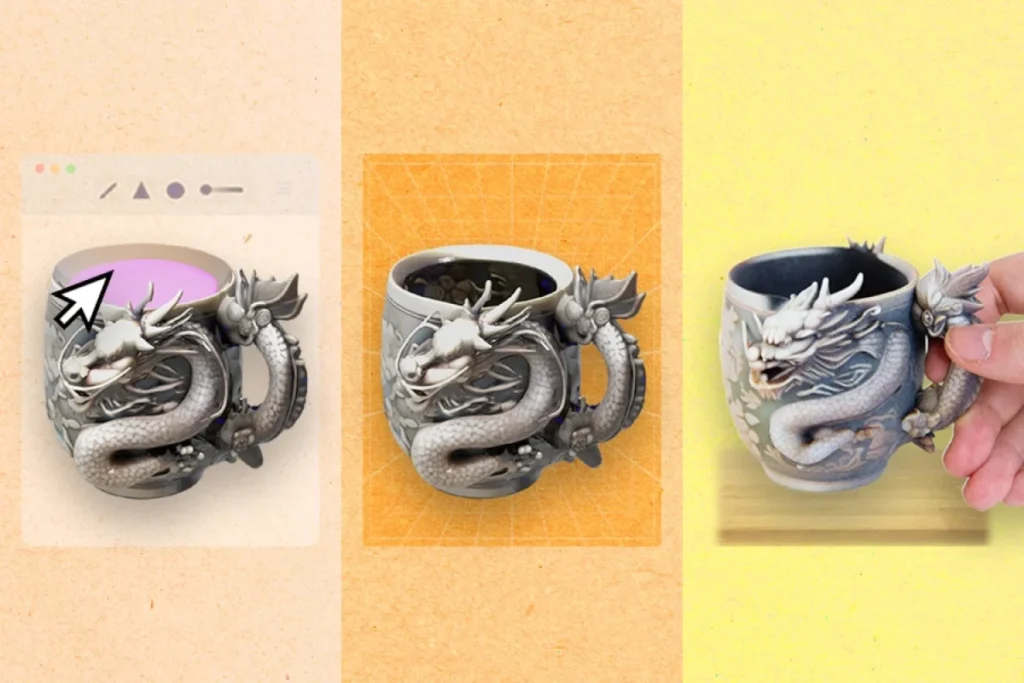
The process begins with a user providing a prompt, much like interacting with any other generative AI. For example, a user might request "a pair of glasses with butterfly wings." InstructMesh, leveraging TRELLIS, would generate a 3D blueprint for these glasses. Crucially, the system then allows users to interactively refine this blueprint. Users can highlight specific components of the generated design – say, the butterfly wings – and provide further natural language instructions for modifications. This could involve requests like "make the wings larger," "change the color of the wings to blue," or "ensure the wings do not obstruct the wearer’s vision."
"We wanted to bring together the talents of 3D generators and the reasoning skills of LLMs in an interactive space to make objects that people actually want," explains Faraz Faruqi SM ’22, PhD ’26, the lead author of the paper presenting the project. Faruqi, a graduate of the Department of Electrical Engineering and Computer Science and a recent CSAIL affiliate, elaborates, "Language models are great at text and images, while TRELLIS’s talent lies in its ability to create 3D models, since it’s seen so many." This combination allows InstructMesh to not only understand what an object should look like but also to interpret user feedback in a way that leads to functional improvements.
Demonstrating Creative Potential: From Dragon-Embraced Mugs to Functional Robots
The creative potential of InstructMesh is vividly illustrated by the examples generated by the CSAIL researchers. They transformed ordinary items into extraordinary creations:
- A Mug Embraced by a Dragon: A mug where the handle is ingeniously designed as the tail of a coiled dragon, showcasing a blend of fantasy and utility.
- A Shell-Inspired Whistle: A functional whistle fabricated to resemble a shiny blue seashell, demonstrating an ability to imbue everyday objects with naturalistic aesthetics.
- Butterfly-Winged Eyeglasses: A pair of spectacles adorned with delicate butterfly wings positioned just above the lenses, a testament to the system’s capacity for whimsical and fashionable designs.
- An Octopus Drink Dispenser: A more complex and functional design, this octopus-shaped dispenser features liquid flowing from each tentacle, enabling simultaneous distribution of beverages into multiple cups.
Beyond these creative applications, InstructMesh has demonstrated its utility in more practical and even medically relevant domains. The researchers successfully used the tool to fabricate a personalized knee brace designed to mimic the appearance of denim, allowing it to seamlessly match a patient’s jeans. This showcases the system’s ability to cater to individual aesthetic preferences in functional prosthetics.
Furthermore, InstructMesh is capable of creating sophisticated enclosures for robots. The researchers demonstrated this by fabricating a "bristle bot" that resembles a colorful shrimp. This robot, with a hidden motor, can traverse surfaces like a wind-up toy, highlighting the system’s aptitude for producing functional electromechanical components.
Rigorous Evaluation: Novices Navigating Design Flaws with Intuition
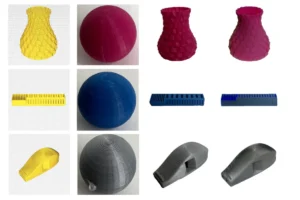
A critical aspect of InstructMesh’s development involved assessing its usability and effectiveness for individuals without prior 3D modeling experience. To this end, the research team leveraged TRELLIS to recreate popular 3D models found on Thingiverse, a vast online repository of millions of 3D printable designs. This initial phase revealed a significant finding: nearly 80 percent of the AI-generated models exhibited structural flaws that would impede their functionality or printability.
The subsequent step involved a user study where individuals with no prior 3D modeling background were tasked with identifying and rectifying these design flaws within the InstructMesh interface. The results were remarkably positive. These novices were able to detect and correct errors in approximately 90 percent of the models, as validated by expert review. This underscores a key insight: while technical expertise is valuable, human intuition and the ability to articulate desired changes through natural language can be equally powerful in the design process.
InstructMesh’s architecture is designed to "scaffold" the actual modeling process, a task that previously demanded domain expertise in specialized 3D modeling tools. "With manipulation happening in the latent space of the generative model, InstructMesh supports natural language description of issues, and creates interpretive changes in the geometry for the user to evaluate and approve," Faruqi explains. This means users can describe problems in plain English, and the AI translates these descriptions into concrete geometric modifications that can be reviewed and approved.
Participants in the study found InstructMesh easy to use, enabling them to create items such as phone stands and vases. They reported that the system facilitated the expression of a wide array of ideas, and the inclusion of intuitive controls, such as sliders, provided the precision needed for specific adjustments, like scaling or extruding particular parts of a model. "The users got what they prompted for and easily tweaked designs where needed," Faruqi noted. "What they saw is what they got, and the items worked as advertised, so to speak." This successful outcome directly addresses the initial "what you see is what you get" challenge, ensuring that the visual representation aligns with functional reality.
Future Trajectories: Augmented Reality Integration and Physics Simulation
The vision for InstructMesh extends far beyond its current capabilities. Faruqi, now working at Google, is exploring the integration of InstructMesh into augmented reality (AR) platforms. The envisioned scenario involves users interacting with their surroundings, prompting the system by describing their needs within the context of their environment. For instance, one could prompt the system to create a phone case that perfectly matches their wallet, and InstructMesh could then rapidly generate and potentially even 3D print it on demand. This AR integration promises to make personalized object creation even more seamless and context-aware.
Furthermore, the researchers are looking to incorporate physics simulations into InstructMesh. This would allow users to predict how their designs would behave under specific real-world conditions. For example, the system could simulate whether a bowl would break if dropped or determine the optimal materials for a particular application. The integration of advanced physics engines will further enhance the functional reliability of AI-generated designs. The ongoing refinement of TRELLIS to TRELLIS.2 also promises the ability to adjust even finer details within 3D models, leading to greater precision and sophistication in the generated objects.
A Collaborative Endeavor and its Academic Roots
The development of InstructMesh is the result of a significant collaborative effort involving leading researchers in artificial intelligence and computer science. The paper presenting the project features a distinguished list of authors, underscoring the interdisciplinary nature of this innovation.
Stefanie Mueller, an associate professor of Electrical Engineering and Computer Science (EECS) and Mechanical Engineering at MIT and a member of CSAIL, served as a senior author on the paper. Faruqi and Mueller collaborated with Google researchers Ahmed Katary ’23, Fabian Manhardt, Vrushank Phadnis MEng ’13, PhD ’20, Ruofei Du, and Federico Tombari. Additional contributions came from Northeastern University Assistant Professor Megan Hofmann and several CSAIL colleagues, including Demircan Tas SM ’24 and SMArchS ’24 (a PhD student in EECS and Architecture), former visiting researcher Theresa Hradilak, Ning Zhang ’25 (a graduate student in EECS), postdoc Jiaji Li, and Martin Nisser SM ’19, PhD ’24.
The research received support from Google and the MIT-HPI Collaborative Research Program, highlighting the significant investment and institutional backing behind this ambitious project. The team is scheduled to present their findings at the prestigious ACM Symposium on User Interface Software and Technology in November, a testament to the academic and technological significance of their work.
The implications of InstructMesh are far-reaching. By democratizing the process of functional 3D design, it has the potential to empower individuals, small businesses, and even researchers to create bespoke objects tailored to their specific needs. This could lead to a surge in personalized manufacturing, innovative product development, and a more intuitive human-computer interaction paradigm for physical object creation. The ability to seamlessly translate imaginative concepts into tangible, functional realities marks a significant leap forward in the convergence of artificial intelligence and the physical world.