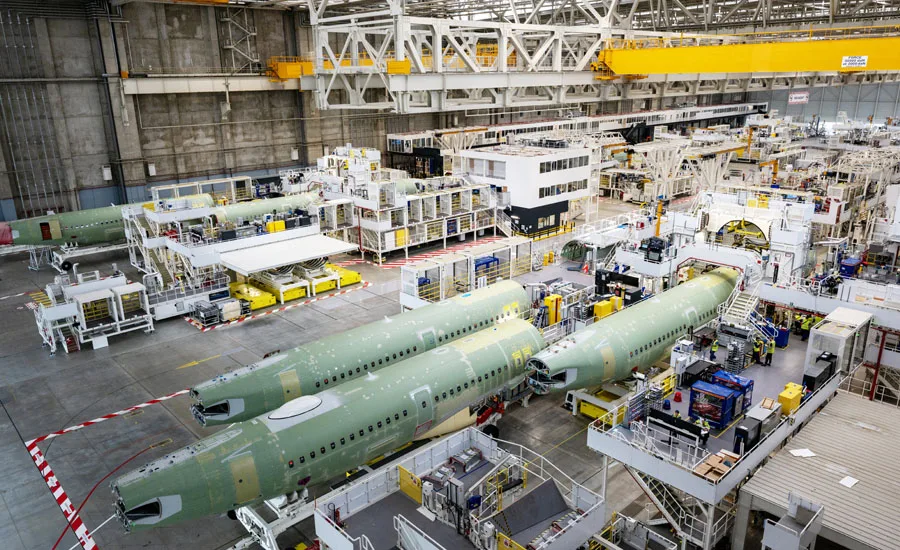
Tianjin, China – Airbus has officially marked a pivotal moment in its global expansion and production strategy with the delivery of the first A320 jet produced on its newly established assembly line in Tianjin. This landmark aircraft was handed over to China Eastern Airlines, underscoring the European aerospace giant’s deepening commitment to the world’s second-largest and most dynamic aviation market. The event not only signifies a significant step in Airbus’s efforts to localize production closer to its key customers but also contributes substantially to its ambitious global target of ramping up A320 family production.
The newly commissioned final assembly line (FAL) in Tianjin, which commenced operations following its inauguration in October 2025, represents Airbus’s second such facility in the bustling Chinese port city and its tenth worldwide. This strategic expansion complements Airbus’s existing global manufacturing footprint, which includes four assembly lines in Hamburg, Germany; two in Toulouse, France; and two in Mobile, Alabama, in the United States. The inauguration of this new line highlights Airbus’s proactive approach to meeting escalating global demand for its best-selling single-aisle aircraft family, while specifically strengthening its industrial presence in Asia.
A Strategic Expansion in the Heart of Asia
The decision to establish a second A320 family final assembly line in Tianjin is a testament to China’s undeniable strategic importance in the global aviation industry. The original Airbus Final Assembly Line Asia (FALA), also located in Tianjin, was established in 2008 and has since played a crucial role in delivering A320 family aircraft to Chinese and Asian customers. The success and efficiency demonstrated by this initial facility provided a robust foundation for the latest expansion. The new line is designed to incorporate the latest manufacturing technologies and lean production principles, aimed at enhancing efficiency, reducing lead times, and ensuring the highest quality standards for aircraft destined for a rapidly expanding market.
Locating these facilities in Tianjin offers several distinct advantages. The city boasts a robust industrial base, a skilled workforce, and excellent logistical connections, including a major port, which facilitates the transport of large aircraft components from Europe. This proximity to customers in Asia reduces delivery times and associated costs, while also fostering stronger relationships with local airlines and supply chain partners. The investment in a second line also reflects Airbus’s long-term vision for China, moving beyond simply selling aircraft to becoming an integral part of the country’s advanced manufacturing ecosystem. This strategic localization not only addresses logistical efficiencies but also aligns with China’s broader industrial policies, which encourage foreign companies to invest in local production and technology transfer.
Bolstering Global Production Targets
This delivery from the new Tianjin line comes as Airbus intensifies its efforts to accelerate A320 family production globally. The aerospace giant is targeting an aggressive production rate of 75 aircraft per month across all its A320 family final assembly lines. Achieving this rate is critical for Airbus to clear its substantial backlog, which currently stands at several years’ worth of production, and to meet the burgeoning demand for single-aisle aircraft worldwide.
The A320 family, encompassing the A319, A320, and A321 variants, particularly the fuel-efficient A320neo and A321neo, remains the backbone of many airlines’ fleets globally. Its versatility, operational efficiency, and passenger comfort make it a preferred choice for short-to-medium haul routes. The new Tianjin line is therefore an indispensable component in this global production ramp-up, adding vital capacity and flexibility to Airbus’s manufacturing network. It allows for a more distributed production system, potentially mitigating risks associated with single-point dependencies and enhancing overall supply chain resilience. The other global facilities in Hamburg, Toulouse, and Mobile are also undergoing continuous optimization and expansion to contribute to this ambitious target, integrating advanced automation and digital manufacturing processes to streamline assembly operations. The deployment of robotics for tasks like aircraft seat installation, as hinted in broader industry discussions, reflects Airbus’s commitment to leveraging cutting-edge technology to enhance precision and speed in its production processes.
China’s Unprecedented Aviation Demand
The strategic importance of the new Tianjin FAL is underscored by the immense growth potential of the Chinese aviation market. Forecasts indicate that China is projected to require a staggering 8,830 new passenger aircraft over the next two decades, from 2026 through 2045. This figure alone accounts for more than 20 percent of the projected global demand for 42,060 new aircraft over the same period, firmly establishing China as the single largest growth market for commercial aviation.
Several factors fuel this unprecedented demand. Rapid urbanization, the expansion of a burgeoning middle class, and increasing disposable incomes are driving a significant rise in both domestic and international air travel. The Chinese government’s extensive investment in aviation infrastructure, including the construction of new airports and the expansion of existing ones, further supports this growth trajectory. Furthermore, China’s "dual circulation" economic strategy emphasizes strengthening domestic demand and supply chains, which naturally boosts internal air travel. While domestic travel has largely recovered and even surpassed pre-pandemic levels, international travel is also steadily rebounding, creating a renewed need for fleet modernization and expansion among Chinese carriers.
This robust demand also presents a complex competitive landscape. While Airbus and its American rival Boeing have historically dominated the Chinese market, the emergence of the domestically produced COMAC C919 signifies China’s ambition to become a major player in aircraft manufacturing. The C919, a direct competitor to the A320 and Boeing 737 families, has already entered commercial service with Chinese airlines, signaling a long-term shift towards greater self-reliance in the aviation sector. Against this backdrop, Airbus’s deepened industrial presence in China, through facilities like the new Tianjin FAL, is crucial for maintaining its market share and competitive edge by demonstrating a strong commitment to local collaboration and service.
A Decades-Long Partnership: Airbus and China Eastern
The delivery of the inaugural A320 from the new Tianjin line to China Eastern Airlines highlights a long-standing and mutually beneficial relationship between the European manufacturer and one of China’s largest carriers. This partnership dates back to 1985 when China Eastern Airlines, then known as China Eastern Aviation, took delivery of China’s first Airbus aircraft, an A310. This historical milestone laid the groundwork for decades of collaboration and trust.
Today, China Eastern Airlines operates the largest Airbus fleet among airlines on the Chinese mainland, a testament to the reliability and performance of Airbus aircraft in their demanding operational environment. As of the end of August, China Eastern’s impressive fleet comprises 393 A320 family aircraft, 56 A330 wide-body jets, and 20 A350-900 long-range aircraft. The A320 family aircraft form the backbone of China Eastern’s extensive domestic and regional network, while the A330s and A350s are crucial for its growing international routes. The continued preference for Airbus aircraft by China Eastern underscores the successful integration of these planes into their operational strategies, contributing significantly to their capacity expansion, route development, and overall fleet modernization goals. This delivery further strengthens the bond, ensuring China Eastern remains at the forefront of adopting the latest and most efficient aircraft technologies.
Voices from the Industry
While specific quotes were not provided in the original brief, it is highly probable that this momentous occasion was met with enthusiastic statements from all involved parties. Airbus executives would undoubtedly emphasize the company’s long-term strategic commitment to China, highlighting the new FAL as a symbol of trust, partnership, and a shared vision for the future of aviation. "This delivery from our new Tianjin line is more than just an aircraft; it represents a new chapter in our enduring partnership with China and its vibrant aviation sector," an Airbus representative might state. "It reinforces our strategy to produce closer to our customers, ensuring timely deliveries and supporting the region’s dynamic growth."
China Eastern Airlines, for its part, would likely express satisfaction with the acquisition and reaffirm its confidence in Airbus aircraft. "The A320 family continues to be a cornerstone of our fleet modernization and expansion strategy," a China Eastern spokesperson could remark. "Receiving this aircraft, built right here in China, symbolizes the strength of our collaboration with Airbus and our commitment to providing passengers with the most modern and efficient travel experience."
Local government officials in Tianjin would almost certainly laud the investment as a significant boost to the region’s high-tech manufacturing capabilities, job creation, and economic development. "Tianjin is proud to host such a significant expansion by Airbus, a global leader in aerospace," a municipal official might comment. "This facility not only creates skilled jobs but also strengthens Tianjin’s position as a hub for advanced manufacturing and international industrial cooperation."
Industry analysts would view this development as a shrewd strategic move by Airbus. "This expansion solidifies Airbus’s leading position in the crucial Chinese market," noted a prominent aviation analyst. "It provides them with enhanced capacity, reduces logistical complexities, and offers a strong counter to emerging domestic competition, while simultaneously de-risking their global production system."
Broader Implications for Global Aerospace
The inauguration and initial delivery from the new Tianjin FAL carry significant broader implications for the global aerospace industry. For Airbus, it represents a pivotal step in its ongoing strategy to globalize its production footprint, moving beyond its traditional European strongholds. This decentralization helps to mitigate geopolitical risks, reduce currency fluctuations impact, and allows for greater responsiveness to regional market demands. It also positions Airbus more favorably in an era where global supply chains are increasingly scrutinized for resilience and efficiency.
For China, the presence of advanced manufacturing facilities like the Airbus FAL contributes to the country’s broader industrial upgrade and technological advancement goals. It fosters local expertise in aerospace manufacturing, creates high-value employment, and potentially encourages the growth of a local aerospace supply chain. While assembly lines do not encompass full aircraft manufacturing, they involve sophisticated processes, quality control, and logistics management that contribute significantly to a nation’s industrial capability.
Furthermore, this move by Airbus underscores the enduring importance of international collaboration in the highly capital-intensive and technologically complex aerospace sector. Despite geopolitical tensions, the commercial imperative of meeting global aviation demand often transcends political boundaries, fostering partnerships that drive innovation and economic growth. The successful operation of multiple Airbus FALs across continents exemplifies a globalized industrial model that is likely to be replicated and refined by other major manufacturers in the years to come, as they seek to serve diverse and rapidly expanding markets more effectively. The Tianjin expansion is not merely about increasing production numbers; it is about strategically positioning Airbus for sustained leadership in the most critical growth regions for decades to come, ensuring the skies remain accessible and efficient for billions of travelers worldwide.