The world of haute horlogerie often celebrates brands that meticulously cultivate a singular, recognizable identity. Yet, H. Moser & Cie. has carved a unique niche precisely by embracing the antithesis of traditional branding, positioning itself as the quintessential “unbrand” in the luxury watchmaking landscape. This strategy, characterized by bold innovation, unexpected collaborations, and a healthy dose of irreverence, has allowed the Schaffhausen-based manufacture to capture attention and build a fervent following, even as it deliberately eschews conventional marketing paradigms. The recent debut of the H. Moser & Cie. Pump watch at Watches & Wonders 2026, a significant step for the independent brand from its traditional showcase at the Carré des Horlogers to a more prominent position within the main Palexpo halls, underscores this evolving narrative of disruption and sophisticated playfulness.
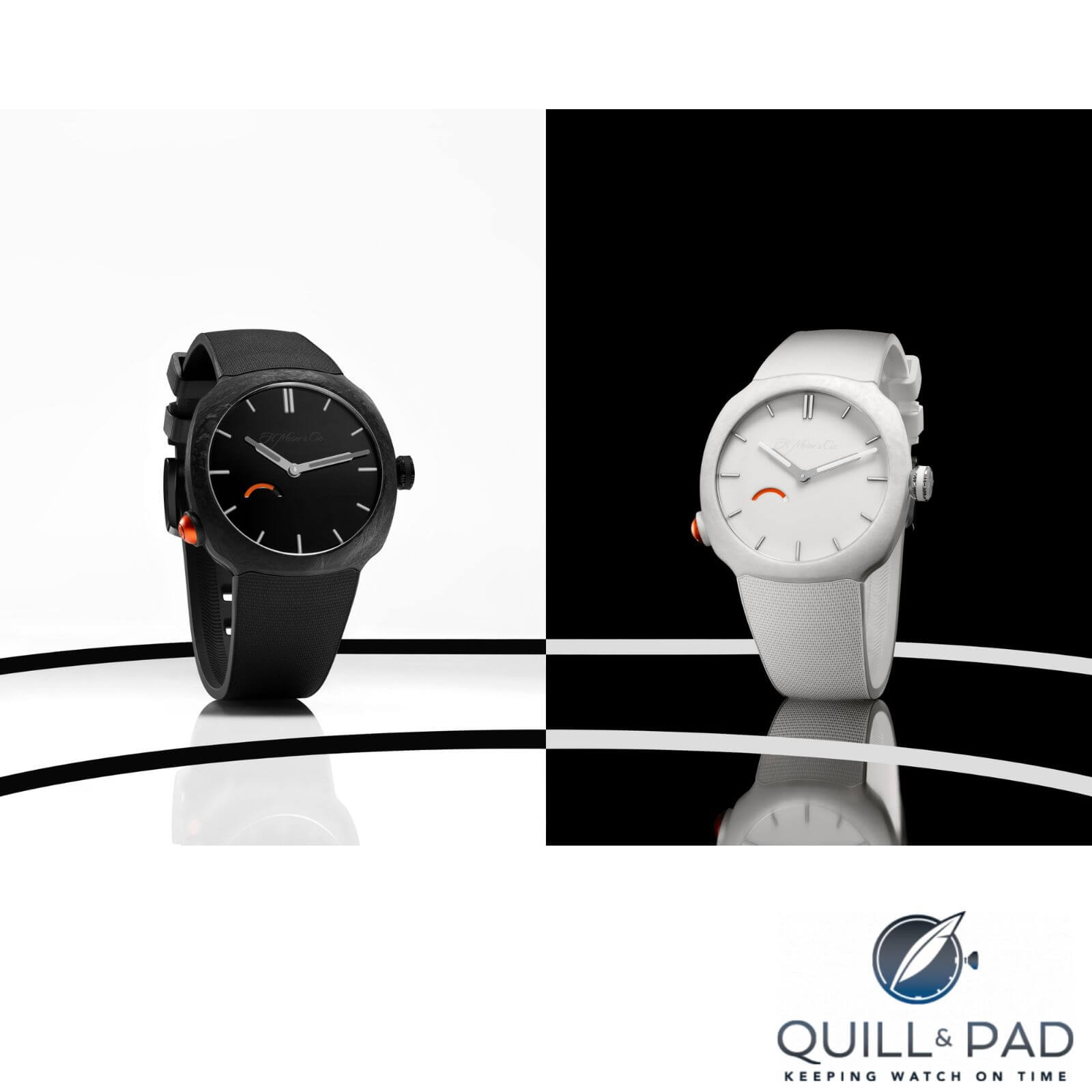
The term “maverick,” often used to describe individuals or entities that refuse to conform, finds a fitting parallel in H. Moser & Cie.’s operational philosophy. Originating from husbandry, where it denotes an unbranded stray calf, the concept translates in the corporate world to an organization that charts its own course, unburdened by established norms. For H. Moser & Cie., this translates into a deliberate strategy of avoiding overt branding, allowing its exceptional timepieces and audacious concepts to speak for themselves. This approach was vividly on display at Watches & Wonders 2026, where the brand’s booth, designed with the airy aesthetic of an art gallery, drew considerable attention. Amidst the bustling trade fair, two distinct iterations of the new Pump watch – one in stark white, the other in deep black – served as magnetic focal points, showcasing a design that is both strikingly modern and playfully eccentric.
The Pump watch itself is an embodiment of Moser’s ethos. Immediately recognizable as a member of the esteemed Streamliner family due to its cushion-shaped case and flowing, lug-less silhouette, it eschews the commonplace for the extraordinary. This collection has become a canvas for the company’s most distinctive releases, where the oft-repeated mantra of "tradition and innovation" is not merely a slogan but a lived reality. Working in concert with its sister brand, Hautlence, H. Moser & Cie. consistently produces timepieces that surprise and delight, all while resting on a foundation of robust watchmaking prowess.
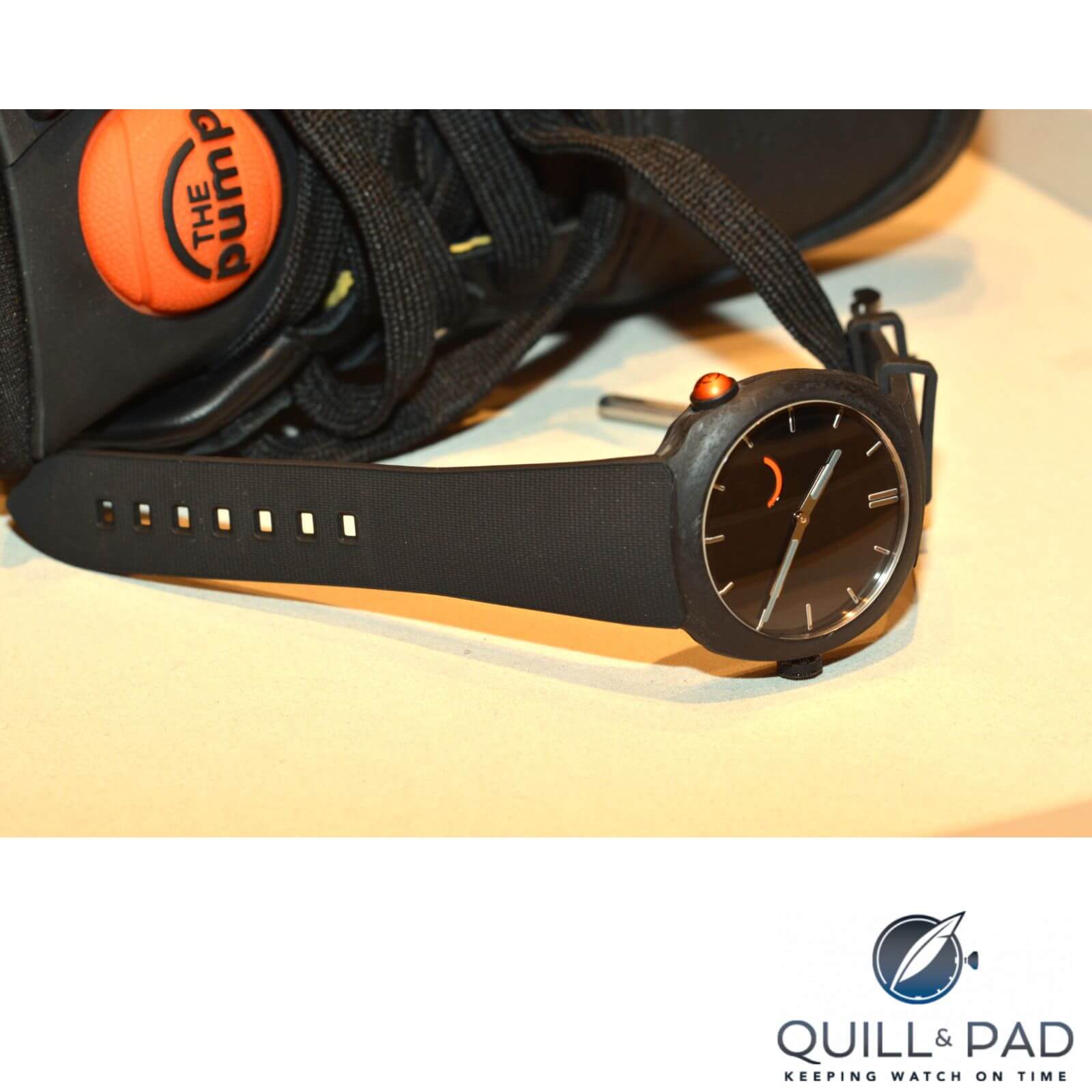
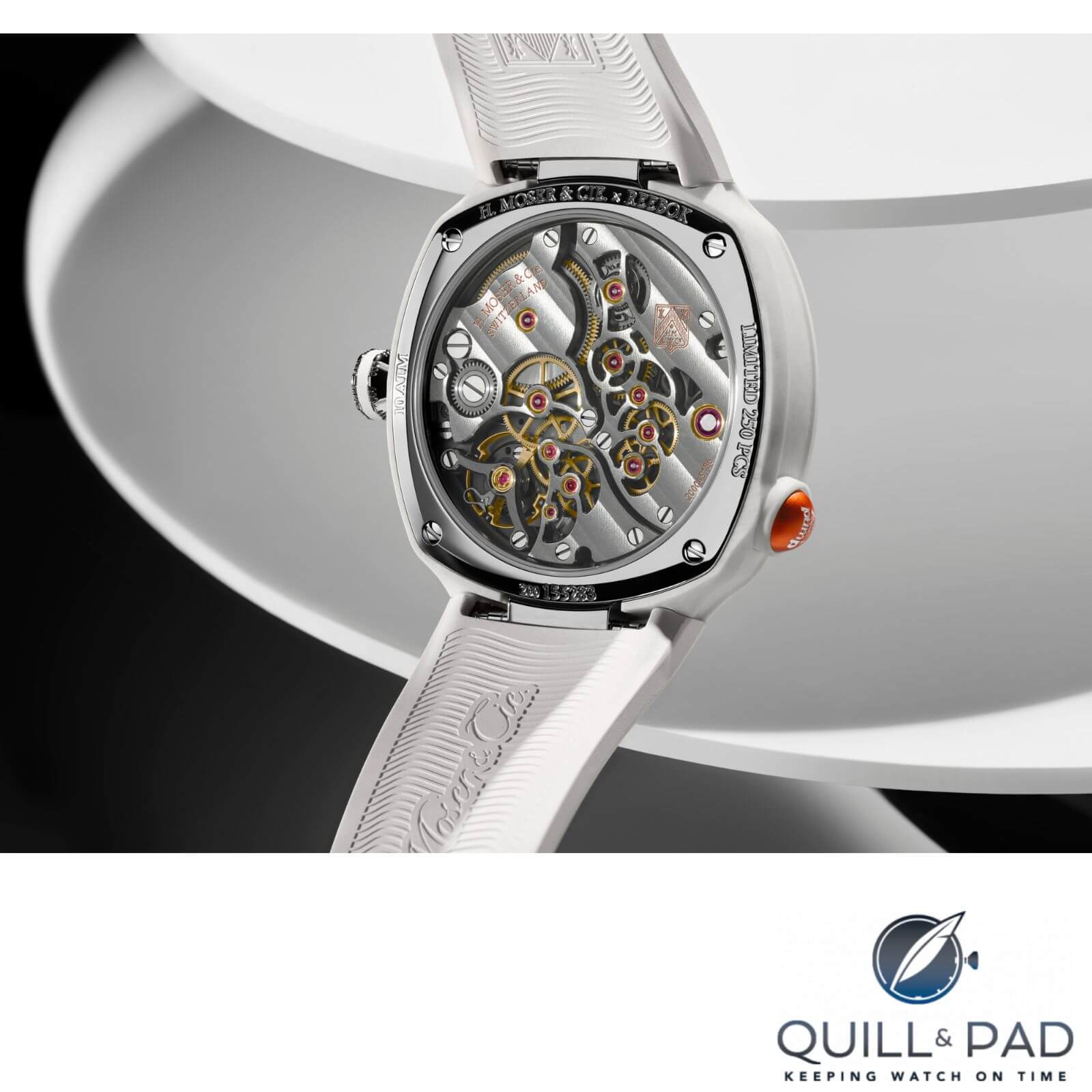
A key component of Moser’s strategy to generate buzz and differentiate itself has been through bold collaborations and unexpected inspirations. The Pump watch is a prime example of this, drawing inspiration from a most unlikely source: the humble sneaker. Specifically, Moser ingeniously borrowed a celebrated feature from Reebok’s 1989 iconic basketball shoe – the pump mechanism. This innovative footwear allowed wearers to inflate an internal air chamber for a customized fit via a distinctive orange button. Moser’s watch masterfully replicates this gesture with an anodized aluminum pusher, strategically placed at the 8 o’clock position. This pusher offers an alternative method for fully winding the hand-wound HMC 103 manufacture caliber, complementing the traditional crown at 3 o’clock. A subtle slit on the dial, positioned nearby, serves as a power reserve indicator, a nod to the functional elegance that Moser consistently delivers.
Beyond its playful exterior, the Pump watch is a testament to H. Moser & Cie.’s technical acumen. The integration of the pump mechanism into the hand-wound HMC 103 caliber required meticulous engineering. Furthermore, the case is crafted from forged carbon fiber, a material prized for its lightness and resilience, yet rarely employed in watchmaking. Initially released in limited editions of 250 pieces each for both the white and black variants, the potential for color variations in the forged carbon fiber case suggests future iterations that could further expand the Pump’s appeal.
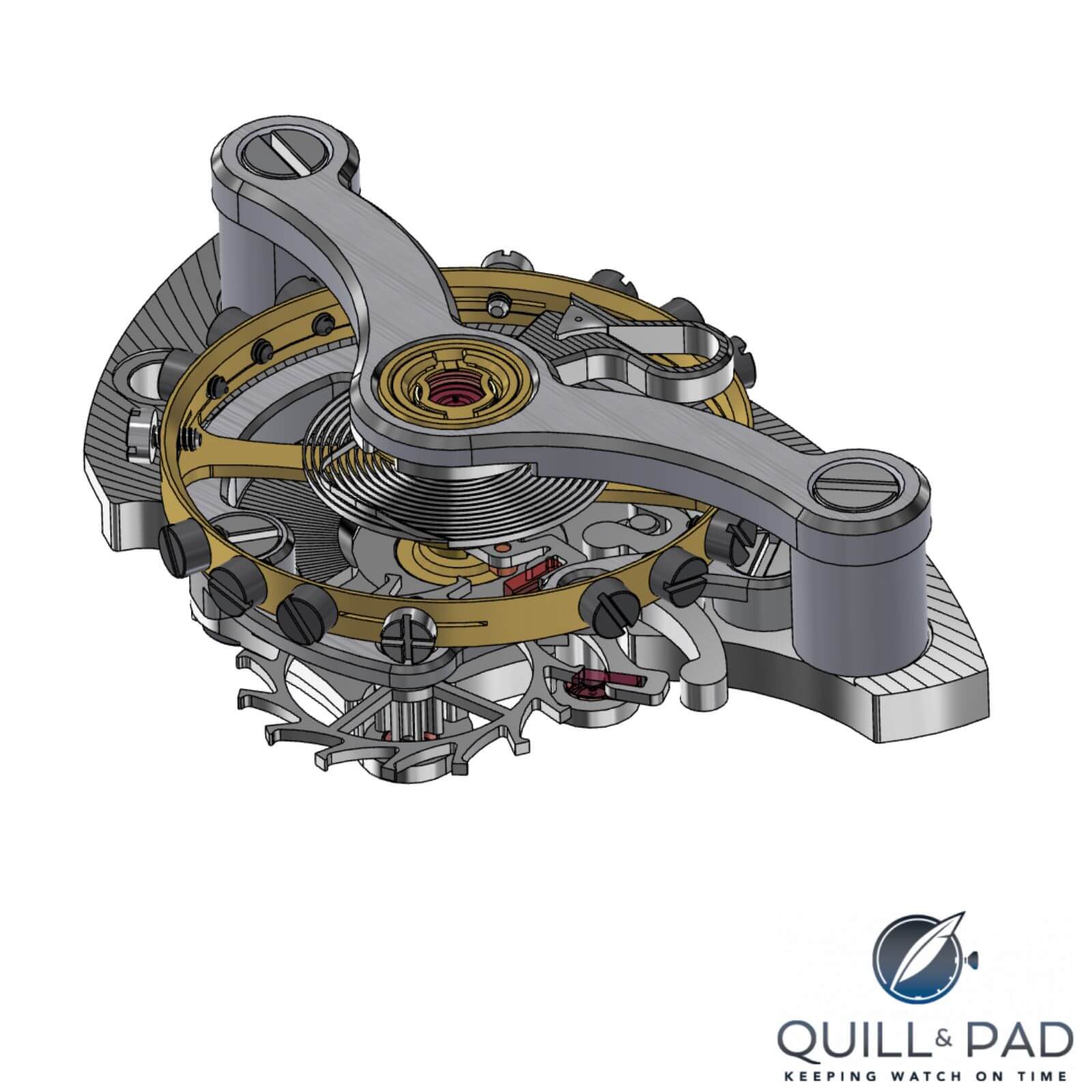
The trajectory of H. Moser & Cie. as a purveyor of surprising timepieces began in earnest following its acquisition by MELB Holding in 2012. This investment vehicle, steered by brothers Edouard and Bertrand Meylan, with guidance from their father, Georges-Henri Meylan, a seasoned figure in the watch industry and former CEO of Audemars Piguet, injected a new dynamism into the brand. Prior to this transition, H. Moser & Cie. was known for its classic timepieces, distinguished by their signature fumé dials in muted earth tones. While these watches exuded traditional elegance, the horological underpinnings were already formidable. The brand’s historical strength lay in its innovative balance wheel, designed by Andreas Strehler, which featured two hairsprings oscillating in opposite directions to enhance chronometric accuracy. The hairsprings themselves were produced by Precision Engineering, a company that became part of the Moser group. Adding to this technical prowess, the balance, pallet lever, and escape wheel were housed within a removable module, simplifying servicing and replacement procedures without requiring a complete disassembly of the caliber.
The new ownership recognized the need to redefine the brand’s market position, a task that entailed considerable risk and significant investment. Nicholas Hofmann, H. Moser & Cie.’s International Sales Director, articulated this strategic shift in an interview: "We needed to discontinue some things and examine what could be improved. I think that was one of the biggest successes: not following in the footsteps of an existing brand, but truly carving out our own territory, our own segment in the market." This commitment to forging a distinct identity has led Moser to embrace a dual approach: maintaining its heritage of producing impeccably crafted, classical timepieces in its Heritage, Pioneer, and Endeavour collections, while simultaneously pushing creative boundaries to provoke and intrigue.
This provocative spirit was notably evident in 2016, in direct response to the smartwatch revolution initiated by Apple. Moser’s riposte was the Swiss Alp Watch, a rectangular timepiece that existed in a fascinating space between a running gag and a conceptual statement. Measuring 38.2mm by 44.0mm, its design deliberately echoed the form factor of early smartwatches, prompting industry-wide discussion. This was not merely a jest; the Swiss Alp Watch, despite its playful premise, was a serious horological endeavor. The movement within, the HMC 324, beat at a traditional 18,000 vibrations per hour and offered an impressive 100-hour power reserve. Its mainplate and bridges were adorned with Moser’s signature double “Moser stripes”, a hallmark of its high-quality finishing.
The success of these conceptually driven pieces, as Hofmann explained, stemmed from their underlying horological integrity. "People took us seriously with the Swiss Alp Watch, with the ‘cheese watch,’ because behind it all we had a genuine, vertically integrated manufacture," he stated. "We had the expertise; we’re specialists in balance springs and balance wheels, so we had a certain credibility. If we’d just been assemblers of off-the-shelf movements and, on top of that, played up this slightly fun, disruptive side, I think it wouldn’t have gone down so well with collectors." This grounded technical foundation provided the necessary gravitas for Moser’s more whimsical creations to be taken seriously by the discerning watch collector community.
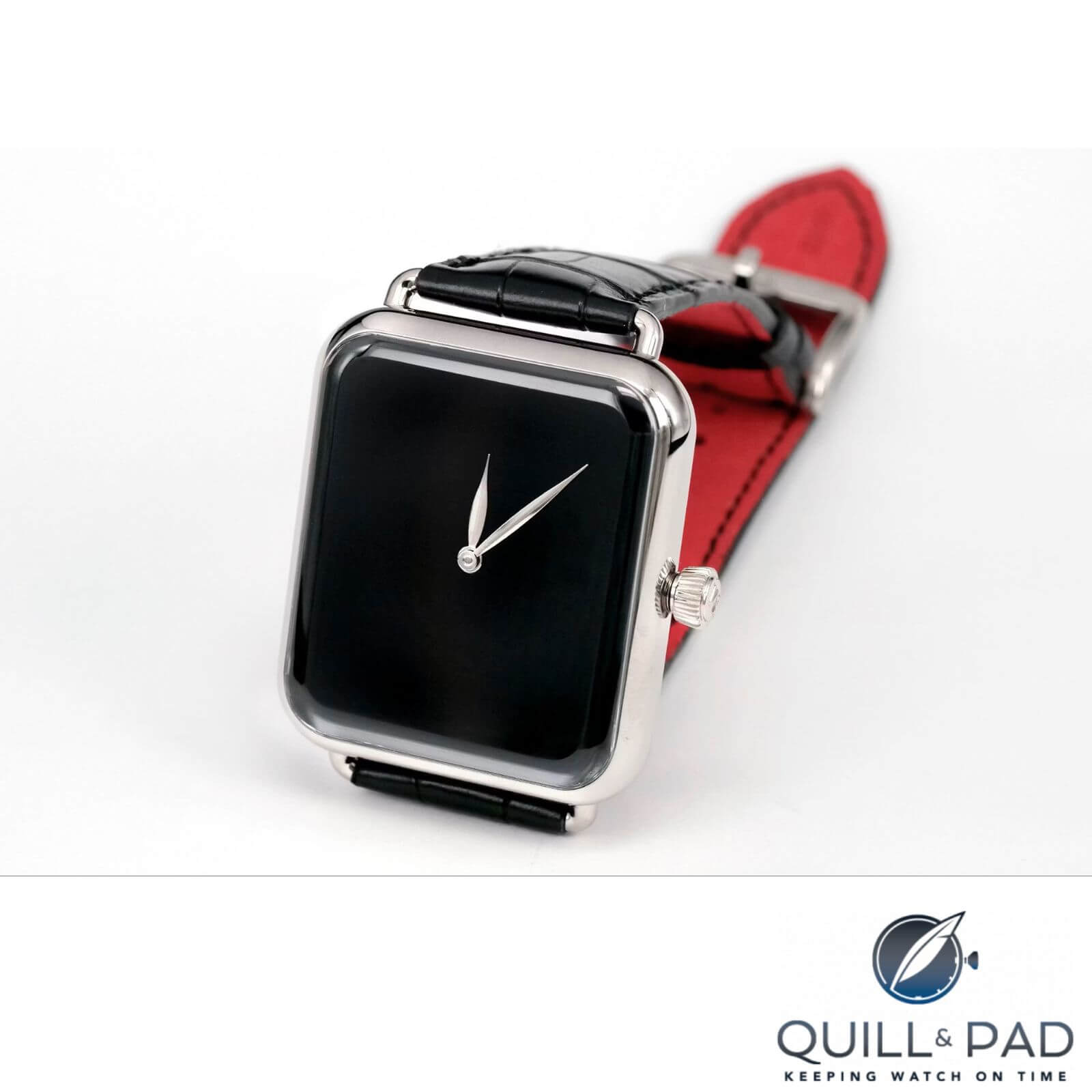
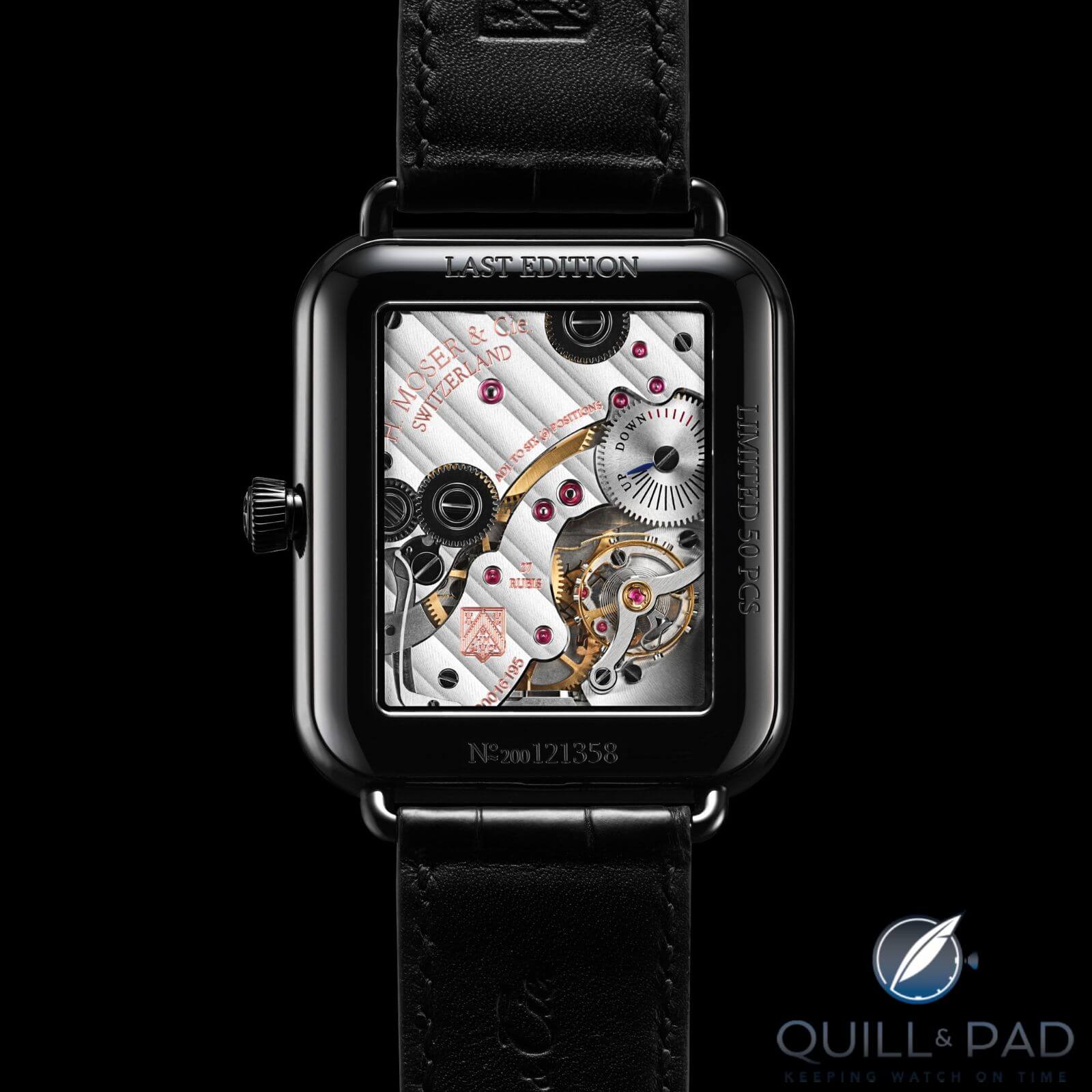
The brand’s willingness to experiment continued unabated. In 2017, the Swiss Alp Watch Zzzz emerged, featuring an all-black or blue fumé dial (dubbed the Brrrr edition) with only two hands, an invitation to embrace a slower pace of time. Subsequent iterations pushed the envelope further, with models incorporating light-absorbing Vantablack dials that rendered them handless, relying on a minute repeater to convey the time. Other versions showcased a tourbillon, a clear signal of the brand’s serious haute horlogerie capabilities beneath its playful exterior. The final iteration, released in 2021, even featured a “loading” sub-seconds display at 6 o’clock, humorously mirroring the startup animation of the Apple Watch.
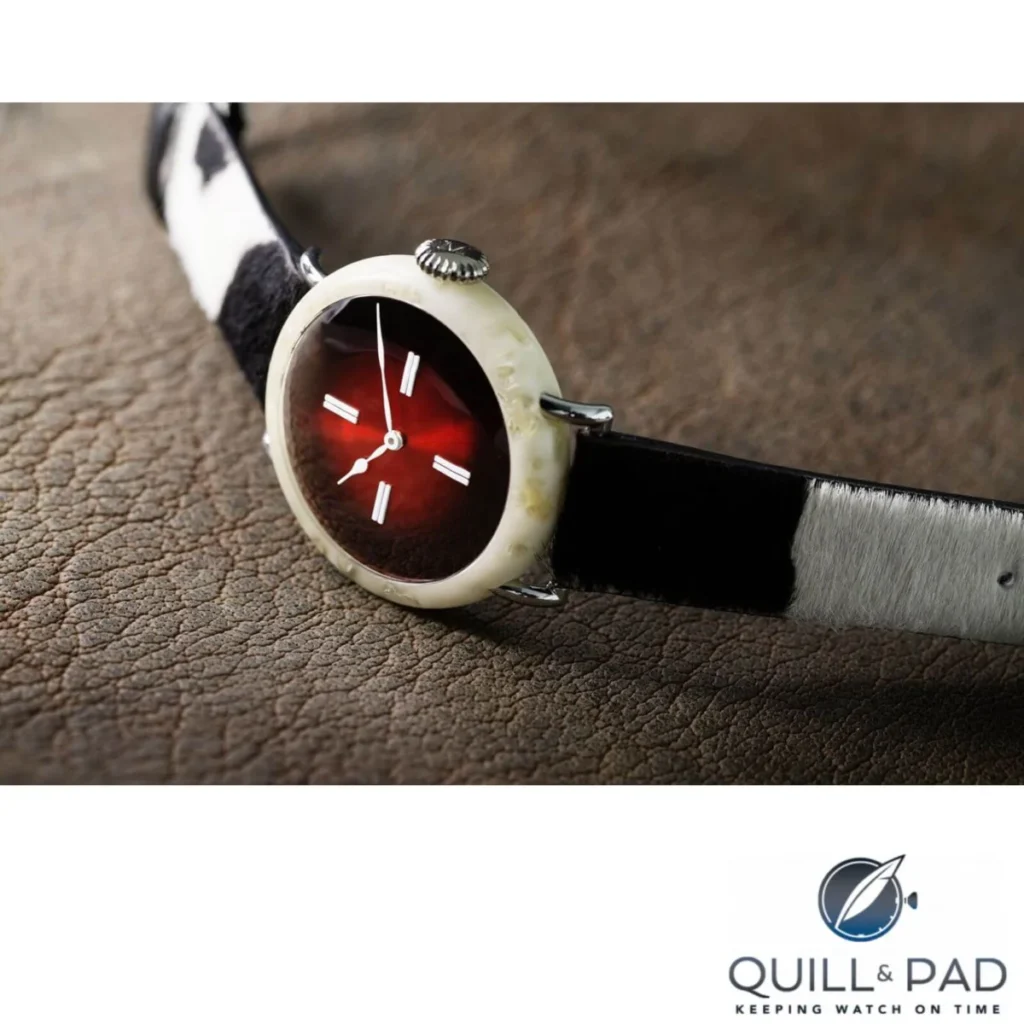
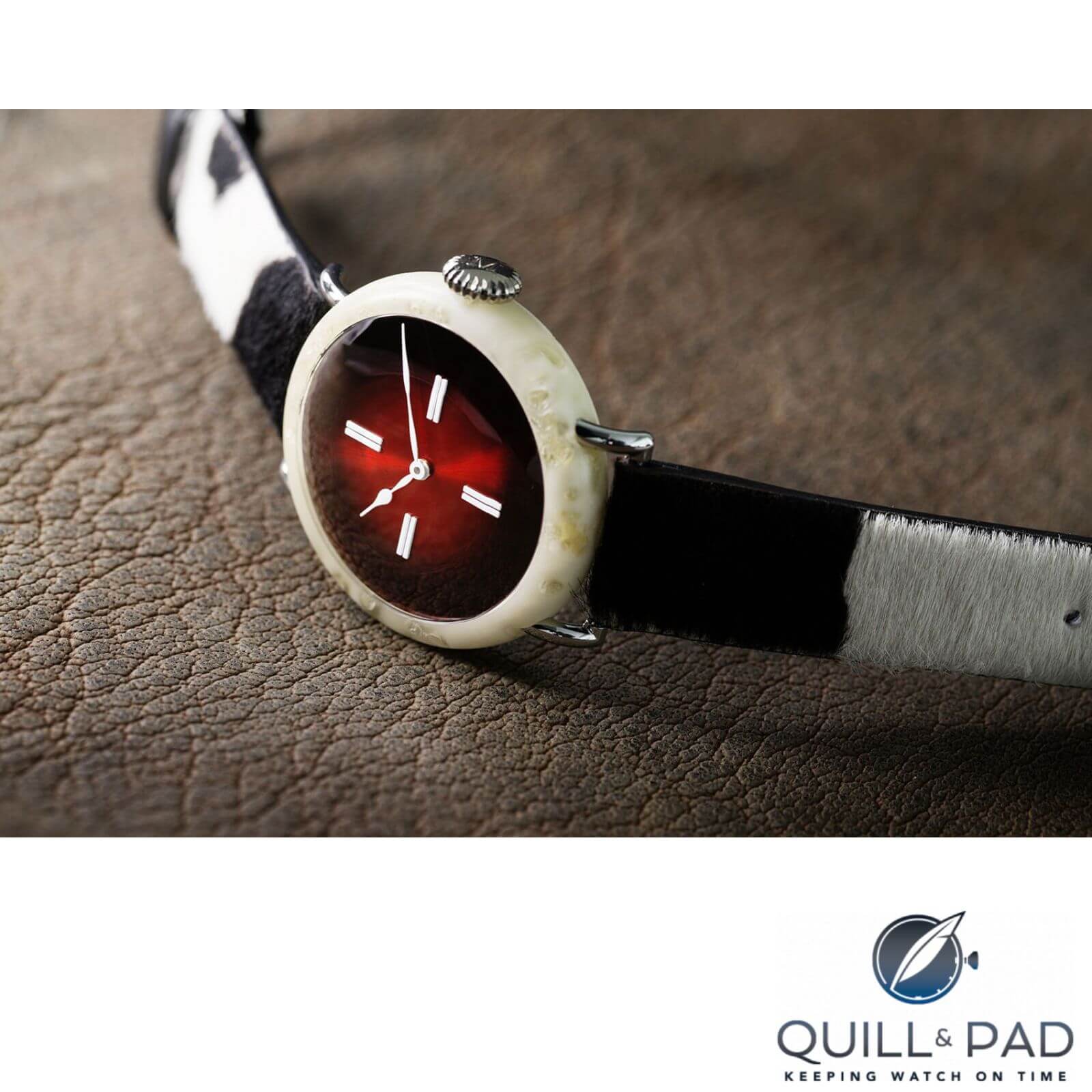
Moser’s audacious streak extended to the Swiss Mad Watch, a timepiece encased in cheese, serving as a protest against the relaxed regulations for the “Swiss Made” label, which allowed for as much as 40% of a watch’s components to be sourced internationally. This was followed by the Frankenstein Watch, a bold pastiche of iconic elements borrowed from rival brands, including a Rolex Pepsi bezel, a Patek Nautilus dial, and a Girard-Perregaux bridge over the balance wheel. This particular creation earned the brand a stern admonishment from industry peers, yet it further cemented Moser’s reputation for daring to be different.
This continuous cycle of surprise and innovation is a deliberate part of Moser’s creative process, allowing the brand to navigate the fine line between serious watchmaking and genuine entertainment. "We’re always on the lookout for ideas, asking ourselves: what can we bring to the table?" Nicholas Hofmann remarked. "We’re here to provoke. We need to surprise people – and yes, if we do, we might lose a certain segment of the customer base who simply won’t relate. But we might also win others over. We have the luxury of being part of a family that owns the brand, and that lets us take risks that a CEO answerable to shareholders on a quarterly basis simply couldn’t." This ownership structure provides a crucial buffer, enabling long-term vision and creative freedom unconstrained by immediate financial pressures.
Further bolstering its technical capabilities and creative potential, H. Moser & Cie. strategically invested in Agenhor in 2023. Agenhor is renowned as one of Switzerland’s premier providers of movements and modules, having been instrumental in the creation of acclaimed timepieces for prestigious brands such as Hermès, Fabergé, Singer, and Van Cleef & Arpels. This acquisition signifies Moser’s commitment to securing top-tier horological expertise and further enhancing its in-house development and manufacturing capacities.
The Streamliner family, launched in 2020, represents another significant chapter in Moser’s evolving narrative. While initially met with a degree of skepticism due to its unconventional case design and the distinctive, unevenly snaking minute chapter ring, the Streamliner has since established itself as a serious and desirable watch. Its versatility has allowed for numerous iterations, including models with simple dials in striking frosted colors, tourbillon complications, skeletonized movements, and even an elegant griffé (scratched) dial in a gold case. More edgy interpretations, such as the Perpetual Moon watch featuring a dial crafted from dyed meteorite, demonstrate the collection’s adaptability to diverse aesthetic sensibilities.
Concurrent with the evolution of the Streamliner, Moser’s other collections continue to mature, affording the brand the flexibility to be both playful and serious. This duality allows Moser to consistently operate at the forefront of independent watchmaking, exhibiting the agility to deviate from routine at a moment’s notice. For the technically inclined enthusiast, the Endeavour Flyback Chronograph Dual Time exemplifies this balance, offering a flyback chronograph, a second time zone, and a central date display. The caliber HMC 730, developed with input from Agenhor, underscores the brand’s commitment to sophisticated mechanical solutions.

Moser’s embrace of vibrant and striking colors for its dials, a bold choice that can sometimes risk dating a timepiece, has proven remarkably successful. The Pioneer Center Seconds Sun Berry, for instance, captivates with its audacious yellow and pink hues. The 2025 Endeavour Pop Collection showcased a playful mix of turquoise, coral, lapis lazuli, and Burmese jade on its dials, appealing to a more contemporary aesthetic. For those with more understated preferences, the Endeavour Perpetual Calendar Concept Tantalum offers a minimalist dial, demonstrating Moser’s ability to cater to a spectrum of tastes.
At its core, H. Moser & Cie.’s strategy is a fascinating paradox. It is a brand that actively resists behaving like a conventional brand, yet in doing so, it has cultivated one of the most recognizable and respected identities within independent watchmaking. As the company approaches the celebration of its founding by Heinrich Moser in Saint Petersburg in 1828, anticipation is high for what the future holds. Nicholas Hofmann hinted that "big things await," but predicting Moser’s next audacious move is, by design, an exercise in futility. This inherent unpredictability, a direct consequence of their deliberate departure from convention, has perhaps become the brand’s most enduring and compelling characteristic. It is this very refusal to be easily categorized that continues to define H. Moser & Cie. as a true maverick in the world of horology.