Washington State University (WSU) researchers have achieved a groundbreaking advance, employing artificial intelligence to identify a significantly faster and more cost-effective method for 3D printing a high-performance metal alloy. This innovative approach circumvented the monumental task of manually testing over 100 million potential printing configurations, a feat previously deemed impractical and prohibitively expensive. The achievement not only promises to democratize access to a critical aerospace material but also establishes a powerful new paradigm for scientific discovery across various fields, including drug development.
A Breakthrough in Additive Manufacturing for Advanced Materials
The core of this breakthrough lies in the ability to precisely control the complex parameters involved in additive manufacturing, particularly for challenging materials. The high-performance alloy in question, GRCop-42, is a copper-chromium-niobium composite renowned for its exceptional properties. Developed by NASA, GRCop-42 is engineered for demanding environments where both superior heat resistance and efficient heat transfer are paramount. Its unique characteristics make it indispensable in aerospace applications, most notably in liquid rocket engine combustion chambers, where it must withstand extreme temperatures and pressures while effectively dissipating heat.
Despite its critical utility and broader potential across various industries, GRCop-42 has historically presented significant hurdles for additive manufacturing. The traditional 3D printing process for this alloy typically necessitates substantial laser power and energy, limiting its production to specialized, high-wattage industrial printers. This exclusivity has kept the material’s adoption confined to a select few entities with access to such advanced, and often costly, equipment. Prior attempts to print GRCop-42 using the lower wattages available on more common commercial machines had largely been unsuccessful, leaving a vast, unexplored parameter space.
The sheer scale of the problem underscored the need for a radically different approach. Evaluating the more than 100 million possible printing configurations through conventional trial-and-error methods was an insurmountable challenge. Each experimental print consumes expensive raw material, requires specialized equipment operation, and demands considerable human effort for setup and analysis. A single print run can incur costs running into hundreds of dollars, and the subsequent thorough analysis of the finished sample can monopolize several days of expert time. This bottleneck in materials science and engineering has long stifled the rapid iteration and deployment of new advanced materials. As Azza Fadhel, first author of the paper and a PhD student in computer science, noted, "Sometimes they printed a certain configuration, and the product just melted. It wasn’t really printable, and even with time and money, they wouldn’t be able to try all 100 million options. What we were doing in our collaboration is to apply the AI so that we efficiently choose candidates from this very large search space."
The Interdisciplinary WSU Research Initiative
The innovative work, published in the Proceedings of the AAAI Conference on Artificial Intelligence, was a collaborative effort between WSU’s School of Electrical Engineering and Computer Science and the School of Mechanical and Materials Engineering. This interdisciplinary synergy was crucial, combining expertise in advanced computational methods with deep understanding of materials science and additive manufacturing processes. The project’s significance was further underscored by its recognition with the prestigious Innovative Deployed Application Award at the AAAI’s annual conference, highlighting its practical impact and novel application of AI.
Leading the research was Jana Doppa, Huie-Rogers Endowed Chair Professor of Computer Science and Berry Distinguished Professor in Engineering. Doppa emphasized the transformative potential of their findings, stating, "Ninety percent of commercial printers cannot print this metal alloy, so given that we were able to find these feasible process parameters, it allows us to use those commercial printers, and we are essentially democratizing the printing of this alloy." This statement encapsulates the profound implication of the research: by unlocking the ability to print GRCop-42 on more widely available equipment, WSU has opened the door for broader adoption, innovation, and reduced barriers to entry for companies and research institutions alike.
Navigating a 100-Million-Option Labyrinth with AI
The researchers embarked on their ambitious project by leveraging existing data – specifically, results from 37 printing configurations that had previously failed in experiments conducted within the School of Mechanical and Materials Engineering. This initial dataset, though seemingly small, provided a crucial starting point for the AI model. Utilizing these foundational results, the team developed a sophisticated AI methodology capable of estimating the likelihood of success for any untested combination of printing settings.
The AI model then played a pivotal role in recommending small, optimized groups of new configurations for experimental testing. Its selection strategy was carefully balanced between two critical priorities: exploration and exploitation. Some recommended experiments focused on configurations that appeared especially promising based on the model’s current understanding, aiming for immediate success (exploitation). Concurrently, other recommendations explored less certain parts of the vast search space, designed to provide new information that would further refine and improve the AI model itself (exploration). This iterative feedback loop, characteristic of active learning or Bayesian optimization strategies, proved immensely effective in rapidly homing in on successful parameters.
The practical implementation of the AI’s recommendations involved a close partnership. Nathaniel Zuckschwerdt, Susmita Bose, and Amit Bandyopadhyay from the School of Mechanical and Materials Engineering worked directly with the computer science team. They meticulously printed GRCop-42 using the AI-chosen configurations and subsequently conducted rigorous evaluations of the finished samples. Aryan Deshwal from the University of Minnesota also contributed to this collaborative effort. Fadhel highlighted the value of this iterative process, even in the face of initial failures: "They would give me back the results, and I liked all of them – even if they failed — because every result improved our AI model." Each experiment, regardless of its immediate outcome, contributed valuable data that strengthened the AI’s predictive capabilities, steering it more efficiently towards viable solutions.
Historical Context: NASA’s Pursuit of Extreme Performance Materials
The development of GRCop-42 itself is rooted in NASA’s long-standing quest for materials capable of withstanding the most extreme conditions encountered in space exploration. For decades, the agency has pushed the boundaries of materials science to develop alloys for high-performance rocket engines, re-entry vehicles, and other critical components. GRCop-42, with its specific blend of copper (for high thermal conductivity), chromium, and niobium (for strength retention at high temperatures), emerged as a prime candidate for applications like the combustion chambers of the RS-25 engines used in the Space Launch System (SLS), or the Merlin engines powering SpaceX’s Falcon rockets. These chambers experience temperatures exceeding 3,000°C (5,400°F), demanding materials that can maintain structural integrity and efficiently transfer heat away from critical areas to prevent catastrophic failure.
Prior to the advent of advanced additive manufacturing, such complex components were often produced through traditional methods like casting, forging, and extensive machining, which are costly, time-consuming, and limited in geometric complexity. The promise of 3D printing for aerospace lies in its ability to create intricate geometries, optimize internal cooling channels, and reduce part count, leading to lighter, more efficient, and potentially more reliable components. However, the unique challenges of printing alloys like GRCop-42, including managing thermal stresses, ensuring uniform material density, and preventing defects, have been a significant hurdle. WSU’s AI-driven approach directly addresses these manufacturing challenges, bridging the gap between material design and efficient production.
Lower Power, Broader Access: The Implications of the Breakthrough
The successful printing of GRCop-42 with significantly less laser power carries profound implications. Primarily, it could drastically reduce energy consumption during the printing process, aligning with broader sustainability goals in manufacturing. Furthermore, operating at lower power levels diminishes wear and tear on expensive printing equipment, extending the lifespan of machinery and reducing maintenance costs. The post-processing costs associated with printed samples – which can often be substantial for high-performance alloys – are also expected to decrease.
Crucially, the ability to utilize 500 watts of laser power instead of much higher wattages means that GRCop-42 can now be printed on a much wider array of commercial 3D printers. This "democratization" makes the alloy accessible to a broader ecosystem of innovators: universities, smaller research laboratories, and startup companies that previously lacked the capital to invest in specialized, high-power printing systems. This expansion of access is not merely an economic advantage; it fosters a more diverse and agile innovation landscape, potentially accelerating the discovery of new applications and improvements for the alloy.
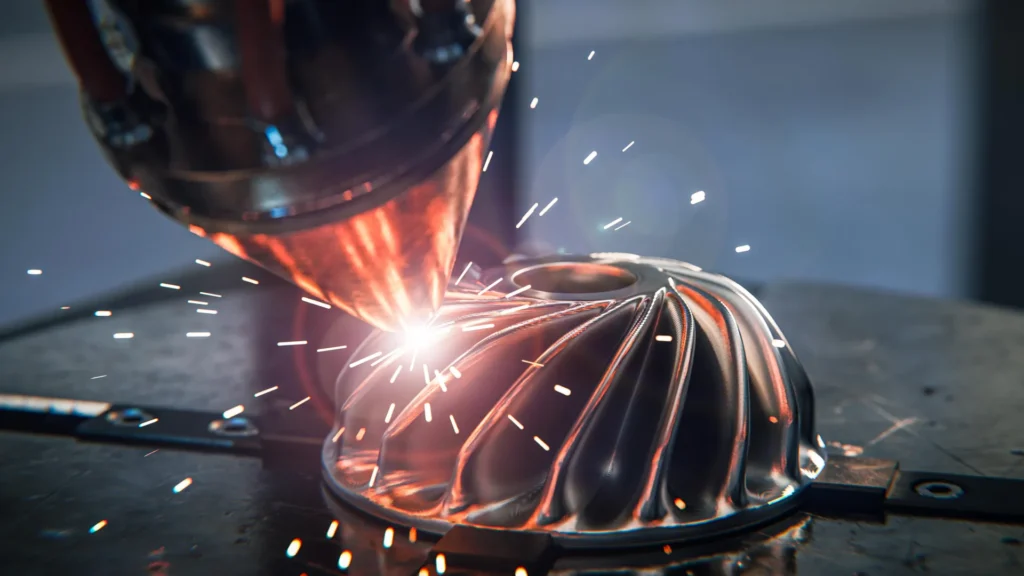
The inherent difficulty of the task cannot be overstated. Researchers were well aware that successful printing settings would be exceedingly rare within the immense parameter space of over 100 million possibilities. Doppa articulated this challenge: "It’s a very challenging case for AI. Every time you try, you basically get a binary success or failure signal, and you are trying to minimize the number of tries that you have so that you get to those successful needles very quickly." Despite these formidable odds, the WSU team achieved remarkable success. Within just three months of intensive work, and by limiting the project to a mere 40 total experiments, they identified six successful configurations at various laser power levels. This included, for the very first time, the successful 3D printing of GRCop-42 using only 500 watts of laser power, a benchmark that was previously unattainable.
A Broader Tool for Scientific Discovery and Economic Impact
The significance of WSU’s work extends far beyond GRCop-42 and metal additive manufacturing. The researchers are confident that the same AI-guided approach can be readily adapted to identify workable processing conditions for a vast array of other metal alloys and additive manufacturing systems. This offers a generalizable solution to a pervasive problem in materials science.
More broadly, the methodology developed by the WSU team provides a powerful framework for tackling scientific problems where successful results are uncommon, the number of possible experiments is astronomical, and traditional trial-and-error testing is prohibitively expensive in terms of material, financial, or time costs. The potential applications span numerous fields:
- Drug Discovery: Identifying optimal molecular structures or synthesis pathways for new pharmaceuticals.
- Catalyst Design: Pinpointing the most efficient catalysts for chemical reactions.
- Energy Materials: Discovering new materials for batteries, fuel cells, or solar energy conversion.
- Agriculture: Optimizing crop growth conditions or developing new fertilizers.
The economic implications are equally compelling. By dramatically reducing the time and cost associated with materials development and process optimization, this AI-driven approach could accelerate product cycles, reduce R&D expenditures, and foster the rapid commercialization of new technologies. It could enhance the competitiveness of industries reliant on advanced materials, strengthen supply chains by diversifying manufacturing capabilities, and unlock entirely new markets.
The success of the WSU team underscores the power of combining advanced computational intelligence with deep domain expertise. "There’s always uncertainty when you are deploying something where real people, materials, and physical costs are involved," said Doppa. "We didn’t know whether we would succeed or not, and there is always that risk. There are real stakes. I was very surprised that we were able to do this so well." This sentiment highlights the inherent challenges of pioneering research and the profound satisfaction of achieving a breakthrough that promises to reshape the landscape of advanced manufacturing and scientific discovery. The WSU achievement is a testament to the transformative potential of artificial intelligence in accelerating the pace of innovation and making previously unattainable technological feats a tangible reality.