The findings, detailed in IDTechEx’s Sustainable Electronics and Semiconductor Manufacturing 2027-2037: Markets, Technologies, Forecasts report, underscore a transformative period for an industry foundational to the global economy. Manufacturers are grappling with the dual challenges of meeting escalating demand for electronic components, particularly fueled by artificial intelligence, while simultaneously adhering to increasingly stringent environmental regulations and mitigating the risks associated with highly concentrated global supply chains.
The Dual Imperative: Sustainability and Resilience in Electronics
The impetus for change in electronics manufacturing stems from two critical, interconnected forces: the urgent need for environmental sustainability and the imperative for supply chain resilience. The global electronics industry, responsible for everything from smartphones and computers to advanced medical devices and automotive systems, has long operated on models that prioritized efficiency and cost-effectiveness, often at the expense of environmental considerations or robust supply chain diversification.
Environmentally, the sector faces immense scrutiny. The rapid pace of technological innovation drives a relentless cycle of consumption and disposal, contributing significantly to the global electronic waste (e-waste) crisis. The United Nations estimates that the world generates approximately 50-60 million metric tons of e-waste annually, with only about 17-20% formally recycled. This waste often contains hazardous substances like lead, mercury, and cadmium, posing severe risks to human health and the environment if not managed properly. Beyond disposal, the manufacturing processes themselves are notoriously resource-intensive, consuming vast amounts of energy, water, and rare earth minerals. The carbon footprint associated with the production of a single electronic device, from raw material extraction to final assembly, can be substantial.
Concurrently, the vulnerability of global supply chains has been laid bare by a series of unprecedented disruptions over the past few years. The COVID-19 pandemic exposed the fragility of just-in-time manufacturing models, leading to widespread shortages of critical components. Geopolitical tensions, such as trade disputes and regional conflicts, further highlighted the risks of over-reliance on single geographic regions or a limited number of suppliers. Natural disasters, from earthquakes and tsunamis in key manufacturing hubs to extreme weather events impacting logistics, have also played a significant role in disrupting the flow of goods. These events have prompted a re-evaluation of strategies, pushing manufacturers towards greater regionalization, onshoring, and multi-sourcing to build more resilient supply networks.
Reimagining Production: Innovations on the Manufacturing Floor
In response to these pressures, manufacturers are actively exploring fundamental changes to how printed circuit boards (PCBs) and semiconductors are produced. IDTechEx points to several key areas of innovation aimed at reducing resource consumption and environmental impact.
One significant thrust is towards optimizing existing processes. This includes the implementation of lower-temperature processing techniques, which can drastically reduce the energy required for various stages of manufacturing. Eliminating unnecessary production steps through process re-engineering is another avenue, streamlining workflows to save both time and resources. Crucially, there is a growing emphasis on recovering and reusing materials within the production cycle, moving towards a more circular economy model for manufacturing inputs. This not only reduces waste but also lessens reliance on virgin raw materials, many of which are finite and subject to volatile commodity markets.
Emerging manufacturing processes offer even more radical shifts. Dry-phase patterning, for instance, is highlighted as a technology with the potential to replace some conventional, wet chemical-intensive production steps. Traditional PCB manufacturing, particularly the etching process, often involves numerous chemical baths and significant water usage, generating hazardous wastewater. Dry-phase patterning aims to achieve similar results with substantially reduced chemical and water footprints, representing a significant leap towards greener manufacturing. Research and development in this area are focused on ensuring that these new processes can match or exceed the precision, reliability, and cost-effectiveness of established methods.
The Promise of Sustainable Materials: A New Era for PCBs
Beyond process optimization, a critical area of development involves new PCB substrate materials. Conventional PCBs predominantly use FR4 (Flame Retardant 4), a glass-reinforced epoxy laminate that is durable but challenging to recycle and not biodegradable. The industry is now actively seeking alternatives that are more environmentally benign, without compromising performance.
Biodegradable and recyclable substrates could eventually provide viable alternatives to FR4 in specific applications, particularly where product lifecycles are shorter or environmental disposal is a primary concern. Technologies and materials currently under development include:

- Polylactic acid (PLA): A bioplastic derived from renewable resources like corn starch, PLA is biodegradable and compostable under industrial conditions. Its application in electronics is being explored for low-power or disposable devices, though challenges remain in matching FR4’s thermal and mechanical properties for all applications.
- Pure Additive: This technology focuses on additive manufacturing techniques for PCBs, which can significantly reduce material waste compared to subtractive methods (etching away unwanted copper). By depositing material only where it’s needed, Pure Additive approaches minimize chemical usage and waste generation.
- Soluboard: Developed by British startup Jiva Materials, Soluboard is a water-soluble PCB substrate. This revolutionary material allows for the easy separation of electronic components from the substrate by simply dissolving the board in hot water, facilitating the recovery and recycling of valuable metals and components. This approach directly addresses the e-waste challenge by enabling more efficient material reclamation.
- Recyclad1G: Another innovation aimed at recyclability, Recyclad1G focuses on creating substrates that are easier to separate into their constituent materials at end-of-life, improving the overall recycling rate of PCBs.
- ReUSE: This concept often refers to broader initiatives for designing electronics for easier repair, refurbishment, and reuse, extending product lifecycles and reducing the demand for new manufacturing. In terms of materials, it implies using materials that retain their properties well through multiple use cycles or can be easily reprocessed.
These innovations signify a profound shift in material science applied to electronics, moving towards a future where the environmental impact of a device is considered from its inception through its end-of-life.
The Resource Intensity of the Digital Age and the AI Factor
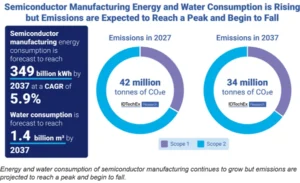
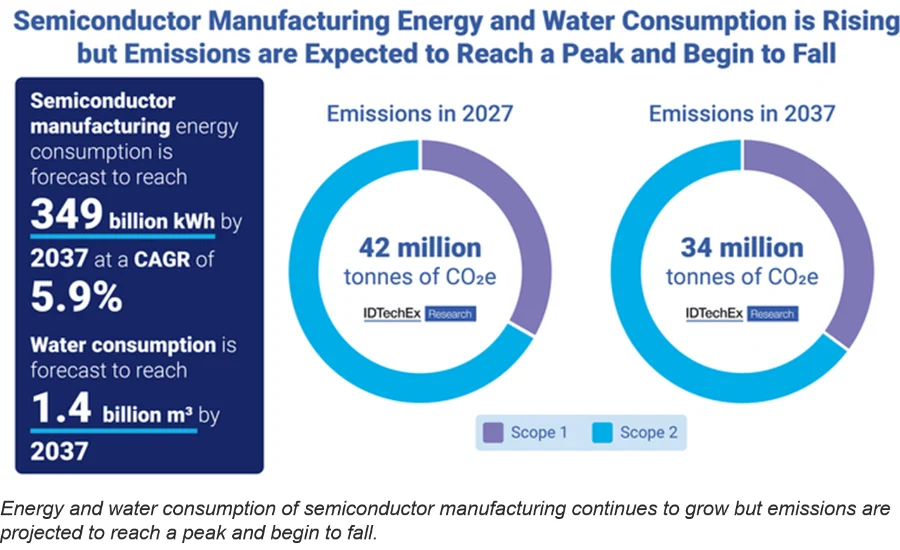
The growth of the electronics industry, particularly the semiconductor sector, brings with it a significant and escalating demand for resources. IDTechEx forecasts that semiconductor manufacturing energy consumption is expected to grow at a compound annual rate of 6%, while water consumption is projected to increase 4% annually. To put this into perspective, the report indicates that the semiconductor industry consumed more than 850 billion liters of water in 2025 – a staggering amount comparable to the annual water consumption of several major cities. This heavy reliance on water is particularly concerning given that many semiconductor fabrication plants (fabs) are located in regions already facing water stress, exacerbating local environmental challenges.
Adding another layer of pressure is the explosive growth of artificial intelligence (AI) and data centers. AI technologies require immense computational power, which translates into a massive demand for advanced electronic components, especially high-performance memory and specialized processors (GPUs, TPUs). This surge in demand is creating significant supply constraints and driving up prices for these critical components. The energy consumption of AI data centers is also a growing concern; training complex AI models can consume as much energy as small towns, and the continuous operation of AI-powered services requires vast amounts of electricity, much of which is still generated from fossil fuels. This creates a feedback loop: AI drives demand for more resource-intensive electronics, which in turn increases the environmental footprint of the digital economy.
Geopolitical Shifts and Regulatory Pressures: Shaping Global Trade
The global electronics supply chain remains highly concentrated geographically, with approximately 90% of printed circuit boards manufactured and exported from the Asia-Pacific region. This concentration, while historically efficient, has become a significant liability in a world marked by geopolitical instability and trade tensions.
The vulnerabilities exposed by recent events have spurred increased interest in strategies like onshoring (bringing manufacturing back to the home country), regionalization (establishing manufacturing hubs within specific geographic blocs), and sourcing from multiple suppliers across diverse locations. Governments worldwide are actively promoting these strategies through various incentives. For example, the U.S. CHIPS and Science Act and the European Chips Act represent multi-billion-dollar initiatives aimed at boosting domestic semiconductor manufacturing capacity and reducing reliance on Asian fabs. However, these strategies face substantial limitations, including the extraordinarily high costs of establishing new manufacturing facilities, the extensive infrastructure requirements (e.g., power grids, specialized water treatment), and persistent shortages of skilled workers with the highly specialized expertise needed for advanced electronics manufacturing.
Beyond supply chain restructuring, regulatory pressures are also poised to reshape the global industry. European regulations, known for their comprehensive approach to environmental and consumer protection, are expected to have a far-reaching impact. IDTechEx anticipates that digital product passport requirements will be implemented for electronics beginning in 2028. These passports will provide comprehensive information about a product’s origin, materials, environmental footprint, repairability, and end-of-life options, accessible via a digital platform. Because electronics supply chains span multiple regions and are intricately intertwined, requirements introduced in Europe will inevitably affect manufacturers and suppliers globally. To sell products within the European market, companies worldwide will need to comply, pushing for greater transparency and sustainability across their entire operations. This aligns with broader European initiatives such as the EU Green Deal, the Waste Electrical and Electronic Equipment (WEEE) Directive, and the Restriction of Hazardous Substances (RoHS) Directive, all of which aim to foster a more circular and sustainable economy.
Navigating the Future: Challenges and Opportunities
The landscape for electronics and semiconductor manufacturing is undeniably complex, characterized by both formidable challenges and significant opportunities. The transition to more sustainable and resilient practices will require substantial investment in research and development, new infrastructure, and workforce training. The initial costs associated with adopting new materials, re-engineering production processes, and diversifying supply chains are high, posing a barrier for some manufacturers, particularly smaller enterprises. Performance trade-offs for some novel materials, especially in demanding applications, also need to be overcome through continuous innovation.
However, the long-term benefits are substantial. Companies that successfully navigate this transformation stand to gain a competitive advantage through enhanced brand reputation, compliance with future regulations, reduced exposure to resource price volatility, and greater supply chain stability. The push for sustainability is also driving innovation, creating entirely new market segments for green electronics, advanced recycling technologies, and sustainable materials. Collaboration across the industry – between manufacturers, material suppliers, research institutions, and governments – will be crucial for accelerating progress.
Ultimately, the electronics manufacturing sector is at an inflection point. The IDTechEx report serves as a stark reminder that the current trajectory of resource consumption and supply chain concentration is unsustainable in the long run. The imperative to integrate environmental stewardship with robust operational resilience is no longer an optional add-on but a fundamental requirement for the future viability and growth of the global electronics industry. The next decade will undoubtedly witness profound changes, shaping how the world’s most ubiquitous technologies are designed, produced, and consumed.